
35,000+ smart investors are already getting financial news, market signals, and macro shifts in the economy that could impact their money next with our FREE weekly newsletter. Get ahead of what the crowd finds out too late. Click Here to Subscribe for FREE.
Summer sales are missed. Across Canada, countdown clocks, crossed-out prices, loyalty offers, doorcrashers, and easy instalment plans can make an ordinary purchase feel like a rare opportunity. The pressure is especially effective when families are already spending on travel, patios, festivals, camping, cooling, and back-to-school preparation.
These 16 common traps show how urgency can weaken comparison shopping, hide the true total, and turn a discount into a larger or less flexible purchase. Some tactics are legitimate promotions; others may cross into misleading marketing when deadlines, stock levels, reference prices, or unavoidable fees are not presented truthfully. The difference often becomes clear only after the cart is full, the return window is limited, or the bill arrives.
The Countdown Clock Becomes the Decision-Maker
16 Ways Canadians Get Trapped by “Limited-Time” Summer Sales
- The Countdown Clock Becomes the Decision-Maker
- The “One-Day Sale” Quietly Lasts All Week
- The Regular Price Is More Impressive Than Real
- “Up to 70% Off” Applies to Almost Nothing
- The Stock Warning May Be Selling Fear
- The Doorcrasher Is Gone, but the Upsell Is Ready
- Mandatory Fees Arrive After the Bargain Has Won
- Free Shipping Encourages an Expensive Cart
- Multi-Buy Deals Create Savings Only Through Volume
- Member Pricing Makes the Non-Member Price Look Punitive
- The Coupon Code Fails After the Cart Is Full
- Final Sale Turns a Fast Decision Into a Permanent One
- The Rebate Is Counted Before It Is Earned
- Buy Now, Pay Later Shrinks the Price on Screen
- Rewards Points Distract From Credit-Card Interest
- Influencer Codes and Retargeted Ads Repeat the Deadline
- 19 Things Canadians Don’t Realize the CRA Can See About Their Online Income

A ticking timer changes the question from “Is this a good purchase?” to “Can this decision be made before zero?” That shift is the trap. Time pressure reduces the space available to compare models, check price history, read return terms, or simply decide whether the item is needed. Research on online scarcity cues has found that limited-time messaging can heighten urgency and encourage faster purchase decisions. Canada’s Competition Bureau also identifies renewed or misleading countdown clocks as a form of fake urgency when the deal remains available after the timer expires.
Consider a patio umbrella marked down to $149 with eleven minutes left. A shopper may rush through checkout, only to discover the same price the next morning under a freshly reset timer. The practical test is simple: capture the page, close it, and check again later or on another device. A genuine deadline may disappear. A manufactured one often returns, revealing that the clock was selling anxiety rather than savings.
The “One-Day Sale” Quietly Lasts All Week

Some summer promotions create urgency through a calendar rather than a countdown. “Today only,” “weekend blowout,” and “last chance” sound final, yet the discount may be extended, renamed, or relaunched almost immediately. The Competition Bureau advises businesses to be truthful about sale duration and not to run a supposedly short sale for a long period or repeat it every week. A recurring deadline can make an ordinary promotional price feel exceptional.
A family shopping for outdoor furniture might buy on Sunday night because the banner says the sale ends at midnight. On Monday, the identical set may appear in an “extended by popular demand” event, followed by a Canada Day or mid-summer promotion at the same price. The loss is not always a higher price; it may be lost bargaining power and a rushed choice. Tracking the item for several days, searching earlier flyers, or checking a price-history tool can show whether the “last chance” is actually part of the retailer’s normal rhythm.
The Regular Price Is More Impressive Than Real

A large crossed-out price acts as an anchor. Once a barbecue is shown as “regularly $899, now $499,” the $400 difference can dominate attention even when comparable models commonly sell near $500. Canadian competition law restricts false ordinary selling price claims: a business cannot invent or inflate a regular price merely to create the appearance of a bargain. The Competition Bureau says a claimed regular price should be genuine, supported by meaningful offering time or sales volume.
The safer comparison is not discount versus sticker price, but final price versus the market. Imagine two nearly identical portable air conditioners: one is “40% off” at $479, while another is plainly priced at $449 with no dramatic markdown. The second may be the better deal despite looking less exciting. Searching the exact model number, checking earlier flyers, and comparing specifications can neutralize the anchor. A percentage is only valuable when the reference price behind it is credible.
“Up to 70% Off” Applies to Almost Nothing

The words “up to” advertise the biggest possible discount, not the discount most shoppers will receive. A storefront can feature “up to 70% off summer essentials” while the popular sizes, colours, and current-season items sit at 10% or 20% off. The headline is describing a maximum, but its overall impression may still lead shoppers to expect broad savings. Canadian deceptive-marketing rules consider the general impression created by an advertisement, not only a qualification tucked into smaller print.
A typical example is a swimwear rack where one discontinued colour in an uncommon size carries the 70% reduction, while the rest of the rack is modestly discounted. The bargain headline gets people through the door; selection pressure does the rest. Before browsing, shoppers can set a target price for the item they actually need and ignore the maximum percentage. Checking how many eligible products exist, whether core sizes are included, and whether the discounted merchandise is returnable quickly separates a meaningful event from a headline built around a handful of leftovers.
The Stock Warning May Be Selling Fear

Messages such as “only two left,” “90% sold,” or “five people are viewing this item” exploit the fear that waiting will mean losing the purchase. The Competition Bureau specifically identifies inaccurate low-stock and high-demand claims as fake urgency cues. Scarcity can be legitimate, especially for seasonal inventory, but the claim should reflect real availability and change as stock moves. A warning that remains frozen for hours or reappears unchanged on every visit deserves skepticism.
Suppose a cottage rental page says only one unit remains for an August weekend. That may be true, or it may refer only to one room type, one rate plan, or a narrow allocation held by the platform. The same logic appears with fans, camping gear, and festival supplies. Check the seller directly, search another retailer, or refresh from a private browser. The goal is not to prove deception every time; it is to prevent an unverifiable stock message from replacing comparison, budget checks, and careful reading of cancellation terms.
The Doorcrasher Is Gone, but the Upsell Is Ready

A limited-time doorcrasher can pull shoppers into a store or website with an unusually low price. The trouble begins when the advertised item is unavailable in reasonable quantities and staff immediately steer customers toward a more expensive substitute. Canada’s Competition Bureau describes this as bait-and-switch selling when a bargain product is promoted but not reasonably available, subject to limited exceptions such as unexpectedly strong demand or supply problems.
Picture a $199 patio set advertised for Saturday morning. By opening time, the item is unavailable, but a $399 set is prominently displayed beside a sign saying “best alternative.” After making the trip, arranging transportation, or mentally committing to the purchase, many shoppers accept the upgrade. Before travelling, call and ask whether stock is physically available, whether it can be reserved, and how many units the location received. Online, take screenshots of the advertisement and availability. The wasted trip is inconvenient; the more expensive replacement is where the real financial trap appears.
Mandatory Fees Arrive After the Bargain Has Won

A low advertised price can secure attention before mandatory charges appear at checkout. Delivery, handling, booking, service, administration, or facility fees may transform the deal after the shopper has already invested time entering details and choosing options. The Competition Bureau calls an unattainable advertised price caused by mandatory non-government charges “drip pricing.” Canadian law generally requires unavoidable fixed fees to be included upfront, apart from government-imposed charges such as sales tax.
A $79 summer attraction pass can feel cheaper than a competitor’s $92 pass until an $11 processing fee and $8 facility charge appear on the final screen. At that point, abandoning the cart feels like wasting the work already done. The defence is to compare all-in totals, not opening prices. Move quickly to the final pre-payment page, record every compulsory charge, and compare identical quantities and conditions. Optional add-ons also deserve attention, but mandatory fees are the clearest sign that the headline price was not the price realistically available.
Free Shipping Encourages an Expensive Cart

A free-shipping threshold turns delivery into a challenge: spend another $18 to avoid a $9 fee. Research on contingent free shipping shows that thresholds can shape basket size and purchase behaviour, which is precisely why retailers use them. The consumer trap appears when extra items cost more than the shipping saved, especially if they were not planned purchases or have weak return value.
Imagine a cart containing $62 in beach supplies with free shipping at $75. Adding a $16 insulated cup saves a $10 delivery charge but increases the total by $6 and brings home something unnecessary. The mathematically cheaper choice was to pay shipping—or compare a local pickup option. Before adding filler, subtract the cart total from the threshold, then compare that gap with the delivery fee. If the gap is larger, free shipping is not free. Even when the gap is smaller, the added item should be useful enough to justify storage, clutter, and the possibility of missing a return deadline.
Multi-Buy Deals Create Savings Only Through Volume

“Buy one, get one free,” “three for $10,” and family-size bundles make the unit price look attractive, but the total bill still rises when the shopper buys more than needed. Research on multi-buy promotions has examined how these offers can encourage overbuying and, for food, contribute to waste or excess consumption. The discount is real only if the full quantity will be used before it expires or becomes unwanted.
Summer makes this especially easy with sunscreen, beverages, snacks, garden products, and seasonal clothing. Two bottles of sunscreen for $24 may beat one for $16 on a per-bottle basis, but not if the second bottle sits unopened past its best-use period. A three-pack of children’s sandals is not efficient when only one pair fits. Compare the single-unit price, the multi-buy unit price, and the actual quantity needed. When possible, split a promotion with relatives or neighbours. A bargain that requires doubling consumption is often a retailer’s volume win disguised as household savings.
Member Pricing Makes the Non-Member Price Look Punitive
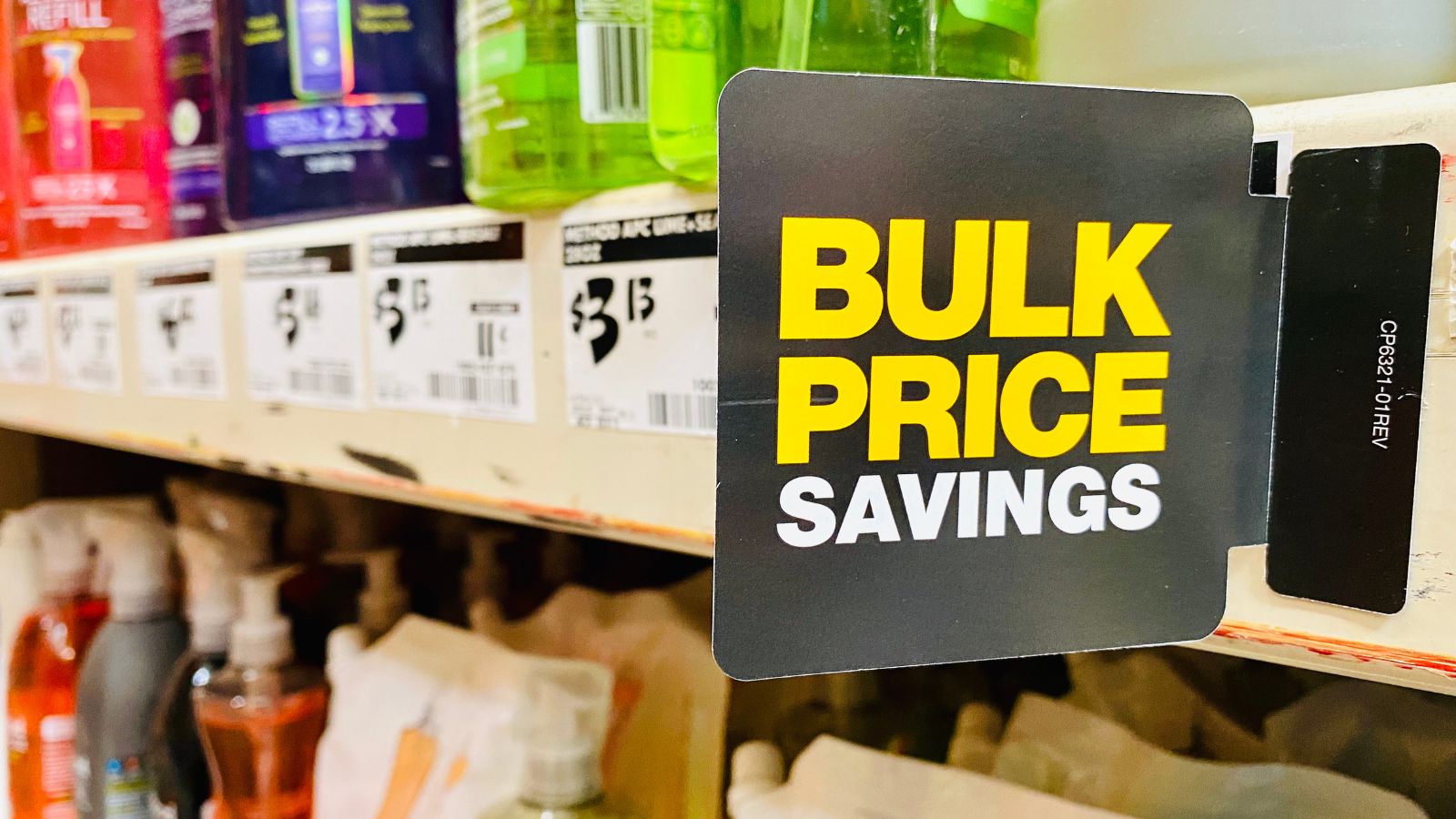
Loyalty-only summer prices can offer genuine savings, but they also change the comparison. A shopper may focus on the dramatic gap between the member and non-member price instead of comparing the member price with other stores. Canadian consumer guidance notes that reward-program terms can differ by program, location, and purchasing method. Membership may also require an account, app, email address, or consent to data collection that has value beyond the immediate discount.
For example, a cooler may be $69 for members and $99 for everyone else. The $30 gap feels like an obvious win, yet a competing retailer may sell a comparable cooler for $64 without registration. The useful question is not “How much did membership save?” but “What is the lowest all-in price for the right product?” Shoppers should also check whether points expire, whether personalized offers require activation, and whether sale prices are available in-store, online, or both. Loyalty can reduce cost, but it should not end comparison shopping.
The Coupon Code Fails After the Cart Is Full

A limited-time code can attract shoppers before exclusions become visible. The banner promises 20% off, but the code may exclude sale items, major brands, marketplace sellers, oversized goods, or products already carrying another promotion. Some codes require a minimum spend before tax and shipping; others cannot be combined with points or free-delivery offers. Canadian online-shopping guidance recommends reviewing terms of sale, shipping, and return conditions before completing a transaction.
A shopper may spend half an hour building a $180 cart, then discover that only a $12 accessory qualifies for the discount. Because the cart already feels “owned,” the failed code may not stop the purchase. This commitment is amplified by the inconvenience of starting over elsewhere. Test the code as soon as the first eligible item enters the cart, not at the end. Read the exclusions, confirm the discount amount in dollars, and remove anything added only to reach a threshold. A coupon should lower a planned purchase, not become the reason a larger purchase exists.
Final Sale Turns a Fast Decision Into a Permanent One

Summer clearance often comes with “final sale” terms, especially for swimwear, seasonal décor, open-box goods, and heavily reduced clothing. Canada does not provide a universal right to return a non-defective purchase simply because the buyer changed their mind; store policy usually governs voluntary refunds and exchanges. That makes return language part of the price, not a minor detail. A lower price can carry more risk when sizing, quality, or compatibility is uncertain.
Consider sandals bought online at 50% off for an upcoming trip. If the fit is wrong and the order is final sale, the entire purchase value may be lost or recovered only through resale. A slightly higher price from a retailer with free returns could have been cheaper in practical terms. Before paying, verify whether final sale applies to the item or the entire event, whether exchange or store credit is allowed, and who pays return shipping. Save the policy and receipt. Urgency is most expensive when it removes the chance to correct a mistake.
The Rebate Is Counted Before It Is Earned

A mail-in rebate, digital claim, gift card, or “bonus with purchase” can make the effective price look much lower than the amount charged today. Yet the benefit may require registration, serial numbers, original packaging, proof of purchase, submission before a deadline, or weeks of waiting. The Competition Bureau’s rebate guidance emphasizes clear disclosure of conditions, while Canada’s Office of Consumer Affairs advises buyers to read rebate terms before purchasing.
A portable air conditioner priced at $499 with a $75 rebate is still a $499 cash outlay at checkout. If the form is missed, the receipt fades, or the model is excluded, the promised net price never materializes. Treat delayed incentives as uncertain until every requirement is understood. Photograph the receipt and serial number immediately, submit the claim early, and set a reminder to follow up. When comparing products, record both the upfront price and the post-rebate price. A discount that depends on future paperwork should never be treated as guaranteed cash in hand.
Buy Now, Pay Later Shrinks the Price on Screen

Instalment plans can turn a $320 summer purchase into “four payments of $80,” making the obligation feel smaller without changing the total. The Financial Consumer Agency of Canada warns that buy-now-pay-later plans may encourage spending beyond one’s means, create fees after missed payments, and make the total cost easier to misjudge. Multiple plans can also overlap across pay periods, turning several manageable amounts into a crowded repayment schedule.
A family buying camping gear, concert tickets, and patio furniture may see three separate instalment amounts rather than one combined debt. The sale deadline adds pressure, while the payment schedule pushes the financial consequence into August or September. Before accepting, write down the full purchase price, every due date, possible late fees, and the total of all active instalments. Compare that figure with available cash, not the promotional payment. A limited-time discount is not a saving when it creates a repayment problem or causes another bill to be carried on higher-cost credit.
Rewards Points Distract From Credit-Card Interest

Bonus-points events can make summer spending feel productive: spend $500, earn extra points, or receive a statement credit. Rewards have value, but interest can erase that value quickly when the balance is not paid in full. The Financial Consumer Agency of Canada advises consumers to compare interest rates, annual fees, rewards, and other card features, and notes that carrying a balance increases the cost of purchases.
Suppose a promotion returns the equivalent of $20 in points on a $500 purchase. If part of that balance remains unpaid and accrues credit-card interest, the financing cost can overtake the reward. The exact outcome depends on the card’s rate and repayment timing, but the principle is consistent: rewards should be calculated after borrowing costs. Before chasing a multiplier, estimate the dollar value of the points, confirm category limits and redemption rules, and decide whether the statement can be paid in full. A sale plus rewards is attractive only when the purchase was already planned and the card is functioning as payment, not financing.
Influencer Codes and Retargeted Ads Repeat the Deadline

Summer sales increasingly arrive through creators, affiliate links, email reminders, and ads that follow shoppers across websites. The same product can appear repeatedly with “ends tonight” language, creating social proof and a sense that the opportunity is everywhere. Canada’s Competition Bureau says influencers must clearly disclose material relationships with brands, including compensation, commissions, free products, or other benefits. A code can be legitimate while the recommendation is still commercially motivated.
A travel creator may promote luggage with a 15% code and say stock is moving quickly. After one click, retargeted ads may continue for days, each presenting a fresh deadline. That repetition can feel like independent confirmation when it is part of one marketing system. Check whether the relationship is disclosed, search the product without the affiliate link, and compare the code price with ordinary sale prices elsewhere. Also notice whether the “exclusive” code is widely available. Familiarity is not evidence of value, and repeated urgency does not make the underlying deadline more credible.
19 Things Canadians Don’t Realize the CRA Can See About Their Online Income

Earning money online feels simple and informal for many Canadians. Freelancing, selling products, and digital services often start as side projects. The problem appears at tax time. Many people underestimate how much information the CRA can access. Online platforms, banks, and payment processors create detailed records automatically. These records do not disappear once money hits an account. Small gaps in reporting add up quickly.
Here are 19 things Canadians don’t realize the CRA can see about their online income.
This Options Discord Chat is The Real Deal
While the internet is scoured with trading chat rooms, many of which even charge upwards of thousands of dollars to join, this smaller options trading discord chatroom is the real deal and actually providing valuable trade setups, education, and community without the noise and spam of the larger more expensive rooms. With a incredibly low-cost monthly fee, Options Trading Club (click here to see their reviews) requires an application to join ensuring that every member is dedicated and serious about taking their trading to the next level. If you are looking for a change in your trading strategies, then click here to apply for a membership.