
35,000+ smart investors are already getting financial news, market signals, and macro shifts in the economy that could impact their money next with our FREE weekly newsletter. Get ahead of what the crowd finds out too late. Click Here to Subscribe for FREE.
Back-to-school promotions arrive with bright signs, countdown clocks, and prices designed to create urgency. Yet a discount label does not automatically mean a family will spend less. In 2026, households are approaching the season cautiously, even as projected spending remains substantial and retailers compete aggressively for attention.
These 18 back-to-school deals show how attractive promotions can lose their value through inflated reference prices, unnecessary quantities, restrictive conditions, financing costs, or products that become expensive over time. Some are perfectly legitimate offers that work well for the right shopper. The trouble begins when the size of the discount receives more attention than the final cost, product quality, or amount actually needed.
Inflated “Regular” Prices
18 Back-to-School Deals That May Not Be Deals at All
- Inflated “Regular” Prices
- Doorbusters With Barely Any Stock
- Buy-One-Get-One Offers
- Oversized School-Supply Multipacks
- Technology Bundles Packed With Extras
- Free Shipping That Requires a Bigger Cart
- Coupons With Minimum-Spend Requirements
- Loyalty-Point Events
- Mail-In Rebates and Store Credits
- Price-Match Guarantees
- Prepacked School-Supply Kits
- Cheap Printers With Expensive Ink
- Clearance Laptops Near the End of Support
- Refurbished and Open-Box Electronics
- Extended Warranties Added at Checkout
- Buy Now, Pay Later Promotions
- Clothing Multipacks That Do Not Survive the Term
- Buying Everything During the First Big Sale
- 19 Things Canadians Don’t Realize the CRA Can See About Their Online Income

A dramatic markdown can look convincing even when the comparison price tells very little about the product’s real market value. A backpack marked “regularly $90, now $49” appears to offer a $41 saving. However, that saving is meaningful only if the bag was genuinely sold at or near $90 for a reasonable period. When a high reference price exists mainly to make the current price appear exceptional, the percentage discount becomes a weak measure of value.
This is why the final price should be compared with equivalent products at several retailers rather than judged against the crossed-out number on one tag. Model numbers, materials, capacity, warranty coverage, and included accessories all matter. A $49 backpack may still be a sensible purchase, but perhaps not because it is supposedly 46% off. Saving screenshots, checking price histories, and searching the exact product name can reveal whether the “sale” price is unusually low or simply the amount the retailer normally expects customers to pay.
Doorbusters With Barely Any Stock

Doorbusters are designed to generate attention, store visits, and website traffic. A retailer might advertise notebooks for a few cents, an inexpensive calculator, or a deeply discounted pair of headphones. The promotion can be genuine, but the available quantity may be too small to meet ordinary demand. Once the featured product disappears, families who have already invested time in the trip may settle for a more expensive substitute.
Canadian competition rules specifically address bait-and-switch selling when a bargain-priced product is not available in reasonable quantities, subject to limited exceptions such as circumstances beyond the advertiser’s control or the offer of a rain check. Shoppers can reduce the risk by checking quantity limits, stock indicators, opening times, and rain-check policies before travelling. A doorbuster also deserves to be judged separately from the rest of the basket. Saving $4 on notebooks does little good when the same visit leads to $35 in unplanned clothing, snacks, organizers, or branded accessories.
Buy-One-Get-One Offers

The word “free” can overwhelm the arithmetic behind a buy-one-get-one promotion. Research has found that shoppers often prefer BOGO offers to economically equivalent percentage discounts because the extra product attracts more attention. That psychological appeal does not guarantee a lower price. If two packs of pens cost $7 under a BOGO offer but comparable packs sell elsewhere for $3 each, the promotion actually costs an extra dollar.
Quantity matters as much as unit price. Two lunch bags are useful when siblings need them, but the second may sit untouched when only one is required. The same problem appears with notebooks in the wrong ruling, glue that dries before it is needed, or duplicate art supplies that the teacher did not request. Dividing the total price by the number of usable items provides a clearer comparison. A BOGO deal becomes valuable when the base price is competitive and both items will realistically be used—not merely because the receipt assigns a zero-dollar price to one of them.
Oversized School-Supply Multipacks

Large packages are often presented as the economical choice, and many do carry a lower cost per pencil, marker, or sheet of paper. Yet a lower unit price and a lower household bill are not the same thing. A family that needs six glue sticks does not necessarily save by buying 24, particularly when the larger package consumes more of the month’s available budget or includes colours and sizes that are unlikely to be used.
Unit pricing is the most reliable way to compare package sizes, but the calculation should include only items that serve a real purpose. A 40-pack of markers loses its advantage when several dry out, duplicate colours remain unopened, or the teacher requires a different type. Researchers studying bulk purchasing also note that larger quantities demand more upfront cash, meaning lower-income households may be unable to access apparent per-unit savings. The strongest multipack deals usually involve durable, frequently replenished basics that can be shared among children or stored safely for another term.
Technology Bundles Packed With Extras

A laptop bundle may combine a computer, carrying case, mouse, headset, security software, cloud storage, and extended technical support under one discounted price. Bundling can offer genuine convenience and savings, but it also helps sellers move lower-demand accessories and increase the total transaction. The package price cannot be evaluated properly until each component is examined separately.
A useful comparison begins with the laptop’s standalone price. The remaining amount can then be weighed against the realistic value of the extras. A basic mouse may be worth little to a student who already owns one, while security software might duplicate protection included with the operating system or begin charging a subscription fee after a trial. The case may be poorly padded, and the headset may not meet the school’s requirements. Retail research shows that bundling is a deliberate revenue strategy, not simply a customer service. A strong bundle contains items the student would have purchased anyway, at specifications that match the actual assignment and classroom environment.
Free Shipping That Requires a Bigger Cart

Free shipping feels like money saved because delivery charges do not produce a tangible product. Retailers know that customers dislike paying them, which is why minimum-order thresholds are common. Research on threshold-based shipping has found that the policy can encourage customers to increase order quantities and raise retailer revenue. The word “free” describes the delivery charge, not necessarily the shopping decision.
Suppose an order totals $63, shipping costs $9, and free delivery begins at $80. Adding a $17 item that was not originally needed would produce an $80 bill instead of a $72 bill. The shopper receives another product, but still spends $8 more. The calculation becomes even less favourable when the filler item is difficult to return or creates another trip. Combining planned purchases, selecting store pickup, comparing another retailer, or simply paying the shipping charge may cost less. Free delivery is a worthwhile deal when the original basket naturally reaches the threshold—not when the threshold becomes the reason for expanding it.
Coupons With Minimum-Spend Requirements

A coupon offering “$20 off a $100 purchase” appears to be a 20% discount, but only for a shopper who already intended to spend exactly $100 on eligible merchandise. If the school list totals $72, adding $28 in products to unlock the coupon produces a final cost of $80. The household receives more merchandise, but it still spends $8 beyond the original plan.
Minimum-spend coupons are effective precisely because they can increase consumption. Research on digital coupons has found that each dollar of subsidy can generate several dollars of additional spending in some settings. Restrictions can further reduce the value: clearance merchandise, electronics, uniforms, premium brands, and marketplace sellers may be excluded, while the threshold may apply before tax but after other discounts. The safest approach is to build the required basket first and apply the coupon last. When extra items must be invented to qualify, the promotion is functioning as an upselling tool rather than a straightforward reduction in back-to-school costs.
Loyalty-Point Events

“Ten times the points” can sound as valuable as an immediate discount, but points are a separate currency controlled by the retailer. Their worth depends on redemption rates, expiry rules, eligible products, and whether the household will return to the same company. A promotion that generates $12 in future rewards is not equivalent to taking $12 off today, particularly if redeeming the points requires another purchase.
Deloitte’s 2025 loyalty research found that 72% of surveyed members said programs made them more likely to spend with a preferred brand, while 56% said the programs increased their spending. The average respondent belonged to eight programs but actively used only five, and 40% sometimes forgot to redeem rewards. Those figures illustrate the commercial purpose behind point multipliers. Families should translate the bonus into a dollar value, subtract membership costs, and consider the price available elsewhere. Points enhance a competitive deal; they rarely rescue an overpriced product or justify abandoning a carefully planned list.
Mail-In Rebates and Store Credits

A product advertised at “$79 after rebate” may still require the shopper to pay $109 at checkout. Receiving the advertised saving can depend on submitting a receipt, product code, original barcode, online form, and mailing address before a deadline. One missing document can erase the reduction. Even successful claims may take weeks, making the promotion less useful to a household managing immediate back-to-school cash flow.
The form of repayment also matters. A manufacturer rebate paid by cheque is different from a retailer credit that can be used only during a future visit. Gift cards generally receive legal protections in Canada, but some service-specific cards, mall cards, or specialized prepaid products can carry conditions or fees. Before treating a rebate as guaranteed savings, shoppers should read the submission rules, photograph every document, note the deadline, and keep copies of the claim. The item should still be reasonably priced without the rebate; otherwise, the entire value of the purchase depends on completing a separate administrative process perfectly.
Price-Match Guarantees
A price-match policy creates confidence that a retailer will not be undersold, but the guarantee does not automatically establish that its shelf prices are low. Customers still have to locate the competing price, confirm eligibility, present evidence, and complete the claim within the required period. The existence of the policy may actually reduce the motivation to compare prices because shoppers assume the retailer has already done the work.
Exclusions are common. The competitor may need a physical store in the same region, the item may need an identical model number, and the lower price may be rejected if it comes from a marketplace seller, membership club, clearance event, flash sale, or limited-quantity promotion. Electronics can be especially difficult because retailers sometimes carry slightly different model numbers with nearly identical specifications. Academic research treats price-matching guarantees as signals that influence consumer perceptions and search behaviour, not proof of the lowest available price. The guarantee becomes valuable only after the terms are checked and the customer is prepared to make the claim.
Prepacked School-Supply Kits

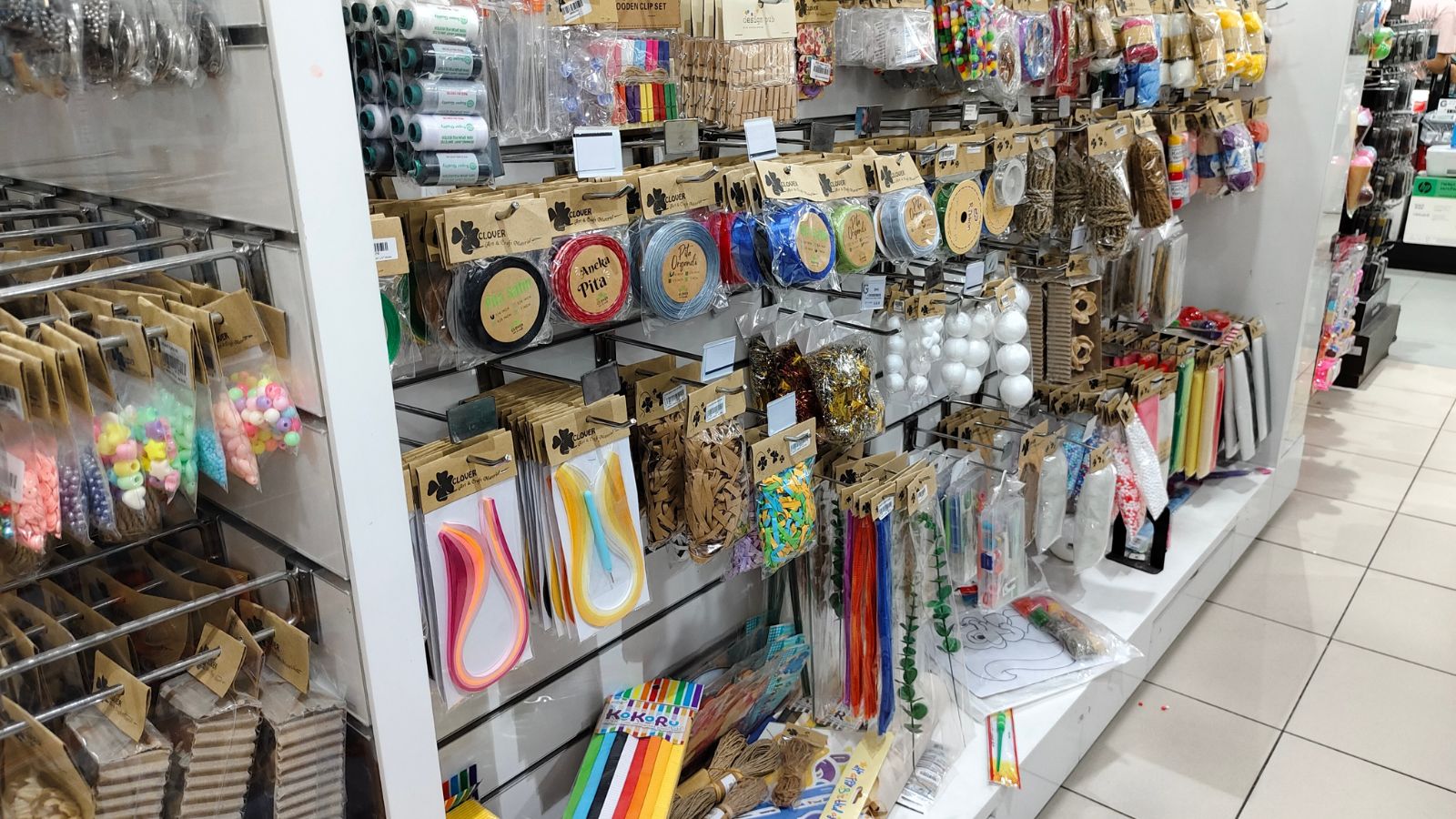
School-supply kits solve a real problem: they gather a grade-specific list into one package and may deliver it directly to the classroom. For busy families, that convenience can be worth paying for. However, the description “school-approved” or “complete kit” does not establish that the package is the cheapest way to obtain the items. Administrative charges, delivery costs, fundraising contributions, and branded products can increase the price.
One television station’s local comparison in 2014 found that a kit priced at $67.99 could be recreated for $20.93, although that single test should not be treated as representative of every school, seller, or year. More recent reporting shows that kits remain popular alongside online school-list tools, while some parents continue to shop individually for savings. The practical test is straightforward: compare the kit’s brands, counts, sizes, and delivery fee with the exact list at two or three stores. A kit may be an excellent convenience purchase, but the convenience premium should be visible rather than mistaken for a product discount.
Cheap Printers With Expensive Ink

A heavily discounted printer can become one of the most expensive purchases on the school list. Entry-level inkjets are often affordable because the continuing revenue comes from replacement cartridges. Consumer Reports has estimated that some low-priced inkjets can require $70 or more in ink each year, while certain higher-priced tank printers may use only about $5 annually. The cheapest machine at checkout may therefore have the highest multi-year cost.
Families can estimate the real expense by adding the printer price, replacement ink, paper, and expected page volume over two or three years. Cartridge capacity, cost per page, automatic duplexing, and whether colour cartridges are consumed during black-and-white printing can matter more than a temporary markdown. A printer should also match actual school practices; many assignments are now submitted digitally, while other classrooms still require frequent colour pages. Paying $50 more upfront can be economical when it sharply reduces recurring ink costs, but an expensive tank model may be unnecessary for a household that prints only a few pages each month.
Clearance Laptops Near the End of Support

Clearance electronics may be discounted because a new generation has arrived, but age can affect more than appearance or speed. Microsoft ended standard support for Windows 10 on October 14, 2025, meaning ordinary Windows 10 computers no longer receive free security updates or technical support. A clearance computer that cannot properly upgrade to a supported operating system may therefore carry a short practical life despite its low purchase price.
Chromebooks create a similar issue through device-specific update schedules. Google states that ChromeOS devices generally receive 10 years of automatic updates from the platform’s release, not necessarily from the date a particular unit is purchased. An older model sold as “new” could already be several years into that period. Before buying, families should verify the exact model, update-expiration date, processor, memory, storage, battery expectations, ports, and school software requirements. A discounted laptop is a real deal when its remaining supported life matches the student’s needs; a steep markdown cannot compensate for imminent incompatibility or replacement.
Refurbished and Open-Box Electronics

Used, refurbished, and open-box products can deliver excellent value, and consumer agencies routinely recommend considering them. The important question is what the label means in a particular store. “Open box” may describe an unused return with damaged packaging, a display model handled for months, or a device missing accessories. “Refurbished” may involve extensive testing and component replacement, or little more than cleaning and resetting.
The warranty and return policy provide clues about the level of confidence behind the product. Buyers should check battery health, cosmetic grading, included chargers, serial numbers, activation locks, operating-system eligibility, and whether repairs used original or compatible components. Marketplace purchases require extra care because the platform, individual seller, and manufacturer may have different responsibilities when something goes wrong. The price difference should be large enough to compensate for any shorter warranty or uncertain history. A professionally refurbished tablet with documented testing can outperform a cheap new model, while a lightly discounted open-box device sold as final sale may transfer too much risk to the family.
Extended Warranties Added at Checkout

Extended warranties are often presented after a family has already decided to buy a laptop, tablet, calculator, or pair of headphones. At that stage, declining coverage can feel reckless. Yet the extra plan may overlap with the manufacturer’s warranty, statutory consumer rights, credit-card benefits, or protection already included through a school technology program.
The Federal Trade Commission advises shoppers to compare the service contract with the warranty that comes with the product and to examine deductibles, shipping charges, reimbursement limits, exclusions, and the claims process. A two-year plan costing $45 on a $200 tablet adds more than 20% to the purchase price before any deductible is considered. Accidental damage may be excluded even when it is the family’s main concern, while ordinary defects may already be covered. The better comparison is not simply “protected versus unprotected,” but the plan’s cost against the likely repair bill, product reliability, replacement price, and ability to set aside money for an emergency.
Buy Now, Pay Later Promotions

Splitting a $300 purchase into four payments of $75 can make the item feel less expensive, even though the price has not changed. Buy now, pay later is a form of credit, not a discount. It can be useful for managing timing, but missed payments may trigger fees, frozen accounts, collection activity, or credit-reporting consequences, depending on the provider and agreement.
The risk increases when several school purchases are divided at once. A laptop, shoes, uniforms, and a backpack may create four separate payment schedules that overlap with rent, utilities, and ordinary credit-card bills. CFPB research found that more than one-fifth of consumers with a credit record used BNPL in 2022, and more than three-fifths of BNPL borrowers held multiple simultaneous loans at some point that year. Before accepting the offer, the full price should be compared with competing retailers, and every instalment should fit the existing budget. A payment plan can improve cash flow, but it cannot turn an overpriced item into a bargain.
Clothing Multipacks That Do Not Survive the Term

Five shirts for one low price may appear more economical than buying garments individually. The calculation changes when the sizing is inconsistent, the fabric loses shape, seams fail, or only two colours are regularly worn. Multipacks can also be difficult to return once one item has been washed or the packaging has been opened. For fast-growing children, buying an entire term’s wardrobe in one size may create another source of waste.
Clothing is already a major back-to-school category. Deloitte’s 2026 survey found that parents planned to spend 22% more on clothing and accessories, while PwC estimated average household clothing-and-shoe spending at $278. Cost per wear is therefore more revealing than the number of garments received. The broader waste picture is significant as well: the U.S. Environmental Protection Agency estimated that 13 million tons of clothing and footwear were generated in 2018 and only 13% was recycled. A smaller set of durable, comfortable pieces may offer better value than a discounted pack that quickly becomes unusable.
Buying Everything During the First Big Sale
The first major seasonal promotion creates understandable urgency. Popular colours, sizes, and technology models can sell out, and early shopping spreads the workload. Still, purchasing every item before teachers finalize requirements can lead to duplicate supplies, unsuitable notebooks, unnecessary electronics, or clothes bought too far ahead of a growth spurt.
Current shopping behaviour reflects this tension. The National Retail Federation reported that 54% of surveyed 2026 shoppers used major June sales for school-related purchases. At the same time, 46% of those who had not completed at least half their shopping said they were waiting for better deals, and 47% planned to buy only start-of-year essentials before replenishing later. The most economical strategy may therefore combine early and delayed purchases. High-demand shoes, uniforms, and verified devices can be secured early, while ordinary paper goods, classroom extras, and uncertain items can wait until lists are confirmed. A sale is most useful when it matches the family’s timing—not when its countdown clock dictates it.
19 Things Canadians Don’t Realize the CRA Can See About Their Online Income

Earning money online feels simple and informal for many Canadians. Freelancing, selling products, and digital services often start as side projects. The problem appears at tax time. Many people underestimate how much information the CRA can access. Online platforms, banks, and payment processors create detailed records automatically. These records do not disappear once money hits an account. Small gaps in reporting add up quickly.
Here are 19 things Canadians don’t realize the CRA can see about their online income.
This Options Discord Chat is The Real Deal
While the internet is scoured with trading chat rooms, many of which even charge upwards of thousands of dollars to join, this smaller options trading discord chatroom is the real deal and actually providing valuable trade setups, education, and community without the noise and spam of the larger more expensive rooms. With a incredibly low-cost monthly fee, Options Trading Club (click here to see their reviews) requires an application to join ensuring that every member is dedicated and serious about taking their trading to the next level. If you are looking for a change in your trading strategies, then click here to apply for a membership.