35,000+ smart investors are already getting financial news, market signals, and macro shifts in the economy that could impact their money next with our FREE weekly newsletter. Get ahead of what the crowd finds out too late. Click Here to Subscribe for FREE.
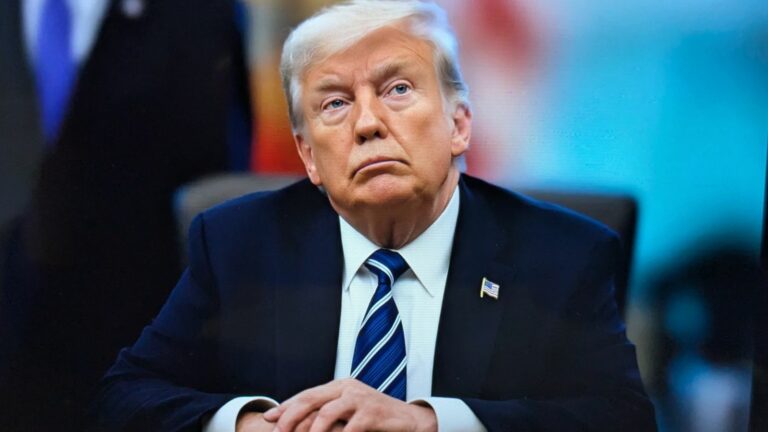
Donald Trump has introduced a striking new possibility into North America’s increasingly complicated auto fight: Chinese companies building vehicles on American soil. The U.S. president said he would be comfortable with Chinese automakers opening plants in the United States if they employed American workers, even as Washington continues to maintain formidable barriers against Chinese vehicles and technology.
For Canada, the timing is particularly important. Ottawa has already reopened limited access to Chinese-made EVs and is explicitly seeking Chinese joint-venture investment as part of a broader effort to make electric vehicles more affordable and diversify an auto sector overwhelmingly tied to the United States. If Washington eventually turns Trump’s invitation into policy, Canada could find itself competing directly with the much larger U.S. market for the same Chinese factories, technology and investment.
Trump’s Comment Changes the Signal, Not Yet the Rules
Trump Opens Door to Chinese Auto Plants in U.S., Raising the Stakes for Canada’s Chinese-EV Strategy
- Trump’s Comment Changes the Signal, Not Yet the Rules
- Chinese Automakers Still Face a Regulatory Wall in America
- Washington Is Already Fighting Over Where to Draw the China Line
- Canada Has Already Moved Further Toward Managed Chinese EV Access
- Affordability Is a Central Part of Ottawa’s Calculation
- That Is Why Canada Wants Chinese Factories, Not Just Chinese Cars
- Canada Cannot Ignore Its Extraordinary Dependence on the U.S. Auto Market
- China’s EV Scale Makes the Competition Impossible to Dismiss
- Technology and Security May Decide Which Investments Are Politically Viable
- The Real Test Will Be Whether Trump Turns an Invitation Into Policy
Trump’s statement was unusually clear. In a September 11 Fox News interview, he said he would be comfortable with China opening an automobile plant in the United States, emphasizing that the important condition was employing Americans. He pointed to Japanese manufacturers as an example of foreign companies that built factories in the country and created local jobs. Trump simultaneously drew a harder line against Chinese automakers manufacturing vehicles in Mexico and shipping them north into the U.S.
That distinction matters. Trump is effectively separating Chinese ownership from Chinese imports: a car company headquartered in China may be politically acceptable to him if its factory, workers and economic activity are located inside the United States. That does not amount to regulatory approval for BYD, Geely or another Chinese manufacturer to start selling American-made vehicles tomorrow. Still, presidential support can influence investment negotiations and future regulatory choices. For Canada, it introduces a competitor that can offer Chinese automakers access to a market roughly ten times larger than Canada’s.
Chinese Automakers Still Face a Regulatory Wall in America
Despite Trump’s openness, U.S. policy remains highly restrictive. The Commerce Department’s connected-vehicle rule prohibits manufacturers with sufficient ties to China or Russia from selling certain new connected passenger vehicles in the United States beginning with model year 2027—even when those vehicles are manufactured inside the country. Restrictions covering Chinese-linked connectivity and automated-driving software also begin with the 2027 model year, while hardware restrictions arrive later.
Chinese electric vehicles also entered this period carrying extremely high trade barriers. Washington raised the Section 301 tariff on Chinese EVs to 100% in 2024, part of a broader attempt to prevent heavily subsidized Chinese manufacturers from rapidly taking market share. The combination means Trump’s invitation cannot function simply as a factory-site decision. His administration would have to determine how Chinese-owned plants could operate within existing national-security rules, whether exemptions or regulatory changes are appropriate, and how tariffs should apply to components. The political door has opened more quickly than the legal one.
Washington Is Already Fighting Over Where to Draw the China Line
Trump’s comments arrive during an increasingly visible argument inside Washington over whether the United States should merely block Chinese competition or selectively absorb Chinese technology and investment. Only days before his remarks, Transportation Secretary Sean Duffy criticized Ford over relationships involving Chinese battery giant CATL and automakers Geely and BYD. Duffy urged Ford to reduce those ties, arguing they create strategic dependencies and national-security concerns.
The contradiction has become difficult for automakers to ignore. Ford is using licensed CATL technology at its Michigan battery operation while insisting that the plant is American-owned, American-controlled and staffed by an American workforce. At the same time, U.S. lawmakers and major automakers have pushed for tighter restrictions on Chinese vehicle companies entering the market. Trump’s position adds another philosophy: let foreign competitors invest locally if Americans capture the jobs. The unresolved question is whether Chinese capital can be welcomed while Chinese control, software and supply-chain dependencies remain restricted. Canada now faces a similar balancing problem.
Canada Has Already Moved Further Toward Managed Chinese EV Access
Canada entered 2026 with a substantially different approach. Ottawa replaced the 100% surtax that had applied to Chinese EVs with a controlled import quota negotiated as part of a broader Canada-China economic arrangement. The first-year quota allows as many as 49,000 qualifying Chinese-origin EVs to enter Canada at the normal 6.1% most-favoured-nation tariff, provided importers obtain the required permits.
The system is deliberately managed rather than fully open. Canada initially divided the first quota year into two six-month periods, with the second beginning September 1. Global Affairs Canada says unused volumes from the first period carry forward, while permits continue to be administered on a first-come, first-served basis. Government data updated September 11 showed 15,763 vehicles had used the 49,000-unit annual quota, leaving 33,237 available. That makes Canada one of the most significant potential North American entry points for Chinese-made EVs—but still within a framework designed to prevent an unlimited surge of imports.
Affordability Is a Central Part of Ottawa’s Calculation
Canada’s Chinese-EV arrangement is not solely about trade diplomacy. It also addresses an increasingly difficult consumer-market problem. Statistics Canada reported that zero-emission vehicle registrations fell 34.7% in 2025 and accounted for 9.5% of new registrations, down from 14.6% in 2024. Battery-electric registrations alone dropped sharply as earlier incentive programs were disrupted and many households continued to confront high purchase prices.
Ottawa’s Chinese quota is structured to bring more affordable vehicles into the market over time. Beginning in the second year, part of the quota is reserved for vehicles priced at $35,000 or less on a free-on-board basis, with that share scheduled to climb to 50% by year five. At the same time, Canada’s new five-year EV Affordability Program offers incentives of up to $5,000 under separate eligibility rules. The broader objective is clear: Ottawa wants more EV price competition without completely surrendering domestic industrial ambitions. Lower-cost Chinese models could help consumer adoption, but imports alone would do little for Canadian factory employment.
That Is Why Canada Wants Chinese Factories, Not Just Chinese Cars
The Canadian government has explicitly said it hopes the new relationship will produce Chinese joint-venture investment with trusted partners. Prime Minister Mark Carney argued when the arrangement was announced that accessing innovative partners and supply chains could strengthen Canada’s own EV sector. The government’s February auto strategy subsequently identified Chinese partnerships as a way to diversify trade, generate investment and develop next-generation vehicle manufacturing in Canada.
Trump’s statement potentially turns that ambition into an investment contest. Chinese manufacturers deciding where to place a North American factory would compare labour costs, incentives, energy, supply chains, regulation, market access and political risk. Canada can offer established assembly expertise, battery investments, critical minerals and relatively clean electricity in major manufacturing provinces. The United States can offer a vastly larger domestic market and, potentially, a president willing to bless Chinese-owned factories if they create American jobs. Ottawa may therefore need stronger local-production conditions and incentives if it wants Chinese investment to follow Chinese vehicle imports into Canada.
Canada Cannot Ignore Its Extraordinary Dependence on the U.S. Auto Market
Any Canadian strategy involving Chinese automakers runs into a basic economic reality: the Canadian and U.S. auto industries remain deeply integrated. The federal government says more than 90% of Canadian-made vehicles and roughly 60% of Canadian-made auto parts are exported to the United States. Statistics Canada found that U.S. demand accounted for 76.4% of Canadian automobile and light-duty vehicle manufacturing output and payroll jobs in 2024, representing roughly 27,000 jobs.
That makes Canada’s position fundamentally different from a country building Chinese-financed factories mainly for its own domestic market. A Canadian plant is most economically attractive when vehicles can move throughout North America. But Washington’s restrictions on Chinese-controlled connected vehicles mean that a Chinese-backed Canadian factory could not simply assume seamless U.S. access. Ottawa therefore has to pursue two goals that can pull in opposite directions: reducing excessive dependence on the American market while protecting the integrated supply chains that support Canadian manufacturing. Trump’s willingness to host Chinese factories inside America makes that balancing act even more delicate.
China’s EV Scale Makes the Competition Impossible to Dismiss
The fight matters because China is no longer a peripheral player in electric vehicles. The International Energy Agency estimates that China produced nearly three-quarters of the world’s electric cars in 2025. Chinese factories produced roughly 16 million electric cars that year, while Chinese EV exports doubled to more than 2.5 million units. Intense domestic competition and huge manufacturing capacity are pushing companies increasingly aggressively into overseas markets.
That export pressure strengthened further in 2026. According to the IEA, Chinese electric-car exports increased by more than 120% year over year during the first half of 2026, while total Chinese vehicle exports rose about 65%. Chinese manufacturers are therefore looking for markets, factories and partnerships at precisely the moment North American governments are reconsidering industrial policy. Canada’s attraction is access to resources, engineering talent and an established automotive cluster. America’s attraction is scale. If both countries begin courting Chinese investment under different restrictions, manufacturers could gain significant leverage in deciding which governments receive factories and which remain primarily import markets.
Technology and Security May Decide Which Investments Are Politically Viable
Price and employment are only part of the debate. Modern EVs contain cellular connections, cameras, navigation systems, software platforms and sophisticated driver-assistance technology. U.S. regulators have argued that foreign-adversary access to those systems could expose personal information or allow remote interference. That security concern is the foundation of the Commerce Department restrictions scheduled to affect Chinese-linked connected vehicles beginning with the 2027 model year.
For Canada, Chinese investment therefore creates policy questions extending far beyond assembly jobs. Governments would have to consider where vehicle data are stored, who controls software updates, which connectivity hardware is used, how sensitive technology is governed and whether Canadian-made vehicles can satisfy future U.S. security requirements. Ottawa has described its preferred model as Chinese investment with “trusted partners,” language that points toward controlled partnerships rather than unrestricted foreign ownership. If Washington eventually permits some Chinese manufacturing under strict American control, that model could also become the benchmark Canada is forced to compete against.
The Real Test Will Be Whether Trump Turns an Invitation Into Policy
Trump’s remark is significant precisely because it challenges the assumption that the United States intends to exclude Chinese automakers under all circumstances. But the decisive developments will come next. U.S. regulators would need to clarify whether Chinese-controlled manufacturers can realistically operate under the connected-vehicle rule, whether specific authorizations could be used, and whether Congress pursues legislation making existing restrictions even tougher. Major American automakers are already lobbying for strong barriers.
Canada, meanwhile, has moved beyond hypothetical discussions. Its Chinese EV quota is active, imports are occurring, and Ottawa’s automotive strategy openly seeks Chinese joint-venture investment. That gives Canada a head start in defining a workable commercial relationship, but not necessarily in securing factories. Trump has now signalled that Chinese manufacturers could potentially receive an American alternative: build in the United States, employ Americans and gain political acceptance that imported Chinese vehicles do not have. For Canada, the challenge is no longer simply deciding how many Chinese EVs to admit. It is ensuring that opening the market ultimately brings production, technology and durable Canadian jobs with it.
This Options Discord Chat is The Real Deal
While the internet is scoured with trading chat rooms, many of which even charge upwards of thousands of dollars to join, this smaller options trading discord chatroom is the real deal and actually providing valuable trade setups, education, and community without the noise and spam of the larger more expensive rooms. With a incredibly low-cost monthly fee, Options Trading Club (click here to see their reviews) requires an application to join ensuring that every member is dedicated and serious about taking their trading to the next level. If you are looking for a change in your trading strategies, then click here to apply for a membership.