35,000+ smart investors are already getting financial news, market signals, and macro shifts in the economy that could impact their money next with our FREE weekly newsletter. Get ahead of what the crowd finds out too late. Click Here to Subscribe for FREE.
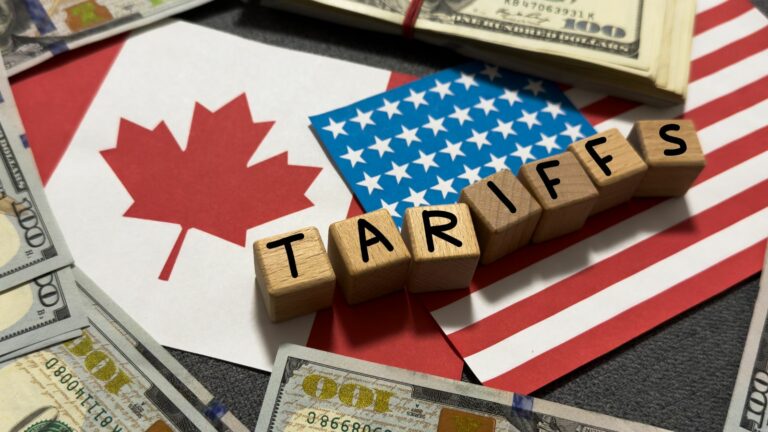
Canada and the United States are racing toward an August 19 deadline that could reshape more than the cost of goods crossing the border. President Donald Trump’s planned 50% tariffs would hit nearly US$20 billion in Canadian imports, including products that would normally qualify for tariff-free treatment under CUSMA. Behind closed doors, negotiators have been meeting frequently and officials on both sides still appear interested in reaching an agreement. Yet people familiar with the negotiations have warned that allowing the tariffs to take effect could sour the relationship and stall the discussions. That makes the deadline a test not only of whether Ottawa and Washington can narrow their differences, but of whether the negotiating process itself can survive another major escalation.
The Real Risk Is a Breakdown in the Negotiating Rhythm
Canada-U.S. Trade Talks Face a Freeze If Trump’s 50% Tariffs Hit, Negotiation Sources Warn
- The Real Risk Is a Breakdown in the Negotiating Rhythm
- August 19 Is Different From an Ordinary Tariff Deadline
- Both Governments Still Have Reasons to Avoid the Collision
- Canada Wants More Than the New Tariffs Taken Off the Table
- Autos, Dairy and American Alcohol Sit at the Heart of the Bargaining
- Small Exporters Could Feel the Shock Almost Immediately
- Canada Is Already Entering the Fight From a Weaker Growth Position
- Domestic Politics Could Make Compromise Harder After Tariffs Arrive
- The Tariff Fight Is Now Entangled With CUSMA’s Uncertain Future
- A Freeze Would Mark a New Phase, Not the End of Canada-U.S. Trade
For now, Canada-U.S. negotiations remain active. Canadian Trade Minister Dominic LeBlanc has repeatedly travelled to Washington to meet U.S. Trade Representative Jamieson Greer, while chief Canadian negotiator Janice Charette and officials from foreign affairs, finance and agriculture have remained engaged with their American counterparts. A Canadian government source familiar with the talks told Reuters that negotiations appeared to be progressing and that Washington also wanted an agreement before August 19. That is considerably more encouraging than a formal breakdown in relations.
The warning comes from what could happen next. Reuters reported that the bilateral relationship could sour and negotiations could stall if Washington allows the new tariffs to take effect. Once companies begin paying 50% duties, political pressure on Ottawa to retaliate would intensify and compromise could become harder to defend. A missed deadline would therefore change the environment surrounding the talks, even if negotiators technically remained in contact.
August 19 Is Different From an Ordinary Tariff Deadline
The scale of the threatened action helps explain the urgency. The U.S. Trade Representative estimates that the new tariffs would apply to nearly US$20 billion in Canadian imports, equal to roughly 5.2% of the US$383 billion in goods the United States imported from Canada in 2025. The affected categories range widely, with U.S. documents covering products such as wine, dairy goods, cement, clothing, furniture and hockey equipment.
More consequentially, covered Canadian products would not escape the tariffs simply because they satisfy CUSMA rules of origin. The White House says the Section 338 duties apply to listed goods regardless of whether they qualify under the North American trade agreement. Energy, potash, products already subject to certain Section 232 restrictions and some other categories are excluded. That departure from the broad CUSMA shelter makes August 19 unusually significant: businesses that structured supply chains around preferential continental trade rules could suddenly face a 50% border charge anyway.
Both Governments Still Have Reasons to Avoid the Collision
Despite the tougher rhetoric surrounding the dispute, there are signs that neither capital is treating failure as inevitable. A Canadian government source told Reuters that Washington shares Ottawa’s objective of securing an agreement before the deadline. LeBlanc met Greer twice during the week of August 10 and four times within roughly three weeks, an unusually concentrated schedule reflecting the seriousness of the negotiations.
Canadian and American officials have also been working on proposals that could eventually be put before Trump and Prime Minister Mark Carney. That matters because the biggest political decisions are unlikely to be made by technical negotiators alone. Trade officials can narrow differences over tariff rates, quotas and market access, but leaders ultimately have to decide whether the package is politically acceptable. The frantic pace therefore reflects both opportunity and danger: enough negotiating activity exists to produce a deal, but relatively little time remains for each side to decide how much it is prepared to concede.
Canada Wants More Than the New Tariffs Taken Off the Table
Ottawa is not negotiating simply to preserve the status quo on August 19. Canada has also been pressing Washington for relief from existing U.S. tariffs affecting economically important industries, particularly steel and aluminum. Those sectoral restrictions have already forced Canadian producers to contend with higher barriers even while much of the wider bilateral trading relationship continued operating under CUSMA preferences.
That helps explain why a limited American offer may not be enough. Reuters reported on August 12, citing CBC sources, that Canadian officials were unhappy with the latest U.S. proposal because it would lower some tariffs but not as much as Ottawa wanted. This creates a difficult calculation. Accepting a narrow package could prevent the new 50% duties while leaving major existing barriers intact. Rejecting it risks a much broader escalation. Canadian negotiators therefore have to judge not simply whether Washington is offering tariff relief, but whether that relief is substantial enough to justify the concessions the United States is demanding in return.
Autos, Dairy and American Alcohol Sit at the Heart of the Bargaining
The dispute has become concentrated around several politically sensitive sectors. According to Reuters, Canada has discussed removing retaliatory tariffs on U.S. automobiles, reaching an understanding over Washington’s interpretation of Canadian dairy tariff-rate quota allocation and encouraging the return of American alcoholic beverages to provincial retail shelves. In exchange, Canada has sought reductions in existing U.S. tariffs, including those hitting Canadian steel and aluminum.
Each issue carries complications beyond ordinary tariff mathematics. Canadian dairy policy is tied to the long-standing supply-management system, making concessions politically sensitive. Provincial governments, rather than Ottawa alone, control much of Canada’s alcohol distribution system, meaning the federal government cannot simply order every liquor board to reverse its purchasing decisions. Automobiles are even more complex because plants and parts suppliers operate through highly integrated North American supply chains. A package that looks straightforward in Washington can therefore require Ottawa to coordinate with provinces, agricultural interests and manufacturers before it becomes politically or practically workable.
Small Exporters Could Feel the Shock Almost Immediately
Large industrial companies may dominate discussion of Canada-U.S. trade, but smaller exporters could experience some of the fastest disruption. An August survey by the Canadian Federation of Independent Business found that 40% of surveyed Canadian small exporters to the United States sell products that would be affected by the proposed 50% tariffs. Among those businesses, 77% expected revenues to decline if the duties took effect, while 35% anticipated losing at least half of their revenue.
Those numbers illustrate why tariff deadlines affect decisions well before customs officers begin collecting the duties. A small manufacturer shipping machinery, a food producer selling into U.S. stores or a Canadian creative business supplying American customers may not have enough margin to absorb a 50% tax. Raising prices risks losing customers, while absorbing the tariff can erase profitability. Unlike multinational companies, smaller firms often lack alternative factories, warehouses or export markets. The uncertainty surrounding August 19 can therefore freeze hiring, investment and new orders even before tariffs formally begin.
Canada Is Already Entering the Fight From a Weaker Growth Position
Canada’s exposure to the United States remains substantial even after businesses increased efforts to diversify their markets. Statistics Canada reported that 71.7% of Canadian merchandise exports went to the United States in 2025, down from 75.9% in 2024. That decline shows meaningful diversification, but it also underscores how difficult replacing American demand would be quickly if another large section of bilateral trade suddenly became more expensive.
The broader economy also has limited room for an unnecessary shock. The Bank of Canada said in its July Monetary Policy Report that economic growth had been weak and uneven, affected partly by U.S. tariffs and continuing trade-policy uncertainty. Canadian GDP in the first quarter of 2026 was roughly unchanged from a year earlier, while average growth during the first half was estimated at just above 1%. Another escalation would not automatically produce a recession, but it could deepen the caution already affecting business investment, export planning and hiring.
Domestic Politics Could Make Compromise Harder After Tariffs Arrive
Canadian negotiators are also operating under considerable public pressure. Angus Reid Institute polling conducted in late July found that 62% of Canadians wanted Ottawa to respond to the latest American tariff threat with counter-tariffs, including 34% who favoured matching the United States dollar for dollar. Only a smaller group preferred relying exclusively on negotiation or concessions. The same research found that 75% did not trust the Trump administration to honour the terms of any eventual agreement.
Those attitudes matter once tariffs stop being a threat and become an actual cost. A government can argue before August 19 that concessions are worthwhile if they prevent new duties. After Canadian exporters begin paying 50%, however, calls for retaliation may become politically harder to resist. Carney has already said Canada is prepared to defend its interests and has kept retaliatory options available. That means an escalation could narrow the political room both governments need to produce a compromise, reinforcing the risk of stalled negotiations.
The Tariff Fight Is Now Entangled With CUSMA’s Uncertain Future
The immediate dispute is occurring against an even larger trade negotiation. On July 1, the United States declined to renew CUSMA in its current form for another 16-year term. The agreement remains in force, but Washington has made clear that it wants changes before providing longer-term certainty. The United States has meanwhile pursued bilateral discussions with Mexico, including negotiations involving rules of origin and industrial policy.
Automobiles are becoming an especially difficult issue. Reuters reported that the Trump administration has pushed for vehicles to contain at least 50% U.S.-made content while also seeking tougher overall North American content requirements. Detroit automakers themselves have warned that some proposed changes could add billions of dollars in annual costs. For Canada, this creates two overlapping negotiations: the immediate effort to prevent August 19 tariffs and the longer struggle over the structure of continental trade. Failure in the first could poison the atmosphere surrounding the second.
A Freeze Would Mark a New Phase, Not the End of Canada-U.S. Trade
Even if the August 19 duties take effect, Canada and the United States would remain deeply interconnected economies. CUSMA would still exist, enormous volumes of goods would continue crossing the border, and companies on both sides would still depend on suppliers, customers and investments in the other country. A negotiation freeze would therefore be better understood as a deterioration in the political process rather than the disappearance of bilateral trade.
The immediate consequences could nevertheless be substantial. Negotiators could lose momentum, Ottawa could face greater pressure for countermeasures, businesses could accelerate diversification plans, and the fight could migrate into legal challenges and the broader CUSMA review. As of August 14, none of that is inevitable: negotiations remain active and sources say both governments want an agreement before the deadline. But that is precisely why August 19 matters. Once threatened tariffs turn into collected tariffs, compromise becomes more expensive politically and economically, making it considerably harder to recreate the negotiating environment that existed before the deadline.
This Options Discord Chat is The Real Deal
While the internet is scoured with trading chat rooms, many of which even charge upwards of thousands of dollars to join, this smaller options trading discord chatroom is the real deal and actually providing valuable trade setups, education, and community without the noise and spam of the larger more expensive rooms. With a incredibly low-cost monthly fee, Options Trading Club (click here to see their reviews) requires an application to join ensuring that every member is dedicated and serious about taking their trading to the next level. If you are looking for a change in your trading strategies, then click here to apply for a membership.