35,000+ smart investors are already getting financial news, market signals, and macro shifts in the economy that could impact their money next with our FREE weekly newsletter. Get ahead of what the crowd finds out too late. Click Here to Subscribe for FREE.
Canada has added five senior Iranian figures to its sanctions list as the crisis around the Strait of Hormuz continues to disrupt shipping, energy markets and diplomatic efforts. Foreign Affairs Minister Anita Anand announced the measures on August 14, saying the targeted individuals were involved in military, legal or communications activities linked to efforts to obstruct navigation through the waterway.
Ottawa’s move comes after months of threats, vessel attacks and sharply reduced commercial traffic in a passage that normally carries a major share of the world’s oil and liquefied natural gas. The sanctions are narrow in scope, but their message is broader: Canada is treating interference with maritime passage not simply as a regional dispute, but as a challenge to international law, global commerce and the security of crews whose ships have been caught inside the Persian Gulf.
Ottawa’s New List Reaches Across Iran’s Power Structure
Canada Sanctions Five Iranian Officials Over Efforts to Block Navigation Through Strait of Hormuz
- Ottawa’s New List Reaches Across Iran’s Power Structure
- One Target Shows How Allied Sanctions Are Converging
- The Human Cost Behind the Shipping Crisis
- Why Hormuz Still Moves Global Energy Markets
- What the Canadian Sanctions Actually Do
- A Distant Shipping Crisis Can Still Reach Canadian Wallets
- Canada Is Framing Navigation as an International-Law Issue
- The Sanctions Land as Diplomacy Stalls Again
Ottawa’s August 14 package adds Ali Abdollahi, Ebrahim Zolfaghari, Ebrahim Azizi, Shahram Irani and Hamid Hosseini to Canada’s Iran sanctions list. Global Affairs Canada identifies Abdollahi as commander of Khatam al-Anbiya Central Headquarters and a senior Islamic Revolutionary Guard Corps official; Zolfaghari as the headquarters’ spokesperson; Azizi as a parliamentarian who heads the National Security and Foreign Policy Committee; Irani as commander of Iran’s regular navy; and Hosseini as a representative of the country’s oil, gas and petrochemical exporters union.
The range of roles is significant. Ottawa is not focusing only on commanders physically associated with maritime operations. Its list reaches into military communications, parliamentary security policy and the commercial energy establishment. That framing reflects Canada’s allegation that the effort to restrict passage through Hormuz involves more than ships and weapons. It also depends on political decisions, public messaging and systems that determine who may transit and under what conditions.
One Target Shows How Allied Sanctions Are Converging
One name on Canada’s list illustrates how Ottawa’s action fits a wider sanctions campaign. Hamid Hosseini had already been sanctioned by the European Union in June under a framework aimed specifically at threats to freedom of navigation in the Middle East. The EU said Hosseini promoted a policy requiring ships to submit information, undergo assessment and pay transit fees to Iranian authorities for safe passage through the Strait of Hormuz.
The European measures also targeted the Hormozgan Provincial Command of the IRGC Navy, which the EU said screens vessels and determines which ships can transit, sometimes after toll payments. Canada’s latest action does not simply duplicate that package, because its five-person list reaches additional military and political figures. Still, the overlap matters. It shows allied governments increasingly treating the control, screening and monetization of commercial passage as sanctionable conduct, rather than merely as a side effect of the broader conflict.
The Human Cost Behind the Shipping Crisis
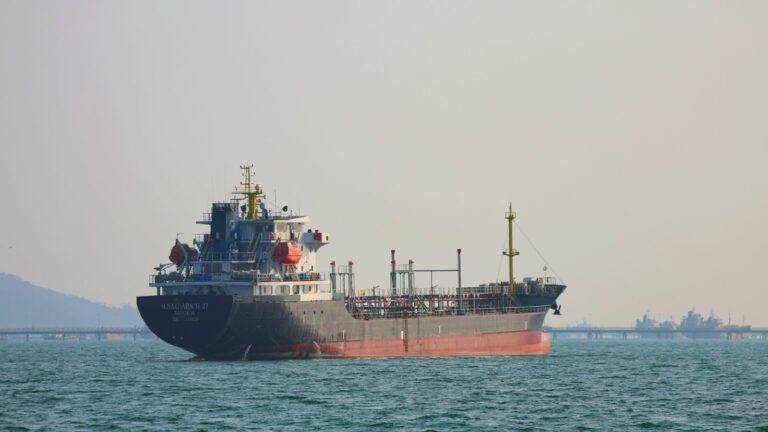
The sanctions arrive against a maritime crisis that has lasted for months. Canada says Iran announced the closure of the Strait of Hormuz after U.S. and Israeli attacks began on February 28, then warned that vessels could not pass without prior Iranian authorization. Global Affairs Canada says more than 1,500 vessels remain stranded in the Persian Gulf because operators fear military confrontation, while Iranian authorities have threatened, seized or targeted commercial ships in or near the waterway.
Behind those vessel counts are crews living with prolonged uncertainty. The International Maritime Organization says more than 20,000 seafarers in the region have been affected, including people stranded aboard ships unable to leave through Hormuz. An IMO evacuation framework moved 136 vessels and an estimated 2,900 seafarers between June 23 and June 26 before the plan was paused. The agency’s incident log also records deaths and injuries from multiple attacks since March 2026.
Why Hormuz Still Moves Global Energy Markets
The Strait of Hormuz matters far beyond the Gulf because there is no easy substitute for the energy volumes that normally move through it. The International Energy Agency says nearly 20 million barrels a day of crude oil and petroleum products crossed the strait in 2025, equal to roughly one-quarter of global seaborne oil trade. Around 80 per cent of those oil flows were destined for Asia, while Qatar and the United Arab Emirates sent LNG volumes through Hormuz representing almost one-fifth of global LNG trade.
The disruption in 2026 has been extraordinary. The U.S. Energy Information Administration estimates oil and petroleum-liquids traffic through Hormuz averaged only 4.9 million barrels a day in the second quarter, down from 21.6 million in the final quarter of 2025. The IEA’s August outlook says renewed hostilities and maritime disruption again cut Gulf exports, tightening inventories and keeping energy markets exposed to price swings.
What the Canadian Sanctions Actually Do
For the five newly listed individuals, the Canadian consequences are financial and legal. Under the Special Economic Measures (Iran) Regulations, people in Canada and Canadians abroad are prohibited from dealing in property owned, held or controlled by a listed person, facilitating transactions, providing financial services connected to that property, or making goods available to the sanctioned person. Global Affairs Canada says the five are also inadmissible to Canada under immigration law.
The latest designations bring Canada’s Iran-related total under these measures to 232 individuals and 260 entities. Ottawa has also listed the Islamic Revolutionary Guard Corps as a terrorist organization under the Criminal Code and maintains Iran’s designation as a foreign state supporter of terrorism. The new package sits inside a larger pressure architecture. Its practical effect depends on whether listed individuals have assets, financial relationships or exposure touching Canada or Canadian persons, but the restrictions apply wherever Canadians operate.
A Distant Shipping Crisis Can Still Reach Canadian Wallets
For Canadians, the Strait of Hormuz crisis is not an abstract shipping story. The Department of Finance has described Canada as insulated because it is a net energy exporter with limited trade exposure to the strait, yet it has also warned that higher oil prices raise household and business costs. In early April, gasoline and diesel prices had risen sharply, while the government’s spring update linked the conflict to higher inflation and weaker global growth.
The Bank of Canada has made the point. It reported that headline inflation rose to 3.2 per cent in May as gasoline prices surged, while inflation excluding gasoline remained close to 2 per cent. The central bank estimated that higher gasoline prices added roughly 1.4 percentage points to inflation at their peak in the second quarter. That helps explain why Ottawa frames freedom of navigation as an economic-security issue as well as a foreign-policy concern.
Canada’s argument is rooted in a wider international position that ships must be able to use straits serving international navigation. The United Nations Convention on the Law of the Sea establishes a right of transit passage through such straits, while UN Security Council Resolution 2817, adopted in March 2026, condemned Iranian attacks on Gulf states and reinforced demands around maritime security. G7 governments have repeatedly called for safe, toll-free navigation through Hormuz.
That principle has become a point of diplomacy. In April, a France- and United Kingdom-led conference brought together 51 countries to support reopening the strait and protecting commercial shipping. At the June G7 summit, leaders again backed unrestricted passage without tolls and supported a defensive multinational initiative intended to reassure merchant vessels and help with mine clearance. Canada’s sanctions fit that pattern: economic pressure is being used alongside diplomatic and maritime efforts rather than as a standalone response.
The Sanctions Land as Diplomacy Stalls Again
The timing of Canada’s sanctions shows how fragile the situation remains. Reuters reported on August 14 that tanker traffic through Hormuz had slowed to a handful of ships as the United States and Iran traded competing claims of control. The United Arab Emirates accused Iran of attacking ADNOC-linked vessels in the strait, while Tehran continued to insist that reopening depended on concessions from Washington. Talks involving Oman have produced discussions over shipping routes, but not a return to normal traffic.
That leaves sanctions as one part of a contest over leverage. Canada says it remains ready to support efforts to stabilize the strait when conditions permit, while calling on Iran to de-escalate and respect navigation rights. The measures may not by themselves reopen a waterway shaped by military risk, insurance decisions and diplomacy, but they raise the personal cost for officials Ottawa says are helping sustain restrictions on commercial passage.
This Options Discord Chat is The Real Deal
While the internet is scoured with trading chat rooms, many of which even charge upwards of thousands of dollars to join, this smaller options trading discord chatroom is the real deal and actually providing valuable trade setups, education, and community without the noise and spam of the larger more expensive rooms. With a incredibly low-cost monthly fee, Options Trading Club (click here to see their reviews) requires an application to join ensuring that every member is dedicated and serious about taking their trading to the next level. If you are looking for a change in your trading strategies, then click here to apply for a membership.