
35,000+ smart investors are already getting financial news, market signals, and macro shifts in the economy that could impact their money next with our FREE weekly newsletter. Get ahead of what the crowd finds out too late. Click Here to Subscribe for FREE.
Loyalty points can look reassuringly permanent on a screen, yet the value behind those balances is far less fixed. Canadian programs can become less rewarding without cancelling points or announcing an obvious across-the-board cut. Inflation, changing redemption tables, higher spending hurdles, partner switches, exclusions and increasingly complicated earning rules can all weaken what a member receives from the same shopping habits. Sometimes the change is significant; other times it amounts to a few dollars quietly disappearing from ordinary transactions. Understanding the difference requires looking beyond the size of a points balance and examining what those points actually buy. These 16 ways Canadian loyalty programs can quietly lose value show why yesterday’s rewarding routine may not produce the same return today.
Fixed-Dollar Points Lose Purchasing Power to Inflation
16 Ways Canadian Loyalty Programs Quietly Get Less Valuable
- Fixed-Dollar Points Lose Purchasing Power to Inflation
- Reward Charts Can Be Repriced Upward
- Dynamic Pricing Makes Peak Dates More Expensive in Points
- Earning Formulas Can Change Even When the Program Survives
- Minimum Redemptions Leave Small Balances Stranded
- More Value Is Moving Behind Apps and Personalized Offers
- Bonus Offers Can Demand Bigger Baskets
- Big Multipliers Can Be Built on Tiny Base Rates
- Taxes and Product Exclusions Quietly Reduce Earnings
- Merchant Coding Can Decide Whether a Purchase Earns the Bonus
- Accelerated Earning Can Stop After an Annual Cap
- Spending Points Can Sometimes Stop New Points From Being Earned
- Partner Changes Can Make a Program Worse for One Household
- “Free” Reward Travel Can Still Carry Real Costs
- Inactivity Rules Can Still Put Stored Points at Risk
- Elite Benefits Are Becoming More Closely Tied to Spending
- 16 Costco Canada Habits That Could Be Costing Shoppers More Than They Save

One of the quietest devaluations requires no rule change at all. PC Optimum, for example, continues to advertise a straightforward redemption value of 10,000 points for $10. That makes the program easy to understand, but a fixed dollar value does not automatically rise when groceries, household products and other everyday purchases become more expensive. Statistics Canada reported that the national Consumer Price Index was 2.8% higher in June 2026 than a year earlier. When prices rise while the redemption value remains fixed, the real purchasing power of a saved points balance declines.
Consider a household that has been sitting on 100,000 points. At the standard PC Optimum rate, the balance represents $100 regardless of whether it was accumulated last year or this year. If the products eventually purchased cost more, however, that $100 simply covers fewer of them. Nothing disappeared from the account, and the conversion rate was not technically reduced. Economically, though, the reward became less valuable. This is one reason hoarding fixed-value points for years can carry a hidden cost.
Reward Charts Can Be Repriced Upward

Travel programs have another lever: changing how many points a reward requires. Aeroplan provided a concrete Canadian example in 2026 when it updated portions of its Flight Reward Chart effective June 1. Air Canada described the revision as a mixture of increases and decreases designed to better reflect redemption costs. Some awards became cheaper, but numerous long-haul partner redemptions required substantially more points than before, meaning the impact depended heavily on where and how a member travelled.
For North America-to-Atlantic-zone trips between 4,001 and 6,000 miles, for example, the listed partner first-class amount increased from 100,000 to 120,000 points, while business class rose from 70,000 to 75,000. In another North America-to-Atlantic distance band, partner first class climbed from 140,000 to 165,000 points. A member who had carefully accumulated a balance for one of those rewards could therefore reach the original target and still discover that more points were suddenly required. The account balance did not fall; the destination effectively moved farther away.
Dynamic Pricing Makes Peak Dates More Expensive in Points
A traditional reward chart creates the comforting idea that a destination has a predictable price. Dynamic pricing weakens that certainty. Aeroplan states that the points price for Air Canada rewards is related to the cash price of the ticket and provides estimated ranges for planning purposes. During periods of high demand, Air Canada specifically warns that a reward may cost more points than the normal range. Popular dates can therefore consume a much larger share of a member’s balance.
That matters because loyalty rewards are often saved precisely for expensive trips: Christmas travel, March break, summer holidays or a last-minute family emergency. Those are also times when cash fares can be elevated. A balance that looks sufficient during a quiet February search may be nowhere near enough for the same route during a holiday weekend. Dynamic pricing does improve availability because Aeroplan allows members to redeem for any Air Canada seat that is available for cash purchase. The trade-off is that availability does not guarantee attractive value. Members gain access to more seats while surrendering some certainty about what those seats will cost.
Earning Formulas Can Change Even When the Program Survives

Devaluation is not limited to the redemption side. A program can also make the same activity produce a different number of points. Air Canada changed the way Aeroplan members earn points on eligible Air Canada flights departing from January 1, 2026. Instead of the previous system tied to distance and fare option, ordinary members now earn a base of one Aeroplan point for every eligible dollar spent on the base fare and carrier surcharges, excluding taxes, fees and third-party charges. Elite members receive additional multipliers.
The change does not hurt every traveller equally. Someone purchasing an expensive ticket may do well under a revenue-based formula. A traveller who regularly finds inexpensive fares for long journeys, however, can receive fewer points than might be expected from the distance flown. That illustrates why checking only whether a favourite program still exists can be misleading. The logo, membership number and points currency may remain unchanged while the behaviour rewarded most generously shifts underneath them. Loyalty increasingly rewards not merely frequency, but the particular kind of spending a program wants to encourage.
Minimum Redemptions Leave Small Balances Stranded
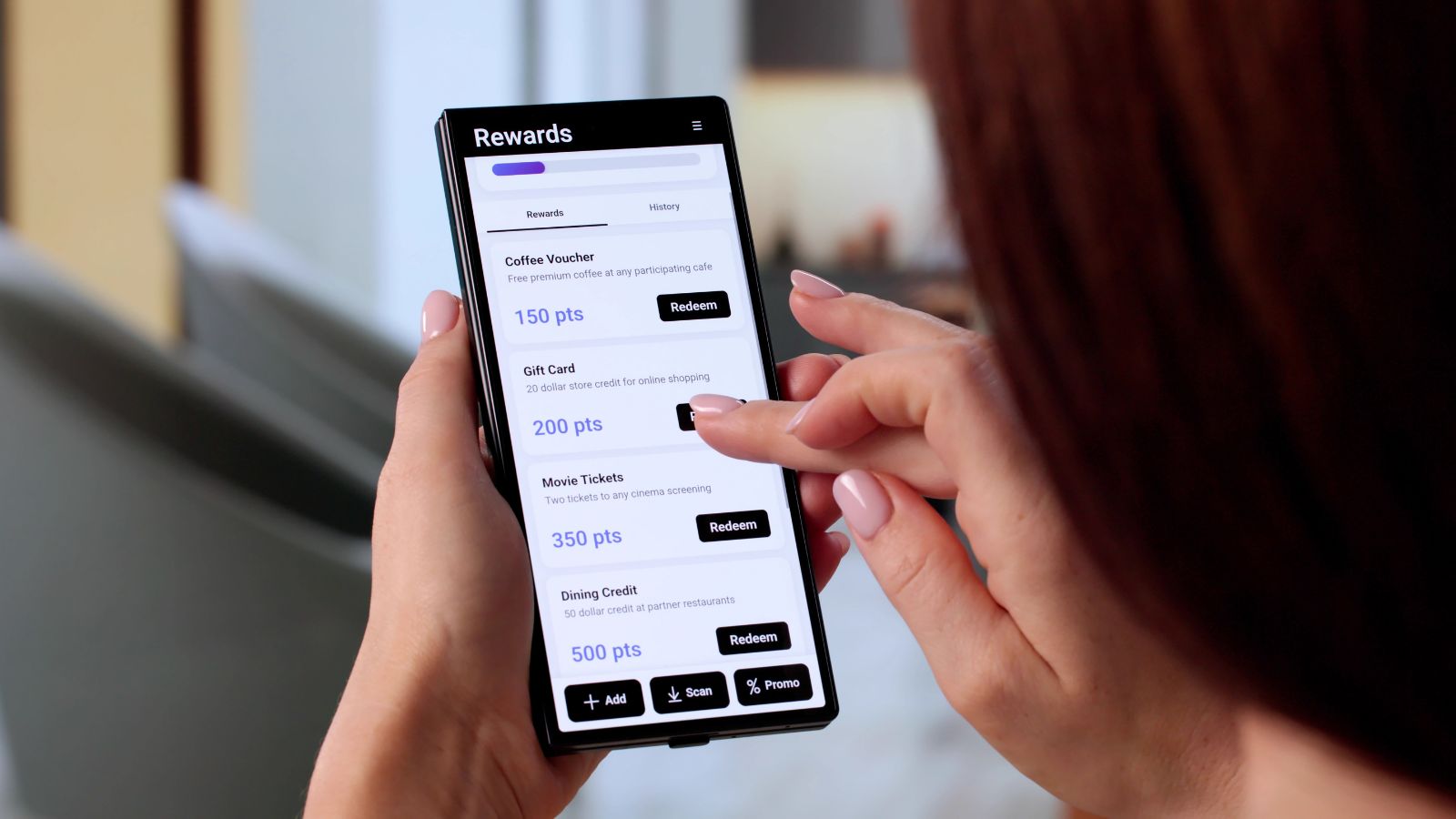
Points that technically have monetary value are not always as flexible as cash. PC Optimum generally requires members to redeem at least 10,000 points at a time, worth $10. Scene+ commonly uses 1,000-point, $10 redemption increments for grocery purchases. Neither rule is especially difficult for a frequent member, but minimum thresholds create an important distinction between a displayed balance and money that can actually be spent immediately.
Imagine a shopper with 9,600 PC Optimum points who stops visiting participating stores. The account may show value approaching $10, yet it cannot ordinarily be redeemed until the balance reaches the required threshold. Similar friction appears when programs require redemptions in fixed increments, leaving small remainders behind after a purchase. Across millions of members, those residual balances can be substantial even though each individual amount seems trivial. Cash can generally be spent down to the cent. Loyalty currencies often cannot. The greater the minimum redemption and the less frequently a household uses the program, the more likely some accumulated value remains inaccessible.
More Value Is Moving Behind Apps and Personalized Offers

The modern loyalty card is increasingly becoming a digital marketing platform. PC Optimum promotes new personalized offers through its app and tells members to open the app to load offers. The company also says app users earn an average of about $200 back in points per year. That figure does not prove the app itself causes higher earnings—digitally engaged customers may simply shop more—but it demonstrates how important offer engagement has become to the program’s value proposition.
The practical result is a widening gap between passive and active members. A shopper who scans the same loyalty card every week may earn considerably less than someone who checks personalized offers, notices a product-specific bonus and times purchases around promotions. What once felt like an automatic reward increasingly requires attention, data sharing, notifications and repeated interaction. The base program may remain unchanged, allowing the company to say points have not been reduced. Yet if an increasing share of attractive earning opportunities is concentrated in individually targeted offers, members who simply present a card at checkout can experience a quieter form of devaluation.
Bonus Offers Can Demand Bigger Baskets

A headline such as “10,000 bonus points” sounds generous until the minimum purchase requirement is considered. Canadian loyalty promotions frequently attach rewards to increasingly specific spending thresholds. PC Optimum promotions have used conditions such as spending $75 or more, while Triangle Rewards promotions have included examples requiring $150, $200 or more in qualifying pre-tax purchases. The bonus can be genuine, but the effective value depends on whether the required spending would have happened anyway.
This creates a psychological trap. A household planning to spend $58 may add products to reach a $75 threshold for a reward worth perhaps $10. If the extra items were unnecessary, the loyalty offer did not produce a true $10 saving. It encouraged additional consumption. Larger thresholds also make promotions less accessible to people who shop frequently in small baskets, live alone or divide purchases among several retailers. A program can therefore advertise larger-looking bonuses while making those bonuses harder to obtain naturally. The points total rises, but the amount of spending required to unlock it can rise faster.
Big Multipliers Can Be Built on Tiny Base Rates

Multipliers are among the most eye-catching loyalty promotions because “20X” looks dramatically better than “2%.” But the number is meaningless without the underlying base earn rate. Triangle Rewards provides a useful example. Canadian Tire states that its standard collection rate used in multiplier calculations is 0.4%. Under the company’s own example, a 20X offer on a $100 qualifying pre-tax purchase produces $8 in bonus CT Money. In other words, the impressive-looking multiplier does not mean a customer receives 20% back.
There is nothing inherently improper about multiplier marketing when the calculation is disclosed. The challenge is that consumers tend to compare large headline numbers across programs even when their underlying currencies and base rates are completely different. A 10X promotion in one program can be worth less than a 3X promotion somewhere else. As programs rely more heavily on bonus events, understanding the base earning rate becomes increasingly important. Otherwise, members may feel increasingly rewarded because promotional numbers are getting larger while the actual percentage returned on each dollar barely changes.
Taxes and Product Exclusions Quietly Reduce Earnings

Receipts contain plenty of spending that loyalty programs do not necessarily reward. Triangle Rewards says CT Money is collected on the pre-tax amount of qualifying purchases. PC Optimum and its promotions also list numerous exclusions depending on the transaction, including categories such as tobacco, lottery tickets, gift cards, certain prepaid products and provincially regulated goods. Those rules mean the amount charged to a credit card or appearing at the bottom of a receipt can be noticeably larger than the amount that actually generates rewards.
The distinction becomes especially visible on expensive transactions. A customer may think of a $500 checkout as a $500 loyalty purchase, but sales tax alone can remove a meaningful portion from the earning calculation where rewards apply only before tax. Excluded products reduce it further. None of this necessarily represents a newly introduced devaluation; exclusions have long existed in loyalty programs. But as shoppers increasingly calculate expected returns from multipliers and bonus events, overlooked exclusions make the practical rebate smaller than the headline offer suggests. The relevant number is the eligible subtotal, not necessarily the final bill.
Merchant Coding Can Decide Whether a Purchase Earns the Bonus

Credit-card-linked loyalty programs introduce another invisible layer: merchant category codes. Scotiabank’s Scene+ card terms explain that accelerated earn rates depend on how a merchant is classified by the payment network. A business that appears to a customer to be a grocery store, restaurant or entertainment venue does not automatically qualify for the corresponding bonus if its merchant coding falls into another category. Separate businesses operating inside a larger store can also be coded differently.
This matters because a member cannot determine merchant coding simply by looking at a storefront. Two purchases that seem almost identical may post with different reward rates. The disappointment generally appears later, when points arrive at the standard rate rather than the advertised multiplier. Programs can therefore advertise attractive category bonuses while the payment network quietly determines which transactions fit the definition. The issue becomes more significant as standard earning rates remain modest and members rely on accelerated categories to make annual fees or program participation worthwhile. A category bonus is valuable only when ordinary spending reliably qualifies for it.
Accelerated Earning Can Stop After an Annual Cap

Even a correctly coded purchase may eventually stop receiving the advertised bonus. Some Scene+-earning Scotiabank products apply annual spending limits to accelerated rates. Scotiabank’s program information, for example, describes a card structure where purchases earn two Scene+ points per dollar up to a $50,000 annual spending maximum for that accelerated rate, after which applicable purchases fall to one point per dollar. The card still earns rewards, but the marginal value of additional spending is reduced.
Caps matter most to households that consciously consolidate spending onto one card. A family may calculate the card’s value in January using the prominent accelerated rate and assume the same return will continue all year. Once the threshold is reached, the economics change. The effect can be particularly easy to overlook because no points are removed and transactions continue earning something. There is simply less earned per dollar. Credit-card rewards should therefore be judged not only by the biggest multiplier displayed in advertising, but by how much ordinary annual spending actually remains eligible for that multiplier.
Spending Points Can Sometimes Stop New Points From Being Earned

Redeeming rewards and earning rewards on the same transaction sounds intuitive, but some programs restrict that combination. Triangle Rewards states that, ordinarily, members do not collect CT Money on the portion of a transaction paid for by redeeming CT Money, although special promotions can temporarily override that rule. A member using a large reward balance is therefore giving up some earning that would have occurred had the entire qualifying purchase been paid with cash or a card.
The effect is usually modest on one transaction, which is exactly why it is easy to miss. Suppose someone redeems a significant amount during a major Canadian Tire purchase. The immediate saving is real, but the next reward balance grows a little more slowly because the redeemed portion did not generate the usual return. During special “redeem and get points back” events, the economics may improve, making timing more important. This illustrates a broader loyalty-program principle: the advertised redemption value is not always the same as the net economic value once forgone earning is considered.
Partner Changes Can Make a Program Worse for One Household

Coalition programs become valuable because they fit into existing routines. When a major partner changes programs, that routine can break even if the loyalty network remains healthy overall. Canada saw a striking example in 2026. Shell ended AIR MILES earning and redemption in Alberta after March 2 and across the rest of Canada after May 25. Scene+ launched at Shell nationally on May 26. Around the same period, BMO transformed AIR MILES into Blue Rewards, automatically converting existing balances at equivalent value.
None of those changes automatically means every affected program became worse. Scene+ gained a major fuel partner, while BMO said Blue Rewards launched with more than 400 brands and converted AIR MILES balances without loss of value. But loyalty value is personal. A commuter who historically earned AIR MILES on every Shell fill-up experienced a meaningful change because a routine earning location disappeared from that program. Network size matters less than whether the partners match where a particular household actually spends money.
“Free” Reward Travel Can Still Carry Real Costs

A points ticket is not necessarily a zero-dollar ticket. Aeroplan says it has eliminated additional airline surcharges on Air Canada flight rewards, which is valuable, but taxes and third-party charges such as airport fees still apply. Members may use additional points to cover those amounts, yet doing so consumes more of the reward balance. Flights involving another airline also carry a $39 partner booking fee per ticket under Aeroplan’s current policy.
For one traveller, $39 may be a relatively small addition to an international reward. For a family of four, the same partner booking fee becomes $156 before considering applicable taxes and other charges. That changes the real-world comparison between a reward booking and a discounted cash fare. A points price that initially looks excellent can become less compelling once unavoidable cash charges—or additional points used to cover them—are included. The Competition Bureau has specifically advised Canadians to understand whether taxes or other costs must still be paid when loyalty rewards are redeemed. The meaningful number is therefore the total trip cost, not only the points displayed on the first search screen.
Inactivity Rules Can Still Put Stored Points at Risk
Canadian consumers sometimes assume loyalty points cannot expire anymore, but the legal and contractual picture is more complicated. Ontario prohibits expiry based solely on the passage of time in many circumstances, yet the province explicitly notes that programs may still close accounts after prolonged inactivity. Aeroplan’s published policy similarly says points can expire after 18 months without qualifying account activity, although Air Canada has temporarily paused Aeroplan points expiry through November 29, 2026, with normal expiry scheduled to resume afterward.
The distinction between “points expiring because they are old” and “an account becoming inactive” may sound technical, but financially the result can be similar: accumulated value disappears. Aeroplan makes staying active relatively straightforward because earning, redeeming, donating, transferring or converting points can count as activity. Even so, members juggling several loyalty accounts can easily forget a program they use only occasionally. A balance that is valuable enough to save but too small to redeem immediately deserves periodic attention, particularly when temporary expiry suspensions end or program rules change.
Elite Benefits Are Becoming More Closely Tied to Spending

The value of a travel loyalty program extends beyond redeemable points. Status can bring baggage allowances, upgrades, priority treatment and other benefits. Aeroplan changed its Elite Status qualification system in 2026, introducing Status Qualifying Credits, or SQC, and new milestone structures. The revised framework gives members several ways to accumulate qualifying credit, including flights, participating partners and spending on eligible Aeroplan credit cards. That flexibility can help some members, but it also makes the value calculation more dependent on how much and where they spend.
Aeroplan’s published examples show the scale involved. Core Aeroplan credit cards can generate 1,000 SQC for each $20,000 in eligible card spending, while premium cards can generate 1,000 SQC for every $5,000, subject to program limits. Aeroplan 25K status begins at 25,000 SQC. For travellers whose previous loyalty strategy centred on frequently flying inexpensive fares, the growing importance of spend-based qualification changes the equation. The program may offer more earning pathways overall, yet its most valuable perks can become increasingly concentrated among customers who combine substantial travel with substantial credit-card spending.
16 Costco Canada Habits That Could Be Costing Shoppers More Than They Save
The Executive Membership can feel like an obvious upgrade because the 2% annual reward sounds straightforward. For households that spend heavily at Costco Canada, the extra fee may be easy to justify. But the habit becomes costly when shoppers upgrade first and calculate later. A Gold Star Membership costs less, while Executive costs more and only pays off if eligible annual spending is high enough to offset the difference.
16 Costco Canada Habits That Could Be Costing Shoppers More Than They Save
This Options Discord Chat is The Real Deal
While the internet is scoured with trading chat rooms, many of which even charge upwards of thousands of dollars to join, this smaller options trading discord chatroom is the real deal and actually providing valuable trade setups, education, and community without the noise and spam of the larger more expensive rooms. With a incredibly low-cost monthly fee, Options Trading Club (click here to see their reviews) requires an application to join ensuring that every member is dedicated and serious about taking their trading to the next level. If you are looking for a change in your trading strategies, then click here to apply for a membership.