35,000+ smart investors are already getting financial news, market signals, and macro shifts in the economy that could impact their money next with our FREE weekly newsletter. Get ahead of what the crowd finds out too late. Click Here to Subscribe for FREE.
Few internet brands get an unexpected second act nearly three decades after becoming household names. MapQuest appears to be having one. After U.S. President Donald Trump ordered the federal government to rename Lake Ontario as “Lake America,” MapQuest publicly said it would continue using the traditional name. Weeks later, MapQuest general manager Doug Berger said three million new users — many of them Canadian — had downloaded the app since the executive order. The episode has turned an old mapping brand into an unlikely participant in a modern debate about geography, national identity and the power technology companies have over the names people see on their screens. Independent app-store data confirms there was a dramatic initial surge, although the three-million figure itself comes from MapQuest management.
The App’s Comeback Started With Four Words
MapQuest Refuses Trump’s ‘Lake America’ Rename — and Says 3 Million New Users Have Downloaded the App
- The App’s Comeback Started With Four Words
- What Trump’s Executive Order Actually Changed
- MapQuest Chose Familiarity Over the New Federal Label
- The Download Spike Was Fast — and Measurable
- Google and Apple Took a Different Mapping Route
- Public Opposition Extended Beyond MapQuest Users
- Canada Became a Major Part of MapQuest’s Moment
- The Viral Attention Quickly Turned Into Product Feedback
- MapQuest Had the History to Benefit From an Unexpected Revival
- The Three-Million Figure Comes With an Important Measurement Detail
MapQuest’s response to the renaming order was unusually simple for a technology company confronting a politically charged issue. Shortly after Trump signed the executive order on August 27, MapQuest posted that it was “not changing it,” signalling that Lake Ontario would remain Lake Ontario on its maps. Berger later told The Canadian Press that the reaction quickly grew far beyond a social-media post. By September 25, he said roughly three million new users, including large numbers of Canadians, had downloaded MapQuest since the order was signed.
The episode became personal enough for Berger that he travelled to Toronto and visited the Lake Ontario waterfront on September 24. His trip illustrated how unusual the moment had become for a company many people still associate with printed driving directions from the early days of the commercial internet. MapQuest had suddenly found itself at the centre of a cross-border naming dispute, with the company saying users were contacting it specifically to express support for retaining Lake Ontario.
What Trump’s Executive Order Actually Changed
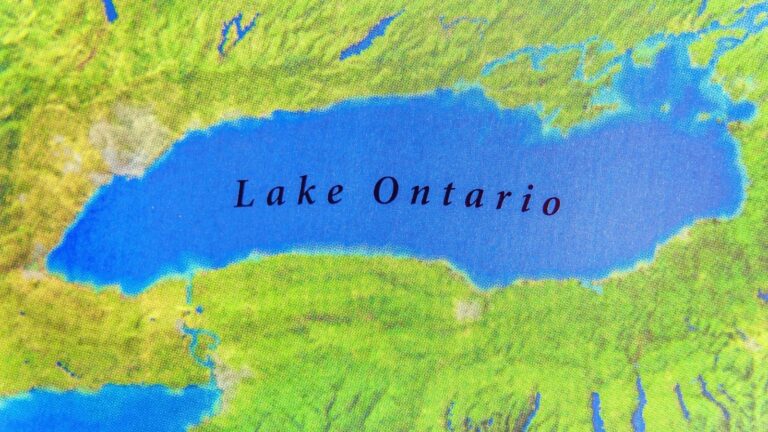
Trump signed Executive Order 14422, titled “Honoring the American History of the Great Lakes and Renaming Lake Ontario as Lake America,” on August 27, 2026. The order directed the U.S. secretary of the interior and the U.S. Board on Geographic Names to adopt “Lake America” as the lake’s official name for federal purposes. It also called for the Geographic Names Information System to be updated and instructed federal agencies to use the new designation on government maps, contracts and other official documents.
That distinction matters because an American executive order cannot determine what Canada calls the lake. Canadian authorities have continued using Lake Ontario, while the change primarily governs U.S. federal terminology and databases. The result is an unusual situation in which one body of water can appear under different names depending on the government, mapping service or geographic location of the person viewing it. MapQuest, as a private mapping service, chose to continue displaying Lake Ontario rather than adopting the new federal U.S. designation.
MapQuest Chose Familiarity Over the New Federal Label
MapQuest’s position was not presented merely as a technical delay. Berger said the company intended to keep using the name Lake Ontario worldwide, rather than changing what American users saw to match the new U.S. federal terminology. The approach effectively made MapQuest one of the most visible mapping services declining to mirror the federal naming change for U.S. users. The company framed the choice around keeping geographic names familiar and useful to the people navigating with its products.
There was also precedent for MapQuest treating government-directed name changes differently from larger mapping platforms. Its response to the Lake Ontario order built on an increasingly visible debate over whether private mapmakers should automatically reproduce official naming decisions. In MapQuest’s case, the decision became part of its public identity: the company even began selling merchandise carrying its “We’re not changing it” message. What could have remained a minor cartographic disagreement instead became a recognizable piece of the brand’s sudden resurgence.
The Download Spike Was Fast — and Measurable
Independent data indicates that something significant happened almost immediately after MapQuest’s response. TechCrunch reported data from mobile-intelligence firm Sensor Tower showing MapQuest rising from No. 128 among U.S. iPhone apps on August 28 to No. 92 the next day, then reaching No. 3 on August 31 and No. 1 overall by September 1. Sensor Tower estimated approximately 632,000 U.S. downloads between the executive order and September 2.
MapQuest’s own numbers climbed as the surge continued. The company told TechCrunch in early September that it had accumulated more than 1.5 million installations across the United States and Canada since the dispute began. System1, MapQuest’s parent company, subsequently announced on September 8 that the app had surpassed two million new users on iOS and Android. Berger’s September 25 statement raised the reported total to three million. Those figures use different dates and, in some cases, different geographic scopes, but together they show how rapidly the app’s audience expanded.
Google and Apple Took a Different Mapping Route
MapQuest’s decision stood out partly because Google and Apple handled the federal change differently. Google Maps began displaying “Lake America” to users in the United States after the new name entered the U.S. government’s geographic database. Canadian users continued seeing Lake Ontario, while users elsewhere could see both names. Google said its approach reflected a longstanding practice of relying on official government sources when geographic names differ between countries.
Apple later adopted a comparable location-dependent approach. Its maps displayed Lake America for users in the United States while continuing to show Lake Ontario in Canada, with dual naming used in some other markets. That means the same smartphone map can present a different label depending on where it is viewed. MapQuest instead kept Lake Ontario across markets. The contrast demonstrates that digital maps are not simply static representations of geography: companies also make decisions about which official databases, national conventions and naming systems they will display.
Public Opposition Extended Beyond MapQuest Users
MapQuest’s sudden popularity occurred against a broader backdrop of American opposition to the rename. A Reuters/Ipsos poll released September 1 found that 63% of U.S. adults opposed changing Lake Ontario’s name to Lake America, while 14% supported the change. About one-fifth were unsure. Opposition crossed partisan lines to varying degrees: Ipsos reported that 84% of Democrats, 65% of independents and 43% of Republicans opposed the rename. The poll surveyed 1,023 U.S. adults.
Those results help provide context for MapQuest’s growth, but they do not establish why each person downloaded the app. An app-store surge is not a representative public-opinion poll, and some people may have installed MapQuest because media coverage reminded them the service still existed. Others may have been motivated by the naming dispute itself. What can be documented is that MapQuest’s rankings rose sharply at the same time the rename was receiving widespread attention and that Berger said many new users directly told the company they appreciated its decision.
Canada Became a Major Part of MapQuest’s Moment
The Canadian response was especially important because Lake Ontario forms part of the Canada-U.S. Great Lakes system and the Canadian government did not adopt Washington’s new terminology. System1 said MapQuest climbed to No. 2 among all free iPhone applications in Canada by August 30 before reaching No. 1 in both Canada and the United States shortly afterward. That represented an extraordinary chart position for a navigation service launched in the 1990s.
Berger said many of the three million new users were Canadian, and Toronto became a particularly important source of feedback. His September visit to the Lake Ontario waterfront was therefore more than a symbolic photo opportunity; it placed the company in the city where a large portion of its new attention was coming from. Canadian users were also beginning to ask for practical improvements rather than merely commenting on the naming controversy, signalling that at least some of the new audience was actively testing MapQuest as an everyday navigation tool.
The Viral Attention Quickly Turned Into Product Feedback
A flood of downloads can create a short-lived ranking spike, but it can also expose a product to millions of people who immediately notice what it lacks. Berger said the surge brought a significant amount of feedback from new MapQuest users, including requests from people in Toronto for stronger public-transit tools and Android Auto integration. That changed the conversation from what MapQuest called a lake to whether the service could compete with the mapping applications people already use every day.
On September 24, MapQuest launched public-transit directions in its mobile app. System1 said the feature combines buses, trains, trams and walking routes and covers nearly 2,000 cities in more than 70 countries, with real-time transit information available in more than 350 cities. The company described transit as one of the most frequently requested capabilities after its recent influx of users. The timing shows how the unexpected publicity around Lake Ontario quickly became a product-development opportunity rather than remaining only a social-media story.
MapQuest Had the History to Benefit From an Unexpected Revival
Part of the fascination surrounding MapQuest’s resurgence comes from its age. The service dates to 1996 and became one of the earliest widely used commercial internet mapping products. Long before smartphones offered continuous turn-by-turn navigation, millions of drivers typed destinations into MapQuest, printed several pages of directions and carried the paper into the car. That experience gave the brand unusually strong recognition among people who used the internet during the late 1990s and 2000s.
The company did not disappear when mobile navigation became dominated by Google Maps, Apple Maps and other competitors. System1 acquired MapQuest in 2019 and continues operating it as one of its consumer internet properties. That existing infrastructure meant MapQuest was capable of absorbing renewed attention when the naming controversy suddenly pushed it up the app-store rankings. The combination of nostalgia and a functioning modern navigation product gave the brand something many dormant internet names lack: recognition from older users alongside an app that new users could immediately install.
The Three-Million Figure Comes With an Important Measurement Detail
The headline number requires careful wording. The claim that three million new users downloaded MapQuest comes from Berger, the company’s general manager, as reported by The Canadian Press on September 25. It is therefore a company-reported figure rather than an independently audited download total. Earlier independent information from Sensor Tower estimated approximately 632,000 U.S. downloads by September 2, while MapQuest separately said at the time that U.S. and Canadian installations had already surpassed 1.5 million.
Those figures are not necessarily contradictory because they cover different dates, markets and measurement methods. System1 then reported more than two million new mobile users by September 8 before Berger gave the three-million update later in the month. What is independently supported is the scale and speed of the initial surge: third-party ranking data showed MapQuest moving from well outside the leading apps to the top of the U.S. App Store within days. The exact cumulative total ultimately depends on MapQuest’s internal reporting, but the comeback itself was visible across both download estimates and public app-store rankings.
This Options Discord Chat is The Real Deal
While the internet is scoured with trading chat rooms, many of which even charge upwards of thousands of dollars to join, this smaller options trading discord chatroom is the real deal and actually providing valuable trade setups, education, and community without the noise and spam of the larger more expensive rooms. With a incredibly low-cost monthly fee, Options Trading Club (click here to see their reviews) requires an application to join ensuring that every member is dedicated and serious about taking their trading to the next level. If you are looking for a change in your trading strategies, then click here to apply for a membership.