
35,000+ smart investors are already getting financial news, market signals, and macro shifts in the economy that could impact their money next with our FREE weekly newsletter. Get ahead of what the crowd finds out too late. Click Here to Subscribe for FREE.
Buy Now, Pay Later can make a purchase feel remarkably manageable: a large price becomes four smaller numbers, often with no interest attached. But the convenience can hide an important reality. BNPL is still credit, and several overlapping payments can turn an ordinary household budget into a calendar of automatic withdrawals.
For Canadians already managing high housing, food and transportation costs, the biggest risk appears when instalment financing moves from occasional purchases into recurring necessities or short-lived wants. These 21 expenses are especially poor candidates for BNPL because the item may be consumed, forgotten or replaced long before the debt disappears—or because another bill for the exact same expense will arrive before the first one has been paid off.
1. Groceries and Weekly Household Essentials
21 Things Canadians Should Never Put on Buy Now, Pay Later
- 1. Groceries and Weekly Household Essentials
- 2. Rent
- 3. Mortgage Payments
- 4. Hydro, Heating and Other Utility Bills
- 5. Credit Card Payments
- 6. Payday Loans and Cash Advances
- 7. Income Tax Balances
- 8. Insurance Premiums
- 9. Child-Care Fees
- 10. Prescription Medication and Recurring Health Necessities
- 11. Gas, Transit and Everyday Commuting
- 12. Phone, Internet and Streaming Subscriptions
- 13. Restaurant Meals and Food Delivery
- 14. Fast Fashion and Impulse Clothing
- 15. Holiday Gifts
- 16. Concert, Festival and Sports Tickets
- 17. Vacations and Weekend Getaways
- 18. Smartphone and Electronics Upgrades
- 19. Furniture and Décor Refreshes
- 20. Anything Likely to Be Returned or Disputed
- 21. Anything That Only Looks Affordable in Four Payments
- 16 Costco Canada Habits That Could Be Costing Shoppers More Than They Save
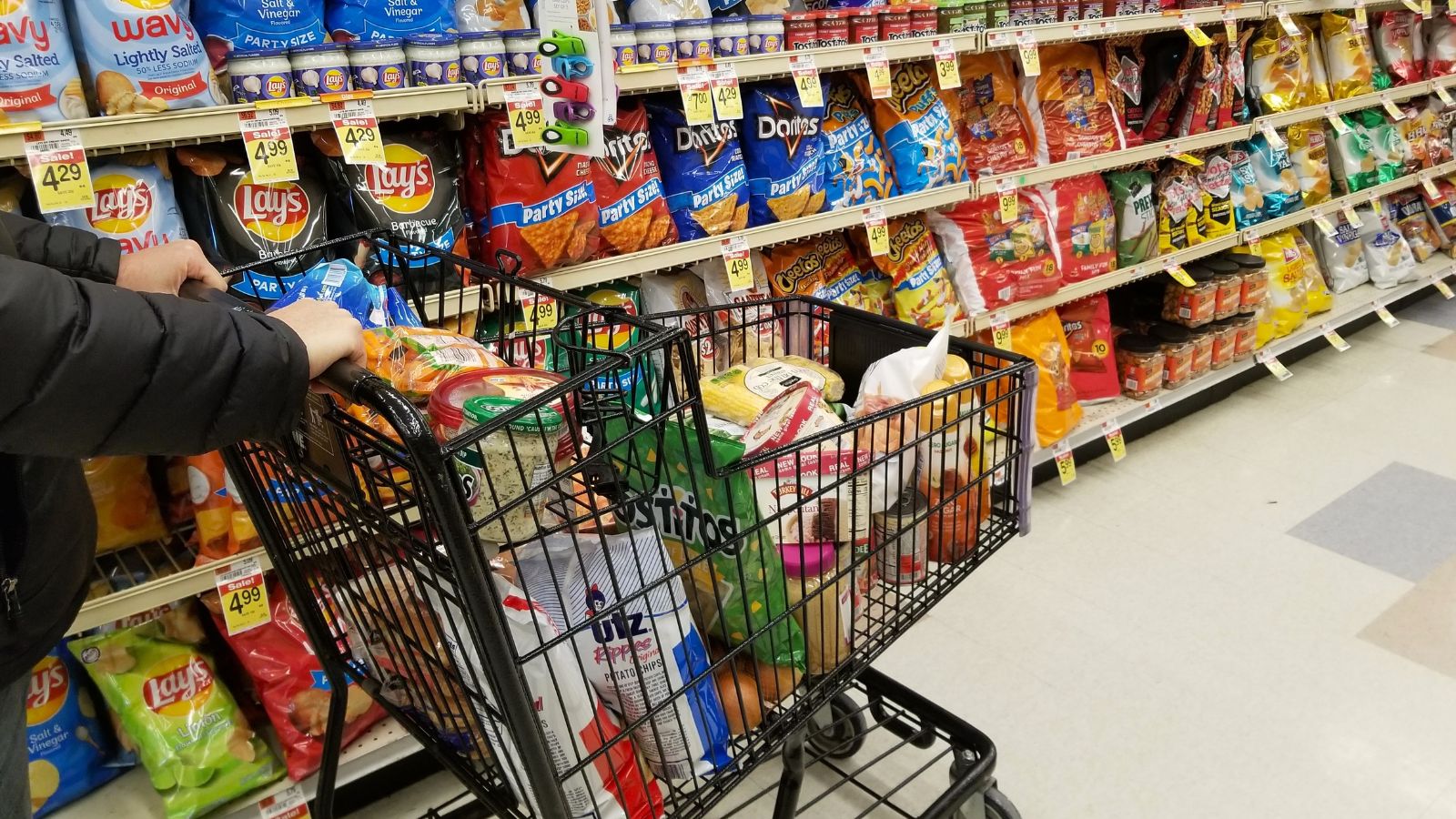
A grocery cart may seem like a harmless place to split a payment, especially when several days of meals suddenly cost more than expected. The problem is that food is a repeating expense. Another grocery trip will probably happen before a typical pay-in-four plan has finished collecting its instalments. Statistics Canada’s 2025 CPI basket assigned 10.82% of household consumption to food purchased from stores, showing how central grocery spending already is to Canadian budgets. Even a small FCAC pilot study found Canadians had used BNPL for groceries and other household essentials.
Financing a $160 grocery run into four $40 payments does not reduce the $160 cost. It simply moves $120 of this week’s food bill into future weeks, when another grocery bill will arrive. Repeat that habit several times and a household can end up paying for meals already eaten while trying to afford the next cart. BNPL may smooth an isolated timing problem, but routinely borrowing for food is a warning that regular expenses and available income are no longer lining up.
2. Rent

Rent is one of the clearest expenses that should not be transformed into short-term retail debt. It arrives every month and usually represents one of the largest obligations in a renter’s budget. Statistics Canada’s 2026 update to the CPI basket showed that rent represented 7.45% of household consumption expenditures in 2025, rising for the third consecutive year. Shelter overall accounted for 28.51% of the basket.
Adding BNPL payments to that obligation risks creating a rolling deficit. Consider a renter who cannot cover $400 of this month’s rent and somehow uses a financing service or intermediary to bridge the difference. That amount has not disappeared when the next rent payment arrives. The household now has next month’s full rent plus instalments from the previous month competing for the same income. A temporary shortfall can therefore become a structural one surprisingly quickly. When housing costs cannot be covered, addressing the budget gap or speaking with the landlord or appropriate support service is fundamentally different from disguising the gap as another retail-style payment plan.
3. Mortgage Payments

A mortgage already is long-term financing, which makes borrowing through another credit product to keep up with it particularly dangerous. Canadians struggling with mortgage payments have formal options that may be available through their lender, including payment relief measures in qualifying circumstances. FCAC specifically advises borrowers experiencing financial difficulty to contact their financial institution as soon as possible rather than allowing missed payments to accumulate.
That distinction matters because mortgage default carries consequences far beyond a late shopping instalment. FCAC notes that missing a regular mortgage payment can constitute default under the mortgage agreement and may eventually lead to a forced sale of the home. Using short-term financing to make one payment may therefore create the appearance that the problem has been solved when it has merely been moved forward several weeks. If $600 is missing from the mortgage budget this month, four $150 instalments could still be coming out when the next mortgage payment is due. Mortgage difficulties need a mortgage-level solution, not another layer of consumer credit.
4. Hydro, Heating and Other Utility Bills
Electricity, natural gas and other household utilities are recurring necessities. They belong in the same category as housing and food when building a basic budget, rather than being treated like occasional purchases. FCAC budgeting guidance identifies utilities among the expenses that should be covered before discretionary wants. A financing plan can therefore be particularly counterproductive when it is being used simply to keep ordinary household services running.
Imagine a $240 utility bill divided into four $60 payments. The instalment looks easier to absorb, but the household may receive another electricity or heating bill before those four payments are complete. If that second bill is financed as well, the family is effectively carrying two generations of utility costs at once. Seasonal swings can make the problem worse, especially when winter heating or summer cooling costs rise. The danger is not necessarily a single late fee. It is converting an expense that already repeats every month or two into another recurring debt stream, leaving less room for the next unavoidable bill.
5. Credit Card Payments
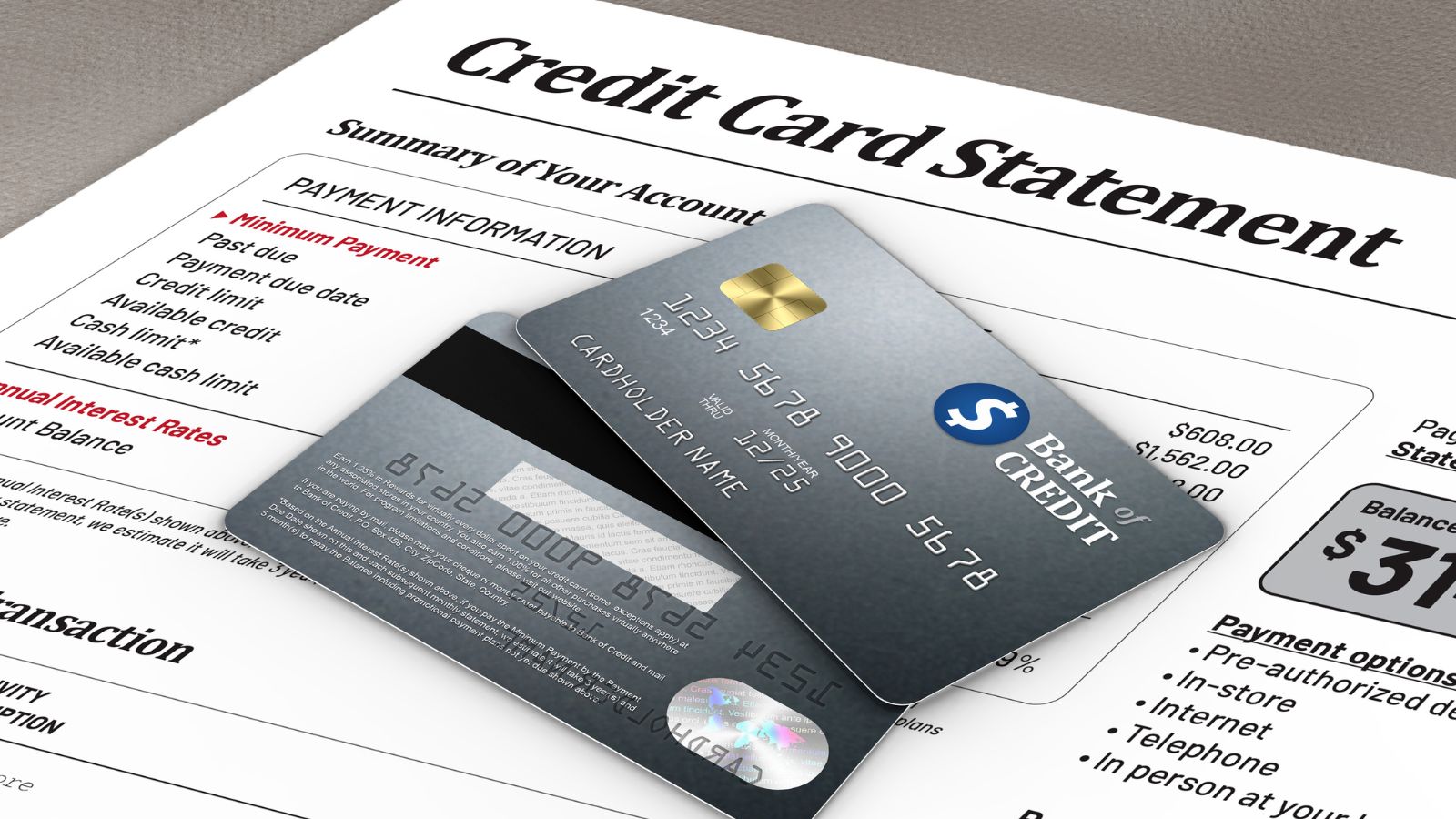
Using one form of short-term credit to make room for another rarely fixes the underlying debt. Credit cards can already become expensive when balances are carried, and replacing cash that should have gone toward a card payment with a new BNPL obligation can keep the borrower moving sideways. FCAC recommends continuing to make minimum payments on all debts while developing a repayment strategy, with particular attention to past-due accounts and higher-interest balances.
Its own credit-card example illustrates how quickly interest matters. A $2,000 balance at an 18% interest rate, with a $60 monthly payment, would take three years and 11 months to clear and generate $793 in interest under the agency’s example. Adding a handful of supposedly harmless instalment purchases during that repayment period reduces the money available to attack the expensive balance. A better test is straightforward: if making a BNPL purchase would mean paying less toward existing credit-card debt than planned, the new purchase is probably not affordable yet, regardless of whether its first instalment is only $25 or $50.
6. Payday Loans and Cash Advances

A payday loan should not be repaid by creating a fresh BNPL obligation elsewhere. Both products rely on future income, so combining them can turn the next paycheque into a traffic jam of scheduled withdrawals. Canada has reduced the permitted cost of payday borrowing, but FCAC still describes payday loans as an expensive form of credit. In provinces with payday-loan regulations, the maximum borrowing cost is $14 for every $100 borrowed.
FCAC provides a useful comparison using a $300 loan for 14 days. In its illustration, the payday loan costs $42, compared with $5.92 for a line of credit, $7.42 for overdraft protection and $7.65 for a credit-card cash advance under the assumptions used. Someone already paying that premium for emergency cash generally cannot improve the situation by taking on another set of automatic instalments for everyday purchases. Debt used to service other debt is a warning sign that the household needs breathing room, a repayment arrangement or lower-cost assistance—not an additional checkout button promising four smaller payments.
7. Income Tax Balances
A tax bill is another obligation that already has an official payment process. Canadians who cannot pay a CRA balance in full may be able to arrange payments directly with the agency. For the 2025 tax year, balances were generally due April 30, 2026, and the CRA states that compound daily interest applies to outstanding amounts beginning after the deadline. The agency also provides payment-arrangement options for people who cannot immediately clear their debt.
That makes an outside BNPL arrangement an unnecessary complication. A taxpayer could end up owing the CRA while simultaneously owing a separate finance company, with two schedules and potentially two sets of consequences to manage. The temptation is understandable: dividing $1,200 into four $300 chunks looks more approachable than one four-digit balance. But the CRA already has mechanisms designed specifically for tax debt. Where a taxpayer cannot pay, dealing directly with the creditor—the government in this case—keeps the repayment problem in one place rather than turning a tax shortfall into consumer-finance debt as well.
8. Insurance Premiums
Auto, home, tenant, life and other important insurance premiums should be treated as protection costs, not discretionary purchases. FCAC tells consumers to pay premiums on time because an insurer may cancel a policy when payments are missed. Losing coverage can expose a household to a financial risk vastly larger than the original premium, particularly when insurance is protecting a vehicle, home or family income.
Putting the premium on BNPL can also create needless overlap. A household that finances a $600 premium into four instalments may still be making those payments when another policy, renewal fee or monthly insurance charge comes due. The apparent convenience becomes even less attractive if the BNPL payment is automatically withdrawn from an account running close to zero. The policy itself should remain the financial priority. If the premium has become unaffordable, reviewing coverage, deductibles, payment frequency or competing quotes addresses the insurance cost directly. Financing the payment through another creditor simply leaves the original insurance expense intact while adding a second contract that also has to be managed.
9. Child-Care Fees

Child care is another expense that repeats too quickly for short-term instalment debt to be a comfortable fit. Statistics Canada reported that 58% of children aged five and younger were in child care in 2025. Average full-time centre-based expenses nationally fell to $435 per month, while average full-time home-based care cost $534 per month. Those averages still represent hundreds of dollars that may recur every few weeks.
The mismatch with BNPL is easy to see. Financing a $500 child-care payment across six weeks can leave part of the previous month’s fee outstanding when the next $500 is already due. After several cycles, a family could effectively be carrying multiple child-care months at once even though each individual instalment looks manageable. Child-care arrangements also differ substantially across provinces, providers and subsidy programs, so the national averages do not describe every family’s bill. The broader principle remains the same: essential recurring care needs to fit into recurring cash flow. Short-term purchase financing can postpone the pressure, but it cannot sustainably reduce a monthly obligation.
10. Prescription Medication and Recurring Health Necessities

Medication is explicitly treated as a need, rather than a want, in FCAC budgeting guidance. That is an important distinction. Necessary health spending should not become dependent on repeatedly qualifying for new short-term loans. Statistics Canada’s 2025 CPI basket assigned 5.40% of household consumption to health and personal care, and average household spending on health and personal care reached $4,947 in the 2023 Survey of Household Spending.
BNPL is especially awkward for recurring prescriptions because the product may be gone before the payments are. A 30-day supply purchased on a six-week instalment schedule means another refill can arrive before the previous one is fully paid. Repeating that cycle can build an invisible backlog of health-related debt. The goal should never be to delay medically necessary care simply to avoid financing. Instead, when recurring health expenses are becoming difficult to cover, the underlying cost should be discussed with the appropriate pharmacist, health provider, insurer or available public program. Turning every refill into another consumer loan does not make the treatment cheaper; it only changes when the financial strain appears.
11. Gas, Transit and Everyday Commuting
Transportation is already a major Canadian household expense. Statistics Canada’s 2026 CPI basket update showed transportation taking 17.87% of household consumption in 2025, the largest increase in share among the eight major CPI components. The 2023 Survey of Household Spending also put average transportation spending at $12,090 per household.
Financing routine commuting costs creates the same problem as financing groceries: the product is consumed almost immediately. A tank of gas may be gone in a week while instalments continue for several more weeks. Transit fares behave similarly. Someone financing $80 of fuel today could still owe $60 after using every litre, then need another $80 fill-up. Within a month, payments can become detached from the purchases that created them, making the budget harder to read. A commuter may feel as though the weekly fuel bill has fallen because only one instalment appears at a time, even though total transportation spending has not changed. Regular travel to work needs recurring budget capacity rather than increasingly complicated short-term financing.
12. Phone, Internet and Streaming Subscriptions
Monthly communications and entertainment bills are already instalments in everything but name. Adding BNPL on top of them can turn a simple subscription into a web of overlapping dates. Statistics Canada reported that prices for video and audio subscription services were 21% higher in 2024 than in 2019. Canadian households spent $11.3 billion on cable, satellite and other program-distribution services, including streaming, during 2024.
These costs are often individually small, which is exactly what can make them hard to notice. A $15 streaming service, $90 mobile plan and $80 home-internet bill may feel manageable separately, yet together they become a meaningful recurring commitment. Borrowing to preserve those services adds another recurring commitment rather than reducing the total. When communications costs no longer fit comfortably, reviewing the plan, dropping unused subscriptions or renegotiating service addresses the actual expense. Turning a monthly charge into four smaller charges merely keeps an old bill circulating while next month’s version is already approaching.
13. Restaurant Meals and Food Delivery

A dinner that has already been eaten is one of the clearest examples of a short-lived purchase that should not outlast its payment. Canadian households spent an average of $3,351 on food purchased from restaurants in 2023, according to Statistics Canada. In the 2025 CPI basket, food purchased from restaurants represented 6.02% of household consumption expenditures.
The psychological appeal of splitting restaurant spending is obvious. A $120 meal can appear to be a $30 decision when the checkout screen emphasizes four instalments. But the household still spent $120, and the remaining $90 competes with groceries, transportation and other bills over the next several weeks. Restaurant dining is also the kind of discretionary category where multiple small transactions can accumulate before the first one feels expensive. A couple of financed dinners, a delivery order and a weekend brunch could create several simultaneous payment schedules for food that disappeared days earlier. Dining out can be worth budgeting for; borrowing repeatedly to make routine dining fit is a different proposition.
14. Fast Fashion and Impulse Clothing

Clothing is one of the categories already closely associated with BNPL. In FCAC’s small Canadian pilot study, 23% of surveyed BNPL users reported using the service for clothing or fashion purchases. Statistics Canada’s 2026 basket update also showed clothing and footwear representing 4.50% of household consumption in 2025, up slightly from the previous year.
The danger is less about a winter coat genuinely needed for work and more about turning low-cost impulse purchases into automatic debt. A $100 online order shown as four payments of $25 can feel almost trivial, making it easier to add another shirt, pair of shoes or accessory. Research into BNPL behaviour has found that dividing a total into smaller instalment prices can reduce the perceived expensiveness of the purchase. Fashion retail is particularly suited to that effect because purchases are frequent, promotions are constant and return decisions may come later. If an item would not make sense at its full checkout price today, splitting that price into smaller numbers does not make it a bargain.
15. Holiday Gifts

Gift giving creates an emotional reason to overspend, which is precisely why financing can become dangerous around the holidays. A 2025 Canadian holiday-spending study from NerdWallet found that 12% of holiday shoppers planned to use BNPL debt for gifts, up from 9% in 2023. The same study found that among Canadians who had taken on credit-card debt for the previous holiday season, 28% were still paying it off.
The calendar makes holiday BNPL particularly risky. Several gifts can generate separate instalment plans within a few days, while January still brings rent or mortgage payments, heating bills, groceries and regular debt payments. By then, the gifts may already have been opened, exchanged or forgotten while their instalments keep arriving. A smaller gift paid for from available funds can carry the same meaning without sending part of the celebration into February. Holiday generosity becomes far less enjoyable when the next year begins with payments for purchases made under the pressure of a December deadline.
16. Concert, Festival and Sports Tickets

Canadians have enthusiastically returned to live entertainment. Statistics Canada reported average household recreation spending of $5,231 in 2023, up 23.9% from 2021. The broader spectator-sports, event-promoter and related industry reached record operating revenue of $12.7 billion in 2023, with admission to live events accounting for roughly half of industry sales.
Tickets are also perfectly designed to trigger urgency. There may be a limited presale, a countdown timer, rapidly disappearing seats or fear that resale prices will climb. BNPL can remove just enough immediate pain to turn “too expensive” into “four manageable payments.” Yet the full ticket price is still being spent, often before transportation, accommodation, parking, food or merchandise have been considered. A concert lasting three hours can therefore produce payments lasting six weeks or longer. If the full ticket price would strain the entertainment budget, the instalment option should not be interpreted as evidence that the event has suddenly become affordable.
17. Vacations and Weekend Getaways

FCAC’s borrowing guidance explicitly uses a vacation as an example of debt that may be difficult to justify because the borrower can still be paying after the experience is over. Canadian travel spending is substantial: domestic visitors spent $105.6 billion travelling within Canada in 2025, according to Statistics Canada.
A vacation also contains far more than the first price presented at checkout. Flights or hotels may be financed first, followed by luggage, meals, attractions, car rentals and local transportation. If several of those costs receive separate instalment plans, a long weekend can create months of fragmented payments. Foreign travel can add currency-conversion costs and unpredictable expenses as well. Saving in advance makes the true trip budget visible before departure. BNPL reverses that order: the experience happens first and its affordability is tested later. That can be particularly uncomfortable when a traveller returns home to ordinary housing and household bills that never went on vacation.
18. Smartphone and Electronics Upgrades

Electronics were the second-most-common category in FCAC’s Canadian BNPL pilot: 32% of surveyed users said they had used BNPL for electronics. That popularity is understandable. New smartphones, televisions, laptops, headphones and tablets can carry four-figure prices, while retailers frequently reduce the psychological impact by displaying a much smaller payment amount.
But an upgrade is different from an urgent replacement. A functioning two-year-old phone does not become economically obsolete because a newer camera or processor arrives. Financing upgrades can also create a cycle in which consumers repeatedly allocate future income to devices purchased primarily for incremental improvements. Electronics are depreciating goods, and the excitement surrounding a launch often fades faster than the repayment schedule. Where a computer or phone is genuinely necessary for work or school, the purchase deserves careful total-cost comparison. Where it is mainly an upgrade, the strongest affordability test remains simple: would the item still be purchased if the checkout page displayed only the full price?
19. Furniture and Décor Refreshes

Furniture and appliances were the most frequently reported BNPL purchase category in FCAC’s Canadian pilot, used by 39% of the BNPL users surveyed. Statistics Canada, meanwhile, found that Canadian households spent an average of $9,404 on household operations, furnishings and equipment in 2023.
There is an obvious difference between replacing a refrigerator that stopped working and ordering a new sectional because the living room needs a different look. BNPL can be useful-looking precisely because furniture has a large sticker price, but financing an optional refresh still means committing future household income. Décor is especially vulnerable to this effect because several purchases may be made together: a sofa produces one instalment plan, lighting another and accessories a third. Suddenly the redesigned room contains five payment schedules. Necessary appliances deserve comparison based on durability, repairability and total price. Optional furnishings are better delayed until the purchase fits without relying on the illusion that a $2,000 sofa somehow became a $500 purchase.
20. Anything Likely to Be Returned or Disputed
BNPL becomes considerably more awkward when a purchase might be returned. Canadian businesses generally are not required to accept returns simply because a customer changes their mind, unless the item is defective, although many stores voluntarily maintain return and exchange policies. Conditions can also differ for sale items, online orders and third-party marketplace sellers.
Adding a financing provider gives the transaction another moving part. FCAC’s Canadian pilot found that 36% of surveyed BNPL users had difficulty understanding how a potential dispute would be resolved. A refund may therefore involve both the retailer and the financing company, while scheduled payments may still need attention during the process. This matters for purchases where fit, quality or appearance is uncertain—online clothing, furniture, gifts and unfamiliar electronics are obvious examples. Before financing something that might go back, the shopper should understand exactly who stops the payments, how refunds are credited and what happens if the merchant and finance provider process the return on different timelines.
21. Anything That Only Looks Affordable in Four Payments
The most important item is not a product category at all. It is any purchase that feels affordable only after the full price has been broken into smaller numbers. Research published in the Journal of Retailing found that presenting BNPL instalment prices lowered consumers’ perception of how expensive a purchase was and increased spending. Another study of online purchasing estimated that BNPL adoption was associated with a 6.42% increase in spending at the retailer studied.
Multiple plans can compound the effect. U.S. Consumer Financial Protection Bureau research found that about 63% of BNPL borrowers in its 2021–2022 matched data had multiple simultaneous BNPL loans at some point, while roughly one-third used multiple providers. Those figures are American and should not be treated as Canadian prevalence estimates, but they demonstrate the stacking risk built into the model. Four payments of $25, $40 and $55 are not three cheap purchases. Together they are $480 of spending. If the total price causes hesitation but the instalment price makes the hesitation disappear, that is precisely when the full price deserves another look.
16 Costco Canada Habits That Could Be Costing Shoppers More Than They Save
The Executive Membership can feel like an obvious upgrade because the 2% annual reward sounds straightforward. For households that spend heavily at Costco Canada, the extra fee may be easy to justify. But the habit becomes costly when shoppers upgrade first and calculate later. A Gold Star Membership costs less, while Executive costs more and only pays off if eligible annual spending is high enough to offset the difference.
16 Costco Canada Habits That Could Be Costing Shoppers More Than They Save
This Options Discord Chat is The Real Deal
While the internet is scoured with trading chat rooms, many of which even charge upwards of thousands of dollars to join, this smaller options trading discord chatroom is the real deal and actually providing valuable trade setups, education, and community without the noise and spam of the larger more expensive rooms. With a incredibly low-cost monthly fee, Options Trading Club (click here to see their reviews) requires an application to join ensuring that every member is dedicated and serious about taking their trading to the next level. If you are looking for a change in your trading strategies, then click here to apply for a membership.