
35,000+ smart investors are already getting financial news, market signals, and macro shifts in the economy that could impact their money next with our FREE weekly newsletter. Get ahead of what the crowd finds out too late. Click Here to Subscribe for FREE.
Canadian stock rallies often feel reassuring because the TSX has a familiar cast of banks, pipelines, miners, and mature dividend payers. That surface stability can make advances look calmer than they really are, especially when rate hopes, commodity moves, and a few heavyweight names are doing more of the lifting than broad economic strength. Underneath the index, the signals can be far more mixed.
This piece examines 18 warning signs that suggest a Canadian rally may be less comfortable than it appears, from narrow leadership and stubborn inflation to mortgage renewals, household strain, and commodity-sensitive trade flows. None of them alone has to end a rally. Together, though, they form a useful checklist for judging whether optimism is resting on durable foundations or on a story that can change quickly.
Leadership Is Too Narrow
18 Warning Signs a Canadian Stock Rally May Not Be as Comfortable as It Looks
- Leadership Is Too Narrow
- A Few Stocks Are Carrying More Weight Than Many Investors Realize
- Breadth Can Deteriorate Faster Than the Headline Index Suggests
- Smaller Companies Are Not Offering Much Confirmation
- Valuations Look Less Cushioned Than the Income Story Implies
- The Rate Narrative Is More Fragile Than the Market Wants It to Be
- Inflation Has Started Moving the Wrong Way Again
- Bond Yields Are Still Acting Like Caution Matters
- Growth Is Positive, but It Is Not Running Hot
- The Labour Market Still Looks Cooler Than Bulls Prefer
- Household Balance Sheets Remain Heavily Loaded
- The Mortgage Reset Has Not Passed
- Financial Stress Is Already Showing Up in Insolvency Data
- Housing Looks Balanced, Not Robust
- Regulators Are Still Talking Like Stress Scenarios Matter
- Banks Are Still Building and Holding Meaningful Credit Cushions
- Recent Trade Strength Has Been Highly Commodity-Dependent
- The Canadian Dollar Is Not Screaming All-Clear
- 19 Things Canadians Don’t Realize the CRA Can See About Their Online Income

A Canadian rally can look broad simply because the benchmark itself is not especially balanced. The TSX is still dominated by financials, energy, and materials, so a good run in banks, oil producers, or miners can create the impression that the whole market is moving with confidence. In practice, that often means the headline index is reflecting the strength of a few powerful groups rather than a widespread improvement in corporate conditions. When leadership is concentrated, the market tends to feel smoother on the surface than it actually is underneath.
That matters because concentrated rallies can reverse just as quickly as they form. A turn in crude prices, a softer tone from lenders, or even one bad earnings cycle in a major bank can do outsized damage. Canadian investors have seen this pattern before: the benchmark looks sturdy until a dominant sector loses momentum, and then the weakness spreads faster than expected. A rally becomes much more durable when participation expands into more interest-rate-sensitive, consumer-facing, and mid-sized businesses. Until that happens, comfort may be more cosmetic than real.
A Few Stocks Are Carrying More Weight Than Many Investors Realize

Even inside a concentrated market, concentration within the winners can become its own warning sign. Canadian equity benchmarks and broad-market ETFs still put a remarkable amount of weight in a handful of household names, especially the largest banks, major pipelines, and one or two standout growth stories. That means a rally can feel healthier than it really is because a narrow cluster of giant stocks is rising hard enough to offset softness elsewhere. The index is moving, but the average constituent may not be sharing equally in the lift.
This is one reason investors sometimes feel disconnected from the benchmark. A portfolio filled with smaller industrials, retailers, developers, or niche technology names can lag badly even while the TSX looks respectable on a chart. When a few giants do most of the heavy lifting, market resilience becomes more fragile than the headline suggests. Strong results from one large bank or a sharp move in a name like Shopify can brighten the entire index, yet that does not necessarily mean the rest of corporate Canada is seeing the same demand, margin support, or financing backdrop.
Breadth Can Deteriorate Faster Than the Headline Index Suggests

A comfortable rally usually has breadth behind it. More stocks rise, sector participation expands, and pullbacks get absorbed without too much internal damage. A less comfortable rally often shows the opposite pattern: the benchmark can still look composed, but advancing stocks do not meaningfully outnumber decliners, and the list of companies participating in the move stays short. That kind of internal weakness rarely gets as much attention as the headline level of the index, but it often says more about the market’s real health than the closing number on its own.
Breadth matters because it measures conviction. When more stocks are falling than rising, even during periods when the TSX still seems elevated, the investing experience becomes narrower and rougher than the public narrative suggests. That is when confidence can evaporate quickly. A rally that depends on a few liquid winners is easier to break than one supported by banks, cyclicals, utilities, consumer names, and smaller firms at the same time. Thin participation does not guarantee a reversal, but it often reveals that the market is standing on a much smaller platform than the index headline implies.
Smaller Companies Are Not Offering Much Confirmation

Smaller companies often tell the truth faster than the blue chips do. Large-cap Canadian stocks can lean on scale, stronger balance sheets, and easier access to capital. Smaller firms, by contrast, tend to feel the pressure from financing costs, weaker order books, or cautious customers much earlier. That is why their behavior matters so much in a rally. When the big benchmark is climbing but the small-cap and completion universe looks shaky, the message is rarely comforting. It suggests investors still prefer safety, liquidity, and size over true risk-taking.
That split can be easy to overlook in Canada because the biggest names are so familiar and so heavily followed. Yet domestic confidence is better tested by what happens in the less glamorous corners of the market: regional industrials, second-tier producers, smaller software firms, and companies tied more directly to local business spending. When those names are not confirming the move, it can mean the rally is more about selective positioning than about improving fundamentals across the economy. In other words, the market may be rising, but investors are still acting as if they do not fully trust the backdrop.
Valuations Look Less Cushioned Than the Income Story Implies

Canadian equities are often marketed as practical rather than expensive: banks instead of hype, pipelines instead of moonshots, dividends instead of distant promises. That image can make rallies feel safer than they are. But when broad-market valuations drift higher while the cash yield stays relatively modest, the old “cheap and income-rich” story starts to lose some of its protective power. A market trading on a richer earnings multiple with a thinner yield cushion is relying more on continued optimism than many investors assume.
That becomes especially important when government bond yields remain competitive. If long-term federal yields are higher than the cash yield available from a broad Canadian equity fund, part of the historic comfort attached to the market starts to fade. Investors are no longer being paid as generously to wait through volatility. The rally becomes more dependent on price appreciation, stable margins, and a friendly rate backdrop. That is manageable in good conditions, but it leaves less room for disappointment. When valuation support weakens, even a traditionally conservative market can behave much less conservatively than its reputation suggests.
The Rate Narrative Is More Fragile Than the Market Wants It to Be
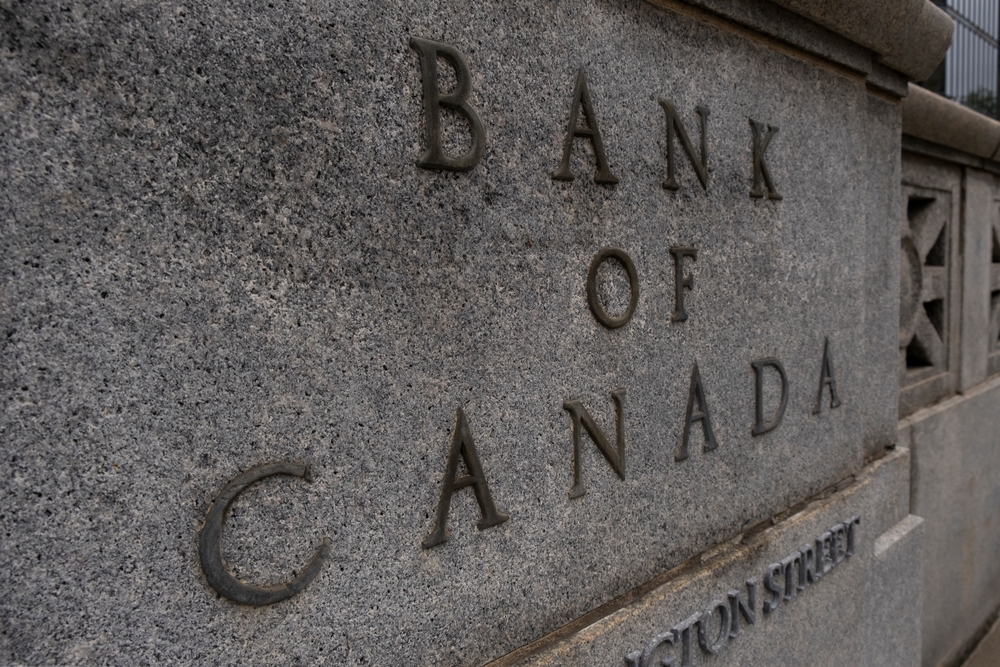
Many rallies become easier to believe when investors think the central bank is done tightening and ready to help if growth softens. In Canada, that assumption looks shakier than the market would probably prefer. The Bank of Canada may have lowered rates from peak levels, but it is no longer speaking as if the path ahead is automatically easier. Once policymakers begin emphasizing uncertainty, energy-price risk, and the possibility that inflation could reaccelerate, a rally built on easy rate optimism becomes much more vulnerable to surprise.
That is the heart of the discomfort. If investors are treating the rate backdrop as settled while the central bank is still describing a world in which policy could stay where it is or even turn firmer, the market is resting on a more conditional foundation than it appears. Canadian stocks do not need aggressive rate cuts to perform, but they do benefit from confidence that financing conditions are becoming less restrictive. When that confidence fades, rate-sensitive sectors quickly feel different. What looked like a calm march higher can start to resemble a market that was pricing in relief a little too early.
Inflation Has Started Moving the Wrong Way Again

Inflation does not have to return to crisis levels to make a rally uncomfortable. It only has to stop moving in the reassuring direction investors had hoped for. In Canada, that is a real issue whenever energy regains influence. A market can celebrate stronger oil-linked earnings and still underestimate what higher fuel and transport costs do to households, retailers, freight-heavy businesses, and rate expectations. That split creates a strange kind of rally: the index can look stronger precisely because one of the forces pushing it higher is also making the broader economy less comfortable.
That is why a renewed inflation wobble matters so much. It complicates the story for policymakers, raises questions about how quickly borrowing costs can ease, and puts pressure back on consumer budgets just as many households are still digesting years of higher rates. Canadian rallies often look durable when resource strength and domestic resilience are reinforcing each other. They look less comfortable when commodity gains are helping the benchmark while also making life more expensive. In that setting, investors can mistake a sectoral tailwind for a broad-based all-clear, and that is not the same thing.
Bond Yields Are Still Acting Like Caution Matters

The stock market can be enthusiastic while the bond market remains skeptical, and that mismatch is rarely something to ignore. When long-term Canadian government yields stay elevated or drift higher, they remind investors that inflation risk, fiscal concerns, and global volatility are still part of the picture. That matters because equity rallies tend to feel easiest when financial conditions are steadily relaxing. Rising long yields work in the opposite direction. They raise discount rates, make income alternatives more attractive, and keep financing costs uncomfortably relevant for real estate, utilities, and other rate-sensitive groups.
A calm equity advance looks more convincing when bonds are confirming that inflation is cooling and policy risk is falling. When they are not, the rally carries more hidden tension than it first appears. Canada’s market can sometimes absorb that tension better than others because of its energy and financial exposure, but even that has limits. Higher long yields do not just affect valuations in theory. They shape mortgage pricing, corporate funding, infrastructure math, and investor preferences. If the bond market is still behaving as though caution deserves a seat at the table, stocks may be celebrating too easily.
Growth Is Positive, but It Is Not Running Hot

A rally does not require a booming economy, but it helps when growth is clearly accelerating. Canada’s recent picture looks more modest than that. Output has remained positive, which is important, yet the underlying pace is hardly explosive. That creates an awkward middle ground. The economy is not weak enough to produce obvious panic, but it is not strong enough to make lofty confidence feel automatic either. In such an environment, market gains often depend less on broad economic momentum and more on a combination of sector concentration, sentiment, and a few earnings standouts.
That makes rallies feel more delicate than they look. When national growth is modest, there is less buffer for mistakes. A soft patch in employment, a renewed inflation bump, or a weaker quarter in consumer demand can matter more than usual because there is no booming backdrop to absorb it. Investors can still justify higher prices if they believe conditions will improve, but that is a forward-looking case, not proof of present strength. The distinction matters. A market climbing on expectation is often less comfortable than one climbing on obvious, economy-wide evidence that the expansion is broadening.
The Labour Market Still Looks Cooler Than Bulls Prefer

The labour market is one of the clearest ways to test whether a rally reflects lived economic strength or just improving market psychology. In Canada, job conditions have not fallen apart, but they also do not look strong enough to erase concern. A labour market that is cooling through slower hiring rather than mass layoffs can still weigh on confidence, household spending, and business decision-making. That kind of softness is subtle, which is exactly why it can be overlooked during a rising market. The index may look fine while job seekers quietly find that the process is taking longer.
That tension matters because consumer resilience is not built only on whether people are employed today. It also depends on whether they feel secure enough to spend, move, borrow, and plan ahead. When hiring slows and unemployment stays above pre-pandemic norms, caution lingers in the background. Companies may not slash payrolls dramatically, yet they can still postpone expansion or lean harder on efficiency. For a domestic market that depends heavily on banks, housing, telecom, and consumer activity, that is not an ideal base for a carefree rally. The labour market looks stable enough to prevent alarm, but not strong enough to justify complacency.
Household Balance Sheets Remain Heavily Loaded

Canadian households are still carrying a great deal of debt, even after some improvement from the most stressed period. That is one of the central reasons a rally can feel less comfortable than it looks. High leverage does not always create immediate problems when wages are steady and rates are easing. But it leaves consumers far more sensitive to fuel prices, job insecurity, rent, and renewal costs. A heavily indebted household does not need a recession to retrench. It only needs expenses to rise faster than confidence. That makes the broader economy more fragile than an upbeat benchmark might suggest.
The vulnerability is even more pronounced in the age groups carrying the highest debt burdens. Younger and mid-career households are often the ones spending most actively on housing, children, transport, and discretionary categories, so their financial flexibility matters disproportionately. If they are still tightly managed by debt-service realities, sectors tied to domestic demand can feel pressure long before the benchmark gives investors a clear warning. Canadian rallies often seem safe because of the country’s conservative financial reputation. Yet high household leverage remains one of the clearest reasons that surface stability can hide a more brittle foundation underneath.
The Mortgage Reset Has Not Passed

One of the easiest mistakes in the Canadian market is to assume the mortgage shock is old news simply because the first wave of rate increases is already behind the country. The timing is more complicated than that. A large share of borrowers are still moving through renewals, and many of the loans written during the ultra-low-rate era have not yet fully confronted the new payment reality. That means some of the pressure investors worry about has been delayed, not eliminated. The most visible stress often arrives when the teaser period ends and the reset becomes concrete.
That makes the market’s calm look less reliable. A household that managed 2024 without obvious distress may still face a real hit when the mortgage comes up for renewal in 2026 or 2027. Those resets do not just affect individual spending decisions; they shape bank risk, housing activity, consumer confidence, and the tone of the broader economy. Markets like to move ahead of trouble, but they can also misread timing. A rally can look comfortable if investors assume the refinancing pain has already been digested. In reality, a meaningful portion of that adjustment is still working its way through the system.
Financial Stress Is Already Showing Up in Insolvency Data

When financial pressure reaches insolvency statistics, it is usually no longer theoretical. By that point, the coping mechanisms have already been used: savings have been run down, balances have been rolled, payments have been stretched, and outside help may have been exhausted. That is why rising consumer insolvencies are such an uncomfortable signal during a rally. They remind investors that even if the benchmark is advancing, part of the household sector is already under real strain. Stock markets can ignore that for a while, but they rarely erase it.
The disconnect is especially important in Canada, where household finances matter so much to the health of banks, housing, retail, and communication services. Insolvency growth does not automatically translate into an immediate market downturn, yet it does undercut the idea that the consumer side of the economy is broadly comfortable. It suggests a portion of the population is already operating beyond its financial margin of safety. That is the kind of underlying weakness that a concentrated, sector-led rally can easily gloss over. It may not dominate the daily narrative, but it changes the meaning of calm when it is already showing up in official filings.
Housing Looks Balanced, Not Robust

Canada’s housing market no longer looks like it is in straight freefall, but that is not the same as saying it looks strong. A more balanced resale market can stabilize sentiment, yet stability is different from momentum. When inventories sit near long-run norms and new construction trends soften, the market is sending a message that is cautious rather than celebratory. That matters because housing carries unusual weight in Canada’s economic psychology. Stronger housing often boosts confidence far beyond the sector itself. Merely steady housing does far less of that work.
The distinction is easy to miss during a stock-market rally. Investors may see a housing market that is no longer deteriorating sharply and treat that as a green light. But a truly comfortable Canadian rally would look better with clearly improving resale activity, firmer pricing confidence, and construction trends that are pointing decisively upward rather than wobbling month to month. Instead, the backdrop looks orderly but unresolved. That is a useful difference. Orderly markets can still disappoint, especially when consumer leverage remains high and mortgage resets are still ahead. Balanced housing is a relief, but it is not the same thing as genuine strength.
Regulators Are Still Talking Like Stress Scenarios Matter

Sometimes the clearest warning sign is not in a market chart but in the tone regulators use when they describe the system. Canadian supervisors are not behaving as if the difficult part is over. Their focus on real-estate-secured lending, non-bank financial exposures, liquidity, and funding conditions makes clear that they still see important fault lines. That does not mean a crisis is imminent. It does mean the people tasked with guarding resilience are still prioritizing the kinds of risks that comfortable rallies tend to wave away too quickly.
That is especially important in a market like Canada’s, where confidence can lean heavily on the reputation of the banking system and the perceived sturdiness of housing finance. When regulators are still flagging delinquency trends, geopolitical volatility, funding vulnerabilities, and the knock-on effects of cross-border stress, it suggests the system is stable but not carefree. Investors do not need to mirror the supervisor’s caution completely, but ignoring it is rarely wise. A rally looks less comfortable when the official risk map still emphasizes mortgages, liquidity, and market shocks rather than simply applauding resilience and moving on.
Banks Are Still Building and Holding Meaningful Credit Cushions

A bank-heavy market is easiest to trust when lenders themselves act fully relaxed. That is not what Canadian bank disclosures suggest. Large institutions can post strong profits and still maintain sizable provisions for credit losses, which is a subtle but important signal. It says management teams see enough uncertainty in households, commercial lending, capital markets, or macro conditions to keep the cushions meaningful. That is not the same thing as panic provisioning, but it is also not the posture of a system that believes the road ahead is smooth.
This nuance matters because bank earnings often anchor the broader Canadian market narrative. When profits look solid, investors can be tempted to conclude that the macro worries are mostly noise. But provisioning tells a different story. It shows where prudence is still alive inside the system. In late-cycle environments, banks often look fine right up until the soft spots get harder to ignore. A rally can coexist with strong bank earnings, yet still be less comfortable than it appears if those same banks are quietly preparing for trouble in parts of their loan books. In Canada, that subtle warning deserves attention.
Recent Trade Strength Has Been Highly Commodity-Dependent

A trade surprise can make the economy look stronger than it really is, especially in a country so tied to commodities. When energy prices jump and precious metals shipments surge, export totals can improve dramatically and the overall trade picture can turn in a hurry. That kind of strength is real, but it is also narrow. If the bulk of the improvement comes from oil and gold rather than a wide range of manufactured and value-added exports, the market may be celebrating a windfall more than a broad industrial upswing. Those are not the same thing.
This is one of the classic Canadian complications. Resource-linked gains can boost the currency, lift government revenues, and power the benchmark higher, all while leaving large parts of the domestic economy under pressure from the very same price moves. A rally feels more comfortable when trade strength reflects widespread demand and volume growth across many sectors. It feels less comfortable when export gains depend heavily on geopolitically sensitive commodities. That kind of support can be powerful, but it can also reverse abruptly. Headline trade numbers may improve fast, yet the foundation under the market can still be surprisingly narrow.
The Canadian Dollar Is Not Screaming All-Clear

Currencies do not have to surge for equity rallies to work, but a genuinely comfortable market backdrop often produces at least some confirming strength in the local currency. The Canadian dollar has looked more tentative than that. Good news has not translated into an emphatic breakout, and price action has often seemed more influenced by oil swings and external uncertainty than by a clean vote of confidence in domestic fundamentals. That matters because currencies are one of the quickest ways global investors express whether they truly believe a country’s macro story is improving.
A loonie that stays hesitant while stocks rally does not prove the rally is wrong, but it does suggest the message is less unified than bulls might like. Comfortable advances usually have reinforcing signals: stocks improve, the currency firms, credit conditions behave, and macro data line up cleanly enough to keep the narrative intact. In Canada, that alignment still looks partial. The market may be rising, but some of the confirmation signals remain cautious, rangebound, or commodity-driven. That does not predict an immediate reversal. It simply means the calm may be less settled and less durable than it first appears.
19 Things Canadians Don’t Realize the CRA Can See About Their Online Income

Earning money online feels simple and informal for many Canadians. Freelancing, selling products, and digital services often start as side projects. The problem appears at tax time. Many people underestimate how much information the CRA can access. Online platforms, banks, and payment processors create detailed records automatically. These records do not disappear once money hits an account. Small gaps in reporting add up quickly.
Here are 19 things Canadians don’t realize the CRA can see about their online income.
This Options Discord Chat is The Real Deal
While the internet is scoured with trading chat rooms, many of which even charge upwards of thousands of dollars to join, this smaller options trading discord chatroom is the real deal and actually providing valuable trade setups, education, and community without the noise and spam of the larger more expensive rooms. With a incredibly low-cost monthly fee, Options Trading Club (click here to see their reviews) requires an application to join ensuring that every member is dedicated and serious about taking their trading to the next level. If you are looking for a change in your trading strategies, then click here to apply for a membership.