35,000+ smart investors are already getting financial news, market signals, and macro shifts in the economy that could impact their money next with our FREE weekly newsletter. Get ahead of what the crowd finds out too late. Click Here to Subscribe for FREE.
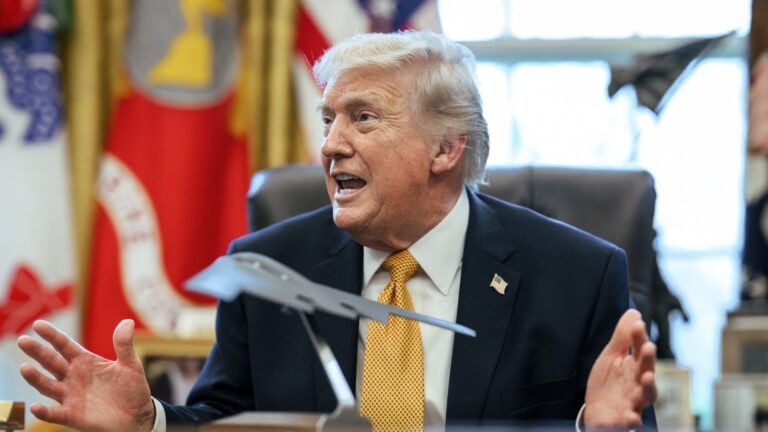
The public messages coming from Washington and Ottawa could hardly sound more different. U.S. President Donald Trump has been telling voters that the Canada-U.S. trade fight could be settled soon, while a Canadian government official with direct knowledge of the negotiations says the recent burst of diplomacy has produced only “limited progress.” Prime Minister Mark Carney has struck a similarly cautious note, describing merely a slight intensification in discussions and arguing that any movement so far reflects the United States shifting closer to Canada’s position.
That gap matters because the two governments are no longer talking past each other entirely. Negotiators are again discussing concrete tariff relief, particularly for steel and automobiles. But after an August breakdown that triggered another round of duties and counter-duties, Ottawa is treating optimistic language from the White House as a signal of possibility, not proof that an agreement is ready.
Washington Sounds Closer Than Ottawa
Trump Talks Up Canada Trade Deal as Ottawa Insider Reports Only ‘Limited Progress’
- Washington Sounds Closer Than Ottawa
- “Limited Progress” Still Means the Talks Have Reopened
- Steel and Autos Are the Most Likely First Deal
- Midterm Pressure Is Now Part of the Negotiation
- August’s Breakdown Still Shapes Ottawa’s Red Lines
- The Economic Stakes Are Already Visible
- A Deal Would Ease Pressure, Not End the Trade Fight
Trump’s public pitch has been unmistakably upbeat. At an October 25 campaign rally in Port Huron, Michigan, he predicted the dispute with Canada would be settled “pretty soon” and claimed Canada was prepared to make major concessions. In a Detroit television interview the same day, he said an agreement was “getting close” and suggested it could come before the November 3 midterm elections, while also acknowledging that it might take a couple of months. White House economic adviser Kevin Hassett has likewise described the two countries as very close to an agreement.
Ottawa has been far more restrained. On October 27, a Canadian government official with knowledge of the negotiations said discussions had continued but that there had been only “limited progress.” Carney had already told reporters that the pace of contact had picked up only slightly and that Canada had not changed its negotiating position. The contrast does not necessarily mean one side is misleading the public. Trump is campaigning and emphasizing the prospect of a win; Canadian officials are emphasizing what has actually been agreed. At the moment, those appear to be two very different things.
“Limited Progress” Still Means the Talks Have Reopened
The cautious Canadian language should not be confused with a complete stalemate. U.S. and Canadian officials are actively working on a package that could ease American tariffs on Canadian steel and automobiles. Commerce Secretary Howard Lutnick and Canada-U.S. Trade Minister Dominic LeBlanc have been in regular contact, while the U.S. Trade Representative’s office and Canadian officials have also been discussing the broader architecture of any arrangement. That represents a meaningful change from September, when senior U.S. officials were publicly signaling that Washington felt little urgency to strike a deal.
Still, “talking again” is not the same as “closing.” The latest reporting indicates that U.S. officials continue to seek additional concessions from Canada, and Canadian officials have not publicly identified a final negotiated text, completed tariff schedule or implementation date. Carney has said Canada remains prepared to sign an agreement that serves Canadian interests, but he has also stressed that Ottawa’s bottom lines have not moved. In practical terms, the diplomatic temperature has improved, but the bargaining gap remains large enough that a sudden announcement is possible without being predictable.
Steel and Autos Are the Most Likely First Deal
If an agreement emerges quickly, it is more likely to be targeted than comprehensive. Current discussions are concentrated on Section 232 tariffs affecting Canadian steel and automobiles. U.S. duties reach as high as 50% on Canadian steel, while autos face a 25% tariff. Commerce, rather than the U.S. Trade Representative, is central to that part of the negotiation because Section 232 tariffs are administered through the Commerce Department. One Canadian industry source familiar with the discussions described the potential outcome as a narrowed deal rather than a sweeping settlement.
That focus reflects the pressure points on both sides of the border. Canada’s auto sector is built around deeply integrated North American supply chains, and Statistics Canada estimates that U.S. demand accounted for 76.4% of payroll jobs in Canadian automobile and light-duty vehicle manufacturing in 2024. Iron and steel mills were also heavily exposed, with 67% of payroll jobs tied to U.S. demand. For a worker at an Ontario parts plant or a steel mill in Hamilton, tariff relief is not an abstract diplomatic achievement. It can influence production schedules, investment decisions and whether cross-border orders remain commercially viable.
Midterm Pressure Is Now Part of the Negotiation
The calendar is shaping the diplomacy. The United States votes in midterm elections on November 3, and Canada tariffs have become a problem for Republicans in border states where businesses are closely tied to cross-border supply chains. In Michigan, Republican Senate candidate Mike Rogers has publicly called for the tariff war with Canada to end, arguing that Canada is “not our enemy.” A September poll of likely Michigan voters found 64.2% opposed Trump’s 50% tariffs on Canadian goods, while 71.5% expected those tariffs to increase the prices they pay.
Maine provides another example. Republican Senator Susan Collins pressed the administration for relief on Canadian products used by blueberry, potato, apple and seaweed producers. On October 23, Trump signed a proclamation removing some Canadian goods from the 50% tariff list, with the changes taking effect October 30, while adding other products to the tariff regime. The timing does not prove that a broader Canada deal will arrive before election day, but it does explain why the White House has a stronger incentive than it did a month ago to show movement. Trade policy has become part of the campaign map.
August’s Breakdown Still Shapes Ottawa’s Red Lines
Canada’s caution is rooted in what happened only two months ago. In mid-August, both governments were close enough to a deal that Washington briefly delayed new 50% tariffs. On August 21, however, Carney suspended negotiations and recalled Canada’s negotiating team, saying last-minute U.S. changes were unfair, uneconomic and raised doubts about the reliability of any agreement. The next day, he said Washington had asked too much and offered too little. Canada subsequently announced retaliatory tariffs designed to match the new U.S. measures dollar for dollar.
One of the most important disputes involved autos, particularly the treatment of Canadian-made medium- and heavy-duty vehicles. Reporting on the August negotiations found that the talks collapsed in part over whether contemplated tariff relief would extend to those vehicles, a significant issue for Canadian manufacturing. That history helps explain why Carney’s latest language is deliberately conditional. He has said any progress now reflects Washington moving toward Canada’s position, not Ottawa retreating from the red lines that caused the August breakdown. For Canadian negotiators, a fast deal that recreates the same vulnerabilities would not count as progress simply because it arrives before a U.S. election.
The Economic Stakes Are Already Visible
Canada has good reason to want tariff relief without accepting an agreement at any price. The United States remains by far its largest export market. Statistics Canada reported that 71.7% of Canadian merchandise exports went to the U.S. in 2025, even after that share fell from 75.9% a year earlier. Canadian exports to the United States declined 5.8% during 2025, and Canada’s annual merchandise trade surplus with the U.S. narrowed to about C$81.6 billion. The relationship nevertheless remains enormous: Canadian government data put total Canada-U.S. goods and services trade at nearly C$3.5 billion per day in 2025.
The sector numbers show why autos and steel are at the centre of the current push. More than 93% of Canadian motor-vehicle exports went to the United States in 2025, while U.S. demand supported roughly 27,000 jobs in Canadian automobile and light-duty vehicle manufacturing in 2024. Manufacturing employment fell by nearly 36,000 workers from December 2024 to December 2025, and more than half of manufacturers surveyed in early 2026 said U.S. tariffs had negatively affected their business. A tariff breakthrough would not reverse every weakness facing Canadian manufacturing, but it could remove one of the largest sources of uncertainty confronting trade-dependent factories.
A Deal Would Ease Pressure, Not End the Trade Fight
Even a successful steel-and-auto agreement would leave the larger Canada-U.S. relationship unsettled. The United States declined in July to renew the Canada-United States-Mexico Agreement in its current form during the pact’s joint review. CUSMA remains in force, and Canada says the agreement can continue until 2036, but Washington has kept the review process open and is already soliciting public input for another joint review in 2027. In other words, the two countries can resolve selected tariffs without resolving their broader argument over how North American trade should operate.
That distinction is important when weighing Trump’s optimistic language against Ottawa’s more guarded assessment. A narrow deal before the midterms could lower costs for selected industries, reduce immediate political pressure and restore a more functional negotiating channel between the two governments. It would not automatically remove every U.S. tariff, end Canada’s retaliation, settle disputes involving autos and other sensitive trade rules, or guarantee long-term predictability under CUSMA. For now, the most defensible conclusion is also the least dramatic one: negotiations are alive again, there is a plausible path to limited relief, and the distance between public optimism and an actual signed agreement remains significant.
This Options Discord Chat is The Real Deal
While the internet is scoured with trading chat rooms, many of which even charge upwards of thousands of dollars to join, this smaller options trading discord chatroom is the real deal and actually providing valuable trade setups, education, and community without the noise and spam of the larger more expensive rooms. With a incredibly low-cost monthly fee, Options Trading Club (click here to see their reviews) requires an application to join ensuring that every member is dedicated and serious about taking their trading to the next level. If you are looking for a change in your trading strategies, then click here to apply for a membership.