35,000+ smart investors are already getting financial news, market signals, and macro shifts in the economy that could impact their money next with our FREE weekly newsletter. Get ahead of what the crowd finds out too late. Click Here to Subscribe for FREE.
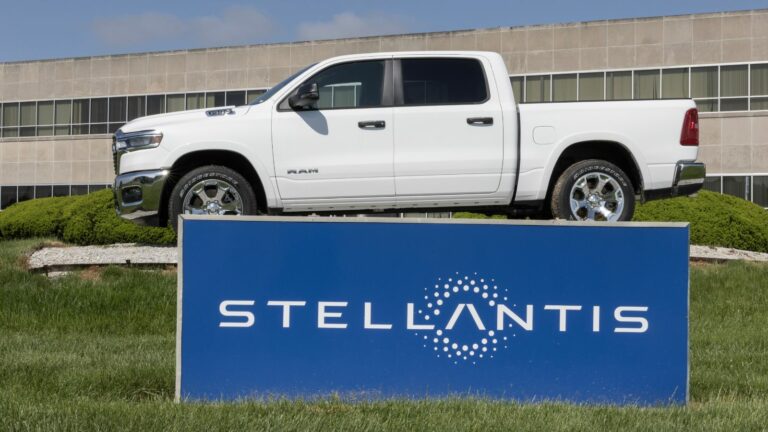
For more than two years, thousands of Brampton autoworkers have been waiting for a promised return to the assembly line. That uncertainty has now deepened into something more serious. Unifor says Stellantis disclosed on August 12, 2026 that it is considering closing and selling its Brampton Assembly Plant, the same facility once slated to build the next-generation Jeep Compass before that production was moved to Belvidere, Illinois. Stellantis has not issued a formal closure notice and says its focus remains on finding a sustainable manufacturing solution for Brampton. The dispute now sits at the intersection of jobs, public subsidies, U.S. tariffs, municipal land-use policy and looming contract talks—turning one idled factory into a test of how much automotive manufacturing Canada can retain as production decisions increasingly respond to North American trade pressure.
A Possible Sale Changes the Stakes for Brampton
Stellantis Weighs Brampton Plant Sale After Jeep Production Shifts to Illinois, Unifor Says
- A Possible Sale Changes the Stakes for Brampton
- The Jeep Compass Promise Moved South
- More Than 2,200 Workers Have Been Waiting Since 2023
- More Than C$1 Billion in Government Support Raises the Pressure
- Tariffs Rewrote the Economics of Cross-Border Production
- Brampton Is Trying to Keep the Property an Auto Site
- The Identity of the Potential Buyer Remains a Major Unknown
- Windsor Shows Stellantis Is Still Manufacturing in Canada
- September Contract Talks Could Become the Next Battleground
- Leapmotor Talks Show How Many Options Have Already Been Considered
Unifor’s latest disclosure changes the Brampton story from a prolonged production pause into a potential ownership question. The union says Stellantis informed it on August 12 that the company intends to open discussions with another firm about a possible sale. Unifor says it has not received formal written notice that the plant will close, because its collective agreement requires at least one year’s notice of a closure or sale.
Stellantis has been more guarded. The automaker said it was preparing for collective bargaining and had nothing new to announce, while repeating that its focus is a “sustainable manufacturing solution” for Brampton. That leaves a gap between possibility and decision. For workers, however, even preliminary sale talks matter. After years of waiting for production to resume, the question is no longer simply when the factory might restart, but who could ultimately own it and what, if anything, would be built there.
The Jeep Compass Promise Moved South
Brampton’s current crisis begins with the Jeep Compass. Stellantis planned to retool the Ontario plant for the next generation of the SUV, giving the factory a new mandate after production of the Chrysler 300, Dodge Charger and Dodge Challenger ended in late 2023. Retooling was paused in 2025 as trade uncertainty intensified, and in October Stellantis announced that North American Compass production would instead go to Belvidere, Illinois.
The Illinois decision was substantial. Stellantis said it would invest more than US$600 million to reopen Belvidere for the Jeep Cherokee and Compass, with initial production expected in 2027 and roughly 3,300 jobs anticipated. The move formed part of a broader US$13-billion U.S. manufacturing plan. For Brampton workers, the contrast was stark: a plant emptied to prepare for a new Jeep program remained idle, while the same nameplate became part of a factory revival south of the border.
More Than 2,200 Workers Have Been Waiting Since 2023
The human impact is measured in years as much as headcount. Unifor says more than 2,200 Local 1285 members employed at Brampton Assembly have been on layoff since the plant was idled in December 2023. Many expected the shutdown to be temporary—a bridge between the final run of large Chrysler and Dodge cars and a retooled future built around the Jeep Compass and electrified production.
That expectation matters because auto assembly jobs often anchor entire working lives. Brampton’s plant has operated for decades, and local officials describe automotive manufacturing as central to the city’s economy. Assembly plants support parts makers, logistics companies, skilled trades and service businesses. Unifor warns that permanent closure would reduce Canada’s automotive footprint and threaten thousands of jobs. For families living through a long layoff, a potential sale feels less like a corporate transaction than a decision about whether those careers can return someday.
More Than C$1 Billion in Government Support Raises the Pressure
The Brampton dispute carries unusual political weight because taxpayers helped finance Stellantis’s Canadian modernization strategy. In 2022, Stellantis announced a C$3.6-billion program for its Brampton and Windsor operations. The federal government committed up to C$529 million, while Ontario pledged up to C$513 million, aiming to convert the plants into modern facilities capable of producing electrified vehicles.
Those commitments later became leverage. Federal records show C$222.4 million had been disbursed under the contribution agreement for the Brampton-Windsor project as of March 31, 2025. After Stellantis moved the Compass mandate, Ottawa launched formal dispute resolution in November 2025, required a plan for Brampton and paused future payments. The government has also discussed recovering public money if commitments are not met. Any sale therefore unfolds alongside unresolved questions about contractual obligations, public funding and what Canada received in return for its industrial support for workers and communities.
Tariffs Rewrote the Economics of Cross-Border Production
U.S. tariffs are the force Unifor most directly blames for pushing Brampton toward this point. The Trump administration imposed a 25% tariff on imported automobiles in 2025, disrupting an industry built around vehicles and components crossing North American borders repeatedly. Stellantis paused Brampton retooling during that period and later reassigned the Compass to Illinois, a sequence Canadian politicians and the union linked to the new trade environment.
The pressure has not eased in 2026. Canada and the United States are negotiating under another tariff deadline, with Washington threatening new 50% duties on a range of Canadian imports beginning August 19. Canada still maintains counter-tariffs on certain U.S. automobiles. Not every tariff applies to every vehicle the same way, but cross-border production carries more political and financial risk. Brampton’s predicament shows how quickly an integrated manufacturing strategy can be rewritten when governments use trade policy to encourage domestic production.
Brampton Is Trying to Keep the Property an Auto Site
Brampton City Council has already tried to limit one possible outcome: converting the assembly site to another use. On February 25, 2026, council unanimously directed planning changes intended to designate the Stellantis lands at 2000 Williams Parkway for automotive assembly and related manufacturing. The move called for amendments to the city’s Official Plan, zoning by-law and other policies.
That decision does not force Stellantis to restart production, nor does it guarantee a buyer would manufacture vehicles. It does signal that local government wants the property preserved as strategic industrial land rather than treated as redevelopment. Mayor Patrick Brown and councillors argued that assembly plants create high-value jobs and attract suppliers and skilled-trades activity. If Stellantis advances a sale, the city’s planning stance could affect the transaction, especially for a buyer whose preferred use falls outside automotive manufacturing. Brampton is trying to protect the factory’s industrial purpose even if ownership changes.
The Identity of the Potential Buyer Remains a Major Unknown
A major unanswered question is the identity of the prospective buyer. Unifor says Stellantis told the union that it intends to open discussions with another firm, but neither side has named that party publicly. Stellantis has also stopped short of announcing a sale process, signed agreement or closure decision. That uncertainty makes it risky to assume what a transaction would mean for production.
A sale could produce different outcomes depending on the buyer’s business and the conditions attached. An automotive manufacturer could reuse an assembly site, while another owner could face city efforts to preserve the lands for vehicle manufacturing. Government funding and labour obligations add another layer. Until a buyer, price, timeline and intended use are disclosed, “potential sale” should be treated as exactly that. The immediate significance is that Stellantis is considering alternatives to operating Brampton itself, not that the factory has already been sold or permanently closed.
Windsor Shows Stellantis Is Still Manufacturing in Canada
The Brampton situation does not mean Stellantis has abandoned Canadian manufacturing altogether. In September 2025, Unifor said the company would restore a third shift at its Windsor Assembly Plant in early 2026. Stellantis has continued recruiting for Windsor positions this summer, including an August production-supervisor posting, showing manufacturing activity there remains part of its Canadian manufacturing footprint today.
That contrast makes Brampton politically complicated. Stellantis can point to Canadian operations even while Ottawa and Unifor argue that the company failed to honour the product commitment associated with Brampton. Windsor also shows why governments and unions focus on model allocations: an assembly plant without a vehicle program cannot survive on a corporate promise alone. The difference between Windsor and Brampton is not simply whether Stellantis operates in Canada, but where it assigns enough production to keep workers on the line. Brampton still lacks a product mandate capable of supporting a restart.
September Contract Talks Could Become the Next Battleground
The timing of the sale disclosure raises the stakes because Stellantis and Unifor are approaching a contract deadline. The current Stellantis agreement expires at 11:59 p.m. Eastern Time on September 20, 2026. Unifor says it will use the coming negotiations to address Brampton and protect jobs and incomes, placing the plant’s future inside bargaining covering other Stellantis workers in Canada.
The collective agreement gives the union meaningful leverage. According to Unifor, Stellantis must provide no less than one year’s notice of a closure or sale, and the union says formal notice has not been given. That does not eliminate Brampton’s risk, but it means the process cannot be reduced to an overnight shutdown. Bargaining could become the arena where Stellantis is pressed for a product commitment, income-security measures or sale guarantees. For laid-off workers, negotiations may be the clearest opportunity to turn years of uncertainty into enforceable terms.
Leapmotor Talks Show How Many Options Have Already Been Considered
Before the latest sale disclosure, a Brampton rescue involved Stellantis’s Chinese partner, Zhejiang Leapmotor Technology. Reuters reported in April that Stellantis was in discussions about building electric vehicles in Canada, with Brampton considered. Stellantis said it was evaluating programs for the plant, but no final decision had been made. Unifor later voiced concerns about a Chinese partner entering the shuttered facility.
The sale discussion makes that idea less settled. Ottawa says it remains engaged with Stellantis, Unifor and Ontario to protect workers and keep the plant operating, while Stellantis describes its goal as finding a sustainable manufacturing solution. Outcomes range from a new Stellantis product to a partner program, a sale to another operator or eventual closure. Brampton has moved beyond a retooling delay. The decision will determine whether a Canadian auto site returns to vehicle production or becomes a symbol of manufacturing lost to a changing trade regime.
This Options Discord Chat is The Real Deal
While the internet is scoured with trading chat rooms, many of which even charge upwards of thousands of dollars to join, this smaller options trading discord chatroom is the real deal and actually providing valuable trade setups, education, and community without the noise and spam of the larger more expensive rooms. With a incredibly low-cost monthly fee, Options Trading Club (click here to see their reviews) requires an application to join ensuring that every member is dedicated and serious about taking their trading to the next level. If you are looking for a change in your trading strategies, then click here to apply for a membership.