35,000+ smart investors are already getting financial news, market signals, and macro shifts in the economy that could impact their money next with our FREE weekly newsletter. Get ahead of what the crowd finds out too late. Click Here to Subscribe for FREE.
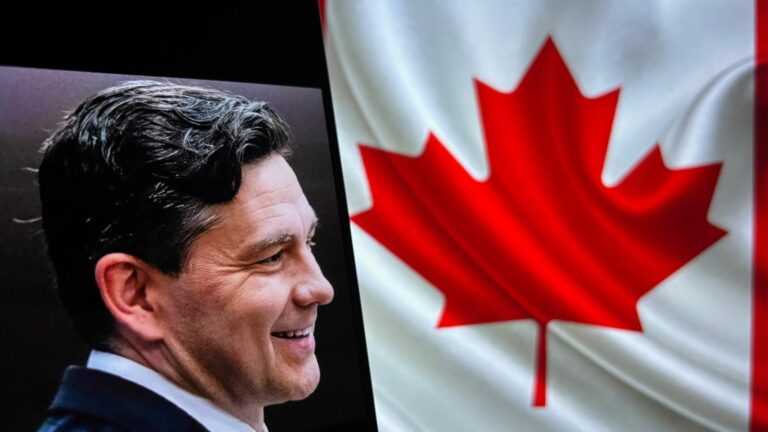
Alberta’s unity debate has moved from a provincial pressure campaign into a national political test. Pierre Poilievre’s decision to step directly into the referendum fight gives the issue new weight because he is not just the federal Conservative leader — he is now also an Alberta MP. What began as a separatist petition has become a larger argument over federalism, energy, treaty rights, national identity, and whether Ottawa can still persuade frustrated Albertans that Confederation works for them.
The fight is unfolding at a volatile moment. Alberta has a referendum scheduled for October 2026, separatists say they have gathered hundreds of thousands of signatures, and pro-Canada forces are trying to show that anger at Ottawa does not equal a mandate to leave Canada.
Poilievre’s Alberta Problem Becomes a National Unity Test
Poilievre Jumps Into Alberta Referendum Fight, Vows to Keep Province in Canada
- Poilievre’s Alberta Problem Becomes a National Unity Test
- Why the Referendum Fight Moved So Fast
- Alberta Separatism Is Loud, But Still a Minority View
- The Court Ruling Put Treaty Rights at the Centre
- A Referendum Would Not Be a Clean Exit Door
- Energy Grievances Are Driving the Political Fire
- The Pro-Canada Side Has Its Own Momentum
- Poilievre Has to Avoid Two Political Traps
- Ottawa’s Challenge Is to Offer More Than Warnings
- Why This Fight Could Reshape Conservative Politics
Pierre Poilievre’s entry into the Alberta referendum fight carries unusual political weight because he now represents Battle River—Crowfoot, one of the most reliably Conservative regions in the country. That makes his message harder to dismiss as an Ottawa lecture. He is speaking as the federal Conservative leader, but also as an Alberta MP whose own political future is tied to the province’s mood.
The challenge is delicate. Many Alberta separatists are rooted in the same anti-Ottawa frustration that has helped fuel Conservative support for years. Poilievre has spent much of his career attacking Liberal governments, federal bureaucracy, carbon policy, and what many Western voters see as economic unfairness. Now he has to argue that Canada is worth preserving without sounding like he is minimizing the grievances that made the separatist campaign possible.
Why the Referendum Fight Moved So Fast
The Alberta referendum fight accelerated after the province changed its citizen initiative rules, lowering the signature threshold and extending the canvassing period. Under current Elections Alberta rules, a citizen initiative petition requires signatures equal to 10 percent of the votes cast in the previous provincial election. For the current cycle, that threshold is 177,732 signatures.
Stay Free Alberta says it submitted nearly 302,000 signatures to trigger a vote on whether Alberta should leave Canada and become an independent state. The visual politics were powerful: boxes of petitions, supporters waving Alberta flags, and a message that the movement had gone from online anger to organized pressure. Even if every signature is not validated, the number forced national politicians to take the issue seriously.
Alberta Separatism Is Loud, But Still a Minority View
The separatist movement has energy, but available polling suggests it is still well short of majority support. Abacus Data found that 26 percent of Albertans supported independence, while 64 percent opposed it. Pollara found 27 percent of decided voters would vote to separate, though support rose when voters were asked whether they might use a separatist vote to send a message to Ottawa.
That distinction matters. Some Albertans appear to see separation less as a concrete plan and more as a protest tool. It is the political equivalent of slamming a door to make sure the rest of the house hears it. Poilievre’s opportunity is to speak to those voters directly: not only the committed separatists, but the frustrated Conservatives who want leverage, respect, and a better economic deal inside Canada.
The Court Ruling Put Treaty Rights at the Centre
The referendum push hit a major legal obstacle when an Alberta judge quashed the separatist petition, finding that the province had a duty to consult First Nations. Several First Nations argued that Alberta’s referendum process and any move toward separation could affect treaty rights. The ruling pushed Indigenous rights from the edge of the debate to the centre of it.
That changes the story dramatically. Alberta’s political arguments often focus on pipelines, equalization, carbon policy, and resource control. But the legal question is much larger than provincial frustration. Alberta exists on treaty lands, and First Nations leaders have emphasized that their treaties are with the Crown and Canada, not simply with the provincial government. Any serious secession debate would have to confront that constitutional reality.
A Referendum Would Not Be a Clean Exit Door
Even if a separation question reached the ballot, a referendum would not automatically remove Alberta from Canada. The Clarity Act requires the House of Commons to assess whether the question is clear and whether a clear majority has expressed a clear will to secede. It also says there is no unilateral constitutional right for a province to leave Canada.
That means a successful Alberta separation vote would likely trigger a long legal and political battle rather than a quick declaration of independence. Negotiations would involve Ottawa, other provinces, Indigenous representatives, and constitutional amendment rules. Poilievre’s pro-Canada pitch can lean on that reality: a referendum may sound simple on a bumper sticker, but the actual process would be messy, expensive, and uncertain.
Energy Grievances Are Driving the Political Fire
Alberta’s frustration is inseparable from energy politics. The province remains Canada’s energy engine, producing a dominant share of the country’s oil-equivalent output and natural gas. Alberta also has the highest GDP per capita among Canadian provinces, a status tied partly to its resource base. When Albertans argue that Ottawa has blocked their prosperity, energy policy is usually the core complaint.
Recent federal-provincial energy talks have added another layer. Industry executives have cautiously welcomed signs of a better investment climate, but they still warn that Canada is competing against the United States for capital. A proposed West Coast pipeline could become a major unity test of its own. For Poilievre, defending Canada may require arguing that Alberta can win more inside Confederation than outside it.
The Pro-Canada Side Has Its Own Momentum
The separatist side is not the only organized force in Alberta. The Forever Canadian petition, led by former Alberta deputy premier Thomas Lukaszuk, has pushed for a clear pro-Canada position. Recent reporting said more than 400,000 Albertans had signed the Forever Canadian petition, creating a political counterweight to the independence campaign.
That number matters because it challenges the idea that separatists speak for Alberta. It also explains why the fight has become so intense inside the legislature. A committee reviewing the pro-Canada petition descended into confusion after a UCP release appeared to announce a recommendation before the vote had actually taken place. The episode gave critics a new argument: that the process itself has become politicized.
Poilievre Has to Avoid Two Political Traps
Poilievre’s first trap is sounding too much like Ottawa. If his message becomes only a warning about legality, markets, and constitutional complexity, it may fail with voters who already feel ignored. Alberta separatism is partly emotional: pride, resentment, exhaustion, and a belief that the province has paid more into Canada than it has received in respect.
His second trap is validating the separatists while trying to court their supporters. If he blames everything on Liberal governments, he may strengthen the idea that Canada only works when Conservatives are in power. That is risky for a national leader. A durable unity argument has to survive elections, party changes, and policy disagreements. The message must be that Alberta belongs in Canada even when Ottawa is frustrating.
Ottawa’s Challenge Is to Offer More Than Warnings
Prime Minister Mark Carney has stressed rule of law, Indigenous rights, privacy, and clarity of the referendum question. Those are important guardrails, especially after allegations involving voter data and foreign-contact controversies around the separatist movement. But guardrails alone rarely win emotional political fights.
The federal government also has to show Albertans what a better bargain inside Canada looks like. That could include faster project approvals, credible pipeline pathways, stronger market access, and a more respectful approach to federal-provincial negotiations. If Ottawa’s message is only “you cannot leave,” separatists will portray it as proof of the problem. A stronger message is that Alberta can lead, prosper, and be heard without breaking the country apart.
Why This Fight Could Reshape Conservative Politics
The referendum battle could become one of the defining tests for Poilievre’s leadership. Conservatives have long benefited from Western alienation, but separatism turns that anger into a direct challenge to national unity. Poilievre now has to convert protest energy into a federalist argument without alienating the voters who helped build his movement.
That balancing act could reshape the party’s tone heading into the next election cycle. If Poilievre succeeds, he can present himself as the leader who understands Alberta well enough to keep it in Canada. If he stumbles, Liberals and New Democrats will argue that Conservative rhetoric helped fuel a crisis the party can no longer control. Alberta’s referendum fight is no longer just about Alberta. It is becoming a test of whether Canadian conservatism can be both Western and national at the same time.
This Options Discord Chat is The Real Deal
While the internet is scoured with trading chat rooms, many of which even charge upwards of thousands of dollars to join, this smaller options trading discord chatroom is the real deal and actually providing valuable trade setups, education, and community without the noise and spam of the larger more expensive rooms. With a incredibly low-cost monthly fee, Options Trading Club (click here to see their reviews) requires an application to join ensuring that every member is dedicated and serious about taking their trading to the next level. If you are looking for a change in your trading strategies, then click here to apply for a membership.