35,000+ smart investors are already getting financial news, market signals, and macro shifts in the economy that could impact their money next with our FREE weekly newsletter. Get ahead of what the crowd finds out too late. Click Here to Subscribe for FREE.
Ottawa’s latest pipeline push has turned a familiar Canadian argument into something sharper: not whether Alberta wants a new route to tidewater, but whether British Columbia, coastal First Nations, environmental groups, and private investors can be brought into a deal built around conditions.
Prime Minister Mark Carney’s framework ties a potential West Coast oil pipeline to carbon pricing, carbon capture, Indigenous consultation, private-sector backing, and financial benefits for B.C. Supporters see a nation-building bid to diversify energy exports beyond the United States. Opponents see a political collision course with the north coast tanker ban, marine protection rules, and unresolved questions about who would pay, who would profit, and who gets final say.
The Pipeline Is No Longer Just an Alberta Ask
Carney’s Pipeline Conditions Set Up the Next Big West Coast Fight
- The Pipeline Is No Longer Just an Alberta Ask
- Carney’s Conditions Are Meant to Change the Political Math
- The Tanker Ban Is the Flashpoint Waiting on the Coast
- B.C. Wants a Fair Share, Not Just the Risk
- Indigenous Consultation Is the Legal Test Carney Cannot Skip
- Carbon Capture Is Now the Project’s Climate Bargain
- The Export Argument Has Real Numbers Behind It
- The Environmental Fight Will Not Stay Local
- Investors May Be the Quiet Deciding Vote
- The Next Fight Is About Who Defines “National Interest”
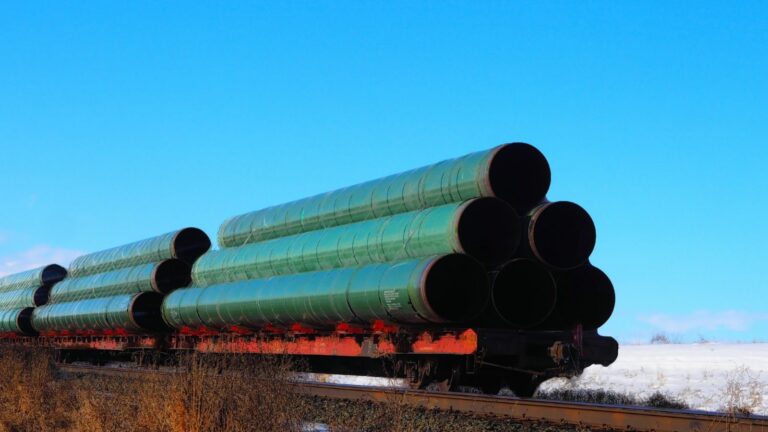
Alberta has spent years arguing that Canada needs another route to Asian oil markets, but the latest framework gives that ambition a more formal federal pathway. The proposed project is being discussed as a roughly 1-million-barrel-per-day crude pipeline to British Columbia’s northwest coast, with Ottawa and Alberta setting out a path that could see construction begin as early as September 2027 if major conditions are met.
That timeline gives the plan political momentum, but it does not make it inevitable. No route has been selected, no construction has started, and Alberta is still preparing a submission to the federal Major Projects Office. The province is acting as the early-stage proponent while trying to attract a private company later. That distinction matters: a government can create the runway, but investors still have to believe the project can survive lawsuits, elections, cost overruns, environmental scrutiny, and years of public resistance.
Carney’s Conditions Are Meant to Change the Political Math
Carney has tried to frame the project as conditional rather than unconditional. In Vancouver, he said a pipeline would need to be built in partnership with First Nations, with sustainability at the centre, and with meaningful benefits for British Columbia. He also tied the project to the Pathways carbon capture effort, which is supposed to reduce emissions from Alberta’s oil sands operations.
That approach is designed to make the pipeline harder to dismiss as a simple fossil-fuel expansion. It also creates a new kind of vulnerability. Every condition becomes a possible breaking point. If the carbon capture project stalls, if First Nations oppose the route, if B.C. refuses to accept tanker-risk changes, or if no private proponent steps forward, the political promise could collapse under its own requirements. Carney’s strategy may buy time, but it also raises expectations on all sides.
The Tanker Ban Is the Flashpoint Waiting on the Coast
The most explosive issue is the Oil Tanker Moratorium Act, which restricts large crude oil tankers from stopping, loading, or unloading along much of British Columbia’s north coast. For many coastal communities and First Nations, the tanker ban is not a technical regulation. It is a hard-won protection for waters tied to fishing, tourism, culture, and local economies.
Ottawa and Alberta’s earlier memorandum left open the possibility of adjusting the tanker ban if a pipeline is approved and Indigenous co-ownership and shared benefits are included. That is where the next fight begins. B.C. Premier David Eby has linked economic development to environmental protection and has specifically defended the north coast tanker ban. Any move to change it would almost certainly turn a pipeline debate into a broader battle over federal power, provincial consent, coastal sovereignty, and Indigenous rights.
British Columbia’s position is not simply anti-development. The province is pushing Ottawa for support on its own priorities, including trade corridors, electricity infrastructure, ports, housing, and softwood lumber. Eby’s argument is that B.C. should not be expected to absorb environmental and political risk for a project mainly designed to move Alberta bitumen to overseas buyers.
That framing could resonate beyond partisan lines. A new pipeline would pass through or terminate in B.C., but many of the direct production benefits would flow to Alberta. The federal government is therefore trying to make “substantial economic and financial benefits” for B.C. part of the formula. The problem is that benefit-sharing sounds simple until it becomes real. Revenue-sharing, port investment, Indigenous equity, spill-response capacity, and community compensation would all become contested pieces of the same negotiation.
Indigenous Consultation Is the Legal Test Carney Cannot Skip
Carney has described the duty to consult First Nations as non-negotiable, and legally, that is not optional language. Canada’s duty to consult and, where appropriate, accommodate Indigenous groups flows from section 35 of the Constitution Act, 1982. It applies when government decisions may affect established or potential Aboriginal or treaty rights.
That means the pipeline cannot be treated as a normal infrastructure file where Ottawa and Alberta agree first and communities are consulted later. Coastal First Nations have already signalled strong opposition to lifting the tanker ban, with leaders warning that they are not prepared to trade marine protection for promises of economic benefit. Indigenous co-ownership may appeal to some communities, but it will not erase the need for consent-focused, early, specific, and credible engagement with rights holders whose territories or waters could be affected.
Carbon Capture Is Now the Project’s Climate Bargain
The Pathways carbon capture project has become central to the politics of the pipeline. Ottawa and Alberta are linking new export capacity to industrial decarbonization, arguing that Canadian oil can remain competitive if its emissions intensity falls. The concept is straightforward: if oil sands production keeps growing or stays strong, emissions-cutting infrastructure must advance at the same time.
The hard part is execution. The Pathways proposal involves capturing carbon dioxide from oil sands facilities and moving it by pipeline to underground storage in northeastern Alberta. It is technically complex, expensive, and still subject to regulatory and financing questions. Critics argue that carbon capture can become a political shield for continued oil expansion. Supporters argue it is one of the few practical ways to reduce emissions from existing heavy industry. Either way, Carney has made it a condition, which means the pipeline’s fate is now tied to a separate mega-project.
The Export Argument Has Real Numbers Behind It
The case for a West Coast pipeline rests heavily on market diversification. Canada still sends the overwhelming majority of its crude exports to the United States, making producers vulnerable to U.S. market conditions, tariffs, refinery demand, and pipeline bottlenecks. The Trans Mountain expansion changed that picture by creating a larger Pacific outlet, and early data showed a sharp rise in crude shipments through British Columbia to Asia.
That gives pipeline supporters a powerful example. Trans Mountain’s expanded system nearly tripled capacity to about 890,000 barrels per day, and federal energy data shows marine exports rose after it entered service. Statistics Canada reported that crude exports through British Columbia surged in the first year after the expansion opened, with China, Hong Kong, Singapore, South Korea, and India becoming notable destinations. For Ottawa, those numbers support the argument that energy infrastructure can help Canada reduce dependence on one customer.
The Environmental Fight Will Not Stay Local
Pipeline debates in B.C. rarely remain confined to route maps and terminal permits. Environmental groups are already warning that more tanker traffic could increase risks for coastal ecosystems, including endangered southern resident killer whales. Those whales face overlapping pressures from prey scarcity, pollutants, vessel noise, physical disturbance, and oil-spill risk.
This creates a political challenge for Ottawa’s “build faster but protect standards” message. The federal government is also reviewing ways to speed up major-project approvals, which critics fear could weaken safeguards under species-at-risk rules. Even if Ottawa insists it will not cut corners, opponents will scrutinize every change to assessment rules, marine safety measures, and habitat protections. In B.C., the credibility of the project will depend not only on engineering safety but on whether communities believe the federal government is protecting the coast first.
Investors May Be the Quiet Deciding Vote
Political agreements can create headlines, but private capital decides whether many projects actually move. Alberta says it expects a private-sector proponent to step forward once early planning and regulatory support are clearer. That is a major assumption. Large pipelines require long-term shipping contracts, stable policy, predictable tolls, route certainty, Indigenous agreements, and confidence that approvals will survive court challenges.
The Trans Mountain expansion offers both encouragement and warning. It opened new export options and helped ease pipeline constraints, but it also became far more expensive and politically difficult than originally expected. Any new West Coast proposal would be judged against that history. Investors will ask whether Ottawa’s accelerated review process truly reduces risk or simply moves conflict into a compressed timeline. A pipeline with no private champion is still a political idea, not a bankable project.
The Next Fight Is About Who Defines “National Interest”
The phrase “national interest” now sits at the centre of the debate. Ottawa’s Building Canada Act and Major Projects Office are meant to streamline major projects that strengthen Canada’s economy, security, resilience, Indigenous participation, and climate objectives. A West Coast pipeline is being framed as exactly that kind of project: a trade-diversifying, revenue-generating, strategically important corridor.
But national interest is not self-defining. For Alberta, it may mean access to Asian energy markets. For B.C., it may mean ports, power, housing, and coastal protection. For coastal First Nations, it may mean defending rights, marine ecosystems, and local economies from risks they did not invite. Carney’s conditions are meant to bridge those definitions. Instead, they may expose how far apart they remain. The next West Coast fight will be about the pipeline, but also about who gets to decide what Canada needs most.
This Options Discord Chat is The Real Deal
While the internet is scoured with trading chat rooms, many of which even charge upwards of thousands of dollars to join, this smaller options trading discord chatroom is the real deal and actually providing valuable trade setups, education, and community without the noise and spam of the larger more expensive rooms. With a incredibly low-cost monthly fee, Options Trading Club (click here to see their reviews) requires an application to join ensuring that every member is dedicated and serious about taking their trading to the next level. If you are looking for a change in your trading strategies, then click here to apply for a membership.