35,000+ smart investors are already getting financial news, market signals, and macro shifts in the economy that could impact their money next with our FREE weekly newsletter. Get ahead of what the crowd finds out too late. Click Here to Subscribe for FREE.
A northern port once seen as a niche seasonal asset is now being talked about as part of a much bigger national strategy. Ottawa and Manitoba are accelerating work around Churchill, where rail, marine, and energy infrastructure could eventually form a new export corridor on Hudson Bay. The idea reaches far beyond one commodity: it touches trade diversification, Arctic sovereignty, Indigenous economic leadership, and the search for new routes to global markets. These 10 angles explain why Churchill has moved to the centre of a serious policy conversation, what has already been funded, where the biggest obstacles remain, and why talk of LNG shipments by 2030 is drawing both excitement and scrutiny.
Why Churchill Is Suddenly a National Project
Ottawa Eyes Churchill LNG Shipments by 2030, Manitoba Premier Says
- Why Churchill Is Suddenly a National Project
- What “Churchill Plus” Actually Means
- Why LNG Entered the Conversation
- Why 2030 Looks More Like a Target Than a Guarantee
- The Railway Is Still the Real Backbone
- Icebreakers May Decide Whether the Vision Can Scale
- Indigenous Ownership Changes the Politics and the Economics
- Europe and Global Markets Are Part of the Logic
- The Port Is Not Starting From Scratch
- The Environmental Test Could Make or Break the Project
- What Success Would Actually Mean
Churchill is back in the national conversation because the project now sits at the intersection of several priorities Ottawa has been pushing at once: faster approvals for major infrastructure, stronger Arctic presence, and new trade routes that do not rely so heavily on the United States or the Pacific coast. Prime Minister Mark Carney said this week that plans to expand the Port of Churchill are a top priority, while Manitoba Premier Wab Kinew has been pressing for the port to become a far more important outlet for western Canadian goods.
That is a striking shift for a facility long treated as a regional asset rather than a nation-building one. In federal planning documents, Port of Churchill Plus is now framed as a transformative strategy, not just a local upgrade. That language matters. It signals that Churchill is no longer being discussed only as a northern resupply point or legacy grain outlet, but as a potential Arctic trade corridor with national economic and strategic importance.
What “Churchill Plus” Actually Means
The phrase “Churchill Plus” sounds simple, but the concept is much broader than port modernization alone. Official federal descriptions say the project could combine an all-weather road, rail enhancements, an energy corridor, and stronger marine ice-breaking capacity. In other words, this is not a single construction job. It is a package of linked infrastructure meant to make Churchill more reliable, more competitive, and more useful across more months of the year.
That broader framing helps explain why the project keeps attracting attention from different sectors at once. Critical minerals producers care about export access. Northern communities care about dependable transportation and supply chains. Governments care about sovereignty, security, and regional development. Energy companies are watching the corridor idea because it suggests more than one possible use over time. If Churchill moves ahead in this larger form, it would not merely reopen old capacity; it would be recast as a multi-purpose northern gateway designed for very different trade flows than the port handled in the past.
Why LNG Entered the Conversation
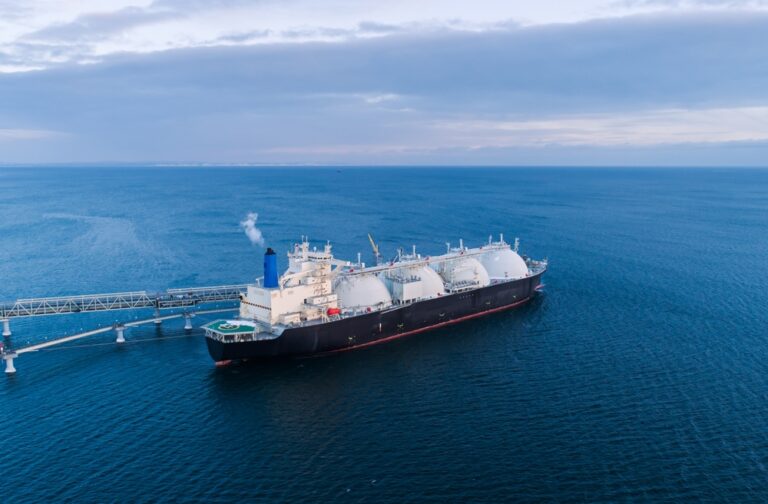
LNG is in the discussion because Manitoba is no longer talking only about grain, zinc, or general cargo. Premier Kinew has said the emerging energy corridor could include a pipeline, transmission infrastructure, fibre connections, and a shipping terminal, and he has spoken specifically about the possibility of liquefied natural gas exports and a liquefaction terminal in the Churchill area. That is a much more ambitious vision than simply expanding the existing port footprint.
The attraction is easy to see. LNG promises higher-value exports and a stronger case for large private investment than some traditional cargoes alone might offer. It also fits a broader Canadian debate about how to reach overseas buyers more directly. Still, Churchill is being sold as a mixed-use corridor, not a one-product bet. Kinew himself has emphasized that any successful buildout would need to work for critical minerals, agriculture, manufactured goods, and northern resupply as well. That makes LNG part of the pitch, but not the whole project.
Why 2030 Looks More Like a Target Than a Guarantee
The 2030 timeline has obvious political appeal. It sounds urgent, concrete, and close enough to rally investors and governments. But the official record suggests the project is still in a proving phase rather than on a locked-in build schedule. Federal announcements from early 2026 describe market sounding work, feasibility studies, and pre-development activity, while support for rail and port operations is framed through 2030. That is meaningful progress, but it is not the same thing as a fully approved LNG export chain already under construction.
That distinction matters because Churchill LNG would require far more than a headline and a willing port owner. It would need upstream gas supply, a credible business case, major marine and terminal engineering, environmental review, Indigenous partnership agreements, and dependable operating conditions in Hudson Bay. The state of public information so far points to momentum, not finality. Put differently, 2030 reads less like a guaranteed commissioning date and more like an aggressive political marker meant to speed up decision-making.
The Railway Is Still the Real Backbone
Any glamorous talk about tankers and export markets eventually runs into a harder truth: without the railway, Churchill does not function at scale. The Hudson Bay Railway is the only year-round surface transportation link for several northern Manitoba communities, and it is also what ties the port into the broader North American network. Federal documents continue to describe maintaining that link as essential not only for economic development, but for basic connectivity, supplies, and Arctic security.
That practical importance was made brutally clear after the 2017 flooding that damaged the rail line and cut Churchill off from its only land link. Ottawa later said fuel and grocery prices rose sharply, tourism fell, and local families and businesses were stranded. That history still shapes how the project is viewed today. Before investors can believe in year-round export dreams, they need confidence that the physical backbone under the project is reliable. In that sense, every Churchill ambition still begins with ballast, ties, culverts, bridge work, and maintenance discipline.
Icebreakers May Decide Whether the Vision Can Scale
One of the biggest unanswered questions is not political at all. It is operational. Churchill’s port season has historically been limited by ice conditions, which is why federal and industry partners are now studying what it would take to extend or even support year-round shipping. PrairiesCan says governments are jointly funding a feasibility study on specialized icebreakers, ice tugs, and research vessels, while Arctic Gateway Group has partnered with Fednav to examine the practical requirements for year-round operations.
That focus reveals how central marine access has become to the project’s future. A port that works for only a short window can still be useful, but it is far harder to build a modern energy export business around a narrow and uncertain season. Icebreaking does not solve every problem, but it is increasingly being treated as the hinge between a revived seasonal port and a genuinely strategic corridor. If the engineering case is weak or the operating costs prove too high, the Churchill story changes immediately.
Indigenous Ownership Changes the Politics and the Economics
One reason Churchill is being taken more seriously now is that the ownership model is no longer the old one. Arctic Gateway Group says it is owned by 41 Indigenous and Bayside communities, including 29 First Nations, and official government releases repeatedly describe the company as Indigenous-owned or Indigenous-led. That matters well beyond optics. It changes who benefits from the asset, who helps shape its future, and how the project is presented to both governments and the private sector.
It also gives Churchill a distinct position in a Canadian infrastructure environment where Indigenous equity and economic participation have become far more important to project credibility. Federal documents explicitly say the broader Port of Churchill Plus approach will prioritize Indigenous equity ownership as the region develops. That does not remove the usual tensions around speed, consultation, and environmental protection. But it does mean this is not being sold as a top-down extractive plan imposed on the North. Its champions are arguing that reconciliation and large-scale development can be linked rather than opposed.
Europe and Global Markets Are Part of the Logic
Churchill’s supporters are not pitching the port as a symbolic Arctic outpost. They are pitching geography. Federal material describes it as the Prairies’ only tidewater access and the shortest route from the prairie provinces to European markets. Arctic Gateway recently signed an agreement with Port of Antwerp-Bruges International to explore long-term trade development, and the company explicitly says Europe’s search for reliable supplies of energy and critical raw materials creates an opening for Churchill.
That logic becomes easier to understand in the context of the broader LNG market. The IEA says Europe’s LNG imports surged in the first half of 2025, while the EIA expects North American LNG export capacity to more than double between 2023 and 2028 if projects under construction come online as planned. Canada’s existing LNG buildout has been heavily Pacific-facing, centred in British Columbia. Churchill would represent a different commercial argument altogether: not another west coast outlet to Asia, but a northern route pitched as a strategic bridge between western Canadian production and Europe.
The Port Is Not Starting From Scratch
For all the futuristic language around LNG and energy corridors, Churchill is not a blank slate. Recent years have already changed the asset. In August 2024, the Port of Churchill shipped its first critical minerals cargo in more than two decades, using zinc concentrate from Hudbay. Arctic Gateway said more than 100 rail cars were delivered over two months and stored in a new facility at the port, the first new building there in over 20 years. That milestone gave the expansion story something valuable: proof that Churchill could move beyond old grain-era assumptions.
The momentum did not stop there. In March 2026, Arctic Gateway said Hudbay would double critical mineral shipments through Churchill in 2025 and that the company planned to triple current storage capacity. Those are still modest numbers compared with what a major LNG corridor would require, but they matter because they show the port is already evolving in real commercial terms. Investors and governments tend to trust projects more when they can point to a working asset rather than a purely conceptual map.
The Environmental Test Could Make or Break the Project
Churchill’s appeal rests partly on fragile geography, which means environmental scrutiny is not a side issue but a central one. Governments have already tied economic planning to a study of a potential national marine conservation area in western Hudson Bay, and Manitoba has put money into that work. At the same time, Premier Kinew has acknowledged the need to think through climate mitigation, wildlife conservation, and sea and ice protection as development plans take shape.
That balancing act may become the toughest part of the entire story. A project sold as nation-building will still need to survive local, Indigenous, scientific, and regulatory scrutiny in one of Canada’s most sensitive northern environments. Climate change complicates the picture further by affecting both ecosystems and infrastructure. Northern rail maintenance is already being discussed in the context of permafrost and more intense weather risks. If Churchill succeeds, it will have to do so by proving not just that it can move cargo, but that it can expand without losing public legitimacy in the very region it claims to strengthen.
What Success Would Actually Mean
If Churchill works at the scale its political backers envision, the payoff would be larger than a busier port. Manitoba would gain a stronger case as a logistics and trade province, not just a landlocked one. Northern communities could see more jobs, more reliable infrastructure, and more local economic participation through Indigenous ownership. Canada would also have a more diversified Arctic-facing export option at a time when policymakers are clearly worried about overdependence on a small number of trade corridors and geopolitical choke points.
But success should be judged carefully. A revived northern gateway is not automatically the same thing as a profitable LNG export system, and a promising trade corridor is not automatically a finished national project. The reason Churchill has become such a compelling story is that it now carries several possible futures at once: strategic, commercial, environmental, and political. Ottawa and Manitoba have moved it well beyond speculation, yet the hardest parts still lie ahead. What happens next will depend less on rhetoric than on engineering, financing, approvals, and trust.
This Options Discord Chat is The Real Deal
While the internet is scoured with trading chat rooms, many of which even charge upwards of thousands of dollars to join, this smaller options trading discord chatroom is the real deal and actually providing valuable trade setups, education, and community without the noise and spam of the larger more expensive rooms. With a incredibly low-cost monthly fee, Options Trading Club (click here to see their reviews) requires an application to join ensuring that every member is dedicated and serious about taking their trading to the next level. If you are looking for a change in your trading strategies, then click here to apply for a membership.