35,000+ smart investors are already getting financial news, market signals, and macro shifts in the economy that could impact their money next with our FREE weekly newsletter. Get ahead of what the crowd finds out too late. Click Here to Subscribe for FREE.
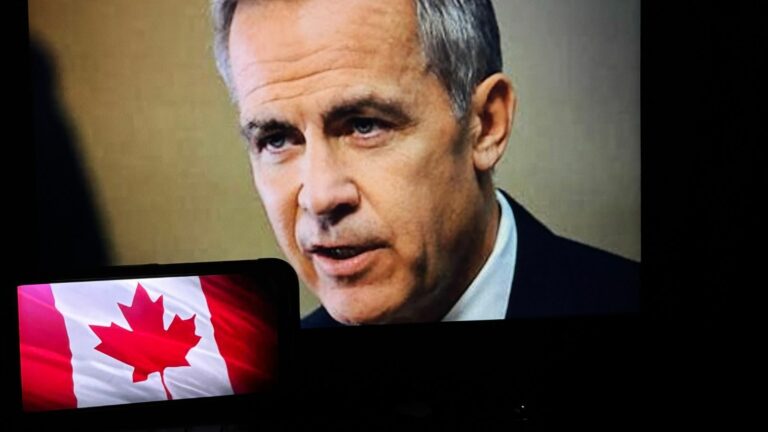
Mark Carney’s place on TIME’s 2026 list is about far more than a magazine honor. It captures the unusual rise of a figure who has moved from crisis-era central banking to climate finance to national leadership at a moment when economic power, political power, and global strategy are colliding. In an age defined by trade shocks, sovereignty debates, and investment battles, Carney sits at the center of several of the biggest conversations shaping the year.
These 10 angles explain why his influence stands out in 2026: the meaning of the TIME recognition, the force of his financial résumé, the crises that built his reputation, the political path that brought him to Ottawa, and the agenda now testing whether international stature can become durable domestic success.
Why the TIME Recognition Matters
Mark Carney Makes TIME’s 2026 Most Influential List
- Why the TIME Recognition Matters
- A Resume Few Political Leaders Can Match
- The Financial Crisis That Built His Reputation
- The London Years Made Him Global
- From Technocrat to Prime Minister
- Why 2026 Changed the Scale of His Power
- His Message Reaches Beyond Canada
- Climate Finance Still Follows Him
- A Domestic Agenda Measured in Scale
- Influence Does Not Cancel Criticism
- Why TIME’s Choice Fits the Moment
Being named to TIME’s 2026 list matters because the publication is not simply rewarding visibility. It is signaling who has become consequential across institutions, borders, and industries. In Carney’s case, the selection reflects a rare mix of economic authority and political relevance. He is not on the list because he suddenly became famous. He is on it because his decisions now sit close to questions of affordability, trade, investment, security, and democratic resilience.
That distinction helps explain why the tribute attached to his entry carries unusual weight. It came from Christine Lagarde, one of the most recognizable economic figures in the world, which gives the recognition a peer-review quality rather than a celebrity gloss. When a leader is being assessed by someone who has also run a major central bank and steered global institutions, the message is clear: Carney’s reach is being taken seriously by the people who understand how power actually moves.
A Resume Few Political Leaders Can Match
Long before he entered elected politics, Carney had already built one of the most unusual résumés in public life. He served as Governor of the Bank of Canada, then crossed the Atlantic to become Governor of the Bank of England. He also chaired the Financial Stability Board, the international body created to strengthen oversight of the global financial system after the banking crisis. That combination gave him credibility in Ottawa, London, Basel, Washington, and boardrooms far beyond any one country.
That history matters in 2026 because influence often depends on recognition before a leader even enters the room. Many prime ministers need years to build international standing; Carney arrived with it. His education in economics at Harvard and Oxford reinforced the technocratic image, but the bigger point is practical rather than academic. He learned how markets behave under stress, how regulators coordinate across borders, and how institutions communicate when confidence is fragile. Very few modern politicians begin office with that background already in place.
The Financial Crisis That Built His Reputation
Carney’s reputation was forged during the global financial crisis, when he took over at the Bank of Canada in early 2008 just as the system was coming under immense strain. The Bank later described how it dramatically eased monetary conditions and supplied significant liquidity as markets seized up. That period became foundational to the way Carney has been understood ever since: not as a theorist first, but as a crisis operator expected to stay calm while others panic.
That early chapter also explains why he still carries authority well beyond partisan politics. TIME’s 2026 write-up points back to the post-2008 reform era, crediting Carney and his peers with helping shape a sturdier framework for banking and finance. Whether admirers overstate his individual role is a fair debate, but the broad takeaway is not really disputed. He emerged from that era with a reputation for seriousness, fluency in risk, and a willingness to speak in plain terms about complex instability. That combination remains central to his public image.
The London Years Made Him Global
Carney’s move to the Bank of England turned a respected Canadian policymaker into a truly global one. He became the first non-British person to lead the institution, a fact that on its own made headlines. Once there, he confronted a string of difficult moments, from weak inflation to the long political and economic drama surrounding Brexit. Those years placed him under a different kind of spotlight, one where every public remark could move currencies, markets, and expectations in real time.
The importance of that chapter goes beyond prestige. London expanded his range. It exposed him to European politics, global investors, and a media environment far harsher than the one he had known in Canada. By the time he left in 2020, he was no longer just a Canadian central banker with an international profile. He had become one of the most recognizable economic officials in the world. That matters now because his current influence is built partly on memory: foreign capitals and financial actors already know who he is and how he works.
From Technocrat to Prime Minister
Carney’s move into politics still feels unusual because it broke the expected sequence. He did not spend years climbing through Parliament, building a ministerial résumé, or rehearsing a conventional party identity. Instead, he was elected leader of the Liberal Party in March 2025 and sworn in as Canada’s 24th prime minister the same month. That made his arrival look less like a standard political ascent and more like a transfer of crisis-management credibility into democratic leadership.
That unusual route is part of why he fascinates both supporters and critics. Admirers see someone with real-world economic experience stepping into government at a volatile time. Skeptics see a polished technocrat who had to prove that institutional fluency could translate into retail politics. Both views contain some truth. What makes Carney influential is not that the argument has ended, but that it remains alive while he still holds power. He represents a test case for whether expertise, once treated as elite distance, can be converted into broad public authority.
Why 2026 Changed the Scale of His Power
Reputation alone does not make a leader influential. The ability to act does. That is why 2026 marked a turning point for Carney. By mid-April, his Liberals had secured a parliamentary majority, reaching 174 seats in the 343-seat House of Commons after special-election wins and defections from opposition parties. That development mattered because it reduced his dependence on rival parties and gave him a firmer governing runway at a moment when Canada faces pressure from rising costs and an unsettled international environment.
The political significance goes deeper than arithmetic. A minority government can still look important abroad, but it operates with constant domestic fragility. A majority changes how allies, investors, and opponents read a leader’s durability. It suggests that policy promises may actually become law. For Carney, that shift turned a high-profile prime minister into a potentially durable one. TIME’s recognition lands differently in that context. It is no longer simply about a former central banker in office. It is about a leader with greater capacity to move policy, budgets, and institutions.
His Message Reaches Beyond Canada
Carney’s influence in 2026 is also tied to the kind of language he uses about the world order. At the World Economic Forum in Davos, he framed Canada’s path as principled and pragmatic, arguing that middle powers are not helpless in an era of great-power rivalry. That message stood out because it blended economic realism with diplomatic ambition. Rather than describing Canada as a passive bystander squeezed between larger states, he presented it as a country that could help shape outcomes through alliances, investment, and strategic coordination.
That framing matters because it gives Carney a role larger than day-to-day domestic management. He is trying to position Canada as a bridge country with leverage in trade, capital, energy, and technology. The pitch is especially resonant when economic coercion and supply-chain vulnerability have become central political concerns. Even when others push back on his interpretation of global change, they are still engaging with his thesis. That is one measure of influence in itself: setting terms that others feel compelled to answer rather than ignore.
Climate Finance Still Follows Him
One reason Carney’s influence has lasted across so many phases of his career is that he was not confined to traditional central banking. In 2019, he was appointed United Nations Special Envoy on Climate Action and Finance, a role that reflected how seriously his views on financial risk were being taken outside monetary policy. Years earlier, while at the Bank of England, he had already helped push climate risk into mainstream financial debate through a landmark speech arguing that markets were underpricing long-term environmental danger.
That legacy still travels with him in 2026. Even for people who disagree with parts of his politics, Carney remains associated with the effort to make climate questions legible to investors, regulators, insurers, and major institutions. That matters because modern influence is rarely confined to one file. A leader who can speak to capital markets, national competitiveness, and climate risk in the same frame occupies more space than a conventional politician. Carney’s brand has been built partly on that crossover ability, and it continues to shape how he is received.
A Domestic Agenda Measured in Scale
For all the attention on his global profile, Carney’s influence will ultimately be tested through domestic delivery. His government’s stated agenda has emphasized scale: large investment programs, economic resilience, strategic industry, and infrastructure that can make Canada less vulnerable to external shocks. Budget 2025 was presented as a plan to catalyze $1 trillion in investment over five years. Other announcements have pointed to a $51 billion Build Communities Strong Fund, major northern investments, and a new automotive strategy aimed at low- and zero-emission growth.
Those numbers matter because they show the style of leadership Carney is attempting to build. He is not presenting himself as a narrow caretaker or symbolic figure. He is trying to govern through statecraft measured in capital flows, industrial plans, and long-term systems. That is one reason his inclusion on a list of influential people makes sense. Influence is not just about rhetoric; it is about whether a leader can align markets, government machinery, and public purpose around a coherent direction. Carney’s domestic project is ambitious enough to be judged on that standard.
Influence Does Not Cancel Criticism
It would be too neat to treat Carney’s rise as a story of admiration alone. His critics argue that technocratic confidence can sound remote in a country still wrestling with housing strain, grocery pressure, and uneven growth. Opponents also attacked the way his government reached majority status, saying it owed too much to defections and political maneuvering rather than a fresh national vote. Abroad, even some economic leaders pushed back on the sharper parts of his Davos worldview, resisting the notion that the old order had fully ruptured.
That tension is part of what makes him a compelling figure in 2026 rather than a settled one. Carney is influential partly because he sits where several debates overlap: expertise versus populism, national sovereignty versus interdependence, investment ambition versus kitchen-table impatience. Leaders who provoke no argument are often leaders who are not shaping the moment very much. In Carney’s case, the praise is substantial, but so is the scrutiny. That combination usually signals genuine importance rather than a passing burst of attention.
Why TIME’s Choice Fits the Moment
Carney makes sense as a 2026 selection because he represents a type of influence that has become especially valuable in unsettled times. He can move between central bank language and political language, between statecraft and market logic, between domestic affordability debates and international strategic positioning. Few figures have led two G7 central banks, chaired a global stability body, worked on climate finance at the UN level, and then stepped into a prime minister’s office with a live governing mandate.
Whether this becomes a lasting legacy will depend on outcomes rather than biography. If affordability improves, investment materializes, and his government proves durable, the 2026 recognition may later look like an early marker of a larger era. If delivery falls short, it may be remembered as a moment when promise briefly outran results. Either way, the logic of the honor is easy to understand. In a year shaped by uncertainty, Mark Carney is not merely participating in the conversation. He is helping define what the conversation is about.
This Options Discord Chat is The Real Deal
While the internet is scoured with trading chat rooms, many of which even charge upwards of thousands of dollars to join, this smaller options trading discord chatroom is the real deal and actually providing valuable trade setups, education, and community without the noise and spam of the larger more expensive rooms. With a incredibly low-cost monthly fee, Options Trading Club (click here to see their reviews) requires an application to join ensuring that every member is dedicated and serious about taking their trading to the next level. If you are looking for a change in your trading strategies, then click here to apply for a membership.