35,000+ smart investors are already getting financial news, market signals, and macro shifts in the economy that could impact their money next with our FREE weekly newsletter. Get ahead of what the crowd finds out too late. Click Here to Subscribe for FREE.
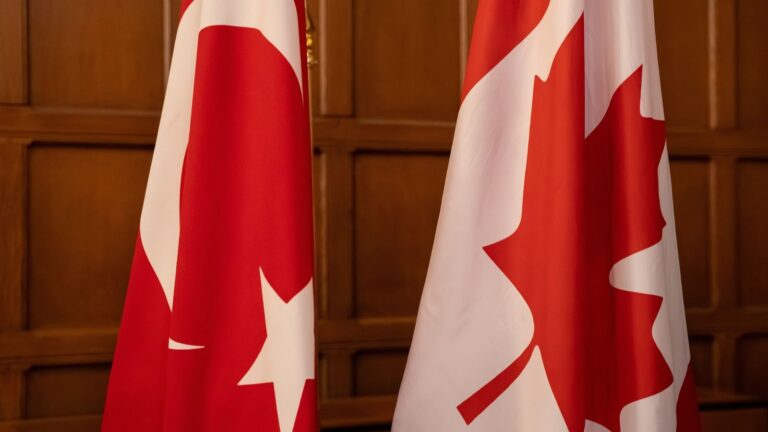
Prime Minister Mark Carney’s first bilateral visit to Türkiye by a Canadian prime minister produced more than a diplomatic photo opportunity. Canada and Türkiye have launched a new Strategic Partnership built around trade and investment, energy, defence and security, and closer people-to-people links, backed by a three-year action plan.
The timing is significant. Ottawa is trying to reduce the economic risk that comes with sending such a large share of Canadian exports to the United States, while Türkiye is looking for investment, energy security and deeper industrial partnerships with NATO allies. The result is a relationship that suddenly has a much more commercial edge: free-trade talks are moving to a formal negotiating round, Canadian nuclear technology is in contention for a major Turkish project, defence companies are being encouraged to work together, and air links are expanding.
A Historic Upgrade From a Limited Relationship
Carney Signs New Türkiye Trade, Energy and Defence Partnership as Canada Seeks Markets Beyond the U.S.
- A Historic Upgrade From a Limited Relationship
- Free-Trade Talks Move From Ambition to a Calendar
- The Bigger Story Is Canada’s Push Beyond the U.S.
- Energy Could Become the Partnership’s Biggest Commercial Test
- A CANDU Bid Gives the Energy Pact a Real Project to Watch
- Defence Ties Mark a Sharp Reset After Years of Friction
- More Flights and Export Finance Are Designed to Make Trade Easier
- The Opportunity Is Real, but So Are the Limits and Political Trade-Offs
Carney and Turkish President Recep Tayyip Erdoğan formally launched the Canada-Türkiye Strategic Partnership in Ankara on October 22, giving the relationship a structure that goes well beyond occasional ministerial meetings. The agreement is organized around four pillars: trade and investment, defence and security, energy and climate cooperation, and government-to-government and people-to-people ties. Foreign ministers are expected to oversee implementation of a three-year action plan, while the two countries plan an annual strategic dialogue and continued economic, political-military and counter-terrorism consultations. For Canada, the visit was historic because no previous Canadian prime minister had made a dedicated bilateral trip to Türkiye.
The shift is striking because the two countries have had diplomatic relations since 1944 but have often operated well below the potential suggested by their NATO membership and G20 ties. Erdoğan described the moment as the start of a new era after what he called a long-standing disconnect. Carney framed it more broadly, arguing that Canada needs a denser network of reliable partners as the old global economic and security order becomes less predictable. That makes Türkiye valuable not simply as a market of more than 85 million people, but as a regional power positioned between Europe, Asia and the Middle East.
Free-Trade Talks Move From Ambition to a Calendar
The clearest commercial milestone is the decision to hold the first negotiating round for a comprehensive Canada-Türkiye free trade agreement in Ankara from November 30 to December 4, 2026. That turns an idea advanced earlier this year into a scheduled negotiating process. Bilateral merchandise trade reached about C$4.3 billion in 2025, consisting of roughly C$1.1 billion in Canadian exports and C$3.2 billion in imports from Türkiye. Ottawa says two-way trade has grown by almost 50% since 2020, giving negotiators a larger base to work from even though the relationship remains small beside Canada’s trade with the United States or European Union.
Investment ties have also been moving faster than the headline trade numbers suggest. Canadian direct investment in Türkiye reached about C$3.3 billion in 2025, up from C$1 billion in 2022, while Turkish direct investment in Canada stood at C$233 million. Erdoğan said the two sides want to lift trade first to US$5 billion and eventually to US$10 billion, although no deadline was attached. A trade agreement could lower tariffs and address non-tariff barriers, services, investment rules and regulatory issues. The important point is that the partnership now has both political backing and a timetable, rather than relying on general promises to do more business.
The Bigger Story Is Canada’s Push Beyond the U.S.
Türkiye matters partly because of what is happening elsewhere. Canada remains deeply integrated with the U.S. economy: 72.5% of Canadian merchandise exports went to the United States in 2025, even after that share fell to its lowest level since the early 1980s. At the same time, Global Affairs Canada reported that exports to non-U.S. markets rose 11.1% in 2025 and accounted for 32.8% of total goods-and-services exports. Those figures show why diversification has become more than a slogan. Canada is not trying to unwind North American supply chains, but it is trying to create enough alternative demand that a tariff fight or political dispute with Washington does not have the same ability to squeeze Canadian producers.
Carney’s government has made doubling non-U.S. exports over the next decade a central economic objective, supported by new trade agreements, investment partnerships and billions of dollars for trade-enabling infrastructure. The Türkiye pact fits that strategy almost perfectly. It is not large enough by itself to transform Canada’s export map, but it can add another destination for energy, aerospace, mining services, agriculture, advanced technology and defence-related products. In that sense, Ankara is one piece of a portfolio approach: Ottawa is trying to build resilience by adding many commercially meaningful relationships rather than searching for a single replacement for the U.S. market.
Energy Could Become the Partnership’s Biggest Commercial Test
Energy cooperation is one of the most detailed parts of the new arrangement. Canada and Türkiye signed a separate joint statement covering liquefied natural gas, civil nuclear power, renewable energy, clean technologies, critical infrastructure resilience and mineral supply chains. The two governments also agreed to encourage direct discussions between Canadian LNG project proponents and potential Turkish long-term buyers. That matters because Türkiye is heavily dependent on imported fuels, while Canada is bringing new LNG export capacity to international markets and wants more customers outside North America.
The agreement extends well beyond selling fuel. Officials identified opportunities in drilling, geological services, laboratory work, resource modelling, battery minerals and responsible mining standards. They also discussed renewable power, carbon capture and next-generation geothermal technology. For Canadian companies, that creates openings across the full energy supply chain rather than one commodity transaction. For Türkiye, the appeal is diversification: more sources of gas, more access to mining expertise and another option for nuclear technology. The commercial outcome will depend on pricing, infrastructure, financing and individual projects, but the energy statement is unusually specific about the types of transactions both governments want to facilitate.
A CANDU Bid Gives the Energy Pact a Real Project to Watch
The nuclear file gives the new partnership an immediate, high-value test. Carney said Canadian engineering firm AtkinsRéalis has a meaningful chance to participate in Türkiye’s planned second nuclear power project, and the company’s chief executive said it would conduct a feasibility study for potential CANDU reactors in the Black Sea region of Sinop. Türkiye has also been considering proposals involving South Korean, Russian, Chinese and Japanese interests, so the Canadian bid faces serious competition. Still, the fact that CANDU technology is being discussed at the leader level shows how quickly the relationship has moved from diplomatic outreach to a potentially multibillion-dollar industrial opportunity.
Türkiye’s nuclear ambitions make the contest important. Its first nuclear station at Akkuyu is being built by Russia’s Rosatom under a US$20-billion agreement, while Ankara is also planning additional large-scale nuclear capacity in Sinop and Thrace. Türkiye’s energy ministry says the country ultimately wants roughly 20 gigawatts of nuclear capacity in the coming decades, alongside work on small modular reactors. A successful Canadian role would therefore be about more than one reactor sale. It could create long-term demand for engineering, components, maintenance, technical expertise and training, while giving Türkiye another technology and supplier relationship as it diversifies its power system.
Defence Ties Mark a Sharp Reset After Years of Friction
Defence cooperation may be the most politically sensitive part of the reset. Canada and Türkiye signed a new memorandum on defence-sector partnerships designed to connect companies and expand industrial collaboration. It builds on a Statement of Intent signed by the two defence ministers at the NATO summit in Ankara in July, which created a framework for military-to-military dialogue, operational support and possible defence-industrial cooperation. Türkiye brings significant scale to that discussion: it has NATO’s second-largest standing military, and its defence and aerospace industry reported exports of more than US$10 billion in 2025, with European and NATO markets becoming increasingly important.
The new tone is notable because relations were strained for years over Canadian military export controls. Canada had maintained a presumptive-denial policy for military export permits to Türkiye, but Global Affairs Canada ended that policy on January 29, 2024, after bilateral discussions on export-control requirements and re-export assurances. The current partnership does not mean every military sale is automatically approved; Canadian export permits remain subject to the country’s legal review system. But politically, the direction has changed. Ottawa now sees Turkish industrial capacity as something Canadian firms may be able to work with in aerospace, naval systems, sensors, advanced manufacturing and other allied supply chains.
More Flights and Export Finance Are Designed to Make Trade Easier
The partnership also targets the less dramatic obstacles that often determine whether trade grows in practice. Canada and Türkiye formalized an expanded air transport agreement that raises the permitted number of weekly passenger-combination flights from 12 to as many as 21 for each country and removes limits on all-cargo flights. For families and tourists, that can mean more choices and potentially stronger competition on routes. For businesses, especially exporters moving time-sensitive or high-value products, more cargo flexibility can matter just as much as a tariff reduction negotiated on paper.
The financial architecture is expanding too. Export Development Canada and Türk Eximbank signed a memorandum to help Canadian and Turkish companies cooperate on projects in third countries, including opportunities in energy, infrastructure, transportation, mining and critical minerals. Carney also announced a Canadian trade mission to Türkiye in 2027, led by the international trade minister. Taken together, these measures show an effort to build a working commercial corridor rather than simply sign a political declaration. A manufacturer in Canada may still need a buyer, financing, shipping capacity and local partners before a deal can happen; Ottawa and Ankara are trying to improve all four pieces at once.
The Opportunity Is Real, but So Are the Limits and Political Trade-Offs
The scale of the opportunity should not be overstated. Türkiye accounted for less than 0.3% of Canada’s merchandise trade in 2025, while the United States still absorbed more than seven out of every ten Canadian merchandise export dollars. Even if bilateral Canada-Türkiye trade eventually reaches Erdoğan’s US$10-billion aspiration, that would remain modest beside the U.S. relationship. The value of the partnership is therefore cumulative. If Canada can deepen trade with Türkiye while also expanding in Europe, Asia, the Gulf and other markets, the combined effect could gradually reduce concentration risk for Canadian exporters.
There are also political complications. Canada and Türkiye have disagreed in the past over human rights and military exports, and rights groups continue to criticize Ankara over pressure on political opponents, journalists and LGBTQ+ organizations. Foreign Affairs Minister Anita Anand raised the importance of human rights during the visit, and Carney later said Canadian officials had specifically raised LGBTQ+ rights with Turkish counterparts. Those tensions will not disappear because a strategic partnership has been signed. The real measure of success will be whether Ottawa can expand trade and security cooperation while still applying its export-control laws, raising rights concerns and turning headline agreements into actual contracts, investment and market access for Canadian firms.
This Options Discord Chat is The Real Deal
While the internet is scoured with trading chat rooms, many of which even charge upwards of thousands of dollars to join, this smaller options trading discord chatroom is the real deal and actually providing valuable trade setups, education, and community without the noise and spam of the larger more expensive rooms. With a incredibly low-cost monthly fee, Options Trading Club (click here to see their reviews) requires an application to join ensuring that every member is dedicated and serious about taking their trading to the next level. If you are looking for a change in your trading strategies, then click here to apply for a membership.