35,000+ smart investors are already getting financial news, market signals, and macro shifts in the economy that could impact their money next with our FREE weekly newsletter. Get ahead of what the crowd finds out too late. Click Here to Subscribe for FREE.
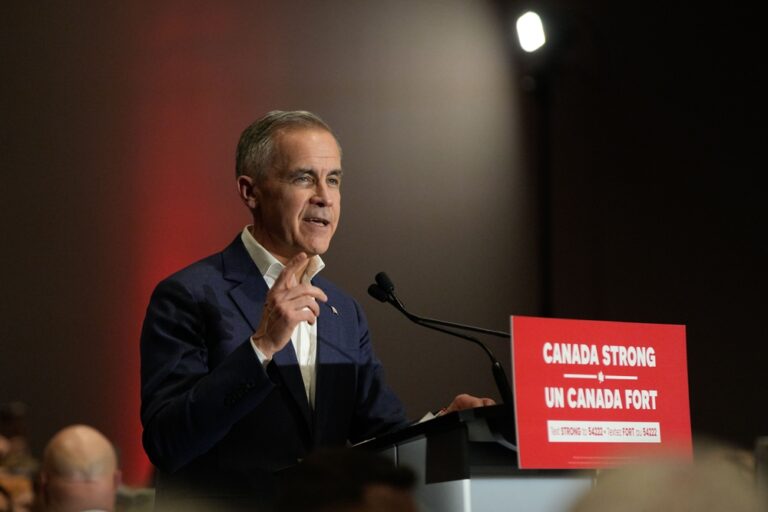
Prime Minister Mark Carney’s response to Donald Trump’s latest tariff threat was carefully measured: surprise was not the point. The proposed U.S. duties, aimed at countries Washington says have not done enough to block goods made with forced labour, had been signalled for months through a formal trade investigation. For Canada, the political challenge is balancing two messages at once: Ottawa agrees that forced labour should be rooted out of global supply chains, but it rejects the idea that a new American tariff wall is the right way to do it.
The dispute lands at a tense moment for Canada-U.S. trade. Most Canadian exports may remain protected if they comply with CUSMA rules, yet the announcement adds another layer of uncertainty for manufacturers, importers, farmers, retailers, and workers already trying to plan around a volatile U.S. trade agenda.
What Carney Meant by “Not a Surprise”
Carney Says Trump’s New 10% Tariff Threat Was ‘Not a Surprise’
- What Carney Meant by “Not a Surprise”
- Why the U.S. Is Framing This Around Forced Labour
- The 10% Figure Comes With Important Exemptions
- Why CUSMA Is Still Canada’s Main Shield
- Canada’s Forced-Labour Laws Are Now Under a Brighter Spotlight
- The Trade Stakes Are Too Large to Treat This as Symbolic
- Trump’s Tariff Strategy Has Shifted After Legal Setbacks
- Forced Labour Is a Real Global Problem, Even if the Tariff Tool Is Contested
- The Proposal Gives Ottawa Both Risk and Leverage
- What Businesses Should Watch Next
Carney’s “not a surprise” remark was not an attempt to minimize the tariff threat. It was a signal that Ottawa had been watching the process unfold since the U.S. Trade Representative launched investigations into dozens of trading partners earlier in the year. The Trump administration’s proposal did not appear out of nowhere; it came through a Section 301 trade process, a formal American mechanism used to investigate practices Washington considers unfair or burdensome to U.S. commerce.
That context matters because the tariff threat is still a proposal, not an immediate border shock. For Canadian businesses, that distinction offers a small but meaningful window. A parts manufacturer in Windsor, a food exporter in Manitoba, or an apparel importer in Montreal may not know the final outcome yet, but they know this fight will move through hearings, comments, exemptions, and negotiations. Carney’s tone suggested Ottawa sees the move as part of a larger U.S. strategy, not a single isolated warning shot.
Why the U.S. Is Framing This Around Forced Labour
The Trump administration is tying the proposed tariffs to forced labour enforcement, arguing that trading partners have not done enough to stop goods made with forced labour from entering global supply chains. That framing gives Washington a politically powerful argument. Few governments want to appear soft on forced labour, and few companies want their products associated with abusive labour practices. The issue reaches across sectors, from textiles and agriculture to electronics, seafood, mining inputs, and consumer goods.
At the same time, the forced-labour justification complicates the debate. Canada already prohibits goods made with forced labour from entering the country and has a federal supply-chain reporting regime. The dispute is therefore less about whether forced labour is a serious problem and more about whether Canada’s enforcement is strong enough. Washington’s criticism focuses on results at the border, while Ottawa emphasizes laws, reporting duties, and the broader goal of cleaning up supply chains.
The 10% Figure Comes With Important Exemptions
The headline number is striking, but the fine print is just as important. The U.S. proposal puts Canada in a lower tariff category than many other targeted economies, with a proposed 10% duty rather than the higher 12.5% rate assigned to countries Washington says have taken fewer steps. That difference reflects Canada’s existing forced-labour import prohibition and its commitments under North American trade rules.
Even more important for Canada is the CUSMA carveout. Carney said goods that comply with the Canada-U.S.-Mexico trade agreement would remain exempt, which is why Ottawa argues Canada still has one of the strongest positions of any U.S. trading partner. That does not mean every exporter can relax. CUSMA compliance can involve detailed rules of origin, documentation, and product-specific requirements. For firms already dealing with steel, aluminum, auto, lumber, or sector-specific trade measures, the latest tariff proposal may feel like one more compliance test layered on top of an already complex border.
Why CUSMA Is Still Canada’s Main Shield
CUSMA has become more than a trade agreement in this dispute. It is Canada’s main defensive wall against broad U.S. tariffs. The agreement, which replaced NAFTA and came into force in 2020, sets rules for how goods qualify for preferential treatment across North America. When a Canadian product meets those rules, it can often avoid new tariff measures that apply to non-compliant goods.
That is why Carney’s response focused heavily on the exemption. Canada’s economy is deeply tied to the U.S. market, and a broad tariff applied without a CUSMA carveout would be far more disruptive. The United States remains the destination for the majority of Canadian merchandise exports, and even small changes at the border can ripple through factories, trucking routes, grocery shelves, and construction projects. For a small supplier, the difference between tariff-free entry and an extra 10% charge can determine whether an order still makes financial sense.
Canada’s Forced-Labour Laws Are Now Under a Brighter Spotlight
Canada has laws on the books, but the U.S. criticism is aimed at enforcement. Canadian rules prohibit goods mined, manufactured, or produced wholly or partly by forced labour from entering the country. Canada’s supply-chain law also requires certain government institutions and businesses to report on steps taken to prevent and reduce the risk of forced labour and child labour in their supply chains.
The problem for Ottawa is that laws can look strong on paper while still drawing criticism for weak border action. The U.S. report argued that Canada’s enforcement record has been limited, pointing to a small number of intercepted shipments and even fewer denied entries. That gives the tariff threat a domestic policy angle. If Canada wants to strengthen its case in Washington, it may need to show not only that it shares the same values, but that its customs system can produce visible, measurable results.
The Trade Stakes Are Too Large to Treat This as Symbolic
Canada-U.S. trade is not a side issue for either country. The two economies are linked through energy, autos, agriculture, machinery, consumer goods, services, and cross-border supply chains that often move parts and materials back and forth before a finished product reaches a customer. A tariff dispute between Ottawa and Washington is rarely confined to one border crossing or one sector.
That scale explains why business groups tend to watch tariff threats with such anxiety. A tariff paid by an importer can become a higher price for a wholesaler, retailer, contractor, or household. In some cases, companies absorb part of the cost to keep customers. In others, they delay investment, renegotiate contracts, or shift sourcing. The human impact is not abstract: a shop floor manager postpones a hiring decision, a family-owned importer waits before placing a seasonal order, and a manufacturer wonders whether a long-standing U.S. customer will look elsewhere.
Trump’s Tariff Strategy Has Shifted After Legal Setbacks
The new proposal also reflects a broader change in U.S. tariff strategy. Trump’s earlier emergency tariff approach faced major legal obstacles, pushing the administration toward other trade-law tools. Section 301 gives the White House a more established route because it has previously been used to impose tariffs after investigations into foreign trade practices.
That legal pivot matters for Canada because it suggests tariff pressure could continue even when one legal pathway is blocked. The issue is not just this 10% proposal; it is the pattern of searching for new mechanisms to keep trade pressure alive. For Canadian negotiators, that creates a moving target. A deal or exemption in one area may not end the broader conflict if Washington opens another investigation under a different statute or frames the next measure around labour, security, overcapacity, or another trade concern.
Forced Labour Is a Real Global Problem, Even if the Tariff Tool Is Contested
The core issue behind the dispute is serious. International labour estimates show tens of millions of people are trapped in forced labour worldwide. That reality has pushed governments to strengthen supply-chain rules and forced-labour import bans. Companies are also facing more pressure to prove where their materials come from, how their suppliers operate, and whether subcontractors are creating hidden risks.
Still, many critics question whether broad tariffs are the most effective way to fight forced labour. A tariff may raise costs without necessarily identifying the factory, farm, vessel, or mine where abuse occurs. Stronger customs enforcement, shared intelligence, traceability tools, supplier audits, and targeted import bans may be more precise. Canada’s position is likely to lean into that distinction: agreeing with the moral objective while arguing that sweeping tariffs can punish compliant businesses and create uncertainty without directly rescuing workers from exploitation.
The Proposal Gives Ottawa Both Risk and Leverage
Carney’s response left room for negotiation. By saying the move was expected and emphasizing that Canada shares the forced-labour objective, he avoided escalating the dispute immediately. That approach gives Ottawa a chance to argue for recognition of Canada’s laws, improve enforcement commitments, and protect the CUSMA exemption before any final measure takes effect.
The risk is that a calm response can be attacked politically as too passive, especially after months of U.S. tariff pressure. Opposition parties, premiers, unions, and industry groups may all push for a tougher line if they believe Canadian exporters remain vulnerable. But diplomacy often rewards precision more than volume. By focusing on CUSMA compliance, forced-labour cooperation, and enforcement credibility, Canada can make a narrower case: it is not asking for special treatment, but for the U.S. to recognize the integrated North American system both countries already built.
What Businesses Should Watch Next
The immediate question is whether the proposal changes before it becomes final. The U.S. process includes a public comment period and a hearing, which means governments, companies, trade associations, and labour groups have an opportunity to challenge the design, scope, and impact of the tariffs. For Canadian firms, the most practical next step is to confirm CUSMA eligibility, review supplier documentation, and monitor whether their products fall under any listed exemptions or separate tariff regimes.
The larger question is whether this becomes another temporary flare-up or the next phase of a more durable trade conflict. Carney’s “not a surprise” line captured the mood of the moment: Canada may not be shocked, but it is still exposed. The country’s advantage is that most of its U.S.-bound trade appears shielded under CUSMA. Its vulnerability is that repeated tariff threats can still chill investment, slow hiring, and force companies to spend more time managing political risk than growing their business.
This Options Discord Chat is The Real Deal
While the internet is scoured with trading chat rooms, many of which even charge upwards of thousands of dollars to join, this smaller options trading discord chatroom is the real deal and actually providing valuable trade setups, education, and community without the noise and spam of the larger more expensive rooms. With a incredibly low-cost monthly fee, Options Trading Club (click here to see their reviews) requires an application to join ensuring that every member is dedicated and serious about taking their trading to the next level. If you are looking for a change in your trading strategies, then click here to apply for a membership.