35,000+ smart investors are already getting financial news, market signals, and macro shifts in the economy that could impact their money next with our FREE weekly newsletter. Get ahead of what the crowd finds out too late. Click Here to Subscribe for FREE.
A political opening in Washington has arrived at a critical moment for Canada’s trade relationship with the United States. After Democrats won control of both chambers of Congress in the November 3 midterm elections, prominent lawmakers began preparing fresh challenges to President Donald Trump’s tariffs on Canadian goods. Yet Prime Minister Mark Carney acknowledged on November 6 that he had not spoken with those Democrats about their plans to repeal the duties.
Carney welcomed efforts to restore free trade while emphasizing that Ottawa would continue negotiating directly with Washington. His response raises questions about Canada’s approach to a changing political landscape, particularly as American manufacturers, Canadian exporters, and thousands of workers face continued uncertainty. Although Democrats are promising to challenge Trump’s trade policies, turning those promises into meaningful tariff relief could prove considerably more difficult.
Carney’s Brief Answer Raises Questions About Ottawa’s Strategy
Carney Admits He Hasn’t Spoken to U.S. Democrats Trying to Repeal Trump’s Canada Tariffs
- Carney’s Brief Answer Raises Questions About Ottawa’s Strategy
- Democrats’ Midterm Victory Creates a New Opportunity for Canada
- Ron Wyden Is Preparing to Challenge Trump’s Tariff Authority
- Chuck Schumer Has Already Tried to Repeal the Canadian Tariffs
- Even a Democratic Congress Cannot Easily Override Trump
- Canada’s Tariff Exposure Is More Complicated Than the 50% Headlines
- Ontario’s Auto Industry Faces Particularly High Stakes
- Canada’s Latest Trade Figures Reveal a Fragile Economic Picture
- Trade Negotiations Remain Uncertain Despite Recent Progress
- The Real Test Will Be Whether Political Promises Produce Tariff Relief
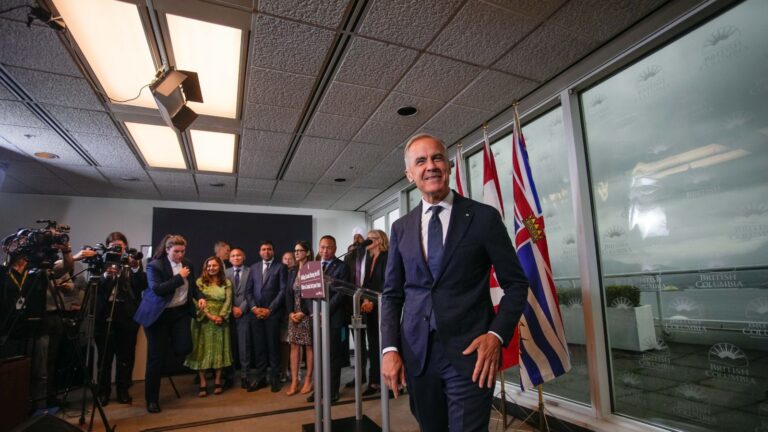
Speaking to reporters in Winnipeg on November 6, Carney was asked whether he had contacted Democratic lawmakers about their efforts to eliminate tariffs on Canadian products. His response was direct: “The short answer is no, I haven’t.” He then emphasized that Canada welcomed efforts to restore a freer trading relationship. Rather than criticizing Washington’s incoming congressional leadership, Carney focused on the economic benefits of reducing trade barriers. He argued that improved trade would help American households struggling with affordability, support workers seeking stable employment, and serve Canada’s economic interests. His remarks demonstrated support for the Democrats’ stated objective without committing Ottawa to a particular congressional strategy.
However, Carney’s admission should not be interpreted as evidence that he has never engaged with Democratic lawmakers. In July 2025, he met a bipartisan Senate delegation that included Oregon Democrat Ron Wyden. The distinction matters because Carney was specifically addressing discussions about the current tariff-repeal effort. His response nevertheless leaves an important question unanswered: how actively will Ottawa engage the lawmakers preparing to challenge Trump’s trade policies?
Democrats’ Midterm Victory Creates a New Opportunity for Canada
The November 3 midterm elections dramatically changed the political landscape in Washington. Democrats secured control of both the House of Representatives and the Senate, giving them substantial new powers when the next Congress convenes in January 2027. Reuters reported that Democrats were projected to hold approximately 54 Senate seats and at least 235 House seats. For Canada, the result means lawmakers openly critical of Trump’s tariffs will gain greater influence over congressional committees, investigations, and legislative priorities. The election does not automatically reverse existing trade measures, but it provides opponents of the tariffs with a stronger institutional platform.
The political shift is particularly significant in states where economic activity crosses the Canadian border. Michigan’s incoming Democratic senator, Abdul El-Sayed, has publicly expressed interest in working with Trump to remove tariffs on Canada. During a November 5 interview, he identified ending the trade conflict as an issue where cooperation could benefit Americans. His position reflects the importance of integrated manufacturing and cross-border commerce. For Canadian exporters, such arguments could create opportunities to build broader support for reducing trade restrictions.
Ron Wyden Is Preparing to Challenge Trump’s Tariff Authority
Oregon Senator Ron Wyden is emerging as an important figure in the effort to reverse Trump’s trade measures. Expected to become chair of the Senate Finance Committee in January, Wyden has pledged to make trade policy a priority. In a November 4 statement, he outlined plans to restore congressional authority over international commerce, challenge tariffs he considers economically damaging, and rebuild important trading relationships. His position is significant because the Finance Committee has jurisdiction over major trade matters. That authority gives Wyden opportunities to organize hearings, examine tariff legislation, and demand explanations from administration officials about the economic consequences of existing policies.
Wyden’s opposition is not a recent development. In July 2026, he criticized the administration’s decision to impose 50% tariffs on nearly US$20 billion in Canadian imports, including consumer goods and household products. He also introduced legislation intended to reform presidential trade powers. Those earlier actions demonstrate that his current ambitions are part of a sustained effort rather than a reaction to the election alone. For Canada, Wyden represents an influential potential partner, although his ability to secure actual tariff reductions remains uncertain.
Chuck Schumer Has Already Tried to Repeal the Canadian Tariffs
Senate Democratic Leader Chuck Schumer began pursuing legislative action against Trump’s latest tariffs well before November’s election. On September 1, he introduced the End Trump’s Tariff Tax Act, a proposal designed to repeal several trade measures, including the administration’s 50% tariffs on certain Canadian products and its newer global tariffs. The legislation also sought to restrict presidential authority to impose additional duties and provide refunds for some tariffs already collected. Schumer framed the proposal around rising consumer costs, arguing that businesses and households were bearing the financial consequences of the trade dispute.
The proposal encountered resistance almost immediately. On September 16, Schumer attempted to secure unanimous Senate consent to pass the legislation, but Republican Senator Mike Crapo objected. That procedural objection blocked the expedited passage attempt; it was not a full Senate vote defeating the bill. The episode demonstrated how difficult it could be to reverse Trump’s trade policies even when lawmakers publicly supported lower tariffs. Democratic control of Congress will create opportunities to revisit such proposals, but passing legislation will require more than political momentum.
Even a Democratic Congress Cannot Easily Override Trump
Winning both chambers of Congress gives Democrats considerably more influence, but it does not transfer control of the presidency. Many of Trump’s trade measures were imposed using powers delegated to the executive branch under existing U.S. laws. Congress can attempt to repeal or restrict those authorities, yet the president can veto legislation he opposes. Under the U.S. Constitution, overriding a presidential veto requires two-thirds support in both the House and Senate. Democrats’ projected congressional majorities remain well below those thresholds, meaning substantial Republican cooperation would be necessary to enact a repeal over Trump’s objections.
There is already an example of the limitations. On April 2, 2025, the Senate voted 51–48 to approve a resolution terminating the national emergency used to justify an earlier round of Canadian tariffs. Four Republicans supported the measure alongside Democrats, but the resolution did not become law. Congressional Research Service analysis subsequently identified additional procedural obstacles in the House. The precedent illustrates an important distinction for Canadian businesses: a successful congressional vote can generate political pressure without necessarily changing the duties charged at the border.
Canada’s Tariff Exposure Is More Complicated Than the 50% Headlines
Trump’s tariffs have created substantial disruption, although the frequently cited 50% rate does not apply uniformly to Canadian exports. Following the collapse of bilateral negotiations in August, the U.S. imposed new 50% tariffs on approximately C$27.6 billion worth of Canadian goods, according to Canada’s Department of Finance. Ottawa responded with matching countermeasures on selected American products, including goods in the steel, dairy, appliance, and industrial sectors. These measures added another layer of costs to a trading relationship already affected by tariffs on automobiles, metals, and other products.
The Bank of Canada’s October 2026 Monetary Policy Report provides a broader perspective. It estimated the average U.S. tariff rate on Canadian goods at 7.5%, compared with 5% in July. Approximately 80% of Canadian goods exports to the United States remained tariff-free, largely because of continuing trade-agreement exemptions and exclusions. This distinction matters when evaluating proposals to repeal tariffs. Eliminating one category of duties would provide relief to affected businesses, but it would not necessarily resolve every restriction facing Canadian exporters or restore the commercial conditions that existed before the dispute.
Ontario’s Auto Industry Faces Particularly High Stakes
Few Canadian industries illustrate the consequences of the trade conflict more clearly than automotive manufacturing. Canada’s federal government estimates that the sector supports more than 120,000 direct jobs and contributes over $16 billion annually to national GDP. Its operations are closely connected with American factories, parts suppliers, transportation companies, and dealerships. In August, Trump threatened to increase tariffs on Canadian cars, trucks, and automotive parts to 50% beginning January 1, 2027. The proposed escalation followed unsuccessful negotiations that reportedly included options for lowering existing automotive and steel duties.
For workers in communities such as Windsor and Oshawa, uncertainty about future tariffs is more than a diplomatic concern. Manufacturers must decide where to locate new production, purchase equipment, and make long-term investments. The Bank of Canada’s third-quarter Business Outlook Survey found that some tariff-affected companies were reducing capacity, delaying investments, or considering moving investment outside Canada. The survey specifically identified steel and automotive businesses among those facing incentives to expand in the United States. Even when production continues, uncertainty can influence decisions about future jobs and investment.
Canada’s Latest Trade Figures Reveal a Fragile Economic Picture
The latest Statistics Canada merchandise trade figures demonstrate why restoring predictable market access remains important. Canada’s merchandise trade surplus with the world reached $5.4 billion in September 2026, while exports totalled approximately $78.6 billion. Those headline figures appeared encouraging, but the underlying numbers were less uniform. Energy products and precious metals accounted for much of the monthly export strength. Excluding energy and metal products, Canadian exports declined 5.6% during September. Motor vehicles and parts also recorded a monthly decline, reflecting weakness in a sector particularly exposed to cross-border trade disruptions.
The United States nevertheless remained Canada’s largest export destination. September shipments to the American market increased 0.7%, while Canada’s merchandise trade surplus with the U.S. reached $12.3 billion. Approximately 70% of Canadian goods exports continued to go south of the border. These figures show both the resilience and vulnerability of the trading relationship. Not every export decline can be attributed directly to tariffs, since production disruptions, commodity prices, and demand also influence trade. However, continued dependence on American buyers makes changes in U.S. trade policy particularly consequential for Canadian businesses.
Trade Negotiations Remain Uncertain Despite Recent Progress
Canada’s negotiations with Washington have already experienced major setbacks. In August, Ottawa suspended formal talks after rejecting U.S. demands it considered incompatible with Canadian interests. Carney subsequently identified concerns involving national sovereignty, French-language protections, cultural policies, and Canada’s freedom to negotiate agreements with other countries. The breakdown was accompanied by new tariffs and Canadian retaliation, substantially increasing economic pressure on both governments. However, recent developments suggest that communication has improved, even though the central disagreements have not been fully resolved.
On November 3, Trump suggested that the United States was close to reaching a trade agreement with Canada. Carney offered a more cautious assessment, acknowledging progress while emphasizing that negotiations remained unfinished. He also indicated that Washington had withdrawn some earlier demands involving Canadian sovereignty and cultural protections. Canada-U.S. Trade Minister Dominic LeBlanc separately said the Democratic midterm victory would not fundamentally change Ottawa’s negotiating approach. Meanwhile, the Canada-United States-Mexico Agreement remains in force despite Washington’s refusal to renew it in its existing form during the July 2026 joint review. Ottawa therefore faces both an immediate tariff dispute and unresolved longer-term questions about continental trade rules.
The Real Test Will Be Whether Political Promises Produce Tariff Relief
The coming months will reveal how much influence the new Democratic Congress can exert over Trump’s trade agenda. Lawmakers will be positioned to hold hearings, investigate tariff exemptions, propose legislation, and publicly challenge administration decisions. Those powers could increase pressure on the White House, particularly if businesses and voters continue raising concerns about prices and economic uncertainty. However, Democrats do not necessarily agree on every aspect of trade policy. Some support protectionist measures intended to preserve American jobs, meaning opposition to Trump’s broad tariffs does not automatically translate into support for unrestricted trade with Canada.
For Carney, the challenge is to pursue opportunities in Washington without assuming that a Democratic Congress can deliver immediate relief. Conservative MP Jamil Jivani has also argued that Canada must continue finding ways to work with Trump, underscoring the importance of maintaining direct engagement with the administration. Carney’s November 6 response does not establish that Ottawa lacks a congressional strategy, but it does highlight an unresolved aspect of Canada’s diplomatic approach. Ultimately, Canadian workers and businesses will judge the outcome through lower trade costs, more predictable rules, and greater confidence in future investment decisions.
This Options Discord Chat is The Real Deal
While the internet is scoured with trading chat rooms, many of which even charge upwards of thousands of dollars to join, this smaller options trading discord chatroom is the real deal and actually providing valuable trade setups, education, and community without the noise and spam of the larger more expensive rooms. With a incredibly low-cost monthly fee, Options Trading Club (click here to see their reviews) requires an application to join ensuring that every member is dedicated and serious about taking their trading to the next level. If you are looking for a change in your trading strategies, then click here to apply for a membership.