35,000+ smart investors are already getting financial news, market signals, and macro shifts in the economy that could impact their money next with our FREE weekly newsletter. Get ahead of what the crowd finds out too late. Click Here to Subscribe for FREE.
The cost of moving oil across an ocean has become an unexpected advantage for American refiners, particularly those purchasing Canadian crude. As the U.S.-Iran war disrupts global shipping routes, rising tanker rates and insurance premiums are making imported oil increasingly expensive for refineries in Asia and other overseas markets.
Meanwhile, U.S. Gulf Coast refiners are benefiting from established supply connections with Canada, discounted heavy crude prices, and infrastructure designed to process oil from Alberta’s oil sands. Industry executives report that these advantages are helping strengthen refining margins despite volatility in global energy markets.
However, the financial benefits are not necessarily shared equally. While American refiners can profit from cheaper Canadian feedstock, producers north of the border face pressure from widening price discounts, raising questions about who ultimately benefits from Canada’s increasingly important role in North American energy security.
The Strait of Hormuz Has Become a Global Shipping Problem
Canadian Crude Gives U.S. Refiners a Cost Advantage as Trump’s Iran War Drives Up Global Shipping Costs
- The Strait of Hormuz Has Become a Global Shipping Problem
- Canada’s Pipeline Network Provides a Major Geographic Advantage
- Western Canadian Select Is Becoming More Attractive to American Refiners
- Tanker Shipping Costs Have Climbed From $5 to as Much as $35 a Barrel
- American Refineries Are Specifically Equipped to Process Heavy Canadian Oil
- U.S. Refining Margins Have More Than Doubled
- Phillips 66 Says Every $1 Wider Canadian Oil Discount Is Worth $140 Million Annually
- Advance Shipping Contracts Are Protecting Major American Refiners
- Canadian Producers Face a More Complicated Financial Outcome
- Higher Refining Profits Do Not Necessarily Mean Cheaper Fuel
- Canadian Heavy Crude Could Remain Important to U.S. Refiners Through 2027
The Strait of Hormuz has become far more than a military flashpoint. Before fighting began on February 28, approximately one-fifth of global seaborne oil and liquefied natural gas passed through the waterway. Security threats have since changed how shipowners assess individual journeys. Insurers charge higher premiums for war risks, vessels face delays, and some cargoes require transfers between ships. Those complications make oil more expensive to deliver, even when supplies remain available.
Shipping has not stopped altogether. Lloyd’s List Intelligence recorded 116 non-Iranian-linked vessel transits between October 19 and 25, compared with 124 the previous week. However, the International Energy Agency warns that longer voyages and complicated transfers reduce the effective capacity of the global tanker fleet. A vessel waiting offshore cannot immediately transport another shipment elsewhere. For refineries dependent on overseas supplies, those inefficiencies eventually become higher operating expenses, bringing the economic consequences of the Middle East conflict directly into refinery purchasing decisions.
Canada’s Pipeline Network Provides a Major Geographic Advantage
Canada’s competitive position begins far from any ocean. Pipeline networks transport crude from Western Canada’s producing regions to American refining centres, connecting Alberta’s oil sands with facilities in the Midwest and Gulf Coast. According to the Canada Energy Regulator, approximately 3.9 million barrels of Canadian crude were exported to the United States daily in 2025, representing roughly 90% of Canada’s crude exports. Canada also supplied 63.4% of American crude imports that year.
The infrastructure supporting those shipments is extensive. Enbridge reports that its Mainline system transports more than three million barrels daily on average and connects with over 30 refineries across the American Midwest and Gulf Coast. The Keystone pipeline provides another important route for heavier Canadian oil. Although pipelines face their own operational challenges, established overland connections generally offer greater protection from disruptions affecting international tanker markets. For American refineries, Canadian crude provides a reliable regional supply option when long-distance transportation becomes particularly expensive.
Western Canadian Select Is Becoming More Attractive to American Refiners
Western Canadian Select, commonly called WCS, is the benchmark for much of Canada’s heavy crude production. Unlike lighter American oil grades, WCS generally trades at a discount to West Texas Intermediate, reflecting differences in crude quality and transportation expenses. That price gap, known as the WTI-WCS differential, has widened as heavy crude supplies compete for refinery demand and higher global freight costs reshape international oil pricing.
Cenovus Energy’s November 3 financial disclosure confirmed that WTI-WCS differentials widened during the first nine months of 2026 compared with the same period in 2025. The company identified rising Canadian and Venezuelan heavy crude supplies, increased freight expenses, refinery outages, and maintenance as contributing factors. For American refiners equipped to process heavier oil, a larger discount can mean lower crude purchasing costs. However, cheaper feedstock does not automatically translate into higher profits because processing expenses and refined fuel selling prices also determine profitability.
Tanker Shipping Costs Have Climbed From $5 to as Much as $35 a Barrel
The magnitude of the shipping disruption becomes clearer when examining individual freight charges. During Valero Energy’s third-quarter earnings conference call, company executive Randy Hawkins explained that transporting crude from the U.S. Gulf Coast to Asia had become dramatically more expensive. The cost had reached approximately $30 to $35 per barrel, compared with an average of around $5 during 2025. That represents an additional $25 to $30 per barrel in transportation expenses.
The International Energy Agency independently reported shipping costs of approximately $33 per barrel between the Gulf Coast and Singapore by mid-October. These figures concern long-distance tanker shipments, not the pipeline cost of moving Canadian crude into American refineries. Nevertheless, they explain why regional supply has become more valuable. Asian refiners purchasing oil from distant suppliers must account for increasingly expensive deliveries. American refiners purchasing Canadian heavy crude through established North American networks can avoid much of that particular exposure, strengthening their relative purchasing position.
American Refineries Are Specifically Equipped to Process Heavy Canadian Oil
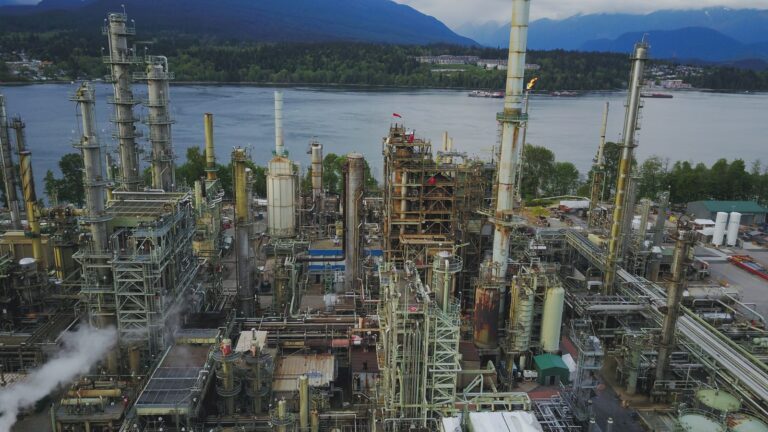
Not every refinery can process crude oil with the same efficiency. Heavy, high-sulfur oil generally requires more sophisticated equipment than lighter grades because additional processing is needed to produce valuable transportation fuels. Gulf Coast refineries have invested extensively in equipment such as cokers, crackers, and sulfur-removal systems. These capabilities allow them to purchase discounted heavy crude and convert it into gasoline, diesel, and other petroleum products.
The Canada Energy Regulator estimates that approximately 70% of American refining capacity is optimized to process crude heavier than the grades typically produced domestically. This explains why the United States continues importing substantial volumes of Canadian oil despite being a major crude producer itself. Much of its domestic shale production is relatively light, whereas Canadian oil sands provide heavier feedstock suited to existing refining infrastructure. When discounted Canadian barrels become more plentiful, refineries with the appropriate equipment can benefit from investments made long before the current geopolitical crisis began.
U.S. Refining Margins Have More Than Doubled
Corporate earnings are revealing how powerful these market conditions have become. Marathon Petroleum reported a third-quarter 2026 refining and marketing margin of $45.70 per barrel, compared with $17.60 during the same period in 2025. Its refining and marketing adjusted EBITDA rose to approximately $9.9 billion from $1.8 billion. These are companywide results rather than measurements of Canadian crude alone, but they demonstrate the magnitude of the industry’s recent financial gains.
Several factors are contributing to stronger profitability. Refiners are purchasing certain heavy crude grades at deeper discounts while gasoline and diesel prices remain supported by disrupted international fuel supplies. The difference between crude purchasing costs and refined product selling prices is commonly described through refining or crack spreads. Stronger spreads, dependable operations, and access to multiple crude grades can significantly improve profitability. However, not every refinery benefits equally, and elevated margins could weaken if consumer demand declines, shipping conditions normalize, or unexpected operating expenses increase.
Phillips 66 Says Every $1 Wider Canadian Oil Discount Is Worth $140 Million Annually
Phillips 66 has translated the widening Canadian crude discount into a measurable financial advantage. During its third-quarter earnings conference call, the American refining giant explained that every additional $1 per barrel in the WTI-WCS differential represents approximately $140 million in annual earnings sensitivity. Its October 28 financial results also showed third-quarter earnings of $5.6 billion, refinery utilization of 98%, and a record distillate yield of 41%.
The underlying advantage comes from purchasing discounted heavy Canadian oil while selling finished products at prevailing market prices. Phillips 66 emphasized its pipeline connections and ability to secure Canadian crude for refineries in the central United States and Gulf Coast. These logistical advantages can become especially valuable when overseas competitors face expensive shipping arrangements. Importantly, the $140-million figure represents a management estimate of annual earnings sensitivity, not guaranteed additional profit. Actual financial performance still depends on refinery throughput, crude purchasing contracts, operational efficiency, and changing fuel prices.
Advance Shipping Contracts Are Protecting Major American Refiners
Some refining companies gained another competitive advantage before global shipping expenses surged. Phillips 66 reported securing more than 40 vessels through time-charter agreements before the Iran conflict intensified. Those arrangements cover approximately 40% of its asset-based shipping requirements. The company also expects to add another 40 vessels over approximately two and a half years at contractual rates below current market levels, providing additional protection from expensive spot freight charges.
Marathon Petroleum has benefited from a similarly defensive supply strategy. During its November earnings conference call, executives said approximately 90% of the company’s crude sourcing comes from the United States and Canada. That significantly reduces its dependence on international crude deliveries during periods of shipping instability. Marathon also secured favourable tanker contracts before the war for the smaller portion of crude purchased overseas. These arrangements cannot eliminate every transportation or insurance expense, but they provide more predictable costs than relying entirely on vessels hired during a global freight shortage.
Canadian Producers Face a More Complicated Financial Outcome
The benefits of discounted Canadian crude are not distributed equally between producers and refiners. When the WCS discount widens, Canadian producers generally receive less for their oil relative to WTI. During Marathon Petroleum’s November 3 earnings conference call, an executive cited a Hardisty market transaction approximately US$32 below WTI, illustrating the unusually large discounts being observed. However, that individual price observation should not be confused with a sustained market average.
Higher global oil prices can still offset some of this pressure. Cenovus reported that its realized sales price increased 33% year over year during the third quarter of 2026, although the widening WTI-WCS differential partially reduced those gains. Canada’s expanded Trans Mountain pipeline also provides access to overseas customers, with the share of crude exports going outside the United States increasing from approximately 2% in 2021 to 10% in 2025. Unfortunately, higher marine freight expenses can make those alternative destinations less attractive, complicating efforts to secure stronger prices.
Higher Refining Profits Do Not Necessarily Mean Cheaper Fuel
The advantages enjoyed by American refiners extend beyond purchasing Canadian crude. Valero Energy’s chief operating officer, Gary Simmons, explained that higher international shipping rates have improved the company’s competitive position when exporting refined products to Latin America. American facilities can sometimes deliver fuel more economically than European competitors travelling longer distances. However, Valero also acknowledged that expensive freight creates difficulties when exporting diesel from the United States to Europe.
For consumers, the consequences are considerably less favourable. The International Energy Agency reported that unusually high crude transportation expenses pushed margins for certain Asian refining operations into negative territory during September. Refineries facing higher input costs may struggle to maintain production, potentially tightening fuel availability. Meanwhile, elevated diesel prices affect freight transportation, agriculture, manufacturing, and other industries dependent on commercial vehicles and machinery. Stronger American refining profits therefore should not be mistaken for a guarantee of lower gasoline or diesel prices. Regional competition, fuel demand, transportation expenses, and broader global energy prices still determine what households ultimately pay.
Canadian Heavy Crude Could Remain Important to U.S. Refiners Through 2027
American refining executives are preparing for the possibility that favourable heavy crude pricing will continue beyond 2026. Marathon Petroleum expects to process record volumes of Canadian heavy crude during the fourth quarter, reflecting the attractive economics of discounted WCS and its established purchasing relationships. HF Sinclair has also indicated that Canadian heavy crude discounts could remain wider than historical levels through at least 2027, although management expects some moderation.
Those projections remain uncertain. A reduction in Middle East hostilities could eventually improve tanker availability and lower international shipping expenses, narrowing part of the advantage enjoyed by American refiners. Additional Venezuelan crude supplies, Canadian export capacity, seasonal refinery maintenance, and changing fuel demand could also reshape price differentials. The International Energy Agency has cautioned that shipping constraints may persist even after security conditions improve because vessels and supply chains require time to return to normal schedules. For Canada, the longer-term challenge is ensuring that its importance as an energy supplier translates into competitive returns for Canadian producers rather than disproportionately benefiting the refineries purchasing their oil.
This Options Discord Chat is The Real Deal
While the internet is scoured with trading chat rooms, many of which even charge upwards of thousands of dollars to join, this smaller options trading discord chatroom is the real deal and actually providing valuable trade setups, education, and community without the noise and spam of the larger more expensive rooms. With a incredibly low-cost monthly fee, Options Trading Club (click here to see their reviews) requires an application to join ensuring that every member is dedicated and serious about taking their trading to the next level. If you are looking for a change in your trading strategies, then click here to apply for a membership.