35,000+ smart investors are already getting financial news, market signals, and macro shifts in the economy that could impact their money next with our FREE weekly newsletter. Get ahead of what the crowd finds out too late. Click Here to Subscribe for FREE.
The United States is heading into another high-stakes diplomatic confrontation with its closest allies as President Donald Trump’s administration prepares for a Group of Seven meeting dominated by economic uncertainty, rising energy costs and international security disputes.
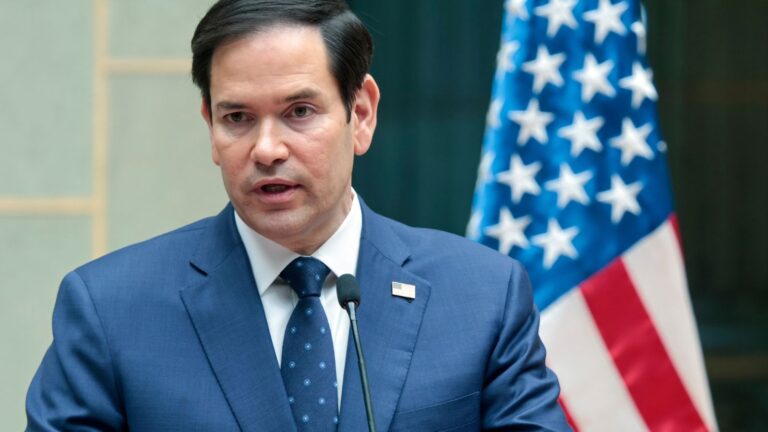
U.S. Secretary of State Marco Rubio is scheduled to travel to Paris from November 8 to 10, 2026, for talks with foreign ministers from Canada, France, Germany, Italy, Japan and the United Kingdom, alongside European Union representatives. The meetings themselves are scheduled for November 9 and 10.
For Canada, the gathering presents an opportunity to defend its economic interests while strengthening cooperation on Ukraine, energy security and international stability. But with Washington’s trade policies and foreign-policy decisions creating friction among traditional partners, finding common ground could prove increasingly difficult.
Rubio’s Trip Comes at a Difficult Moment for Washington
Trump Sends Rubio to G7 Talks With Canada as Allies Confront Tariffs, Energy Prices and Security Disputes
- Rubio’s Trip Comes at a Difficult Moment for Washington
- Canada Seeks to Protect Its Influence With Washington and Europe
- Trump’s Tariffs Remain a Major Source of Tension
- Rising Energy Prices Put Additional Pressure on G7 Governments
- The Iran Conflict Makes Global Shipping a Security Priority
- Ukraine’s Defence and Winter Energy Needs Return to the Spotlight
- NATO Defence Commitments Add Another Layer of Uncertainty
- International Criminal Court Sanctions Deepen the Diplomatic Divide
- Humanitarian Crises and Food Security Demand Coordinated Action
- Canada Looks for Opportunities Beyond Traditional Trade and Security
- The Real Test Will Be Whether Allies Can Produce Meaningful Results
Rubio’s visit carries significance beyond the usual diplomatic meetings. The State Department confirmed his travel plans on November 6, describing the mission as an opportunity to advance American interests through discussions with G7 counterparts. The timing is particularly sensitive because the trip follows major Republican losses in the November 3 U.S. midterm elections. Those results have intensified questions about how much political flexibility the Trump administration will have as it pursues its international agenda. European and Canadian officials will be watching for indications of whether Washington intends to adjust its approach to allies.
France, which holds the G7 presidency in 2026, originally planned to host the gathering in Marseille before relocating it to Paris. French officials cited logistical considerations and the timing of the Paris Peace Forum. The meeting will provide an opportunity to assess progress since the previous formal gathering in March. However, the challenge extends beyond coordinating diplomatic statements. Ministers must determine whether countries with increasingly different priorities can still deliver meaningful results together.
Canada Seeks to Protect Its Influence With Washington and Europe
Canada enters the discussions with Foreign Affairs Minister Anita Anand already engaged in diplomatic coordination with European partners. On October 31, Anand met French Foreign Minister Jean-Noël Barrot during the G20 foreign ministers’ gathering in Atlanta. Their discussions covered Ukraine, energy security, artificial intelligence and cooperation through organizations including NATO and the G7. Both governments emphasized the importance of maintaining coordinated international responses to security challenges. Those conversations established a foundation for Canada’s participation in the Paris meeting, although difficult questions involving Washington remain unresolved.
For Ottawa, maintaining productive relationships with both the United States and Europe is an important strategic objective. Canada depends on American markets and participates in extensive North American security cooperation, but European partnerships provide additional opportunities for investment, diplomacy and economic diversification. The G7 offers Canada direct access to the governments shaping major international decisions. That access becomes particularly valuable when disagreements over tariffs or defence obligations threaten to distract from shared interests. Canada’s challenge is to defend its priorities without allowing bilateral disputes to undermine broader cooperation.
Trump’s Tariffs Remain a Major Source of Tension
Trade disagreements represent one of the most consequential divisions between Washington and its G7 partners, particularly Canada. The Bank of Canada’s October 2026 Monetary Policy Report estimated that the average U.S. tariff on Canadian goods had increased to 7.5%, compared with 5% in July. Although approximately 80% of Canadian merchandise exports to the United States continued to enter tariff-free, recently introduced measures have affected manufacturers in industries ranging from machinery and plastics to furniture and paper products. Some Canadian goods face additional tariffs of 50%, creating substantial uncertainty for businesses that rely on cross-border supply chains.
Canada has responded with counter-tariffs covering approximately $28 billion in American products, adding another layer of complexity to the economic relationship. For manufacturers, the consequences extend beyond immediate costs. Companies must reconsider sourcing decisions, pricing and long-term investment plans when tariff rates can change rapidly. Although the Paris meeting is primarily focused on foreign policy and security rather than formal trade negotiations, these disputes form an unavoidable backdrop. Any effort to rebuild confidence between Ottawa and Washington must contend with their unresolved economic differences.
Rising Energy Prices Put Additional Pressure on G7 Governments
Energy security has become an increasingly urgent concern as conflict in the Middle East disrupts global supplies and pushes fuel prices higher. On October 2, G7 leaders agreed to coordinate measures intended to stabilize markets, including accelerating emergency oil releases and increasing refinery capacity where possible. The agreement called for releasing another 100 million barrels through the International Energy Agency over four months, with particular attention to diesel supplies. By October 15, the agency reported that approximately 330 million barrels had already been released under the broader emergency response launched in March.
The economic consequences are particularly important for Canada, where expensive fuel affects everything from household transportation to agriculture and freight deliveries. The Bank of Canada’s October outlook projected inflation would remain around 3% through much of 2027, partly reflecting higher energy costs. For a trucking company, a sustained diesel price increase can quickly translate into more expensive deliveries. Those costs eventually reach grocery stores and other businesses. The G7 discussions therefore connect international security decisions with everyday affordability concerns, making energy cooperation an important test of the group’s effectiveness.
The Iran Conflict Makes Global Shipping a Security Priority
The ongoing conflict involving Iran has complicated international shipping and exposed the vulnerability of major energy transportation routes. The Strait of Hormuz is especially important because roughly one-fifth of global oil consumption normally passes through this narrow waterway. The International Energy Agency reported that Middle Eastern supply disruptions and higher transportation costs continued to place severe pressure on diesel markets in October. Although some Gulf oil exports recovered during September, renewed attacks on infrastructure and shipping threatened that progress. Energy markets remain vulnerable to further interruptions, even when crude production begins returning toward earlier levels.
The G7 has already expressed support for restoring safe navigation through Hormuz while emphasizing protection for civilians and critical infrastructure. Ministers must now consider how to turn those commitments into practical coordination. The challenge also extends to the Red Sea, where attacks linked to the conflict in Yemen have threatened commercial vessels. Canada and its partners share an interest in keeping shipping routes open, but governments may differ over military involvement and diplomatic strategies. Rubio will face questions about Washington’s approach to regional security and whether allied cooperation can help prevent further economic disruption.
Ukraine’s Defence and Winter Energy Needs Return to the Spotlight
Russia’s continuing war against Ukraine remains one of the most important subjects facing the G7. France has scheduled dedicated discussions on military assistance, financial support and protection of Ukraine’s energy infrastructure ahead of winter. Canada has maintained a substantial commitment to Ukraine, reporting more than $26 billion in assistance since Russia’s full-scale invasion began in February 2022. Ottawa has also imposed sanctions on thousands of Russian-linked individuals, entities and vessels. For Canadian officials, supporting Ukraine is both a foreign-policy priority and part of the broader effort to preserve European security.
The Paris gathering will include a concrete reconstruction initiative. On November 9, France, Ukraine and the European Bank for Reconstruction and Development are scheduled to hold a donor conference addressing damage to the protective structure at the Chornobyl nuclear site. Preliminary assessments suggest that restoring the structure could require at least €500 million. The project demonstrates how the war creates risks extending beyond the battlefield. With Washington facing questions over its military assistance and diplomatic strategy, Canada’s European partners will be looking for continued American engagement alongside financial and operational commitments.
NATO Defence Commitments Add Another Layer of Uncertainty
Disagreements over defence spending have complicated relations between the United States and its NATO allies. At their 2025 summit in The Hague, NATO members agreed to work toward investing 5% of gross domestic product annually in defence and security-related priorities by 2035. That target includes at least 3.5% for core military requirements and up to 1.5% for broader security investments. Canada announced that it had reached the alliance’s earlier 2% spending benchmark during its 2025–26 fiscal year, a milestone accompanied by increased investments in military personnel, equipment and infrastructure.
However, spending commitments alone cannot resolve concerns about the reliability of American security guarantees. Trump has repeatedly challenged allies over their contributions, while his administration’s suggestions of reducing the U.S. military presence in Europe have raised concerns about the alliance’s future posture. NATO is not the formal organizing body for the Paris talks, but these disagreements affect relationships among most G7 members. For Canada, Arctic security, military modernization and cooperation with European partners are especially important. Rubio’s discussions could help clarify Washington’s intentions, although substantial defence decisions will ultimately require action beyond the foreign ministers’ meeting.
International Criminal Court Sanctions Deepen the Diplomatic Divide
Another sensitive issue involves Washington’s confrontation with the International Criminal Court, which investigates and prosecutes serious international crimes. On October 9, 2026, the Trump administration imposed sweeping sanctions against the institution itself, following earlier measures targeting individual judges and prosecutors. American officials have argued that the court’s activities threaten U.S. sovereignty and improperly target the United States and its allies. The ICC has strongly rejected the sanctions, warning that restricting its access to financial services and other essential operations could undermine its independence and ability to deliver justice.
Canada, France, Germany, Italy, Japan and the United Kingdom joined other countries in opposing the American measures. The European Union has also considered using its blocking statute to protect institutions and service providers from the consequences of U.S. sanctions. That approach could create another dispute between Washington and Brussels. For Canada, the issue raises broader questions about international law and the institutions that support it. Rubio will be meeting with governments that remain committed to the court’s role, even as Washington seeks to weaken its operations. This disagreement illustrates how security cooperation can persist alongside fundamentally different approaches to international accountability.
Humanitarian Crises and Food Security Demand Coordinated Action
Beyond the disputes between major powers, the Paris gathering will address humanitarian emergencies affecting millions of people. France has identified Sudan, Haiti, the Horn of Africa and the Middle East among the regions requiring coordinated international attention. The World Food Programme estimates that approximately 19.5 million people in Sudan face acute hunger, while conflict and displacement continue to prevent families from accessing essential supplies. Representatives of the organization are expected to participate in discussions about improving humanitarian supply chains, reducing logistical delays and strengthening global food security. These priorities have become more urgent as higher fuel and transportation costs complicate relief operations.
Canada has been advancing its own regional initiatives. On November 6, Anand met Lebanese Foreign Minister Youssef Raggi in Ottawa, announcing a framework for cooperation on security, stabilization and humanitarian assistance. Canada has provided more than $83 million in humanitarian assistance to Lebanon since May 2025. Such commitments demonstrate how diplomatic cooperation can produce practical benefits even when broader political disagreements persist. For the G7, improving humanitarian access and ensuring assistance reaches vulnerable communities could provide an important opportunity for progress.
Canada Looks for Opportunities Beyond Traditional Trade and Security
The Paris discussions also offer an opportunity to strengthen partnerships in emerging technologies, energy and economic resilience. France has invited Brazil, South Korea, Egypt, Saudi Arabia and Ukraine to participate in selected discussions, reflecting an effort to expand cooperation beyond the traditional G7 membership. Artificial intelligence security will feature prominently, with ministers expected to discuss the risks associated with increasingly powerful AI systems. France is also advancing a G7+ ports network intended to strengthen cooperation against international drug trafficking. The network’s first meeting is planned for Marseille while foreign ministers gather separately in Paris.
These initiatives matter to Canada because economic security increasingly depends on reliable international partnerships and diversified supply chains. Ottawa has already pursued closer cooperation with the European Union on liquefied natural gas, critical minerals, nuclear energy and clean technologies. Those sectors could create new investment opportunities while reducing dependence on vulnerable supply arrangements. At the same time, Canada must balance diversification with the reality that the United States remains its largest export market. The G7 provides a forum for pursuing both objectives without treating economic cooperation as an exclusively bilateral issue.
The Real Test Will Be Whether Allies Can Produce Meaningful Results
Expectations for a sweeping diplomatic breakthrough remain limited. France has indicated that the Paris meeting is unlikely to produce a traditional joint communiqué, reflecting the difficulty of reaching agreement across several major international disputes. The previous G20 foreign ministers’ meeting in Atlanta ended without a consensus statement, instead producing a chairman’s summary. That outcome demonstrated how disagreements over Russia, Iran and other security matters can prevent countries from presenting a unified position. Similar challenges await Rubio and his counterparts in Paris, despite the G7’s smaller membership and longstanding relationships.
Nevertheless, the absence of a comprehensive declaration would not necessarily mean the gathering has failed. Progress could emerge through targeted initiatives, additional support for Ukraine, improved humanitarian coordination or agreements on energy security. France has emphasized measurable outcomes rather than diplomatic announcements alone. For Canada, success would also involve keeping communication with Washington productive while strengthening relationships with European and international partners. The coming discussions will reveal whether established allies can manage their differences while continuing to address shared challenges. With tariffs, energy costs and global conflicts affecting millions of people, the consequences extend far beyond the negotiating table.
This Options Discord Chat is The Real Deal
While the internet is scoured with trading chat rooms, many of which even charge upwards of thousands of dollars to join, this smaller options trading discord chatroom is the real deal and actually providing valuable trade setups, education, and community without the noise and spam of the larger more expensive rooms. With a incredibly low-cost monthly fee, Options Trading Club (click here to see their reviews) requires an application to join ensuring that every member is dedicated and serious about taking their trading to the next level. If you are looking for a change in your trading strategies, then click here to apply for a membership.