
35,000+ smart investors are already getting financial news, market signals, and macro shifts in the economy that could impact their money next with our FREE weekly newsletter. Get ahead of what the crowd finds out too late. Click Here to Subscribe for FREE.
A new refrigerator, range, dishwasher, washer or dryer can look like a straightforward household purchase until delivery fees, installation requirements and years of operating costs enter the picture. In Canada, the smartest comparison often goes well beyond the sale price. Energy labels, electrical certification, warranty restrictions, local rebates and even winter temperatures in an unheated garage can change whether a particular model is a good fit.
These 22 things Canadians should check before buying a new appliance cover the details that are easiest to overlook while shopping. A few minutes spent checking measurements, energy use, service options and purchase terms can help prevent the much more expensive problem of discovering after delivery that an appliance is difficult to install, costly to operate or poorly suited to the household.
Measure the Actual Installation Opening
22 Things Canadians Should Check Before Buying a New Appliance
- Measure the Actual Installation Opening
- Measure Every Part of the Delivery Route
- Check Door Swing, Handles and Working Clearance
- Confirm the Required Hookups Before Ordering
- Look for a Recognized Canadian Safety Certification Mark
- Read the EnerGuide Label Instead of Just the Price Tag
- Understand What ENERGY STAR Adds
- Convert Annual Energy Use Into an Approximate Dollar Cost
- Buy the Capacity the Household Actually Needs
- Compare Water Efficiency for Washers and Dishwashers
- Check the Noise Rating Before It Becomes a Daily Irritation
- Check the Approved Ambient Temperature Range
- Consider Ventilation, Especially for Ranges and Dryers
- Read the Warranty Before Paying for More Coverage
- Understand the Store’s Return and Exchange Rules
- Investigate Repairability and the Local Service Network
- Search the Canadian Recall Database
- Decide Whether the “Smart” Features Are Worth the Data Connection
- Calculate the Entire Installed Price
- Check for Rebates Before Buying, Not Afterwards
- Read the Financing Terms as Closely as the Appliance Specs
- Know What to Inspect and Keep After Delivery

Appliance dimensions are not nearly as standardized as store displays can make them appear. Whirlpool, for example, notes that there is no single standard washer-and-dryer size, while refrigerator dimensions can vary substantially between models. That means an old 30-inch appliance being removed from a kitchen does not automatically guarantee that another product advertised in the same general size category will fit. Canadians should measure the available width, height and depth at several points, particularly when cabinets, countertops or baseboards are involved.
The specification sheet matters more than the marketing category. Buyers should also account for the manufacturer’s required clearance around the unit rather than assuming every centimetre of an opening is usable. A refrigerator that technically fits between two cabinets may still require space for ventilation or levelling. Built-in dishwashers and ranges can create similar surprises when flooring or countertop overhangs reduce the usable opening. Writing the measurements down before visiting a store makes comparisons far easier and reduces the risk of an expensive delivery-day rejection.
Measure Every Part of the Delivery Route

A refrigerator that fits beautifully in its final location is not much use if it cannot get through the front door. The delivery path should be measured from the building entrance all the way to the installation point, including exterior doors, interior doors, hallways, staircases, landings and elevators. Home Depot Canada specifically advises refrigerator buyers to measure every doorway along the route, while appliance delivery guidance from major retailers also emphasizes checking stairs and hallways before an order is placed.
Corners deserve particular attention because a large appliance may clear a doorway individually but have insufficient room to turn immediately afterward. Condominium buyers should consider elevator door width and interior elevator dimensions as well. Removable refrigerator doors can sometimes make delivery easier, but that should be confirmed for the exact model rather than assumed. A buyer replacing an appliance in a basement laundry room may discover that the staircase, not the laundry alcove, is the limiting dimension. The delivery route deserves the same careful measurement as the final opening.
Check Door Swing, Handles and Working Clearance
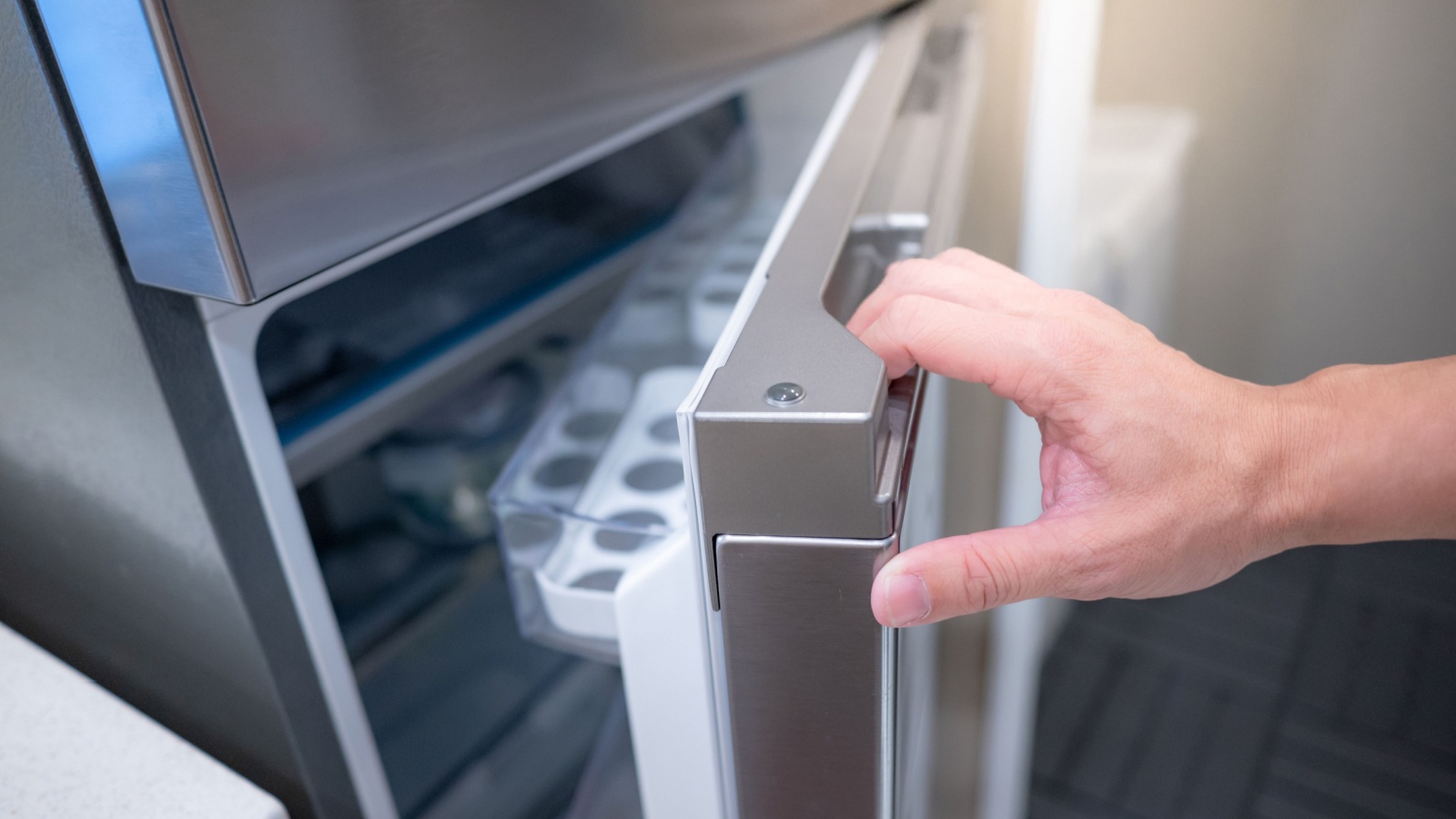
Published appliance depth can be misleading if the surrounding room is ignored. Refrigerator doors need enough room to open past cabinets and walls, dishwasher doors project into walkways, and front-loading laundry machines need space for both their doors and the person loading them. Refrigerator buying guidance specifically recommends checking swing space and considering whether an open door will hit a counter, wall or another doorway. Handles can also add several centimetres beyond the cabinet dimensions shown prominently in product listings.
This issue becomes especially important in smaller Canadian condos and older kitchens where every centimetre matters. A French-door refrigerator may fit the cabinet opening while one door cannot open far enough to remove a crisper drawer. A dishwasher opposite an island may leave almost no walking space when opened. Buyers should therefore picture the appliance in use rather than merely closed. Specification drawings usually show depth with doors and handles, door-opening dimensions and recommended clearance. Those less glamorous measurements often determine whether an appliance feels convenient every day or becomes a recurring source of frustration.
Confirm the Required Hookups Before Ordering

A sale price can become much less attractive when a home is not ready for the appliance. Before buying, Canadians should check the manufacturer’s installation instructions for the required electrical outlet, circuit, gas connection, water supply, drain and venting arrangement. GE Appliances Canada’s delivery guidance, for example, tells customers to verify electrical outlets, gas shutoff valves, water connections and venting before installation. A refrigerator with an ice maker may need a water line even when the old refrigerator did not.
Ranges deserve extra attention. Electric and induction models can require substantial electrical capacity, while gas appliances need appropriate fuel connections and safe installation. Some ranges also require an anti-tip bracket; current Whirlpool instructions warn that the bracket should be secured to the floor or wall. Dryers may require a compatible outdoor vent, and dishwashers need both plumbing and electrical connections. Instead of assuming an installer will solve every problem on arrival, buyers should identify necessary upgrades beforehand and include any electrician, plumber or gas-fitter costs in the purchase decision.
Look for a Recognized Canadian Safety Certification Mark

An inexpensive appliance bought online may look identical to one sold through a Canadian retailer, but electrical approval should never be assumed. Health Canada states that electrical products plugging into an outlet must meet Canadian national safety standards and be certified by an accredited certification body. Common marks include CSA, cUL and cETL. Health Canada advises consumers not to buy or use plug-in electrical products that lack an appropriate Canadian certification mark.
This check is particularly important with unfamiliar marketplace sellers, imported appliances and heavily discounted products shipped directly from abroad. A symbol showing compliance with another country’s requirements is not automatically the same as Canadian certification. Buyers should look at the product itself, packaging or detailed specifications and ask the seller for confirmation when the information is unclear. Certification does not promise that an appliance will never fail, but it confirms that it has been assessed against applicable Canadian safety requirements. Saving a few dollars on an uncertified electrical product is a poor trade when the possible consequences include electrical shock or fire.
Read the EnerGuide Label Instead of Just the Price Tag

For many major appliances sold in Canada, the EnerGuide label provides one of the easiest ways to compare long-term energy use. Natural Resources Canada explains that the label shows a model’s estimated annual energy consumption in kilowatt-hours and places that figure on a scale against comparable models. EnerGuide labelling applies to major categories including refrigerators, freezers, dishwashers, clothes washers, dryers and electric ranges.
The useful number is annual kWh, not simply whether the label looks favourable. Two refrigerators at similar prices can consume noticeably different amounts of electricity over many years. Buyers should also make sure they are comparing similar appliance types and capacities because a larger refrigerator naturally performs a different job from a compact one. EnerGuide gives shoppers a common testing framework that showroom claims cannot provide. A slightly more expensive model with substantially lower annual energy use may ultimately cost less to own, especially for appliances such as refrigerators and freezers that operate continuously rather than only when someone presses the start button.
Understand What ENERGY STAR Adds
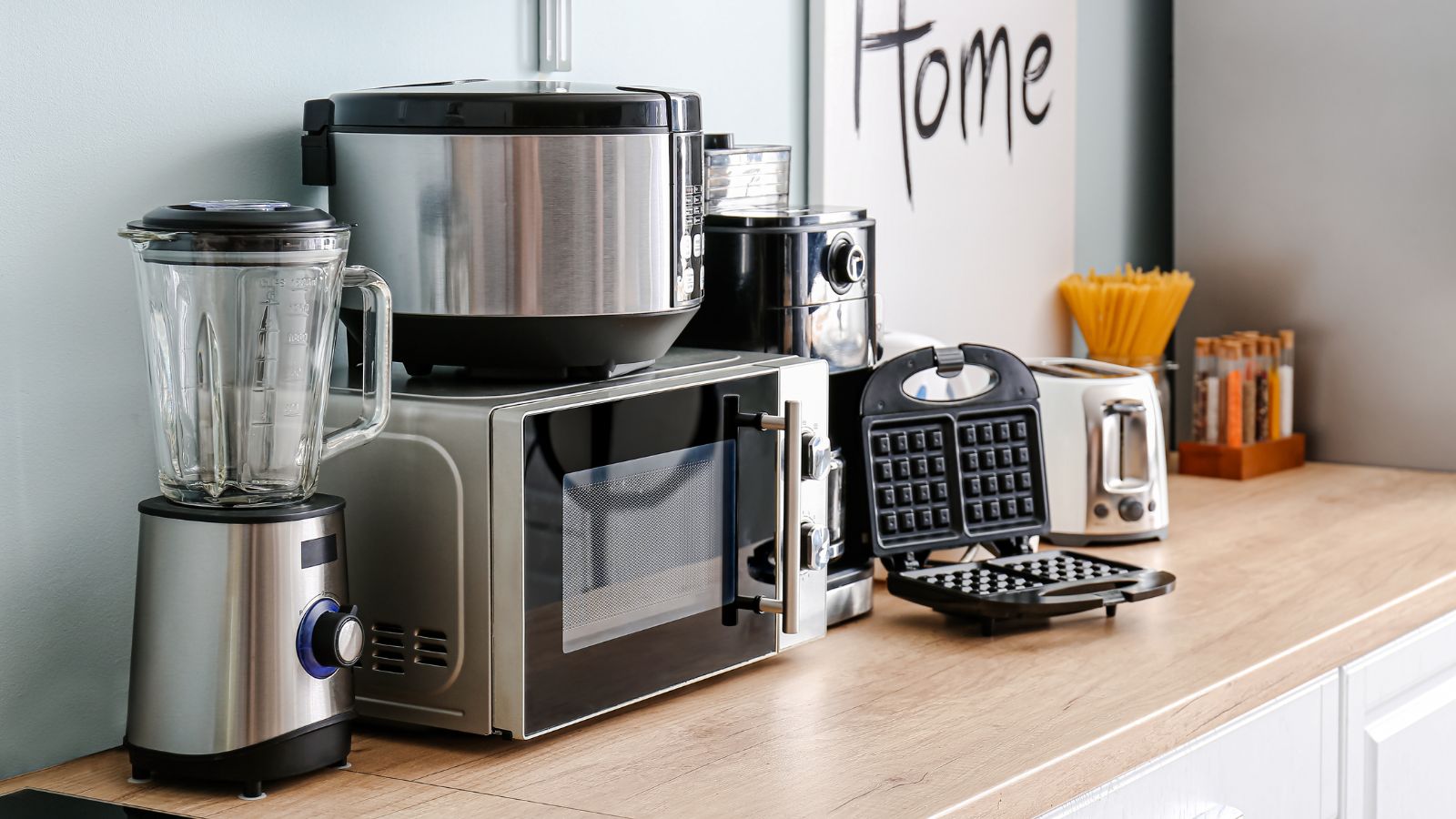
EnerGuide and ENERGY STAR are often seen together, but they serve different purposes. EnerGuide provides an energy-consumption rating that helps consumers compare models, while ENERGY STAR certification identifies products meeting specified energy-performance requirements. Natural Resources Canada says ENERGY STAR certified products are tested and certified to meet strict efficiency specifications. That makes the familiar blue symbol a useful screening tool, particularly when electricity use is an important part of the purchase decision.
Even ENERGY STAR should not end the comparison. Two certified appliances can still have different annual energy consumption, capacity and features, so the EnerGuide figure remains useful. Some incentive programs go further by requiring an ENERGY STAR Most Efficient designation or a specific qualified-product list rather than ordinary ENERGY STAR certification. This distinction can matter when a retailer advertises an efficiency rebate. Buyers should therefore confirm the exact model number instead of relying on a brand-level claim. The combination of certification and model-specific energy data offers a much clearer picture than advertising language such as “eco,” “green” or “energy saving.”
Convert Annual Energy Use Into an Approximate Dollar Cost

Kilowatt-hours become much more meaningful when translated into household dollars. Once an EnerGuide label provides annual consumption, shoppers can multiply that figure by the electricity rate they actually pay. For illustration, an appliance using 500 kWh a year would represent about $75 of electricity at 15 cents per kWh before considering rate structures or other bill components. Over ten years, even a modest annual difference between competing models can become material.
The calculation should be treated as an estimate because electricity pricing varies by province, utility, billing plan and time of use. Actual appliance use can also differ from standardized test assumptions. Still, comparing two models using the same local rate gives a much better ownership-cost picture than comparing purchase prices alone. Natural Resources Canada maintains a searchable product database specifically to help consumers compare energy-efficient models. For a refrigerator running around the clock or a frequently used dryer, operating cost can reasonably influence whether paying slightly more upfront makes financial sense. The cheapest appliance at checkout is not automatically the least expensive appliance to own.
Buy the Capacity the Household Actually Needs

Bigger is easy to sell in a showroom, but unnecessary capacity can carry an energy and space penalty. ENERGY STAR notes that, generally, larger refrigerators consume more energy and says some of the most energy-efficient refrigerator sizes are in the roughly 16-to-20-cubic-foot range. That does not mean every household should buy a refrigerator that size; it means capacity should be matched to real needs rather than treated as a status feature.
A family that prepares most meals at home may reasonably need more storage than someone living alone, while households that buy frozen food in bulk may benefit from a separate freezer. Laundry capacity should likewise reflect typical loads. An oversized appliance can occupy valuable floor space, complicate delivery and increase the amount paid for features that rarely get used. Conversely, an undersized washer that forces constant extra loads may prove frustrating. Looking at what the household actually stores, cooks or washes during an ordinary week is more useful than being impressed by the largest display model. Capacity should solve a routine problem, not create a new one.
Compare Water Efficiency for Washers and Dishwashers

Electricity is only part of an appliance’s resource cost. Dishwashers and clothes washers also consume water, which can matter financially in municipalities where households pay for water and wastewater service. ENERGY STAR dishwasher criteria incorporate both energy consumption and water use, while clothes washers use an Integrated Water Factor, or IWF, to compare water consumption relative to washer capacity. For IWF, a lower number indicates greater water efficiency.
The lesson is to look beyond the annual kWh figure when comparing machines that use significant amounts of water. ENERGY STAR product listings publish model-level water information, allowing shoppers to distinguish between appliances that may appear equally efficient at first glance. Water use also interacts with energy use because hot-water consumption adds another energy requirement to washing. A household running a dishwasher daily or doing frequent laundry will experience those differences much more often than a light user. Features such as soil sensing and load sensing can further affect how intelligently a machine adjusts water use. Efficiency comparisons are most useful when they reflect the household’s actual usage pattern.
Check the Noise Rating Before It Becomes a Daily Irritation

Noise rarely feels important in a brightly lit appliance showroom, yet it can become one of the most noticeable differences once a machine is installed beside a living space. Dishwasher manufacturers commonly publish sound ratings in dBA, making at least some direct model comparisons possible. Current Canadian listings demonstrate meaningful variation: Bosch’s comparison material includes models around 39 to 46 dBA, while GE Canada lists dishwashers at levels such as 42, 45, 47, 50 and 51 dBA.
The location determines how much this matters. A dishwasher in an open-concept kitchen beside a television or home office may justify extra attention to sound, whereas a laundry machine behind a closed basement door may not. Buyers should also remember that a lower dBA figure is not the only performance consideration; cycle length, capacity and cleaning performance still matter. Nevertheless, published noise specifications are valuable because “quiet” and “ultra-quiet” are marketing descriptions rather than precise comparisons. When two otherwise similar appliances are being considered, a documented sound rating can help predict which one will be easier to live with.
Check the Approved Ambient Temperature Range

Putting a refrigerator or freezer in a garage, porch or other unconditioned space can create a specifically Canadian problem: winter. Not every refrigeration appliance is designed to operate properly when the surrounding air becomes very cold or extremely hot. Manufacturers therefore increasingly advertise certain products as “garage ready.” A current Whirlpool Canada garage-ready refrigerator, for example, is designed for ambient temperatures from about 3.3°C to 43.3°C, while GE Canada advertises selected garage-ready freezers tested across a wider range.
The key is not the phrase itself but the exact operating range in the manual. An unheated garage in Winnipeg, Edmonton or northern Ontario can fall far below the approved minimum for some products. Similarly, a poorly ventilated garage can become very hot in summer. Buyers planning non-kitchen placement should compare the home’s real seasonal temperatures with the manufacturer’s limits before purchasing. A refrigerator that is excellent in a climate-controlled kitchen may be the wrong machine for an outdoor-adjacent space, regardless of its capacity, appearance or sale price.
Consider Ventilation, Especially for Ranges and Dryers

Some appliances affect indoor air as well as utility bills. Health Canada recommends making sure a clothes dryer vents outdoors and that the vent is not blocked. For cooking, it advises using a range-hood exhaust fan because cooking can release particulate matter, nitrogen dioxide, carbon monoxide and water vapour. Health Canada reports that operating an exhaust hood on high at about 300 cubic feet per minute can reduce exposure to cooking-related pollutants by more than 80% compared with slower speeds under the conditions examined.
That means a range purchase should not be separated from the kitchen’s ventilation setup. Gas combustion adds another consideration because poor installation or ventilation of fuel-burning appliances can contribute to carbon-monoxide buildup. Dryer buyers should similarly check whether the existing vent route satisfies the new machine’s installation requirements rather than assuming the old duct arrangement is adequate. A premium appliance cannot compensate for unsuitable ventilation. When installation changes are needed, pricing them before purchase helps prevent an attractive appliance deal from unexpectedly turning into a larger renovation project.
Read the Warranty Before Paying for More Coverage

The word “warranty” is less informative than the details underneath it. Canada’s Competition Bureau has specifically advised appliance buyers to ask whether a warranty is full or limited, whether it covers parts, labour or both, whether different components have different coverage periods and whether repairs must be completed by authorized providers. Those details can dramatically change the practical value of a warranty after the first year of ownership.
Extended protection should then be compared with coverage already available. Canada’s Office of Consumer Affairs notes that some credit cards provide additional warranty coverage when an eligible purchase is made with the card. Provincial and territorial consumer laws may also provide implied warranty protections, although the exact rules differ across Canada. Before adding a multi-year protection plan at checkout, a buyer should identify what the manufacturer covers, what the card issuer may add, the deductible or service fees on the proposed plan and any exclusions. Paying twice for overlapping coverage makes an appliance more expensive without necessarily creating much additional protection.
Understand the Store’s Return and Exchange Rules

A refrigerator is not a sweater that can safely be assumed to have a generous return window. Canada’s Office of Consumer Affairs warns that businesses generally are not legally required to accept returned merchandise merely because a customer changed their mind, although defective products involve different rights and provincial or territorial rules can apply. Retail return policies therefore deserve careful reading before a large appliance order is finalized.
Important details include the return period, whether installed appliances can be returned, whether special-order items are excluded, whether restocking or pickup charges apply and what happens when the unit arrives cosmetically damaged. Online purchases can have separate procedures from store purchases. Buyers should save a copy or screenshot of the policy that applied on the purchase date, especially when ordering during a promotion. A showroom salesperson saying that “returns shouldn’t be a problem” is not the same as written terms. Because appliances are costly and difficult to transport, understanding the escape route before purchase can be almost as important as choosing the model itself.
Investigate Repairability and the Local Service Network
A machine’s value does not end when the manufacturer’s warranty expires. Before buying, Canadians can check whether replacement parts are readily available, whether local technicians service the brand, whether diagnostic information is accessible and how long major components are expected to remain supported. The federal government’s right-to-repair work has specifically focused on home appliances and consumer electronics, reflecting concerns about durability, repairability, parts access and consumers’ ability to choose repair options.
The practical test is simple: search the manufacturer’s Canadian service locator using the household postal code before purchasing. A well-known brand with several authorized technicians nearby may be easier to own than a niche product whose nearest servicer is hundreds of kilometres away. Buyers can also search common parts such as pumps, control boards, door seals and heating elements for the exact product family. The goal is not to predict every future failure. It is to avoid discovering five years later that a perfectly repairable appliance must be replaced because parts, software tools or qualified service are unavailable locally.
Search the Canadian Recall Database

New-looking does not always mean problem-free. Health Canada’s recalls and safety-alerts database allows consumers to search both recent and archived product notices, including household appliances. Checking the exact brand and model family before purchase can reveal whether a product line has been subject to a safety action and, just as importantly, whether a recalled unit has somehow remained in resale inventory.
Recent Canadian examples show why model numbers matter. Health Canada published a July 9, 2026 recall involving specific Insignia gas ranges because front-mounted knobs could be activated accidentally, creating a fire hazard. The notice covered 702 units reportedly sold in Canada and instructed consumers to stop using the recalled products while obtaining the remedy. That does not imply that an entire brand is unsafe; recalls usually apply to specific models, production periods or serial numbers. The sensible habit is simply to check. A two-minute search before paying for an appliance is easier than discovering a safety notice after installation.
Decide Whether the “Smart” Features Are Worth the Data Connection

Wi-Fi connectivity can add useful features such as cycle notifications, remote diagnostics and energy monitoring, but it also turns an appliance into another connected device inside the home. Canada’s privacy and cybersecurity authorities have repeatedly warned that connected-home devices can collect information about household activities and may introduce security vulnerabilities. In July 2026, G7 privacy authorities, including Canada’s Privacy Commissioner, highlighted how connected-home technologies can reveal information about daily behaviours and people inside a residence.
Before paying extra for connectivity, shoppers should find out what works without an account or internet connection, what data the manufacturer collects, whether cloud services are required and how software security updates are handled. The Canadian Centre for Cyber Security also advises keeping connected devices patched and separating less-trusted smart devices from sensitive networks where appropriate. A Wi-Fi oven or refrigerator may be genuinely useful for one household and an unnecessary dependency for another. Smart features should therefore be judged like any other appliance feature: by whether their everyday benefit justifies their cost and complexity.
Calculate the Entire Installed Price

The sticker price is only one line in the appliance budget. Delivery, installation, required hoses or cords, stacking kits, water lines, gas connections, haul-away charges and modifications to cabinetry or wiring can all raise the amount ultimately paid. GE Appliances Canada’s delivery information, for example, tells customers to confirm that appropriate outlets, shutoff valves, water supplies and venting are already available. Discovering that they are not can transform a routine replacement into a much more expensive installation.
Consumers should ask the retailer for an itemized total before committing. Canada’s Competition Bureau describes “drip pricing” as advertising a price that is unattainable because mandatory fixed charges are added later, apart from legitimate government-imposed charges. Not every optional delivery or installation service is a prohibited fee, but the broader lesson is useful: compare checkout-to-working-appliance cost, not promotional sticker prices. A $1,200 appliance with everything included may be cheaper than a $1,050 competitor once necessary services and accessories are added. A written quote makes that comparison much easier.
Check for Rebates Before Buying, Not Afterwards

Energy-efficiency incentives can be highly specific to province, utility, appliance category and model number, and they can change quickly. As of August 2026, Ontario’s Home Renovation Savings program lists rebates on several eligible appliance categories, including $200 for qualifying heat-pump clothes dryers, $150 for qualifying induction cooktops and ranges, $75 for washing machines and smaller amounts for eligible dishwashers, refrigerators and freezers. The program also requires buyers to meet eligibility rules and submit an application within a stated period.
That example illustrates why incentive research belongs before checkout. A product described broadly as ENERGY STAR may still fail a program’s qualified-model requirement, while refurbished appliances or purchases made outside an eligible period may not count. Other provinces and utilities operate different programs, and offers may appear or disappear seasonally. Natural Resources Canada also maintains information about ENERGY STAR rebates and incentives. Once two appliances are otherwise comparable, an available rebate can materially change the effective price—but only when the buyer verifies eligibility before assuming the money will arrive.
Read the Financing Terms as Closely as the Appliance Specs

“Zero per cent” can make a large appliance feel cheaper without changing its actual price. The Financial Consumer Agency of Canada explains that buy-now-pay-later arrangements are credit products and may include interest, administration charges, processing fees or penalties for missed payments. Some promotional plans can lose their favourable rate when payment conditions are not met. FCAC gives an example in which a retail-credit promotional rate could jump from 0% to 35% after a missed minimum payment, depending on the agreement.
Before financing a refrigerator or laundry pair, shoppers should identify the total amount financed, payment schedule, administration fees, interest rate, consequences of late payments and whether interest can be charged retroactively. Monthly affordability is not the same thing as total affordability. It is also worth comparing financing against simply delaying the purchase, paying cash or using another lower-cost credit option when replacement is not urgent. An appliance expected to last many years should improve the household, not leave behind expensive short-term debt created by misunderstood promotional terms.
Know What to Inspect and Keep After Delivery
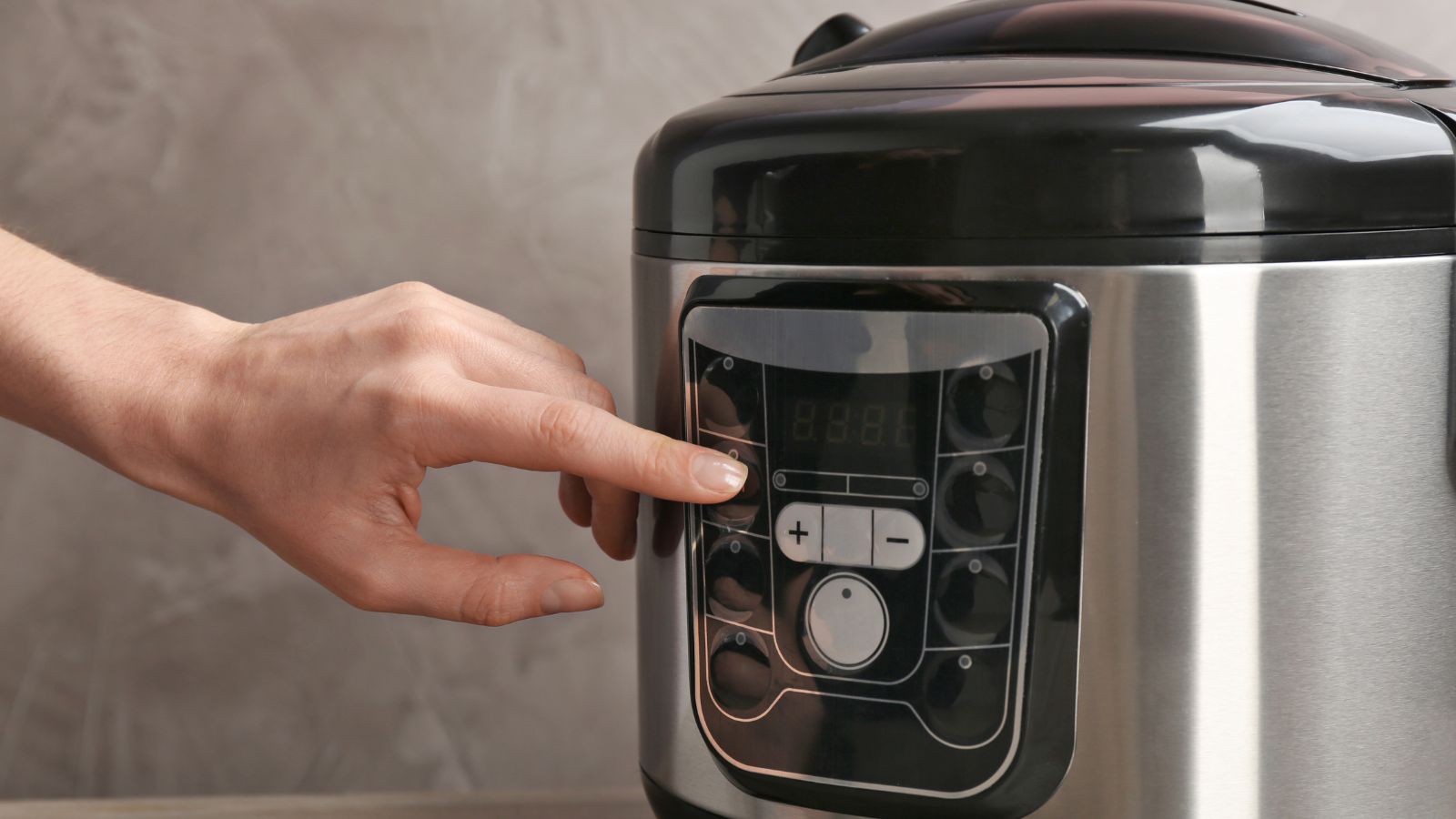
The purchase decision should include a plan for delivery day. Before installers leave, the appliance should be checked for visible dents, broken trim, damaged doors and obvious installation problems, and any concerns should be documented promptly under the retailer’s stated damage procedure. Buyers should also confirm that the delivered model number matches the invoice. This is particularly useful when several nearly identical models have different features, energy ratings or rebate eligibility.
Documentation matters long after the cardboard is removed. Canada’s Office of Consumer Affairs advises consumers to keep sales receipts and product information because they may be required for a future warranty claim. Recording the model and serial number is also useful for service and recall identification. The receipt, warranty terms, installation invoice and photographs of identifying labels can be stored digitally in one folder rather than searched for years later. A major appliance can remain in a home for a long time; five minutes of organized record-keeping at the beginning can make a future repair, insurance claim or safety recall considerably easier to manage.
This Options Discord Chat is The Real Deal
While the internet is scoured with trading chat rooms, many of which even charge upwards of thousands of dollars to join, this smaller options trading discord chatroom is the real deal and actually providing valuable trade setups, education, and community without the noise and spam of the larger more expensive rooms. With a incredibly low-cost monthly fee, Options Trading Club (click here to see their reviews) requires an application to join ensuring that every member is dedicated and serious about taking their trading to the next level. If you are looking for a change in your trading strategies, then click here to apply for a membership.