35,000+ smart investors are already getting financial news, market signals, and macro shifts in the economy that could impact their money next with our FREE weekly newsletter. Get ahead of what the crowd finds out too late. Click Here to Subscribe for FREE.
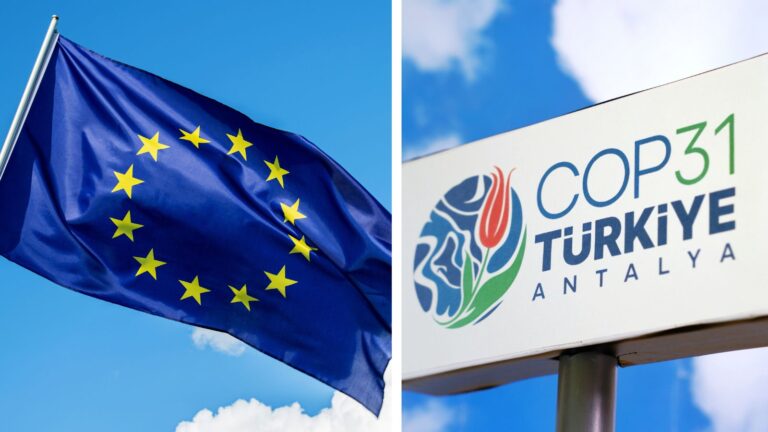
A major confrontation over the future of fossil fuels has pushed international climate negotiations into uncertainty after the European Union formally rejected a proposed COP31 agreement that failed to explicitly mention coal, oil or natural gas.
The dispute erupted on November 22, 2026, during the closing stages of the United Nations climate summit in Antalya, Turkey, where nearly 200 countries had spent two weeks negotiating their response to rising global temperatures.
European officials argued that an agreement avoiding the principal sources of greenhouse gas emissions would represent a dangerous retreat from previous commitments. Oil-producing nations defended greater flexibility and the role of carbon-capture technologies.
With the proposed agreement failing to secure consensus, the confrontation has reopened fundamental questions about the global energy transition, the influence of fossil-fuel producers and the credibility of international climate diplomacy.
Europe Draws a Firm Line Against the Proposed Climate Agreement
EU Formally Rejects COP31 Climate Draft Over Missing Fossil-Fuel Language, Reviving Oil Industry Debate
- Europe Draws a Firm Line Against the Proposed Climate Agreement
- The Antalya Pact Avoided Explicit References to Fossil Fuels
- A Landmark 2023 Agreement Became the Centre of the Dispute
- Carbon Capture Technology Reignites the Oil Industry Debate
- Saudi Arabia and Russia Defend Greater Energy Flexibility
- Vulnerable Nations Join Europe’s Opposition to the Draft
- New Climate Research Intensifies Pressure for Stronger Action
- Climate Finance Remains Another Major Source of Division
- Electrification Offers Progress but Leaves Important Questions Unanswered
- The Rejected Agreement Leaves Climate Diplomacy Facing Difficult Choices
The European Union’s opposition became official during the COP31 closing plenary on Sunday, November 22, when Ireland’s climate minister, Darragh O’Brien, spoke on behalf of the bloc. He declared that European governments could not endorse the proposed Antalya Pact because it failed to recognize fossil fuels as the principal driver of climate change. The intervention came after negotiators had already exceeded the summit’s scheduled conclusion by more than 44 hours, making COP31 the longest-running UN climate conference on record.
The objection carried significant diplomatic consequences. International climate agreements depend on consensus, meaning substantial opposition can prevent a proposed decision from being adopted. COP31 President Murat Kurum subsequently acknowledged that the required agreement did not exist and that the disputed texts had not been approved. Although other negotiating decisions could proceed separately, the rejection effectively blocked the summit’s central political declaration. For European governments, accepting weaker language would have risked undermining commitments they had spent years promoting.
The Antalya Pact Avoided Explicit References to Fossil Fuels
The rejected proposal contained language supporting clean energy, electrification, climate resilience and international cooperation. However, the November 22 draft did not explicitly mention fossil fuels or require countries to transition away from coal, oil and natural gas. Instead, its opening recalled the United Arab Emirates Consensus reached at COP28 in 2023, which had previously recognized the importance of moving away from fossil fuels. European negotiators argued that referring indirectly to an earlier commitment was insufficient when governments were supposed to demonstrate progress toward implementing it.
Other provisions revealed the competing priorities. The proposed agreement encouraged increasing electricity’s share of global final energy consumption to 35% by 2035, while supporting greater deployment of carbon-capture technologies. It also acknowledged that global temperatures were likely to exceed the Paris Agreement’s 1.5°C objective. Critics questioned how those ambitions could be reconciled with the absence of a direct commitment addressing the energy sources responsible for most carbon dioxide emissions. That contradiction became central to the EU’s rejection.
A Landmark 2023 Agreement Became the Centre of the Dispute
The confrontation traces back to COP28 in Dubai, where governments reached a historic agreement in December 2023 recognizing the need to transition away from fossil fuels in energy systems. It was the first time an international climate summit had adopted language explicitly addressing the broader fossil-fuel transition. Although the decision did not establish a binding deadline for ending oil, gas or coal production, it represented an important political milestone after decades of difficult negotiations.
At COP31, disagreements emerged over how that commitment should be carried forward. An initial draft released on November 16 contained alternative proposals, including language reaffirming the transition away from fossil fuels and another calling for accelerated action to phase them out. A revised version released on November 19 removed explicit references to fossil fuels. The final proposal attempted a compromise by recalling the Dubai agreement without repeating its central wording. Supporters of stronger action saw that change as a retreat, particularly because more than 130 countries had pushed for clearer transition language.
Carbon Capture Technology Reignites the Oil Industry Debate
Another major source of disagreement involved carbon capture, utilization and storage, commonly known as CCUS. These technologies aim to capture carbon dioxide from industrial facilities and other sources before it enters the atmosphere. The proposed Antalya Pact encouraged expanding deployment toward gigatonne scale globally by 2035, describing the objective as a collective aspiration. Supporters argue that carbon capture can help industries such as cement manufacturing and steel production, where eliminating certain emissions remains technically challenging.
However, critics worry that emphasizing carbon capture without explicitly reducing fossil-fuel dependence could provide justification for continued investment in oil and gas production. The scale of the proposed expansion also highlights the challenge. According to the Global CCS Institute’s 2026 assessment, 113 commercial carbon-capture projects were operating worldwide as of July 31, with combined annual capture capacity of approximately 68 million tonnes. That remains far below gigatonne scale. The Intergovernmental Panel on Climate Change recognizes a role for carbon dioxide removal but emphasizes that it cannot replace immediate, substantial emissions reductions. Carbon capture at industrial facilities and removal of carbon dioxide already in the atmosphere are also distinct processes.
Saudi Arabia and Russia Defend Greater Energy Flexibility
Major fossil-fuel-producing countries resisted attempts to introduce stronger restrictions on oil, gas and coal. Saudi Arabia defended the importance of keeping technological solutions available, arguing that carbon capture and other approaches should remain part of the global response to climate change. Russia similarly opposed wording that could accelerate restrictions on fossil-fuel supply. Russian delegate Sergei Kononuchenko warned that reducing oil and gas production faster than demand declines could contribute to shortages, price increases and greater energy poverty.
These positions reflect wider tensions between climate commitments and economic considerations. Countries dependent on energy exports face difficult questions about government revenues, employment and future investment. Energy-importing nations, meanwhile, remain concerned about affordability and reliable supplies during periods of geopolitical instability. The central dispute is therefore not simply whether cleaner energy should expand, but how quickly fossil-fuel dependence should decline and how governments should manage the transition. European negotiators insisted that economic concerns could not justify avoiding an explicit acknowledgment of fossil fuels’ contribution to global warming.
Vulnerable Nations Join Europe’s Opposition to the Draft
The European Union was not alone in rejecting the proposed agreement. Countries including Panama, the Marshall Islands and Vanuatu raised serious objections, while the United Kingdom and Norway also criticized the draft. For vulnerable nations, the dispute carried consequences extending far beyond diplomatic language. Rising sea levels, stronger weather extremes and increasing adaptation costs threaten communities already facing substantial climate risks. Representatives of the Marshall Islands warned that the proposal offered an inadequate response to warming and could undermine their long-term security.
Vanuatu similarly objected to language that appeared to normalize exceeding the 1.5°C temperature threshold without establishing a credible pathway to return below it. Panama questioned whether the negotiations adequately reflected the urgency of the climate crisis. The objections demonstrated that support for stronger action was not confined to wealthy European countries. Nevertheless, developing nations were not united on every issue. Some placed greater emphasis on climate finance, national development priorities and energy access, illustrating why reaching consensus among nearly 200 governments remained exceptionally difficult.
New Climate Research Intensifies Pressure for Stronger Action
The negotiations unfolded against increasingly serious scientific warnings. The World Meteorological Organization reported that the global average surface temperature from January through September 2026 was approximately 1.47°C above the 1850–1900 pre-industrial average. The organization also projected that 2026 would rank among the four warmest years recorded. Although a single year near or above 1.5°C does not independently establish a permanent breach of the Paris Agreement’s long-term temperature objective, the trend illustrates the narrowing opportunity to contain warming.
The United Nations Environment Programme’s 2026 Emissions Gap Report concluded that temporarily exceeding 1.5°C is now expected and that substantially faster emissions reductions are essential. Its lowest-overshoot pathway requires global greenhouse gas emissions to fall approximately 18% by 2030 and 45% by 2035 compared with 2025 levels. Even then, modeled peak warming reaches around 1.7°C to 1.8°C before declining. These findings help explain why European officials considered the omission of fossil-fuel language especially troubling when the scientific evidence increasingly demands urgent action.
Climate Finance Remains Another Major Source of Division
Beyond fossil fuels, COP31 exposed persistent disagreements about financial support for countries confronting the impacts of climate change. Many developing nations argue that wealthier economies, responsible for a substantial share of historical emissions, must provide more predictable funding for adaptation. Such financing can support flood defenses, drought-resistant infrastructure, early warning systems and stronger public services. Without adequate resources, governments facing repeated climate disasters may struggle to protect communities while simultaneously investing in cleaner energy systems.
The financial gap remains substantial. UNEP’s 2026 Adaptation Gap Report estimates that developing countries will require approximately US$305 billion annually for adaptation by 2035. International public adaptation finance from developed countries reached only US$28.2 billion to US$31.7 billion in 2024. An earlier COP31 negotiating draft included a proposed US$120 billion annual adaptation-finance target, but that figure disappeared from later versions. Although the EU indicated that its decisive objection concerned emissions reductions and fossil-fuel language rather than adaptation financing, the wider dispute demonstrated how closely climate ambition and financial assistance remain connected.
Electrification Offers Progress but Leaves Important Questions Unanswered
Despite the diplomatic breakdown, COP31 included proposals intended to accelerate the transition toward electricity in transportation, buildings and industry. One prominent objective sought to increase electricity’s share of global final energy consumption to 35% by 2035. The idea reflects growing interest in electric vehicles, heat pumps, modern power grids and industrial electrification as ways to reduce direct fossil-fuel consumption. However, environmental organizations warned that greater electricity use would deliver fewer climate benefits if additional power generation continued relying heavily on coal and natural gas.
Business activity nevertheless demonstrated that the transition is already underway. A UN Climate Change announcement during COP31 described electrification actions involving more than 150 countries plus the EU and over 260 businesses. The International Energy Agency separately estimated that global clean-energy investment would reach approximately US$2.2 trillion in 2026, compared with US$1.2 trillion flowing toward fossil fuels. These figures illustrate a major shift in energy investment, although the transition remains uneven across regions. For oil and gas companies, expanding electrification raises long-term questions about demand, infrastructure and future business strategies, regardless of the summit’s political outcome.
The Rejected Agreement Leaves Climate Diplomacy Facing Difficult Choices
COP31’s failure to adopt its central political agreement represents a significant setback, but it does not eliminate existing climate commitments. The Paris Agreement remains in force, and previous decisions, including the 2023 commitment to transition away from fossil fuels, are not automatically reversed by the absence of a new declaration. Countries can continue implementing national climate policies, expanding renewable energy and pursuing international partnerships independently of the disputed Antalya Pact. Other technical and procedural decisions from the conference also remain separate from the rejected cover text.
The next major opportunity for negotiations is COP32, scheduled for Addis Ababa, Ethiopia, in November 2027. Governments will face renewed pressure to resolve disagreements over fossil fuels, carbon-capture technology and financial assistance for developing nations. The events in Antalya demonstrated how difficult it remains to reconcile environmental urgency with energy security, economic development and national interests. Ultimately, the EU’s rejection left the international community confronting an unresolved question: whether future climate agreements can establish a credible transition away from fossil fuels while providing the financial and technological support needed to make that transition achievable.
This Options Discord Chat is The Real Deal
While the internet is scoured with trading chat rooms, many of which even charge upwards of thousands of dollars to join, this smaller options trading discord chatroom is the real deal and actually providing valuable trade setups, education, and community without the noise and spam of the larger more expensive rooms. With a incredibly low-cost monthly fee, Options Trading Club (click here to see their reviews) requires an application to join ensuring that every member is dedicated and serious about taking their trading to the next level. If you are looking for a change in your trading strategies, then click here to apply for a membership.