
35,000+ smart investors are already getting financial news, market signals, and macro shifts in the economy that could impact their money next with our FREE weekly newsletter. Get ahead of what the crowd finds out too late. Click Here to Subscribe for FREE.
Late summer has a way of making household finances feel temporarily calm. Vacation spending is winding down, fall bills have not fully arrived, and year-end deadlines still seem comfortably distant. That makes August an unusually useful month for a financial reset.
For Canadians, several important account limits, benefit schedules, tax obligations, borrowing rules and consumer protections are worth reviewing before September begins. Some moves can lower recurring expenses, while others can prevent missed payments or preserve valuable registered-account room. These 20 late-summer money moves focus on practical steps households can take now, before back-to-school costs, mortgage renewals, tax instalments and the final spending stretch of 2026 begin competing for the same dollars.
Clear Out Expensive Credit-Card Balances
20 Late-Summer Money Moves Canadians Should Make Before September
- Clear Out Expensive Credit-Card Balances
- Put September Benefit Dates on the Household Calendar
- Check TFSA Room Before Moving Summer Savings
- Use FHSA Room Deliberately
- Top Up an RESP While the Calendar Year Remains
- Make RRSP Contributions Before the Winter Rush
- Rebuild the Emergency Fund After Summer Spending
- Decide Which Debt Gets the Next Extra Dollar
- Start Mortgage Renewal Shopping Before the Notice Arrives
- Check Mortgage Prepayment Privileges Before Sending Extra Cash
- Audit Chequing-Account Fees
- Re-Shop Cellphone and Internet Plans Under New 2026 Rules
- Get Fresh Home and Auto Insurance Quotes
- Prepare for Student-Loan Repayment Before Payments Begin
- Update Payroll Tax Credits After Relevant Life Changes
- Prepare Now for the September 15 Tax Instalment
- Search the CRA Account for Old Uncashed Cheques
- Review GICs Before They Automatically Renew
- Automate a September Sinking Fund
- Pull Both Credit Reports Before Fall Borrowing

Summer travel, restaurant meals, festivals and family outings can leave a credit-card statement looking much larger in August than it did in June. Before adding back-to-school purchases or fall expenses, Canadians carrying balances should determine exactly what is owed, which cards have the highest interest rates and how much can realistically be paid before another billing cycle arrives. Federally regulated card issuers must provide an interest-free grace period of at least 21 days on new purchases, although the benefit of that grace period depends on meeting the card’s payment conditions.
Paying only the minimum can keep an account current without making much progress on the underlying debt. The Financial Consumer Agency of Canada notes that minimum payments are commonly structured as a small flat amount plus interest and fees, or as a percentage of the outstanding balance. A practical late-August reset is to stop adding discretionary purchases to the most expensive card and direct available cash toward the balance. Even a partial reduction means less debt competing with September’s new expenses.
Put September Benefit Dates on the Household Calendar

Government payments work best as part of a cash-flow plan rather than being treated as unexpected spending money. Families receiving the Canada Child Benefit should note that the August 2026 payment is scheduled for August 20, followed by the September payment on September 18. CCB amounts are recalculated each July using information from the previous year’s tax return, which means the amount arriving during late summer may differ from what a household received earlier in the year.
Another recent change is worth remembering: the GST/HST credit was renamed the Canada Groceries and Essentials Benefit beginning in July 2026. Its next regular quarterly payment is scheduled for October 5, so households that rely on that deposit should not build a September budget around money that will not arrive until October. Mapping known deposits against rent or mortgage payments, school costs, utilities and debt payments can reveal a shortfall several weeks before it becomes an overdraft or credit-card problem.
Check TFSA Room Before Moving Summer Savings
Money left over from summer plans may be a candidate for a Tax-Free Savings Account, but Canadians should check their actual contribution room before transferring anything. The TFSA annual dollar limit for 2026 is $7,000, and unused room from earlier years can carry forward. That means two people of the same age can have dramatically different available contribution room depending on previous deposits and withdrawals.
The CRA specifically advises account holders to compare the contribution-room information in their CRA account with their own financial-institution records. That matters because the number shown online depends on information reported to the agency. August is a good time for this check because there are still several months left in the calendar year to decide how cash should be allocated. Someone with high-interest debt may reasonably prioritize that debt first, while a household with adequate emergency savings might use available TFSA room for cash savings or investments appropriate to its goals and risk tolerance.
Use FHSA Room Deliberately

Canadians hoping to buy a first home should give the First Home Savings Account another look before late summer disappears. In the year an eligible person opens a first FHSA, participation room is generally $8,000. Contributions may qualify for an income-tax deduction, while the lifetime FHSA deduction limit is $40,000. Those features make the account unusually valuable for people who actually expect to qualify for a future first-home purchase.
Timing is important. Unlike RRSP contributions, FHSA contributions made during the first 60 days of a new year cannot be deducted against the previous tax year. The FHSA contribution period runs from January 1 through December 31. That does not create an August deadline, but it does make late summer a sensible checkpoint. Someone who opened an FHSA earlier in 2026 but has contributed little can calculate how much monthly cash would be required between now and December rather than attempting an uncomfortable lump sum during the holiday season.
Top Up an RESP While the Calendar Year Remains

Parents and grandparents with Registered Education Savings Plans can use August to determine whether 2026 contributions are on pace to capture available Canada Education Savings Grant money. The basic CESG generally adds 20% of the first $2,500 contributed for an eligible beneficiary each year, producing as much as $500 in basic grant money. The lifetime CESG maximum is $7,200 per eligible child, with additional grant amounts potentially available to lower- and middle-income families.
Unused basic CESG room can also create catch-up opportunities. Where sufficient unused grant room exists, contributions of up to $5,000 in a year can potentially generate as much as $1,000 in basic CESG. That makes an RESP review particularly worthwhile before fall spending accelerates. A family does not necessarily need to find thousands of dollars immediately; identifying the remaining target in August makes it possible to spread contributions across several paycheques before December 31 instead of discovering unused grant room during the final days of the year.
Make RRSP Contributions Before the Winter Rush

RRSP season is usually associated with February, but Canadians do not have to wait for the annual deadline rush to think about retirement contributions. The 2026 RRSP dollar limit is $33,810, although that figure is only the overall annual ceiling. An individual’s actual deduction limit may be significantly lower because it depends on factors including prior-year earned income, pension adjustments and unused contribution room. The personalized figure is available through the CRA and on the latest notice of assessment or reassessment.
For households already expecting to make a 2026 contribution, late summer offers one simple advantage: more time to fit the contribution into ordinary cash flow. Instead of scrambling for several thousand dollars after the holidays, a saver could divide the intended amount among the remaining pay periods. Contributions do not need to be deducted immediately simply because they were made; eligible unused contributions may be carried forward for deduction in a future year. The important part is staying within the person’s actual limit and preserving enough liquidity for near-term expenses.
Rebuild the Emergency Fund After Summer Spending

An emergency fund can quietly shrink during summer. A vehicle repair gets paid from savings, an unexpected flight is booked for a family obligation, or vacation expenses simply run higher than planned. August is a useful point to calculate what remains rather than assuming the fund will somehow rebuild itself during the fall. The Financial Consumer Agency of Canada suggests aiming eventually for emergency savings equal to roughly three to six months of regular expenses.
That target can sound unrealistic for a household starting from a few hundred dollars, but FCAC also emphasizes building the fund gradually. A late-summer reset might therefore be as modest as replacing $300 spent on a repair or adding an automatic $40 transfer every payday. The goal is not to reach six months of expenses by September. It is to restore the habit before winter heating costs, holiday spending and other predictable expenses arrive. Keeping emergency money separate from everyday spending can also make it less tempting to treat the balance as available cash.
Decide Which Debt Gets the Next Extra Dollar

Canadians juggling a credit card, line of credit, vehicle loan and other balances can lose momentum when extra payments are scattered randomly. Before September, it is worth selecting a specific repayment strategy. FCAC identifies two common approaches: directing extra money toward the debt carrying the highest interest rate or targeting the smallest balance first. Minimum payments should continue on the other accounts in either case, while overdue accounts may require attention before either strategy begins.
The highest-interest approach generally focuses on reducing borrowing costs, while the smallest-balance method can provide psychological momentum by eliminating an account sooner. A household with $600 available in August will usually accomplish more by deliberately directing it according to one strategy than by spreading $100 or $150 across several debts without a plan. Writing down every balance, rate and minimum payment also exposes expensive borrowing that may have faded into the background. September then begins with one clear target instead of a collection of competing balances.
Start Mortgage Renewal Shopping Before the Notice Arrives

Homeowners with mortgages renewing this fall should not assume the lender’s renewal offer is automatically the best available option. For mortgages with federally regulated financial institutions, lenders must provide a renewal statement at least 21 days before the end of the existing term. That is a consumer protection, not necessarily the ideal time to begin comparing rates, terms, payment flexibility and other conditions.
Starting earlier creates room to understand what a different payment would do to the household budget. A homeowner can ask the existing lender what rate it is prepared to offer while also investigating competing institutions or a mortgage broker. The comparison should go beyond the headline interest rate: prepayment options, portability, payment frequency and penalties can matter over an entire term. Someone renewing in October, for example, can spend August gathering information rather than making a pressured decision after the official renewal paperwork arrives. Even remaining with the same lender is a more informed choice after alternatives have been considered.
Check Mortgage Prepayment Privileges Before Sending Extra Cash

Homeowners who accumulated extra cash during the year may be tempted to make a large mortgage payment before fall. That can reduce principal, but the mortgage contract should be checked first. Many closed mortgages include prepayment privileges allowing borrowers to increase regular payments or make lump-sum payments up to specified limits without a penalty. Those privileges vary by lender and contract.
Going beyond the permitted amount can be expensive. FCAC warns that mortgage prepayment penalties can cost thousands of dollars in some situations. Open mortgages generally permit additional or lump-sum payments without a prepayment penalty, but they operate differently from closed mortgages and commonly have different pricing. Before transferring a large August bonus, tax refund or accumulated savings, the borrower should confirm the exact unused privilege and whether it resets on a calendar year, anniversary date or another schedule defined by the contract. A five-minute contract check can prevent an otherwise sensible debt-reduction move from triggering an unnecessary charge.
Audit Chequing-Account Fees

Bank fees can become invisible because they are deducted automatically, but Canada’s low-cost banking rules make August a good time to compare what a household is actually paying. Since December 2025, Canadians have had access through participating federally regulated institutions to low-cost accounts priced at $4 per month or less. Eligible groups can also qualify for no-cost accounts, depending on the institution and the commitment’s criteria.
Even outside those products, changing account packages can create meaningful annual savings. FCAC gives an example of a $12 monthly fee adding up to $144 a year. Some regular accounts waive fees when customers maintain specified minimum balances, while the newer low-cost accounts offered under the federal commitment cannot require a minimum balance. Canadians should compare transaction limits as well as the monthly fee because the cheapest account is not necessarily the best fit for someone making numerous debit purchases or transfers. A few recurring dollars saved each month can be redirected toward debt, savings or September expenses without changing the household’s lifestyle.
Re-Shop Cellphone and Internet Plans Under New 2026 Rules

Telecommunications costs deserve a fresh look because Canadian switching protections changed only recently. CRTC rules that took effect on June 12, 2026 prohibit certain fees whose main purpose is to discourage customers from modifying or cancelling cellphone and Internet service plans. The changes are designed to make it easier for customers to move to a more suitable offer without being trapped by artificial switching costs.
That makes late summer an especially timely moment to check whether a plan still reflects actual usage. Someone who bought extra data for summer travel, for example, may no longer need the same package in September. Canadians should still read their contract carefully because legitimate equipment obligations and charges for optional products or services can remain; the new protections do not mean that every possible amount owing disappears when service is changed. The useful money move is to compare the current monthly bill with competing offers, confirm any remaining device balance or equipment requirements, and calculate savings over a full year rather than focusing only on an introductory promotion.
Get Fresh Home and Auto Insurance Quotes

Insurance renewals are easy to accept automatically because changing providers feels like work. Yet premiums can vary between insurers, which is why FCAC recommends shopping around, obtaining quotes and comparing both price and coverage. For auto insurance, the agency also notes that some consumers may qualify for discounts by combining home and vehicle policies with the same company.
August is an appropriate time to do this if either policy renews during the fall. A lower premium is useful only when the replacement policy still provides suitable protection, so deductibles, limits, exclusions and optional coverage should be reviewed alongside the quoted price. Households should also update information that materially affects the policy, such as how a vehicle is used or changes to the property. Even when competing quotes do not justify switching, the exercise gives the policyholder a benchmark for the renewal offer. A Canadian family paying thousands of dollars annually across home and vehicle coverage has more at stake than the few minutes required to request comparison quotes.
Prepare for Student-Loan Repayment Before Payments Begin

Recent graduates should not wait for the first withdrawal from their bank account to investigate student-loan repayment. Canada’s federal student-loan system generally provides a six-month non-repayment period after studies end, after which regular repayment begins. That means someone who completed school in the spring may be approaching repayment later in the year and can use August to confirm the payment amount, banking details and repayment start date through the National Student Loans Service Centre.
Federal Canada Student Loans have been permanently interest-free during repayment since April 1, 2023, although borrowers remain responsible for the principal and provincial or territorial portions may operate under different rules. Canadians expecting difficulty with payments should also examine the Repayment Assistance Plan rather than simply missing payments. RAP can provide reduced or zero payments for eligible borrowers and requires recipients to reapply every six months. Knowing those options before repayment begins is far easier than dealing with an account that has already fallen behind.
Update Payroll Tax Credits After Relevant Life Changes

A paycheque that suddenly looks different is not always a payroll mistake. Tax withheld at source depends partly on the information employees provide through federal and provincial or territorial TD1 personal tax credit forms. Canadians whose eligible personal tax credits have changed should check whether updated forms are required instead of discovering the difference when preparing next year’s tax return.
CRA guidance says an employee must generally provide a new TD1 within seven days when a change affects the personal tax credits previously claimed. The exact impact depends on the person’s circumstances, so this is not an invitation to adjust deductions merely to produce a larger take-home pay. The useful August move is to make sure payroll information still reflects reality after any relevant change during the first eight months of the year. Correct withholding helps reduce the chance of having far too much tax deducted throughout the year or facing an unpleasant balance caused by outdated information when the 2026 return is eventually prepared.
Prepare Now for the September 15 Tax Instalment

September contains an important tax date that can easily be forgotten during summer. Most individuals required to make quarterly 2026 income-tax instalments have payment dates of March 15, June 15, September 15 and December 15. The requirement commonly applies when net tax owing exceeds specified thresholds; for 2026, the CRA lists more than $3,000, or more than $1,800 for Quebec residents, together with its other instalment conditions.
Self-employed Canadians, investors and people with substantial income that does not have enough tax withheld at source are among those who may encounter instalments. August is therefore the time to open the CRA instalment reminder, verify the amount under the available calculation methods and ensure cash will be available. Late or insufficient instalments can result in interest and potentially penalties. Setting the payment aside before September is much easier than realizing on September 14 that the money has already been absorbed by school expenses, a credit-card payment or another household purchase.
Search the CRA Account for Old Uncashed Cheques
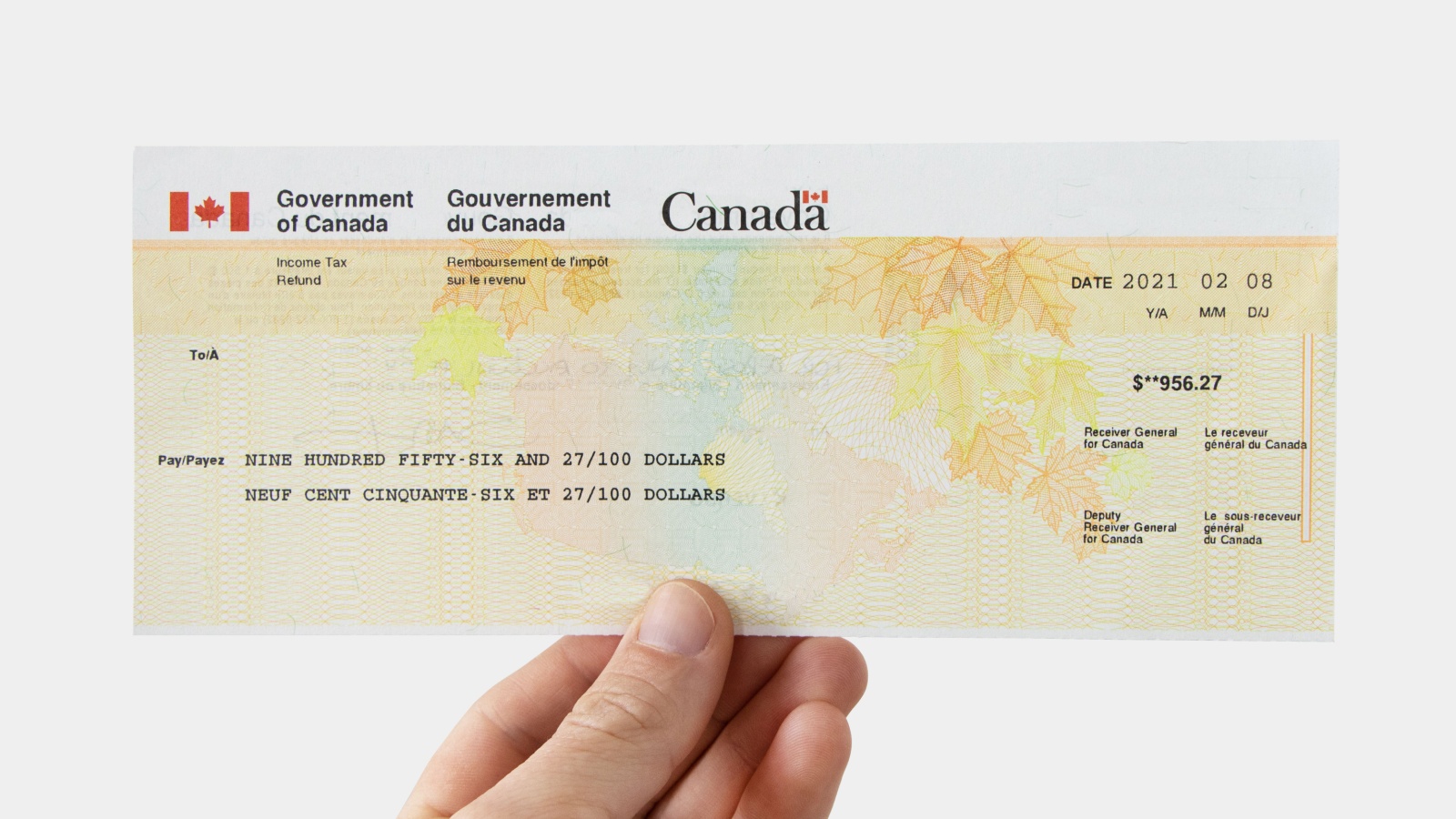
One of the simplest money checks takes only a few minutes: Canadians can look in their CRA My Account for uncashed government payments. The CRA’s online service identifies eligible cheques that have remained uncashed for at least six months and allows taxpayers to begin the process of requesting a replacement payment.
An old government cheque is not automatically worthless just because it has been sitting in a drawer for years. Government of Canada cheques do not expire, although an older cheque may need additional verification when presented to a financial institution. People who moved frequently, changed banks or once received tax refunds and benefit payments by paper may have a greater reason to check. The money may be modest, but recovering even $100 or $200 is more useful than allowing it to remain forgotten while paying September expenses from credit. It is also a good reminder to verify direct-deposit and mailing information so future government payments reach the right destination.
Review GICs Before They Automatically Renew

Guaranteed investment certificates can quietly roll into another term if maturity instructions are ignored. Federally regulated banks have disclosure obligations around renewals and rollovers. For products with terms longer than 30 days, customers generally receive information 21 days and five days before the end of the term, including details intended to help them decide whether to renew or cancel the rollover.
Anyone with a GIC maturing in late August, September or early fall should treat the notice as a decision point rather than routine paperwork. The new term may have a different interest rate, maturity period or liquidity profile than the one originally purchased. A saver who needs cash for a home purchase in six months, for example, may not want money automatically locked into another multi-year certificate. Conversely, someone with no near-term need for the funds may prefer to compare available GIC rates and terms before deciding. The key is making an intentional choice before the institution makes the default choice specified in the agreement.
Automate a September Sinking Fund
Some fall expenses are not emergencies at all. Children’s activities, vehicle maintenance, seasonal clothing, travel, annual memberships and holiday purchases are predictable even when their exact price is not known. Instead of allowing every irregular bill to hit the credit card, Canadians can establish a separate sinking fund and automate small transfers beginning with the final August paycheque.
Automation matters because it turns saving from a monthly decision into a routine. FCAC recommends regular saving when building emergency reserves and specifically encourages automated saving as a way to make progress gradually. The same behaviour works for predictable expenses. A transfer of $25 a week equals $1,300 over 52 weeks, while $50 every two weeks also produces $1,300 over a year. Neither amount transforms a household overnight, but both can create a useful buffer without requiring a large year-end deposit. Starting before September gives the first contribution a job before fall spending expands to consume whatever cash happens to remain.
Pull Both Credit Reports Before Fall Borrowing

Canadians planning to finance a vehicle, apply for a mortgage, move to a new rental or seek other credit later this year should review their credit files now. Equifax and TransUnion are Canada’s two major credit bureaus, and consumers can obtain credit reports from them. Checking one’s own credit report or credit score does not lower the credit score, so there is little reason to avoid reviewing the information.
The important step is looking for accounts that do not belong to the consumer, incorrect balances, outdated information or other errors. Canadian consumers have the right to dispute information they believe is wrong, and credit bureaus must correct confirmed errors without charging for the correction. Fixing a problem can take time, which is precisely why August is better than the evening before a loan application. A clean report does not guarantee approval or a particular interest rate, but discovering an error early removes one preventable complication before major fall borrowing or housing decisions begin.
This Options Discord Chat is The Real Deal
While the internet is scoured with trading chat rooms, many of which even charge upwards of thousands of dollars to join, this smaller options trading discord chatroom is the real deal and actually providing valuable trade setups, education, and community without the noise and spam of the larger more expensive rooms. With a incredibly low-cost monthly fee, Options Trading Club (click here to see their reviews) requires an application to join ensuring that every member is dedicated and serious about taking their trading to the next level. If you are looking for a change in your trading strategies, then click here to apply for a membership.