35,000+ smart investors are already getting financial news, market signals, and macro shifts in the economy that could impact their money next with our FREE weekly newsletter. Get ahead of what the crowd finds out too late. Click Here to Subscribe for FREE.
Markets rarely punish ideas that sound reckless at the start. More often, the expensive mistakes are the ones that sound disciplined, practical, or even responsible in the moment. In Canada, that can mean leaning too hard on familiar dividend names, treating registered accounts like strategy by themselves, or letting tax savings stand in for real portfolio thinking.
These 18 mistakes keep showing up because each one contains a grain of logic. Some reduce stress right away. Some create the feeling of control. Some even work for a while, which makes them harder to challenge. But over time, small decisions made for comfort can quietly damage diversification, raise taxes, increase risk, or interrupt compounding in ways that are much harder to fix later.
Chasing Recent Winners
18 Canadian Investing Mistakes That Feel Smart in the Moment
- Chasing Recent Winners
- Mistaking Familiarity for Diversification
- Treating Dividend Yield as a Safety Label
- Waiting for the “Right” Time to Buy
- Turning a TFSA Into a Trading Habit
- Using an RRSP Like Spendable Cash
- Thinking the Tax Refund Proves the Strategy
- Holding Losers Because Selling Feels Like Failure
- Averaging Down Out of Pride, Not Analysis
- Letting Winners Turn Into Concentration Risk
- Hiding in Cash for Too Long
- Borrowing to Invest Because Leverage Looks Efficient
- Following Finfluencers and Crowd Trades
- Ignoring Fees Because They Seem Tiny
- Losing Track of Contribution Room Across Multiple Accounts
- Making Big Currency Bets
- Letting Headlines Rewrite Risk Tolerance
- Skipping a Written Plan Because Flexibility Feels Sophisticated
- 19 Things Canadians Don’t Realize the CRA Can See About Their Online Income

One of the easiest mistakes to make is assuming that what just worked is the safest place to be. After a strong run in energy, technology, or bank stocks, buying what has already gone up can feel disciplined rather than impulsive. It feels like respecting momentum and avoiding weak areas. In practice, it often means paying more for yesterday’s good news and building a portfolio around recent performance rather than long-term odds.
That instinct becomes even more dangerous when Canadians start believing they can outmaneuver the crowd by jumping from leader to leader. Professional active managers struggle to do that consistently, and retail investors generally do worse when they trade heavily. A strong quarter or a hot year can create the illusion of skill, but markets do not reward certainty for long. The smarter move is usually less exciting: decide on a target mix, keep adding, and let leadership rotate without rebuilding the whole portfolio every time one segment catches fire.
Mistaking Familiarity for Diversification

Canadian investors often feel more comfortable owning companies they recognize: the major banks, pipelines, telecoms, railways, and insurers that shape daily life. That comfort can be useful up to a point. Familiar businesses are easier to follow, their dividends are visible, and their brands feel sturdy. The problem is that familiarity is not the same thing as diversification, especially in a market like Canada’s, where a handful of sectors carry an outsized share of the index.
An all-Canadian portfolio can look diversified because it holds many tickers, yet still be heavily exposed to the same economic forces. If credit conditions tighten, oil prices swing, or the domestic economy slows, several holdings can stumble together. That is why home bias feels smart in the moment: it replaces uncertainty with recognition. But the long-term cost can be a portfolio that misses entire areas of global growth, from healthcare innovation to large parts of global technology, while taking more sector risk than many investors realize.
Treating Dividend Yield as a Safety Label

Cash hitting an account feels real in a way paper gains do not. That is why high-yield Canadian stocks can seem safer than lower-yield names or broad-market funds. The dividend shows up on schedule, the company often looks mature, and the investment appears productive even when prices are flat. For many investors, that creates an emotional shortcut: income becomes a stand-in for quality.
The trouble is that a high yield can be high for the wrong reason. Sometimes the payout looks generous because the share price has fallen sharply, which can be a warning rather than a bargain. Dividends are also not guaranteed. A company can cut them, freeze them, or preserve them while the stock price still drops hard enough to erase years of income. In Canada, where income portfolios often cluster in financials, pipelines, utilities, telecoms, or REITs, yield chasing can also hide concentration risk. A payout can make a stock feel defensive long after the business has stopped being one.
Waiting for the “Right” Time to Buy

Sitting on cash while waiting for a pullback feels rational. It sounds patient, careful, and valuation-aware. In a volatile market, it can even feel more responsible than buying regularly. Many investors tell themselves they are not avoiding risk, only delaying it until prices become more attractive. The emotional reward is immediate: there is comfort in feeling selective.
The longer-term problem is that markets rarely send clear invitations. Sharp rebounds often happen close to ugly headlines, and some of the best days arrive while confidence is still low. Missing only a small number of strong sessions can do far more damage than most investors expect. That is why perfect entry points are so expensive: they require being right twice, once on when to get out of discomfort and again on when to get back in. A steady process, whether through regular contributions or pre-set allocation rules, usually beats waiting for emotional clarity from a market that seldom offers it.
Turning a TFSA Into a Trading Habit
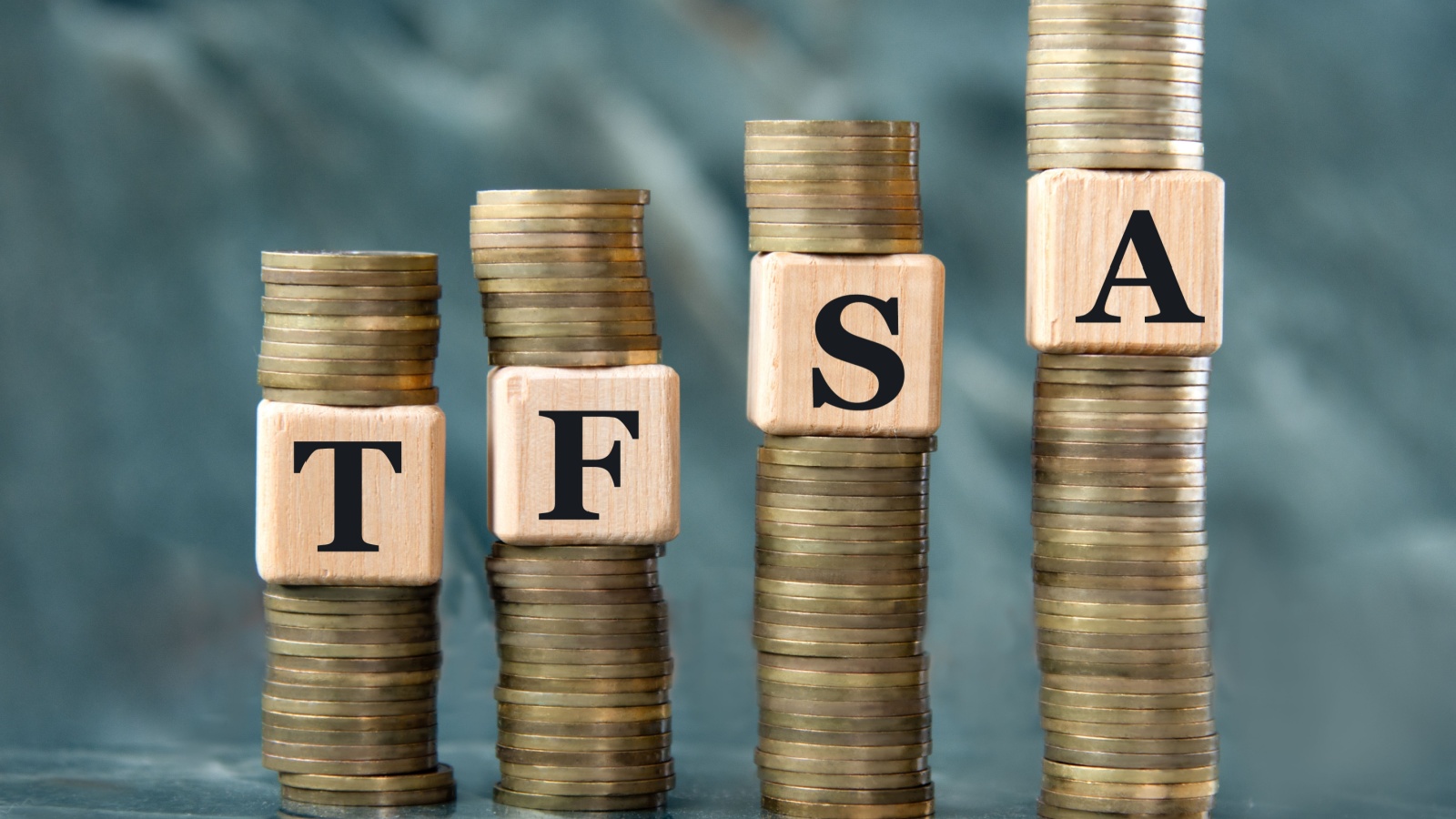
The TFSA is one of Canada’s most useful investing tools, which is exactly why it can encourage bad habits. Because gains and withdrawals are generally tax-free, frequent trading inside the account can feel clever. A few profitable moves create the sense that the investor has found the ideal setup: no tax friction, no reporting burden on every trade, and maximum flexibility. The account starts to feel like a protected zone for experimentation.
That is where the mistake begins. The TFSA is a great shelter for compounding, but it is not a free pass for constant activity. Overcontributions can trigger monthly penalties, and aggressive trading can create another risk entirely if the account is found to be carrying on a business. Even without those extremes, high turnover inside a TFSA can waste the very advantage the account provides. A tax-free wrapper is most powerful when it protects years of growth, not when it becomes a stage for short-term impulses that would be difficult to sustain in any other account.
Using an RRSP Like Spendable Cash

An RRSP can feel more accessible than it really is. The money is there, the balance is visible, and a withdrawal is technically possible at almost any time if the plan is not locked in. That flexibility creates a seductive line of thinking: take the money now, handle the current need, and rebuild later. In the moment, it feels efficient because the account still seems like part of the same personal balance sheet.
But an RRSP is not a casual savings pool. Ordinary withdrawals are taxable, usually subject to withholding at the time of withdrawal, and can raise taxable income for the year. Canada does offer structured exceptions through programs such as the Home Buyers’ Plan and the Lifelong Learning Plan, which is exactly why unplanned RRSP withdrawals are so easy to misjudge. Those exceptions are rules-based and time-bound; ad hoc withdrawals are not. What feels like simple access to cash can end up shrinking retirement capital, increasing tax friction, and forcing a future savings burden that is harder to meet than it looked on the day the money came out.
Thinking the Tax Refund Proves the Strategy

Few investing moments feel as satisfying as an RRSP contribution that generates a noticeable tax refund. The refund is visible, immediate, and emotionally persuasive. It makes the contribution feel validated before the underlying investment has had any time to succeed or fail. That can lead investors to confuse tax efficiency with investment quality, as though a deduction automatically means the money has been placed in the right assets, at the right risk level, in the right account.
The refund, of course, is mostly a function of tax mechanics. RRSP room is tied to earned income and reduced by items such as pension adjustments, and the deduction changes the timing of tax rather than eliminating it forever. That means an inappropriate investment inside an RRSP is still inappropriate, even if the refund feels rewarding. An investor can still overpay in fees, take too much risk, hold the wrong mix, or contribute when liquidity is too tight. The tax benefit matters. It just does not answer the more important question of whether the investment choice itself is actually sound.
Holding Losers Because Selling Feels Like Failure

One of the most persistent investing mistakes is keeping a weak holding simply because selling would make the loss feel official. On paper, the reasoning seems patient. The company is still in the portfolio, the loss is still “unrealized,” and there is always the possibility of a recovery. In practice, this habit often has less to do with analysis than with emotion. Investors do not want to admit that the original idea was wrong, mistimed, or oversized.
Behavioural-finance research has shown for years that investors tend to sell winners too early and hold losers too long. That pattern feels smart in the moment because it protects pride. The winner gets harvested before it can disappoint, while the loser is given one more chance to validate the original purchase. The real cost is opportunity cost. Capital stays tied up in a name that no longer earns its place, while better opportunities are ignored. A disciplined investor does not ask whether a sale feels good. The better question is whether the same money would be put into that holding again today.
Averaging Down Out of Pride, Not Analysis

Buying more after a decline can be a rational move, which is what makes this mistake so tricky. Lower prices can improve future return potential, and disciplined rebalancing often requires buying assets that have fallen out of favour. But averaging down becomes dangerous when the decision is driven less by valuation and more by a need to rescue an earlier call. The investor stops asking whether the business is stronger, cheaper, and still suitable, and starts focusing on getting back to even.
That psychological shift matters. A lower price alone does not make something better. Sometimes the market is overreacting; other times the market is finally recognizing a real deterioration in earnings power, balance-sheet strength, or industry structure. In Canada, this error often shows up in troubled high-yield names or cyclical businesses where a falling price is mistaken for a sale tag. Buying more can feel bold and disciplined, but unless the original thesis has been reviewed with fresh eyes, the investor may simply be turning one mistake into a larger position.
Letting Winners Turn Into Concentration Risk

A winning position creates a pleasant problem. After a strong run, it feels irrational to trim the holding that has done the most to help the portfolio. Selling part of a winner can even feel like punishing success. That is why concentration often develops quietly. No dramatic decision is made. One stock, one sector, or one theme simply grows faster than the rest and starts dominating results.
This is where rebalancing becomes emotionally difficult and strategically useful. A portfolio can drift far from its intended risk level without any new money being added to the dominant holding. In Canada, that drift often compounds existing market concentration, turning a reasonable position in financials, energy, or a standout company into an oversized bet. Rebalancing does not guarantee higher returns every year, and sometimes it means trimming assets that keep rising. Its real value is that it reconnects the portfolio to the original plan. Investors who skip that step often discover only later that they were never broadly diversified at all.
Hiding in Cash for Too Long

Cash has a powerful emotional advantage: it does not surprise anyone on a bad day. After a correction, recession scare, or stretch of ugly headlines, moving money to the sidelines can feel mature and protective. It reduces immediate stress, limits daily volatility, and creates the pleasant sense that the investor is waiting for conditions to improve before taking risk again. In the short term, that relief can feel like proof the choice was correct.
The mistake is not holding cash at all. Canadians absolutely need emergency savings for unexpected expenses, job loss, and financial shocks. The problem comes when an emergency buffer quietly turns into a long-term investment stance. Money meant to be temporarily safe becomes permanently absent from the compounding process. Over time, the portfolio loses exposure not only to risk, but also to recovery. Cash has a job, and it is an important one. But when fear expands that job beyond short-term stability into a substitute for strategy, the investor can end up protecting comfort at the cost of growth.
Borrowing to Invest Because Leverage Looks Efficient

Leverage often arrives dressed as efficiency. Borrow at a reasonable rate, invest in assets with higher expected returns, and let the spread do the work. On paper, the logic can look clean. In practice, borrowing to invest changes the emotional math of every market move. A normal decline no longer feels normal when interest costs are still accumulating and the loan must be repaid whether the investment works or not.
That is why leverage can be one of the most dangerous mistakes that still sounds sophisticated. Canadian regulators repeatedly warn that borrowing magnifies losses as well as gains, and that repayment obligations remain even when the assets fall in value. What looked like a disciplined capital-allocation decision can become a source of forced selling, lifestyle pressure, or in severe cases outright financial distress. For investors who already have mortgages, variable-rate debt, or uncertain cash flow, adding investment leverage can stack risks that seemed separate at the start. The spreadsheet may look elegant. The lived experience is usually much harsher.
Following Finfluencers and Crowd Trades

Social-media investing feels efficient because it compresses research into a story. A charismatic account posts a chart, a simple thesis, or a convincing thread, and the investor gets the feeling of being early, informed, and plugged into something bigger. For people who do not want to read filings or compare valuations, the shortcut feels smart. It offers community, speed, and confidence all at once.
Canadian research has shown how powerful that influence can be. Many retail investors consume financial content from finfluencers, and a meaningful share report making decisions based on that content. The same behavioural pull shows up in copy trading and social features that make popularity look like evidence. A trade seen often enough begins to feel researched, even when it is mostly repeated. That does not mean all online investing content is bad. It means social proof is not due diligence. A good idea should still survive basic questions about valuation, risk, diversification, time horizon, and what would make the thesis wrong.
Ignoring Fees Because They Seem Tiny

A one-percent fee sounds harmless. In everyday spending terms, it barely registers. That is why costs are so often ignored in investing. They do not arrive as a dramatic one-time bill. They show up quietly inside fund structures, advisory arrangements, trading costs, and product design. Because they are gradual and often buried in percentages, they rarely trigger the same caution as a visible mistake like buying at the top.
The trouble is that investing is one of the few areas where a small annual drag can compound into a very large difference over time. Canadian investor guidance consistently emphasizes that fees reduce overall returns, and the management expense ratio can include more than just a manager’s headline charge. Trading costs, taxes, and other operating expenses matter too. That makes fee blindness especially expensive in registered accounts, where investors sometimes assume the tax shelter is doing enough work to offset high costs. It is not. Tax efficiency can help. Low friction still matters, and over long periods it often matters a great deal.
Losing Track of Contribution Room Across Multiple Accounts

Opening more than one TFSA can feel organized. One account for long-term investing, one for cash, one for GICs, maybe another at a new institution offering a better rate. That structure sounds tidy, and sometimes it is. The danger is that the investor starts mentally assigning each account its own contribution limit. In Canada, the TFSA room belongs to the person, not to each separate account.
That misunderstanding causes a surprising number of preventable errors. Contribution room is shared across all TFSAs collectively, and replacing withdrawn amounts at the wrong time can create trouble as well. The situation becomes even messier because CRA account data is not a live tracker of current-year activity; it is updated later, after institutions report transactions. So the setup that looks most organized can become the easiest one to mismanage. Multiple accounts are not the problem. Treating them like separate tax shelters is. Good recordkeeping is far less exciting than account optimization, but it is usually what keeps a smart-looking system from generating an unnecessary tax bill.
Making Big Currency Bets

Foreign investing introduces a layer of uncertainty that can feel irresistible to optimize. When the Canadian dollar moves sharply, investors start imagining a second way to be right. They can pick the right asset and the right currency. Some decide to unhedge everything because the loonie looks weak. Others hedge aggressively because a stronger Canadian dollar seems inevitable. Both choices can feel thoughtful and macro-aware.
The problem is that currency forecasting is notoriously difficult, and exchange-rate moves can overwhelm the tidy logic investors expected. For Canadians, a falling dollar can boost the CAD value of foreign holdings, while a rising dollar can drag on returns. Hedging can reduce that effect, but it behaves more like insurance than a guaranteed performance enhancer. The mistake is not choosing hedged or unhedged exposure. It is making large portfolio decisions mainly because a currency view feels intelligent right now. Long-term investing works better when currency exposure is handled as part of portfolio design, not as a repeated wager on short-term exchange-rate moves.
Letting Headlines Rewrite Risk Tolerance

Macro headlines create a constant temptation to overhaul a portfolio. One week it is inflation, the next it is rate cuts, oil shocks, trade disputes, or geopolitical stress. Changing direction in response can feel responsive and prudent. Many investors tell themselves they are not emotional, only adaptive. But reacting to every new development often means letting the news cycle rewrite a risk profile that should be based on time horizon, capacity, and long-term goals.
That danger is especially obvious when the backdrop is genuinely uncertain, because uncertainty gives every reaction a reasonable-sounding explanation. Even central bankers regularly acknowledge how many moving parts influence the outlook. Yet a portfolio built around personal risk tolerance is meant to absorb changing headlines rather than be redesigned by them. Investors who forget that often end up buying defensive assets after fear has already surged and re-entering risk assets only after calm returns. What feels like staying informed can become a cycle of expensive emotional updating.
Skipping a Written Plan Because Flexibility Feels Sophisticated

Many investors resist writing down a plan because they believe flexibility is a strength. They want room to change accounts, chase opportunities, raise cash, or rotate sectors when circumstances shift. That instinct sounds experienced. It suggests nuance rather than rigidity. But without a written framework, flexibility often becomes a polite word for making repeated decisions based on mood, memory, or whichever argument sounds convincing that week.
A real plan does not need to be elaborate. It can be as simple as target asset mix, contribution priorities, rebalancing rules, and conditions for selling. Its purpose is not to predict markets. It is to protect the investor from overconfidence and drift. That matters because Canadian research has found a meaningful gap between perceived and actual financial knowledge, with some investors overstating what they know. When there is no plan, that confidence gap can steer everything from account choice to position size. The smartest investors are not the ones who improvise the most. They are the ones who make fewer decisions under pressure.
19 Things Canadians Don’t Realize the CRA Can See About Their Online Income

Earning money online feels simple and informal for many Canadians. Freelancing, selling products, and digital services often start as side projects. The problem appears at tax time. Many people underestimate how much information the CRA can access. Online platforms, banks, and payment processors create detailed records automatically. These records do not disappear once money hits an account. Small gaps in reporting add up quickly.
Here are 19 things Canadians don’t realize the CRA can see about their online income.
This Options Discord Chat is The Real Deal
While the internet is scoured with trading chat rooms, many of which even charge upwards of thousands of dollars to join, this smaller options trading discord chatroom is the real deal and actually providing valuable trade setups, education, and community without the noise and spam of the larger more expensive rooms. With a incredibly low-cost monthly fee, Options Trading Club (click here to see their reviews) requires an application to join ensuring that every member is dedicated and serious about taking their trading to the next level. If you are looking for a change in your trading strategies, then click here to apply for a membership.