
35,000+ smart investors are already getting financial news, market signals, and macro shifts in the economy that could impact their money next with our FREE weekly newsletter. Get ahead of what the crowd finds out too late. Click Here to Subscribe for FREE.
September can be an expensive month for Canadians who pay income tax by instalments, especially when self-employment, investments, rental income or pension income leave too little tax withheld during the year. For most people required to make 2026 instalments, September 15 is the third regular payment deadline, but simply sending money to the CRA is not enough to guarantee everything is correct.
Threshold rules, changing income, calculation choices and even the payment method can affect how much is actually required. Some errors can lead to unnecessary overpayments; others can trigger compounded interest and, in more serious cases, an additional instalment penalty. These 17 CRA instalment mistakes remain especially important to watch in September as taxpayers reconcile their August reminders with what has actually happened financially during 2026.
Missing the September 15 Deadline
17 CRA Instalment Mistakes Canadians Can Still Make in September
- Missing the September 15 Deadline
- Looking Only at This Year’s $3,000 Threshold
- Treating an August Reminder Like an Automatic Bill
- Automatically Using the CRA’s No-Calculation Amount
- Lowballing the Current-Year Estimate
- Forgetting CPP or EI Amounts in the Calculation
- Forgetting Income That Has Little or No Tax Withheld
- Applying the Wrong Provincial Threshold
- Splitting an August-Only Requirement 50/50 Without Checking
- Assuming a Late Instalment Carries Trivial Interest
- Assuming the Instalment Penalty Is Just a Small Late Fee
- Failing to Repair an Earlier Shortfall
- Waiting Until the Deadline to Choose a Payment Method
- Choosing the Wrong CRA Online-Banking Payee
- Using the Wrong Remittance Voucher
- Throwing Away Payment Proof Too Soon
- Treating September as the End of Instalment Planning
- 16 Costco Canada Habits That Could Be Costing Shoppers More Than They Save

One of the easiest mistakes is treating September 15 as an approximate target rather than an actual CRA instalment deadline. Most individuals who are required to make income-tax instalments in 2026 have four scheduled dates: March 15, June 15, September 15 and December 15. The September payment therefore is not something that can simply be rolled into the December instalment without potential consequences. CRA guidance says late or insufficient required instalments can generate instalment interest and possibly an additional penalty.
There is a weekend and holiday rule, but it should not be mistaken for a routine grace period. When an instalment deadline lands on a Saturday, Sunday or public holiday recognized by the CRA, payment can be considered on time when received on the next business day. That exception does not turn every deadline into a flexible window. Someone who has the money available but postpones the September payment because year-end still feels distant may discover that the cost of waiting starts accumulating well before the annual tax return is prepared.
Looking Only at This Year’s $3,000 Threshold

The instalment test is more complicated than asking whether someone expects to owe more than $3,000 next spring. For most Canadian residents, CRA’s 2026 rules look at whether net tax owing will exceed $3,000 for 2026 and whether it also exceeded $3,000 in either 2025 or 2024. Quebec residents generally use a lower $1,800 threshold. Ignoring the historical part of that test can lead someone to conclude incorrectly that instalments are required—or that they are not.
Consider a taxpayer expecting $5,000 of net tax owing in 2026 after starting freelance work. If neither 2025 nor 2024 crossed the applicable threshold, the ordinary individual instalment test does not work the same way as it would for someone who repeatedly carries a significant tax balance. Conversely, a taxpayer who crossed the threshold in one of those two earlier years cannot assume that this year’s obligation disappears simply because the other prior year was below it. The multi-year test matters.
Treating an August Reminder Like an Automatic Bill

An August instalment reminder deserves attention, but receiving one does not necessarily mean every dollar printed on it must be paid regardless of current circumstances. CRA sends the reminders to people it believes are likely to need instalments, using tax information already available. That information inevitably looks backward. A taxpayer’s employment situation, investment income, deductions or withholding can change substantially before September.
CRA specifically says that a person who received a 2026 reminder but expects current-year net tax owing of $3,000 or less—or $1,800 or less in Quebec—does not have to make 2026 instalments. There are also situations in which instalments already paid during the year are enough to cover the estimated obligation. The practical mistake is going to either extreme: blindly paying a historical estimate that no longer fits, or throwing the reminder away without doing the calculation. September is a useful point to compare the reminder with an updated full-year tax estimate rather than treating the notice as an ordinary invoice.
Automatically Using the CRA’s No-Calculation Amount

The no-calculation option is convenient precisely because the CRA does much of the work. It determines suggested instalment amounts using information from the taxpayer’s latest assessed return. That simplicity can be valuable when income, deductions and credits remain relatively stable. It becomes less attractive when 2026 looks materially different from earlier years.
A consultant who lost a major contract, a landlord who sold a rental property or a retiree who arranged substantially more tax withholding could have a very different 2026 liability. CRA identifies the current-year option as more suitable when income, deductions and credits have changed significantly from 2025 and 2024. The opposite can also occur: a sudden jump in investment gains or self-employment earnings can make an old amount misleadingly low. The mistake is not choosing the no-calculation method itself. It is choosing it automatically without asking whether the tax picture on which CRA based the amount still resembles the taxpayer’s financial reality in September.
Lowballing the Current-Year Estimate

The current-year calculation option can prevent taxpayers from sending unnecessarily large instalments when income drops. It also shifts more responsibility onto the taxpayer. The calculation depends on an estimate of 2026 net tax owing, along with applicable CPP contributions and voluntary EI premiums. If the estimate is too optimistic, paying the calculated amount by the deadline does not necessarily eliminate instalment-interest exposure.
That creates a common September temptation. A self-employed person having an uneven year may use only income earned through August and assume the remaining months will stay quiet. A landlord could overlook a property sale, or an investor might fail to incorporate taxable income already realized. CRA warns that estimated instalment amounts that are too low can still result in interest or penalties. A defensible estimate should therefore incorporate reasonable expectations for the entire tax year, not merely year-to-date cash flow. September is late enough in the year to improve the forecast, but still early enough for three-and-a-half months of income to change the final result considerably.
Forgetting CPP or EI Amounts in the Calculation

For many self-employed Canadians, income tax is not the only figure that matters when determining instalments. CRA’s 2026 calculation guidance requires applicable Canada Pension Plan contributions payable and voluntary Employment Insurance premiums to be added when calculating the total instalment amount. Those amounts are distinct from the basic net-tax-owing threshold calculation, which makes them easy to overlook when someone builds an estimate from a tax rate and business profit alone.
That omission can be meaningful. Employees normally see CPP contributions withheld through payroll, while a self-employed person can face a different contribution burden when the return is prepared. CRA’s instalment calculation chart separately adds CPP contributions payable on self-employment and other earnings and EI premiums payable on eligible earnings. Someone who correctly forecasts taxable business income but forgets those additional components can still understate the total amount due. September is a particularly useful time to review the calculation because actual business earnings for much of the year are already known, allowing a more realistic estimate than was possible in March.
Forgetting Income That Has Little or No Tax Withheld

Instalment requirements often arise not because someone’s overall income is unusually high, but because the tax system is not collecting enough of it at source. CRA identifies rental income, investment income, self-employment income, certain pension payments and income from more than one job as common situations in which insufficient tax may be withheld. Focusing exclusively on a primary paycheque can therefore produce a misleading estimate.
Imagine an employee whose regular job withholds tax correctly but who also earns substantial freelance income on evenings and weekends. The payroll deductions may look perfectly normal while the untaxed side income quietly creates a year-end balance. Similar surprises can affect retirees receiving several income streams or investors generating taxable distributions. CRA’s guidance for older Canadians also notes that tax is not automatically withheld from CPP and OAS unless withholding is requested. By September, taxpayers generally have enough transaction history to identify these gaps. Ignoring them until filing season can transform what looked like a manageable tax situation into a large balance plus instalment concerns.
Applying the Wrong Provincial Threshold

A taxpayer moving between provinces can easily carry an old assumption into an instalment calculation. CRA states that the province or territory of residence on December 31 determines the relevant net tax owing for individual instalment purposes. The general threshold is more than $3,000, while Quebec residents face the lower threshold of more than $1,800.
That difference matters because someone hovering around $2,500 of expected net tax owing could have a different instalment result depending on where that person is resident at year-end. Moves involving Quebec also create practical complications because Quebec administers its own provincial income-tax system through Revenu Québec. CRA provides specific procedures for taxpayers who have moved out of Quebec after making instalment payments there, including obtaining information about payment dates. The mistake is assuming that a threshold or payment routine from the beginning of the year automatically remains appropriate after a move. Anyone whose province of residence is changing in 2026 should include that fact in the September calculation rather than relying solely on last year’s setup.
Splitting an August-Only Requirement 50/50 Without Checking

Some taxpayers receive only an August instalment reminder because CRA did not ask them to make March or June payments. That situation has its own rules, and assuming the remaining requirement can always be divided evenly between September and December can produce the wrong payment schedule.
For an August reminder that does not identify March or June instalments, CRA says taxpayers using the prior-year or current-year option generally calculate the applicable annual amount and pay 75% on September 15 and 25% on December 15. Under the no-calculation option, the taxpayer instead follows the amount shown in box 2 of the reminder for the September and December payments. The 75/25 split can surprise someone expecting two equal late-year payments. For example, an applicable calculated amount of $8,000 would put $6,000 into the September payment and $2,000 into December under that specific setup. Reading the August reminder carefully is therefore much safer than imposing a homemade quarterly formula on it.
Assuming a Late Instalment Carries Trivial Interest

Missing an instalment by a few weeks can seem harmless compared with failing to pay an entire annual tax bill, but CRA instalment interest is compounded daily at the prescribed rate. For the third quarter of 2026, covering July 1 through September 30, the CRA’s prescribed annual rate on overdue income-tax amounts and instalment interest is 7%. The prescribed rate can change quarterly.
The cost depends on the amount, timing and taxpayer’s overall instalment position, so a short delay will not affect everyone equally. Still, the structure means September underpayments should not be treated as interest-free borrowing until December or April. CRA calculates interest on late or insufficient required instalments and ultimately uses the calculation option that produces the least instalment interest. Someone who was already short on the March or June payments may therefore have more at stake than a person whose September payment is the first problem of the year. Promptly correcting an error limits the time during which the shortfall can work against the taxpayer.
Assuming the Instalment Penalty Is Just a Small Late Fee

Instalment interest and the separate instalment penalty are not the same thing. CRA says the additional penalty can apply when a taxpayer’s instalment interest for 2026 exceeds $1,000. That threshold means modest errors will not automatically trigger the penalty, but taxpayers with large instalment requirements should not assume interest is the only possible cost.
The penalty calculation is also more complicated than simply adding $1,000. CRA compares $1,000 with 25% of the instalment interest that would have arisen if no instalments had been made during 2026. It uses the higher figure, subtracts that amount from the taxpayer’s actual instalment interest and divides the remaining difference by two. CRA’s own example shows actual instalment interest of $2,500 producing a $750 penalty after the calculation. For someone making sizable self-employment or investment-related instalments, that makes repeated underpayments potentially more consequential than they first appear. Understanding the penalty structure can provide a strong reason to deal with a September shortfall promptly.
Failing to Repair an Earlier Shortfall

A missed March or June instalment can create the impression that the damage is permanent, encouraging taxpayers to simply resume normal payments in September. CRA provides a mechanism that can reduce or potentially eliminate some instalment interest: paying the next instalment early or paying more than the required amount. Doing so can generate instalment credit interest that offsets interest on late or insufficient payments in the same tax year.
That credit is not a cash reward. CRA specifies that instalment credit interest is non-refundable and can only be used against qualifying instalment-interest charges for that same tax year. Still, the rule makes September planning more useful for someone who fell behind earlier in 2026. Simply sending the normal September amount may not be the most effective response to a prior shortfall. Depending on the numbers, an earlier or larger subsequent payment can improve the interest calculation. Taxpayers dealing with material amounts may want a precise calculation rather than assuming that an old mistake cannot be mitigated.
Waiting Until the Deadline to Choose a Payment Method

Not every payment channel reaches CRA at the same speed. Online banking payments are generally considered paid the same or next business day depending on the financial institution, while CRA account information can take up to three business days to update after receipt. CRA’s My Payment service usually dates a transaction the same business day, but payments processed late at night, on weekends or statutory holidays may be dated the next business day. Third-party providers can have different delivery schedules altogether.
That distinction matters when someone starts the process at the last possible moment. Seeing a payment instruction accepted by a bank or service provider is not always identical to the CRA having received the money for deadline purposes. CRA warns users of third-party services to arrange payment well in advance because delivery is not immediate. A taxpayer making a five-figure September instalment should therefore understand the specific channel’s timing before pressing the final button. Waiting until the deadline and assuming every digital method settles instantly can turn an otherwise correct payment into a timing problem.
Choosing the Wrong CRA Online-Banking Payee

Canadian banks can display several similar CRA payees, and they do not all serve the same purpose. CRA’s online-banking instructions distinguish a current-year tax-return payment, an assessed amount owing and a tax instalment. For an individual instalment, CRA instructs users to select an option such as “CRA (revenue) – tax instalment” and use the taxpayer’s nine-digit social insurance number as the account number.
Selecting an amount-owing or tax-return payee out of habit can cause money to land somewhere other than intended. That does not necessarily mean the payment is lost. CRA’s online services allow qualifying payments to be transferred within an individual’s account, and the agency provides procedures for resolving payments that were not applied as expected. But correcting the allocation after the fact creates avoidable uncertainty, especially around a deadline. A useful September habit is to verify both the payee category and account number before approving the transaction instead of relying on a saved banking payee created for a different tax payment.
Using the Wrong Remittance Voucher
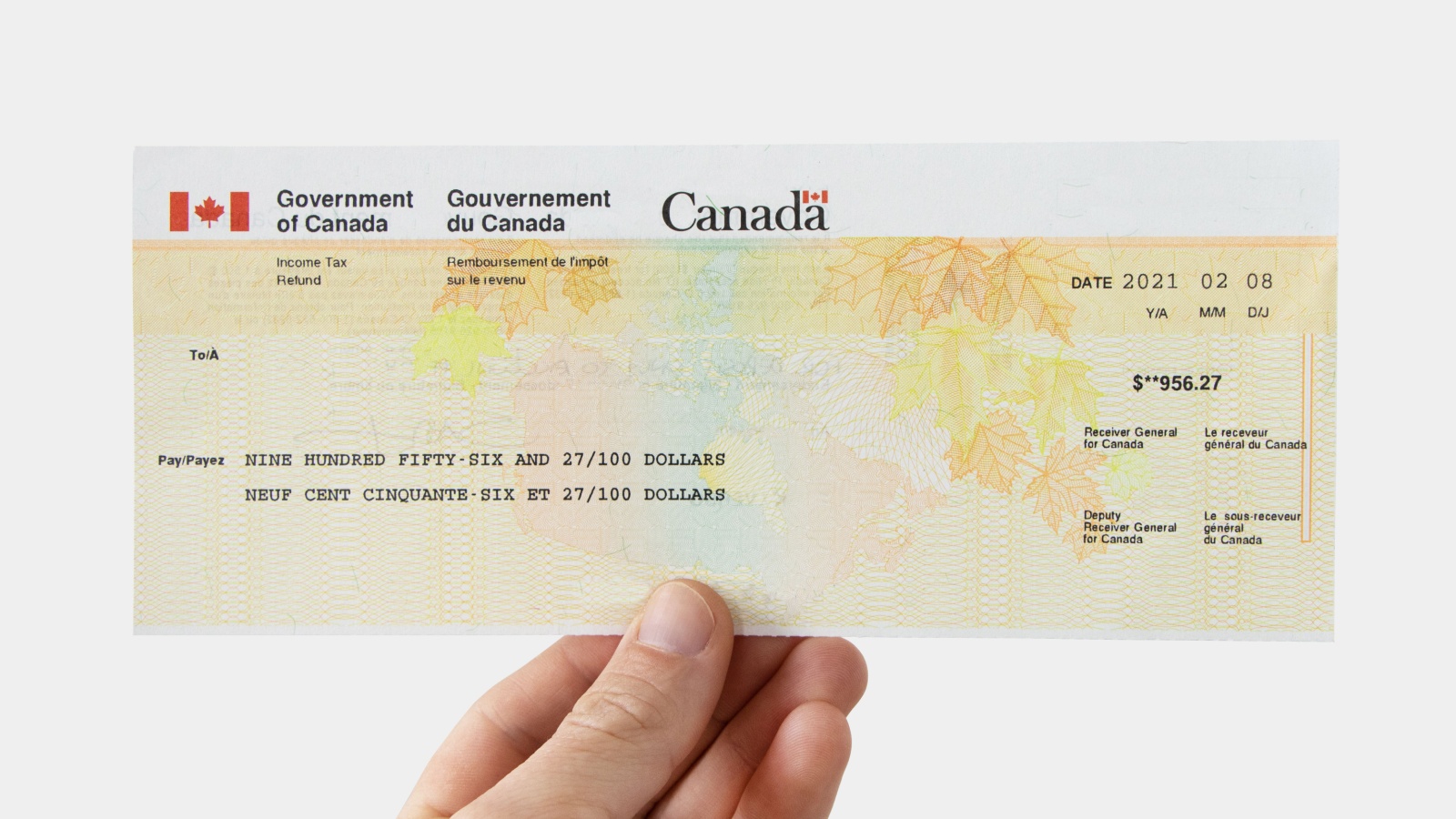
Paper and in-person payments have their own allocation risk. CRA says an individual making an instalment payment in person or by mail should use the INNS3 Instalment Remittance Voucher so the money can be applied correctly. Financial institutions require an appropriate voucher for teller payments, and a mailed cheque should generally include the relevant remittance information.
The personalized details matter. CRA warns that using someone else’s personalized remittance voucher can result in the payment being applied to that person’s account. A non-personalized INNS3 requires the correct social insurance number, and the instalment tax year needs to be identified. This can become surprisingly relevant in families where one spouse handles the paperwork for both taxpayers and several CRA forms are sitting together. A cheque for the right dollar amount can still create a messy problem if the identifying information points to the wrong account or year. September payments made outside online banking deserve the same attention to routing details as the calculation itself.
Throwing Away Payment Proof Too Soon

CRA does not immediately issue a conventional receipt after every instalment payment. Its guidance tells taxpayers to keep proof until the payment has been confirmed in My Account or until the instalment payment summary, Form INNS2, is received. Online payments may require roughly three business days before taxpayers should expect to confirm processing, while cheques or money orders require a longer wait.
That lag creates an awkward period in which the bank may show money leaving an account while the CRA screen has not yet updated. Panicking and paying twice can be just as inconvenient as ignoring a genuinely missing transaction. CRA advises taxpayers to check “Accounts and payments” in My Account and provides tools to transfer or resolve payments that were not applied correctly. A bank confirmation, transaction number or copy of a cheque can make tracing an issue much easier. Keeping that evidence is particularly sensible for September instalments because another payment date arrives in December and accurate year-to-date totals matter when deciding what remains to be paid.
Treating September as the End of Instalment Planning

For most individuals on the regular quarterly schedule, September 15 is the third 2026 deadline, not the last. December 15 remains ahead. That makes September an opportunity to update the full-year forecast rather than simply pay an amount and stop thinking about taxes until spring. A business surge, investment gain, larger deduction or new source of withholding during the final months can alter the taxpayer’s expected position.
CRA also allows some taxpayers to reduce future instalment needs by increasing tax withheld at source. Its guidance identifies options for withholding additional tax from OAS, CPP and certain pension or EI payments. Tax generally cannot be withheld in the same way from self-employment, investment or rental income and capital gains, so those taxpayers may still need instalments. The larger lesson is that September’s calculation is not frozen forever. Someone using a current-year estimate should keep testing it against actual results before December 15. The closer the estimate tracks 2026 reality, the smaller the chance of an unpleasant tax surprise later.
16 Costco Canada Habits That Could Be Costing Shoppers More Than They Save

The Executive Membership can feel like an obvious upgrade because the 2% annual reward sounds straightforward. For households that spend heavily at Costco Canada, the extra fee may be easy to justify. But the habit becomes costly when shoppers upgrade first and calculate later. A Gold Star Membership costs less, while Executive costs more and only pays off if eligible annual spending is high enough to offset the difference.
16 Costco Canada Habits That Could Be Costing Shoppers More Than They Save
This Options Discord Chat is The Real Deal
While the internet is scoured with trading chat rooms, many of which even charge upwards of thousands of dollars to join, this smaller options trading discord chatroom is the real deal and actually providing valuable trade setups, education, and community without the noise and spam of the larger more expensive rooms. With a incredibly low-cost monthly fee, Options Trading Club (click here to see their reviews) requires an application to join ensuring that every member is dedicated and serious about taking their trading to the next level. If you are looking for a change in your trading strategies, then click here to apply for a membership.