
35,000+ smart investors are already getting financial news, market signals, and macro shifts in the economy that could impact their money next with our FREE weekly newsletter. Get ahead of what the crowd finds out too late. Click Here to Subscribe for FREE.
Canada’s moving map looks different heading into summer 2026. The old pattern of chasing only Toronto or Vancouver has weakened as rent growth cools in some markets, housing supply improves in others, and more mid-sized cities prove they can offer real job opportunity without the same monthly strain. That shift is opening the door for a more strategic kind of move.
These 14 Canadian cities stand out because they combine at least some of the signals that matter most right now: affordability, population momentum, rental supply, employment resilience, and day-to-day livability. Some are obvious names with better timing than they had a year ago. Others are quieter plays that look smarter the earlier they are spotted.
Calgary, Alberta
14 Canadian Cities Smart Movers Are Targeting Before Summer 2026
- Calgary, Alberta
- Edmonton, Alberta
- Ottawa-Gatineau, Ontario–Quebec
- Winnipeg, Manitoba
- Regina, Saskatchewan
- Saskatoon, Saskatchewan
- Québec City, Quebec
- Halifax, Nova Scotia
- London, Ontario
- Kitchener-Waterloo, Ontario
- Kingston, Ontario
- Nanaimo, British Columbia
- St. John’s, Newfoundland and Labrador
- Moncton, New Brunswick
- 22 Groceries to Grab Now—Before another Price Shock Hits Canada

Calgary still has the kind of pull that makes movers take notice fast: a large-city economy, steady inflows of newcomers, and a housing conversation that looks more manageable than it did at peak frenzy. The city posted one of the strongest population growth rates among major Canadian metros, which says plenty about how many people still see opportunity there. What makes Calgary more interesting in early 2026 is that rent pressure has started to ease. That changes the tone from panic-buying and rushed renting to something more strategic, especially for households trying to land jobs first and lock in housing second.
There is also a practical argument for Calgary that goes beyond hype. It offers a big employment base in energy, logistics, professional services, construction, and a growing tech ecosystem, but it still feels less financially punishing than the country’s most expensive hubs. For smart movers, that balance matters. A city that is still attracting people while showing signs of rental relief can be a rare combination. Calgary no longer looks like a cheap secret, but it still looks like one of the more rational big-city bets before summer 2026.
Edmonton, Alberta

Edmonton has become one of the clearest value stories among Canada’s larger urban markets. It does not always dominate the national conversation, but that has worked in its favour. Rent remains meaningfully lower than in many other major cities, and the local economy has been adding jobs at a pace that gives movers something real to work with. That combination matters far more than trendiness. A city does not need to feel glamorous to be smart. It needs to leave room in the monthly budget while still giving people a path to income growth, and Edmonton checks that box better than many places its size.
What also strengthens the case is supply. More rental units have been coming online, which can help ease the sharp pricing pressure that makes relocation risky. Edmonton’s appeal is especially strong for young families, tradespeople, health-care workers, and anyone who wants a big-city labour market without big-city rent shock. There is also a steadiness to the place that works in uncertain times. It may not have the loudest brand, but for movers thinking with a calculator instead of a fantasy board, Edmonton looks increasingly hard to ignore.
Ottawa-Gatineau, Ontario–Quebec

Ottawa-Gatineau keeps showing up on smart-move lists for one simple reason: it blends stability with scale. The region has long benefited from federal government employment, but that is only part of the story now. It also has a growing tech footprint, strong education links, and the kind of institutional base that can make downturns less brutal than in markets tied too heavily to one sector. In early 2026, the region also looks more approachable than it did when rents were racing higher. That softening does not make Ottawa cheap, but it does make timing matter more.
For movers who want a city with professional opportunity and a relatively predictable floor under the local economy, Ottawa-Gatineau remains compelling. It is especially appealing for households that want urban amenities without Toronto’s cost intensity. The region also benefits from cross-river flexibility, with different neighbourhood and pricing options depending on whether someone prefers the Ontario or Quebec side. Smart movers often target places where the upside is not just explosive growth, but reduced downside. Ottawa-Gatineau fits that profile well: less dramatic than some boom cities, but often more durable when real life begins after moving day.
Winnipeg, Manitoba

Winnipeg rarely gets treated like a national relocation star, but that is part of what makes it interesting. It remains one of the more affordable city options with real urban substance: universities, major hospitals, transportation links, a growing food scene, and enough economic diversity to avoid feeling one-dimensional. For movers who care more about value than buzz, Winnipeg’s numbers tell a cleaner story than its reputation sometimes does. Rents remain below many comparable cities, and the labour market has held up better than casual observers often assume.
There is also a livability case here that deserves more attention. Winnipeg gives residents access to established neighbourhoods, character housing, cultural institutions, and a pace that feels more workable for families and professionals trying to build rather than just survive. It is not a city people choose for image alone. They choose it because it can still support a middle-class life with fewer compromises. In a national environment where monthly costs shape almost every major decision, Winnipeg stands out as a place where the math can still make sense without giving up the feel of a real metropolitan centre.
Regina, Saskatchewan

Regina looks smarter in 2026 than many people would guess because it sits at a useful intersection of affordability and labour-market resilience. Saskatchewan has been running with one of the lowest unemployment rates in the country, and Regina benefits from that broader provincial backdrop while still offering rents that stay well below most big-market benchmarks. That does not mean it is frozen in time. In fact, rent growth has picked up, which is often what happens when a place starts drawing more serious attention from people who value cost control and career stability.
The opportunity in Regina is not about lifestyle branding. It is about practicality. Public sector work, agriculture-linked business, education, health care, and supporting services create a steadier base than outsiders sometimes expect. For movers priced out of bigger cities, Regina can feel like a reset button: lower carrying costs, shorter commutes, and a clearer shot at saving money again. That is especially relevant before summer, when moving activity tends to rise and lower-cost inventory can get snapped up faster. Regina may never dominate relocation wish lists, but that is exactly why early movers often get the better version of it.
Saskatoon, Saskatchewan

Saskatoon is one of those cities where momentum can be felt before it becomes a national headline. It still offers relatively manageable rents by Canadian standards, yet the pricing trend has been moving upward enough to suggest demand is strengthening. That makes timing part of the story. A city does not need to be cheap forever to be smart; sometimes the better play is getting in while it is still more affordable than where the next wave of attention could push it. Saskatoon’s appeal comes from that middle ground between accessible and rising.
The city also has more economic depth than its smaller scale suggests. Education, health care, mining-related business, agriculture, and professional services all help support the local base. It tends to attract movers who want a city with genuine infrastructure and career options without feeling swallowed by costs. There is a youthful energy here too, helped by the university presence and a growing confidence around the city’s identity. Smart movers tend to look for places where the national market has not fully priced in local potential. Saskatoon increasingly looks like one of those places.
Québec City, Quebec

Québec City offers something unusual in Canada’s urban landscape: a major-city setting with cultural weight and a lower rent profile than many people expect. That alone is enough to attract strategic movers, especially those willing to think beyond the usual Toronto-Montreal-Vancouver triangle. In early 2026, the city looks even more appealing because rents have softened notably while still sitting among the less expensive major-market options. That shift creates breathing room in a place already known for walkability, architecture, and a strong sense of continuity that many newer growth markets cannot replicate.
There is also a quality-of-life argument here that is hard to fake. Québec City feels established rather than improvised. The public realm is strong, daily amenities are integrated into neighbourhood life, and the city’s identity remains one of the clearest in the country. For movers who value beauty and routine as much as economic logic, that matters. The tradeoff, of course, is that language and sector fit can shape how easy the move feels in practice. Still, for people who can make that transition work, Québec City stands out as one of the rare Canadian cities where lower costs and a rich urban environment still meet.
Halifax, Nova Scotia

Halifax remains one of the country’s most watched relocation markets because it offers something many movers keep chasing: an ocean-city lifestyle with real employment infrastructure behind it. The challenge has been cost. Over the past few years, Halifax became expensive quickly, which narrowed the gap between its image as a lifestyle upgrade and the reality of paying for it. What makes the city worth watching now is that new supply has started to change the tone. That does not make Halifax a bargain, but it suggests the market may be entering a more balanced phase than the frenzy that defined earlier periods.
The case for Halifax is strongest for people who want a city that still feels compact and connected while offering major institutions in health care, education, logistics, government, and defence-related activity. Population growth has also helped keep energy in the local market, which matters for restaurants, retail, and neighbourhood renewal. Smart movers are not choosing Halifax because it is the cheapest path left. They are choosing it because it may offer a more satisfying lifestyle-to-opportunity ratio if the housing pressure continues to cool. Before summer 2026, that possibility alone makes it a serious contender.
London, Ontario

London has quietly become one of Ontario’s more strategic relocation plays because it gives movers a large enough economy to matter without demanding GTA-level housing pain. That balance is increasingly rare. The city benefits from a location advantage between Toronto and the U.S. Midwest corridor, but its real strength is internal: health care, education, manufacturing, and supporting business services all give it a more diversified base than many people realize. For movers who want Ontario access without paying premium-market prices every month, London keeps making practical sense.
There is also a scale advantage here. London feels substantial enough to support career growth, multiple neighbourhood options, and a broader service economy, but still manageable enough that daily life does not automatically become a grind. That is a meaningful distinction in a country where many households are no longer just asking where the jobs are, but where those jobs still translate into an actual quality of life. London may not feel as fashionable as some faster-rising cities, yet that is often how smarter moves look at first: solid, slightly underestimated, and far more useful over a five-year horizon.
Kitchener-Waterloo, Ontario

Kitchener-Waterloo has been on the radar for years, but the reason it remains attractive in 2026 is that it continues to pair talent, innovation, and relative cost advantage better than many competing Ontario cities. It still benefits from a strong tech presence, a deep education pipeline, and a labour market shaped by startups, scale-ups, advanced manufacturing, and knowledge work. That makes it more than a commuter alternative. It has its own economic logic. For movers who want proximity to the Toronto region without fully paying Toronto’s ongoing housing premium, that logic remains compelling.
The region also looks more functional from a rental standpoint than it did during tighter market conditions. More available units and a less punishing vacancy picture can reduce the stress that often comes with relocating into growth centres. Add in a strong student and co-op ecosystem, and the area keeps replenishing its talent base in a way many cities struggle to do. Kitchener-Waterloo is not a hidden gem anymore, but it still works for the people who want a serious job market, a younger professional culture, and a better chance of building momentum without getting buried by housing costs too early.
Kingston, Ontario
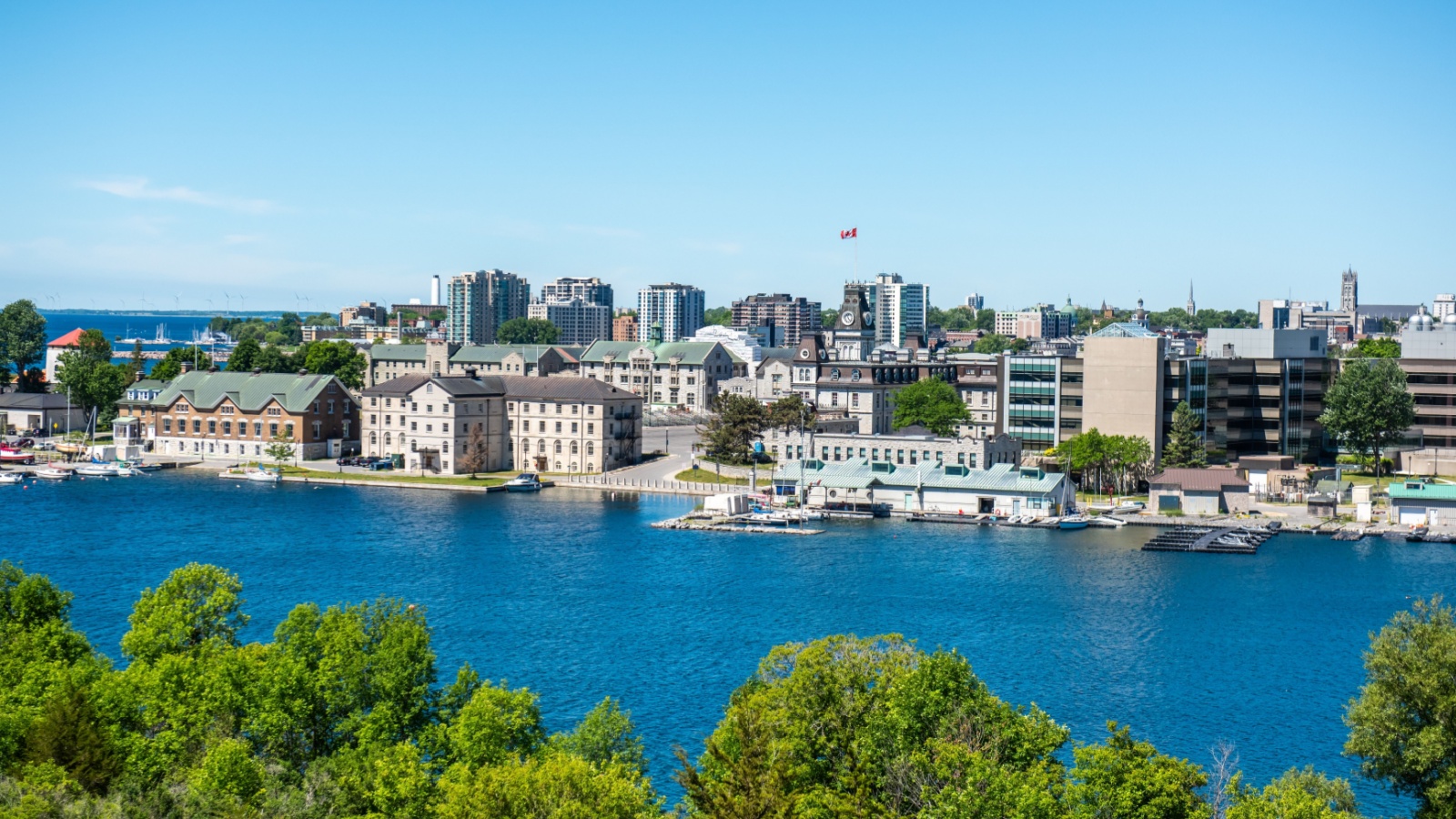
Kingston is one of the more interesting moves on this list because it is not purely an affordability play. In fact, rents have been moving up quickly, partly because newer, higher-priced supply has been entering the market. Yet that same trend hints at why smart movers are still watching it: the city has institutional strength, a steady stream of students and professionals, and a built-in economic base that feels more durable than its size might suggest. Health care, education, and public-sector activity give Kingston a foundation many smaller cities would envy.
There is also a lifestyle dimension that helps explain the interest. Kingston offers water access, historic character, and a scale of living that can feel calmer than larger Ontario centres while still providing genuine urban structure. It attracts people who want a city that feels intelligent rather than oversized. For some movers, that means remote workers seeking a more grounded environment. For others, it means families or professionals who value institutional stability over buzz. Kingston is no longer a cheap underdog, but it still looks like a place where demand is being driven by real strengths, not just temporary hype.
Nanaimo, British Columbia

Nanaimo has evolved far beyond the old stereotype of being simply a quieter Vancouver Island alternative. It now looks increasingly like a city with its own economic pull, not just a scenic fallback. Population growth has been significant, and local planners are projecting more gains ahead, which suggests confidence in the city’s long-term trajectory. That growth story matters because it changes how movers should read Nanaimo. It is not just about ocean views and ferry connections. It is about a place becoming more economically substantial while still offering a different pace than the Lower Mainland.
Housing is not cheap in a national sense, but Nanaimo can still appeal to movers comparing it with larger British Columbia markets. The local business base is broader than many assume, with strength across construction, real estate, services, and professional sectors. That helps support the city beyond tourism or retirement demand. For smart movers, Nanaimo is especially interesting as a lifestyle-and-growth hybrid: a place where the setting is part of the value, but not the whole story. Before summer 2026, it looks like the kind of city people may wish they had taken more seriously sooner.
St. John’s, Newfoundland and Labrador

St. John’s stands out because it offers something increasingly rare in Canada: very low advertised rents relative to most urban markets, paired with signs of fresh economic momentum. That combination gives movers a lot to think about. When a city remains affordable but starts posting better growth and employment numbers, it can suddenly move from “interesting” to “smart.” St. John’s also benefits from being more than a postcard city. It has administrative, health-care, education, and service-sector depth that supports everyday life better than outsiders often expect.
The city’s personality adds to the case. St. John’s feels distinct, compact, and memorable in a way that many interchangeable growth markets do not. For some movers, especially remote workers or people seeking a lower-cost reset, that can be powerful. The tradeoff is geography: distance changes how some careers and family logistics work. But for those who can handle that, the upside is clear. Lower rent leaves room to breathe, and improving economic conditions suggest the city is not just cheap for the sake of being overlooked. It is becoming a more credible strategic move than it used to be.
Moncton, New Brunswick

Moncton has become one of Atlantic Canada’s most convincing growth stories because the numbers no longer look like a small-market fluke. Population has been climbing quickly, employment has been strong, and renter demand has turned the city into one of the country’s most closely watched mid-sized markets. That level of interest can cut both ways, of course. It pushes visibility up and can pressure rents. But it also confirms that Moncton has moved beyond the stage where only locals understood its appeal. It is now part of the national relocation conversation for a reason.
What keeps Moncton attractive is that it still offers a more manageable cost structure than many larger cities while behaving like a place with momentum. Movers get access to a growing regional economy, improving urban energy, and a location that supports broader Atlantic connectivity. It is especially appealing for households that want growth without betting everything on a much pricier market. Smart movers often look for cities where the trend is already visible but not yet fully priced in. Moncton increasingly fits that description, which is why it feels like a timely target before summer 2026.
22 Groceries to Grab Now—Before another Price Shock Hits Canada

Food prices in Canada have been steadily climbing, and another spike could make your grocery bill feel like a mortgage payment. According to Statistics Canada, food inflation remains about 3.7% higher than last year, with essentials like bread, dairy, and fresh produce leading the surge. Some items are expected to rise even further due to transportation costs, droughts, and import tariffs. Here are 22 groceries to grab now before another price shock hits Canada.
22 Groceries to Grab Now—Before another Price Shock Hits Canada
This Options Discord Chat is The Real Deal
While the internet is scoured with trading chat rooms, many of which even charge upwards of thousands of dollars to join, this smaller options trading discord chatroom is the real deal and actually providing valuable trade setups, education, and community without the noise and spam of the larger more expensive rooms. With a incredibly low-cost monthly fee, Options Trading Club (click here to see their reviews) requires an application to join ensuring that every member is dedicated and serious about taking their trading to the next level. If you are looking for a change in your trading strategies, then click here to apply for a membership.