35,000+ smart investors are already getting financial news, market signals, and macro shifts in the economy that could impact their money next with our FREE weekly newsletter. Get ahead of what the crowd finds out too late. Click Here to Subscribe for FREE.
China has tightened its controls on chemicals linked to illicit synthetic-drug production just as one of the year’s most closely watched diplomatic meetings approaches. Beijing announced on September 22 that two additional precursor chemicals will require export permits when shipped to Canada, the United States or Mexico, expanding a North America-specific control system that has grown rapidly over the past year.
The change takes effect immediately and brings the number of chemicals covered by this particular Chinese export regime to 18. For Canada, the decision carries significance beyond the Trump-Xi relationship. Canadian authorities have documented precursor shipments from China, domestic fentanyl production and an evolving illicit market that frequently shifts toward new chemicals when governments tighten existing controls.
China’s New Rule Targets Two More Chemicals
China Puts New Drug-Precursor Export Controls on Canada Alongside U.S. and Mexico Ahead of Trump-Xi Summit
- China’s New Rule Targets Two More Chemicals
- Canada Is Now Part of a Three-Country Licensing Regime
- The Chemistry Shows Why Regulators Keep Updating Lists
- The Timing Adds Weight to the Trump-Xi Meeting
- Canada Has Its Own Precursor Problem to Manage
- Ottawa Has Been Tightening Its Rules Too
- A Major B.C. Seizure Shows the Supply-Chain Risk
- Export Controls Can Disrupt Flows, but Traffickers Adapt
- North American Cooperation Is Already Built Around This Problem
- What the New Controls Could Mean Next
China’s Ministry of Commerce announced the measure jointly with the country’s Ministry of Public Security, Ministry of Emergency Management, General Administration of Customs and National Medical Products Administration. Two additional piperidone-related compounds were added to the first part of China’s catalogue governing precursor exports to specified countries. From September 22 onward, Chinese companies shipping the listed substances to Canada, the United States or Mexico must obtain authorization under Beijing’s existing precursor-export rules.
That distinction is important because China has not announced an across-the-board prohibition on the chemicals. The policy creates a licensing requirement, giving Chinese authorities another opportunity to examine exporters, destinations and transactions before controlled shipments leave the country. The same announcement says the special requirement applies to exports to the three North American countries, while this particular country-specific licensing requirement does not apply to exports of those chemicals to other destinations. Associated Press reported that the two additions increase the North American list to 18 substances.
Canada Is Now Part of a Three-Country Licensing Regime
Canada did not suddenly appear in China’s precursor-control system this week. Beijing formally added Canada, the United States and Mexico to its list of specially designated destinations in November 2025, when 13 chemicals became subject to export licensing for shipments to the three countries. China added another three substances in May 2026. Tuesday’s two additions therefore take the total from 16 to 18.
That progression illustrates how precursor regulation has become an increasingly specific part of China’s relationship with North America. Rather than regulating the newly listed chemicals identically for every export market, Beijing has created a special regime covering Canada, Mexico and the United States. For Canadian importers conducting legitimate activities, China’s measure operates on the export side of the transaction and does not itself replace Canadian licensing requirements. In practical terms, a shipment involving controlled material can now face regulatory checks at both ends of the supply chain, depending on the chemical and its intended use.
The Chemistry Shows Why Regulators Keep Updating Lists
The two newly controlled substances are piperidone-related compounds structurally connected to chemicals used in fentanyl production. That puts them inside a broader regulatory challenge: illicit manufacturers can change the chemicals used earlier in a production chain when authorities place better-known precursors under control. International regulators have consequently moved beyond watching only fentanyl itself and its most familiar immediate precursors.
The International Narcotics Control Board defines a “designer precursor” as a close chemical relative of a controlled precursor that is purpose-made to circumvent controls. Health Canada has documented the same pattern domestically. Its Drug Analysis Service found that the range of fentanyl precursors appearing in Canadian samples expanded considerably from 2020 onward. Frequently identified substances have included ANPP, 4-piperidone and other related chemicals. That constant evolution explains why precursor lists are rarely static: controlling one substance can reduce its availability while encouraging illicit networks to search for an alternative that has not yet been scheduled.
The Timing Adds Weight to the Trump-Xi Meeting
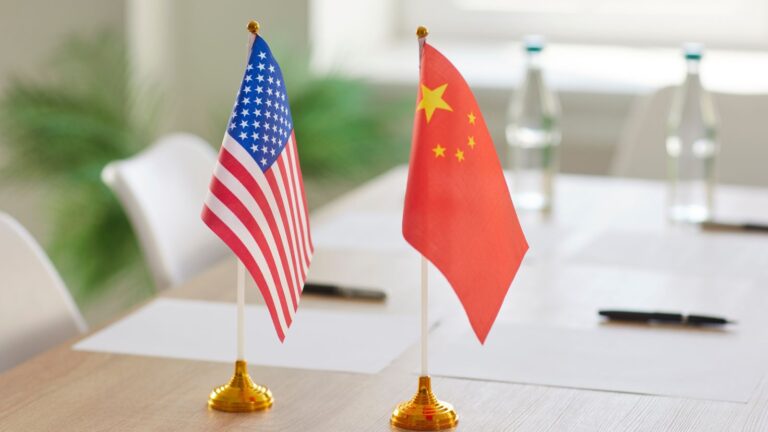
The announcement arrived two days before Donald Trump and Xi Jinping are scheduled to meet in Washington on September 24. Fentanyl precursors were already on the diplomatic agenda. Reuters reported ahead of the summit that the Trump administration wanted China to take stronger action against precursor flows while American and Chinese officials were also discussing trade, artificial intelligence, rare-earth supplies and the future of their tariff truce.
Washington had made its position particularly explicit days earlier. In a September presidential determination, Trump said he had raised precursor chemicals directly with Xi and credited China with adopting North American export-licensing requirements in 2025. The same document argued that criminal networks were continuing to use chemicals outside existing controls and called on Beijing to schedule additional substances. China, meanwhile, has repeatedly defended the strength of its counternarcotics system and rejected the idea that responsibility for the U.S. fentanyl crisis lies solely with Beijing. The new controls therefore arrive amid both cooperation and persistent disagreement over responsibility and enforcement.
Canada Has Its Own Precursor Problem to Manage
Canada’s inclusion alongside the United States and Mexico is supported by evidence that precursor chemicals and domestic synthetic-drug production are genuine Canadian enforcement issues. Health Canada’s analysis of samples collected through 2024 found 862 precursor identifications in the dataset it examined. ANPP and 4-piperidone were among the most frequently detected substances, while precursor identifications were disproportionately concentrated in Western Canada.
The laboratory evidence is particularly significant. Health Canada reported that more than 67% of the 52 fentanyl clandestine laboratories and associated sites it examined were synthesis operations rather than simply pill-pressing or conversion facilities. Most were concentrated in western provinces and Ontario. The public-health stakes also remain substantial. Canada recorded 5,608 opioid-related deaths in 2025, according to the latest national figures released by federal health authorities—about 15 deaths per day. That represented a 23% decline from 2024, but deaths and other harms remained above pre-pandemic levels.
Ottawa Has Been Tightening Its Rules Too
China’s latest export decision is landing as Canada strengthens its own precursor regime. In March 2026, Health Canada announced permanent controls on five fentanyl-related precursor chemicals: phenethyl bromide, phenethyl chloride, phenethyl iodide, propionic anhydride and benzyl chloride. The changes took effect on April 12 and require companies conducting legitimate regulated activities involving those substances to obtain the appropriate Canadian licence or registration.
Some of those chemicals had already been temporarily controlled as Ottawa accelerated its response to changing production methods. Health Canada has also established a Precursor Chemical Risk Management Unit to improve oversight of chemical distribution channels and identify emerging threats. The policy challenge is to prevent diversion without unnecessarily disrupting lawful commercial, scientific or pharmaceutical activity. Many precursor chemicals have legitimate industrial functions, which makes regulation considerably more complicated than simply prohibiting finished illegal drugs. Canada’s system therefore combines scheduling, licensing, monitoring and enforcement rather than relying on a blanket ban.
A Major B.C. Seizure Shows the Supply-Chain Risk
A Canadian border case from 2025 demonstrates why authorities focus heavily on the chemical supply chain. The Canada Border Services Agency and RCMP announced that officers had intercepted 4,300 litres of precursor chemicals arriving from China at the Tsawwassen Container Examination Facility in British Columbia. The cargo had been discovered in two marine containers that were ultimately destined for Calgary.
The shipment contained several different chemicals. Among them were 500 litres of propionyl chloride, which Canadian authorities identify as a fentanyl precursor. Officers also found 3,600 litres of 1,4-butanediol and 200 litres of gamma-butyrolactone, substances associated with GHB rather than fentanyl. The seizure does not establish that every shipment of Chinese industrial chemicals poses a criminal risk, nor does it show that the newly controlled substances were involved. It does, however, provide a concrete example of precursor materials moving through ordinary international freight channels from China into Canada—the exact supply-chain environment that licensing, intelligence screening and customs enforcement are designed to monitor.
Export Controls Can Disrupt Flows, but Traffickers Adapt
Export licensing can make diversion more difficult by creating documentation, regulatory review and additional opportunities to identify suspicious transactions. International experience shows that stronger controls can reduce the attractiveness of specific precursor chemicals. The International Narcotics Control Board has reported declines in seizures of some designer precursors after they became internationally controlled, suggesting that scheduling and monitoring can disrupt established supply channels.
The complication is that illicit production networks do not necessarily stop when one chemical becomes harder to obtain. INCB monitoring has repeatedly identified newly emerging or non-scheduled chemicals offered through commercial and online markets. Health Canada has reached a similar conclusion, describing diversification in Canadian precursor detections as evidence that illicit producers adjust to regulatory and enforcement pressure. That makes Tuesday’s announcement meaningful without making it a complete solution. The critical question is whether authorities can identify replacements quickly enough to prevent a repeating cycle in which one precursor is controlled only after traffickers have shifted toward another.
North American Cooperation Is Already Built Around This Problem
Canada, the United States and Mexico have increasingly treated synthetic drugs as a shared supply-chain problem rather than three separate domestic issues. Canada hosted the ninth meeting of the North American Drug Dialogue in Ottawa on January 27 and 28, bringing together law-enforcement officials, public-health experts and counternarcotics policymakers from all three countries.
The governments agreed to organize cooperation over the next three years around three priorities: securing global supply chains against drug trafficking, strengthening drug-policy implementation and law enforcement, and reducing overdose deaths while supporting recovery. Planned work includes stronger border and postal security, action against illicit financial networks, improved early-warning systems and closer examination of emerging drug trends. China’s decision to apply the same precursor-export requirements to Canada, Mexico and the United States fits naturally into that North American framework. A shipment leaving China may have one declared destination, but trafficking networks, chemical suppliers, clandestine laboratories and financial intermediaries can operate across borders.
What the New Controls Could Mean Next
The immediate regulatory change is straightforward: two more chemicals now require Chinese authorization before they can be legally exported to Canada, Mexico or the United States. Measuring the real impact will be more difficult. Useful indicators will include whether Chinese authorities deny suspicious shipments, whether Canadian agencies see changes in precursor seizures, whether traffickers substitute different chemicals and whether investigators gain better information about exporters and intermediaries.
The Trump-Xi summit will add another layer of attention, but the longer-term test will happen far from the leaders’ meeting rooms. Precursor control depends on customs inspections, licensing records, chemical-company compliance, intelligence sharing and laboratories capable of identifying newly emerging substances. International regulators have shown that monitoring systems can prevent major diversions, but they have also repeatedly warned that synthetic-drug markets evolve rapidly. China’s September 22 decision therefore closes two more identified regulatory gaps. Whether those controls produce a lasting reduction in illicit supply will depend on enforcement and how quickly authorities respond when the market inevitably changes again.
This Options Discord Chat is The Real Deal
While the internet is scoured with trading chat rooms, many of which even charge upwards of thousands of dollars to join, this smaller options trading discord chatroom is the real deal and actually providing valuable trade setups, education, and community without the noise and spam of the larger more expensive rooms. With a incredibly low-cost monthly fee, Options Trading Club (click here to see their reviews) requires an application to join ensuring that every member is dedicated and serious about taking their trading to the next level. If you are looking for a change in your trading strategies, then click here to apply for a membership.