35,000+ smart investors are already getting financial news, market signals, and macro shifts in the economy that could impact their money next with our FREE weekly newsletter. Get ahead of what the crowd finds out too late. Click Here to Subscribe for FREE.
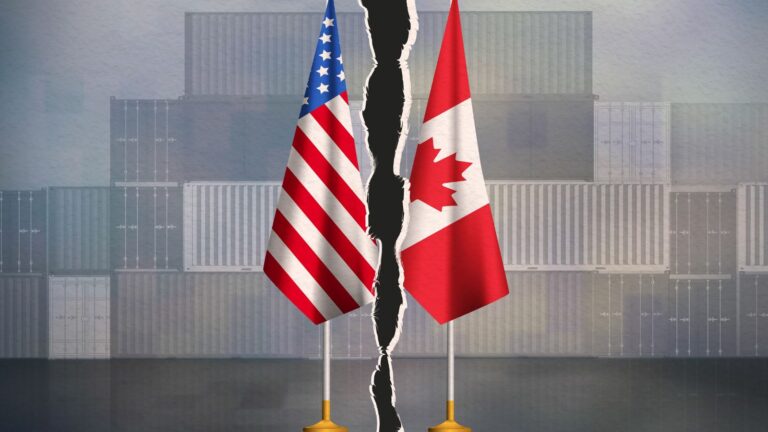
Canada’s effort to strengthen its economy against an escalating trade fight with the United States has opened another confrontation at home: a debate over how far Ottawa should be able to intervene when major strikes threaten the national economy.
The Liberal government’s newly introduced Bill C-39, the Building Canada Strong Act, combines infrastructure, trade, workplace and labour-relations changes in one sweeping package. Among its most contentious provisions are new rules governing federal intervention in serious strikes and lockouts. Ottawa describes the framework as a higher and more transparent threshold for intervention. Major labour organizations argue it could still weaken workers’ bargaining power. The dispute is particularly sensitive because railways, ports, airlines and other federally regulated industries are also the arteries carrying Canadian goods through an increasingly uncertain North American trading system.
What Bill C-39 Actually Changes About Strike Intervention
Union Backlash Hits Liberals’ Labour Bill Over New Strike Powers as Canada Fights U.S. Trade War
- What Bill C-39 Actually Changes About Strike Intervention
- Why Labour Groups Say the Balance Still Tilts Against Workers
- Ottawa Says the New Framework Sets a Higher Bar
- Longer Timelines Could Reshape Bargaining Before a Strike Begins
- Recent Section 107 Cases Help Explain Union Distrust
- The U.S. Trade Fight Makes Supply-Chain Disruptions More Politically Sensitive
- Bill C-39 Is Much Bigger Than Its Most Controversial Labour Provision
At the centre of the dispute is Section 107 of the Canada Labour Code. That provision already gives the federal labour minister broad authority to take measures considered necessary to maintain or secure industrial peace. Bill C-39 would not create federal strike intervention from scratch. Instead, it would establish a more detailed process Ottawa would have to follow before using extraordinary measures in a labour dispute considered nationally significant. That distinction matters because criticism of the legislation has sometimes focused on the government receiving “new” strike powers when the underlying authority has existed for years.
Under the proposed framework, a special mediator would become part of the process in particularly difficult disputes. The mediator would have a defined 21-day mandate and could be appointed no later than the 75th day of conciliation. If no settlement emerged, a report outlining unresolved issues and the parties’ positions would eventually become public. Only after that process and an assessment of the wider consequences could the minister conclude that a strike or lockout would cause a “significant adverse national impact.” The minister could then direct the Canada Industrial Relations Board to take measures that could include resuming operations, extending an existing collective agreement temporarily or establishing binding dispute resolution.
Why Labour Groups Say the Balance Still Tilts Against Workers
The Canadian Labour Congress has objected strongly to the strike-intervention provisions, arguing that employers may have less incentive to compromise if they believe Ottawa could ultimately step into a costly dispute. CUPE has gone further, describing the changes as an attack on constitutionally protected collective bargaining rights. Those are the unions’ interpretations of the legislation rather than established court findings, but they illustrate why the dispute is about more than the mechanics of mediation. Labour organizations see the credible possibility of a strike as one of the central sources of workers’ leverage at the bargaining table.
That argument has an important legal backdrop. In its landmark 2015 Saskatchewan Federation of Labour decision, the Supreme Court of Canada held that the right to strike is an essential part of meaningful collective bargaining protected by freedom of association under the Charter. That does not mean every government restriction on strikes is automatically unconstitutional, nor has a court ruled on Bill C-39. The Canadian Labour Congress has also welcomed several other parts of the legislation, including stronger successor rights, wage-theft enforcement and additional labour-board and workplace-safety resources. The backlash is therefore concentrated largely on how Ottawa proposes to deal with labour disruptions deemed nationally consequential.
Ottawa Says the New Framework Sets a Higher Bar
The federal government presents the reforms differently. Labour Minister Patty Hajdu has characterized the proposed process as placing a higher threshold on ministerial intervention by replacing a broadly worded power with more explicit procedural steps. Before extraordinary action could be considered, mediation would have to run its course, a report would have to be examined and the potential economic and social consequences would need to be assessed. The appointment of a special mediator itself would not suspend or postpone workers’ legal right to strike or an employer’s right to lock workers out.
Ottawa also points to the fact that most federally regulated collective bargaining disputes never reach the stage of a major shutdown. Federal Mediation and Conciliation Service data show that at least 95% of disputes involving its assistance have typically been resolved without a work stoppage; the rate was 97% in 2024-25. The stakes become much higher in the relatively small share that do not settle. Part I of the Canada Labour Code covers more than one million employees and over 22,000 employers in federally regulated private industries, including transportation, telecommunications and banking. A shutdown involving a railway, port or airline can therefore reach far beyond the employees and employer directly involved.
Longer Timelines Could Reshape Bargaining Before a Strike Begins
Bill C-39 would also change the calendar leading up to a potential work stoppage. The standard conciliation period under the Canada Labour Code would increase from 60 days to 90 days. In labour relationships considered at higher risk of disruption, bargaining would be required to start six months before the existing collective agreement expires rather than using the current timeline that can allow negotiations to begin as early as four months before expiry. Ottawa’s stated objective is straightforward: give negotiators and federal mediators more time to find a settlement before positions harden into a strike or lockout.
Unions worry that longer processes do not necessarily produce stronger settlements. The Canadian Labour Congress argues that extending timelines while retaining an intervention mechanism could change the incentives around bargaining, particularly if an employer thinks the economic consequences of a shutdown might eventually trigger government action. The government, meanwhile, is also proposing tools intended to repair difficult labour relationships after disputes and broaden access to geographic bargaining-unit certification. Whether the additional negotiating time ultimately reduces shutdowns, delays them or changes settlement terms cannot be established before the rules are implemented. What is clear is that the legislation attempts to intervene earlier in troubled bargaining relationships rather than waiting until a national supply chain is already disrupted.
Recent Section 107 Cases Help Explain Union Distrust
The reaction to Bill C-39 is inseparable from Ottawa’s recent use of the existing Section 107. Federal briefing material indicates that there were 10 Section 107 referrals beginning in 2023, with nine involving action to end or pause a strike or lockout and/or establish binding arbitration. Recent disputes have touched some of Canada’s most economically important networks, including CN and CPKC rail operations, ports in British Columbia and Quebec, Canada Post and Air Canada. Several of those interventions have generated legal challenges from labour organizations.
The 2025 Air Canada dispute provides a particularly visible example of the tensions involved. After months of negotiations, the federal government invoked Section 107 during a strike involving the airline’s flight attendants and directed the Canada Industrial Relations Board toward binding arbitration and continued operations. The dispute produced an extraordinary standoff before a tentative agreement was reached. Similar controversy followed interventions in railway and port disputes. For unions, that recent history helps explain skepticism toward any legislation that preserves a pathway for government-ordered resumption of work. For Ottawa, those same cases demonstrate why ministers want a clearer framework for handling shutdowns that can rapidly affect travellers, cargo, businesses and critical transportation infrastructure.
The U.S. Trade Fight Makes Supply-Chain Disruptions More Politically Sensitive
The labour debate is unfolding while Canada is already absorbing another source of economic disruption from the United States. In August 2026, Washington imposed a 50% tariff on approximately C$27.6 billion of Canadian goods, according to the federal government. Canada subsequently announced retaliatory tariffs covering an equivalent value of U.S. imports, affecting products across sectors including steel, agricultural equipment, appliances, electronics, dairy and pulp and paper. Ottawa has also expanded financial support for Canadian industries exposed to U.S. trade measures.
Canada’s dependence on cross-border commerce makes interruptions at ports and railways especially consequential during such a period. Statistics Canada reported that merchandise exports to the United States fell 5.8% in 2025, while the U.S. share of Canadian merchandise exports declined from 75.9% in 2024 to 71.7% in 2025 as trade with other markets increased. Bank of Canada Governor Tiff Macklem said in September that newer U.S. tariffs could push fourth-quarter growth below 1%, compared with an earlier projection of 1.5%. Those pressures help explain why supply-chain reliability has become a prominent government and business concern. They do not, however, resolve the separate question of how economic costs should be balanced against collective bargaining rights.
Bill C-39 Is Much Bigger Than Its Most Controversial Labour Provision
The fight over strike intervention risks obscuring how broad Bill C-39 actually is. On the labour side, the government proposes hiring 100 additional health and safety officers, which it says would increase federal inspection capacity by roughly 70%. Another 26 employees would be added to the Canada Industrial Relations Board to address its case backlog. The legislation also contains measures aimed at worker misclassification and wage theft, strengthens successor rights for certain workers when airport and aviation-service contracts change hands, and makes changes to federal workplace and income-support programs. These are among the measures that have received a more positive response from the Canadian Labour Congress.
Beyond labour relations, the package is tied directly to Ottawa’s effort to make the Canadian economy more resilient during the U.S. trade confrontation. The government wants federal reviews of major projects completed on a one-year timeline once a comprehensive application is received, alongside changes involving trade corridors, ports and regulatory coordination. Some industry organizations have welcomed the direction. Fertilizer Canada, for example, supports longer labour-negotiation timelines and special mediators while arguing Ottawa should retain strong tools to protect nationally important supply chains. That contrast captures the political problem facing the government: the same powers that some businesses view as insurance against costly disruptions are seen by major unions as a potential weakening of bargaining leverage. Parliamentary scrutiny of Bill C-39 will now determine how much of that framework survives unchanged.
This Options Discord Chat is The Real Deal
While the internet is scoured with trading chat rooms, many of which even charge upwards of thousands of dollars to join, this smaller options trading discord chatroom is the real deal and actually providing valuable trade setups, education, and community without the noise and spam of the larger more expensive rooms. With a incredibly low-cost monthly fee, Options Trading Club (click here to see their reviews) requires an application to join ensuring that every member is dedicated and serious about taking their trading to the next level. If you are looking for a change in your trading strategies, then click here to apply for a membership.