35,000+ smart investors are already getting financial news, market signals, and macro shifts in the economy that could impact their money next with our FREE weekly newsletter. Get ahead of what the crowd finds out too late. Click Here to Subscribe for FREE.
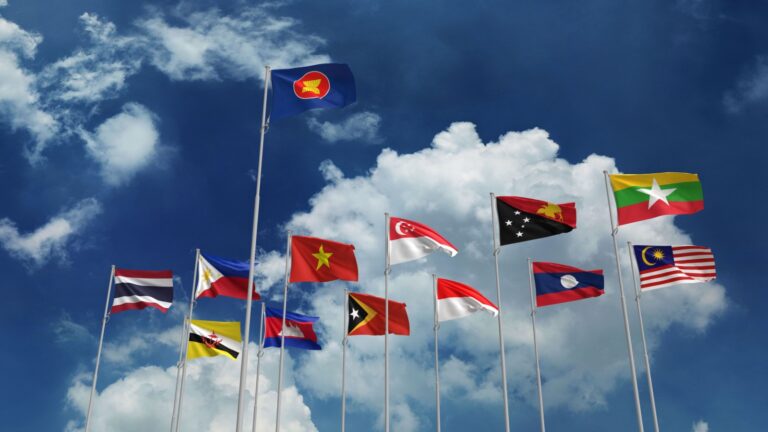
Canada’s effort to build a larger economic footprint in Southeast Asia is moving unusually close to the finish line. International Trade Minister Maninder Sidhu says separate free-trade negotiations with the Philippines and the Association of Southeast Asian Nations are now more than 90% complete, with Ottawa hoping to finish both by November, when Prime Minister Mark Carney is expected in Manila.
The timing gives the talks significance well beyond tariff schedules. Canada is trying to expand trade with faster-growing markets while reducing the economic risk that comes from depending heavily on one partner. Ottawa says diversification was already its strategy rather than simply a reaction to U.S. trade tensions, but the changing North American relationship has made that strategy more economically consequential.
Two Agreements Are Moving Into the Final Stretch
Canada Says Philippines and ASEAN Trade Deals Are More Than 90% Done as Ottawa Diversifies Beyond U.S.
- Two Agreements Are Moving Into the Final Stretch
- The Philippines Deal Has a Concrete Trade Target
- ASEAN Offers Canada a Much Larger Economic Platform
- Canada’s Diversification Is Already Visible in the Trade Data
- Energy Is Emerging as One of Canada’s Strongest Offers
- Infrastructure and Digital Investment Are Part of the Strategy Too
- More Than 90% Complete Does Not Mean the Deals Are Finished
- The Philippines Deals Fit Into a Much Wider Indo-Pacific Push
Sidhu’s description of the negotiations as more than 90% complete represents the clearest indication yet that both agreements may be approaching a political breakthrough. Speaking in Manila on September 22, he said Canada was pushing to have the Philippines agreement and the wider ASEAN agreement ready by the time Carney visits the Philippine capital in November. Ottawa and Manila had already committed earlier in 2026 to trying to conclude their bilateral negotiations before year-end.
That timetable is notable because the bilateral talks are relatively young. Canada and the Philippines formally launched their FTA negotiations in October 2025, with the first negotiating round taking place in Manila from February 18 to 20, 2026. Negotiators worked on areas including goods, services, investment, intellectual property and temporary entry for business people. Canada and ASEAN have been working on their regional agreement much longer, with negotiations formally launched in 2021. The Philippines’ role as ASEAN chair in 2026 has added another incentive to make substantial progress while Manila is helping steer the regional agenda.
The Philippines Deal Has a Concrete Trade Target
The bilateral relationship is meaningful but still relatively small compared with Canada’s biggest trading partnerships. Canada and the Philippines recorded C$3.4 billion in merchandise trade in 2025, up 7.4% from the previous year. Canadian exports to the Philippines were worth roughly C$1.1 billion, while imports reached C$2.3 billion. Canada also reported about C$1.7 billion in direct investment holdings in the Philippines in 2025, a 44% increase from 2024.
Ottawa sees considerable room for those numbers to grow. When Carney hosted Philippine President Ferdinand Marcos Jr. in Vancouver in July, the Canadian government said a bilateral FTA was expected to help triple two-way trade by 2035, with agriculture and forest products identified among the potential Canadian beneficiaries. Services are already important: Canada-Philippines services trade was valued at C$3.2 billion in 2024, including C$2.2 billion in Canadian service exports. For businesses, the appeal of an agreement is therefore broader than lower tariffs on physical goods. More predictable rules affecting services, investment and business mobility could matter to companies that rarely think of themselves as traditional exporters.
ASEAN Offers Canada a Much Larger Economic Platform
The regional agreement would operate on an entirely different scale. ASEAN’s 11 members had a combined population of about 695 million in 2025 and nominal GDP estimated by Canada at approximately C$5.9 trillion. As a group, ASEAN was Canada’s fifth-largest merchandise trading partner that year. Two-way merchandise trade reached approximately C$52.4 billion, an increase of 23.6% from C$42.4 billion in 2024.
An ASEAN agreement could therefore give Canadian exporters access to a geographically diverse set of economies rather than relying on growth from one national market. Canadian government modelling conducted during earlier feasibility work estimated that a comprehensive agreement could eventually raise Canadian GDP by about C$3.37 billion and increase Canadian exports to ASEAN by 13.3%, although those projections were produced using earlier economic assumptions and should not be treated as a forecast of the final agreement now being negotiated. The broader attraction remains straightforward: Southeast Asia combines a large consumer base with expanding industrial, digital and infrastructure demand, creating opportunities ranging from food and machinery to professional services and technology.
Canada’s Diversification Is Already Visible in the Trade Data
Canada is not about to replace the United States as its central trading partner, nor has the government suggested that it can. The economic relationship remains enormous. Still, Statistics Canada data show that the concentration has begun to shift. The United States received 71.7% of Canadian merchandise exports in 2025, down from 75.9% in 2024. Over the same year, Canadian merchandise exports to countries other than the United States increased 17.2%.
Carney’s government has set a longer-term objective of doubling non-U.S. exports over roughly a decade, which it says would generate about C$300 billion in additional trade. Sidhu has stressed that the Southeast Asian negotiations should not be viewed solely through the lens of Washington, describing diversification as Canada’s plan regardless of developments with individual partners. Both ideas can coexist: Canada has pursued Asian trade relationships for years, while heightened uncertainty in U.S.-Canada trade increases the economic value of having alternatives. A company with customers spread across several regions is generally less exposed to a disruption in any single market than one whose sales are overwhelmingly concentrated in one country.
Energy Is Emerging as One of Canada’s Strongest Offers
Energy is becoming a prominent part of Ottawa’s Southeast Asian pitch. Sidhu described it as Canada’s biggest potential offering to the region, particularly as Asian economies look for more diverse sources of liquefied natural gas. Canada now has direct Pacific LNG export capacity, shortening the commercial route between western Canadian production and Asian customers compared with shipments that would need to move through Atlantic facilities.
Natural Resources Canada reported that between June 2025 and August 2026, approximately 130 LNG cargoes left Canada for Asia, representing roughly 9.7 million tonnes of gas. The department says proposed and developing West Coast LNG projects represent more than C$100 billion in potential capital investment. Energy cooperation with the Philippines is broader than natural gas as well. Canada and the Philippines signed a declaration in July covering energy security, critical minerals, responsible mining and civil nuclear cooperation. That combination helps explain why an FTA can become a platform for investment rather than simply a tool for cutting customs duties: large energy and resource projects depend heavily on long-term regulatory confidence, financing and supply-chain relationships.
Infrastructure and Digital Investment Are Part of the Strategy Too
Ottawa is also trying to connect trade negotiations with projects on the ground. Canada joined the Luzon Economic Corridor partnership alongside the Philippines, the United States and Japan and committed an initial C$2 million for technical assistance. The corridor is intended to encourage infrastructure and industrial development on the Philippines’ largest island. Canadian officials have highlighted opportunities around agriculture, aerospace, defence and infrastructure as the relationship expands.
Digital infrastructure could become another area of interest. Sidhu told Reuters that Canada sees potential opportunities in Philippine data centres and related infrastructure as demand for artificial intelligence and digital services grows. Ottawa has already strengthened its commercial presence in the country by establishing an Export Development Canada office and an Indo-Pacific Agriculture and Agri-Food Office in Manila. Those steps matter because trade agreements work best when businesses actually use them. A reduced tariff is valuable only if companies can find customers, finance projects, understand regulations and move goods efficiently. Combining formal trade rules with financing, diplomatic support and infrastructure cooperation suggests Canada is trying to create a broader commercial ecosystem rather than treating the FTA as an isolated diplomatic achievement.
More Than 90% Complete Does Not Mean the Deals Are Finished
The 90% milestone is politically significant, but it should not be confused with a signed or enforceable agreement. Canada’s official trade-agreement database still lists the Philippines FTA as being under negotiation. During the first bilateral negotiating round, Canadian and Philippine officials made progress on market access, investment, services, intellectual property, business mobility and legal provisions, while identifying areas needing further technical work. Detailed final tariff schedules and the complete negotiated text have not yet been publicly released.
Even after negotiators resolve the remaining issues, several formal stages remain. Under Canada’s process, concluded negotiations are normally followed by legal review, translation and domestic approvals before signature. After a trade agreement is signed, it is generally tabled in the House of Commons for 21 sitting days. Free-trade agreements usually also require implementing legislation before Canada can complete ratification and bring the agreement into force. That means a November political conclusion would be an important milestone rather than the moment Canadian companies instantly receive every negotiated benefit. The distinction matters because complex trade agreements can take time to move from a handshake between governments to rules that businesses can actually use.
The Philippines Deals Fit Into a Much Wider Indo-Pacific Push
The Philippines and ASEAN negotiations are only part of Canada’s increasingly crowded trade agenda in Asia. Sidhu travelled to India immediately before the Manila meetings, where Canada and India completed a fourth round of negotiations toward a Comprehensive Economic Partnership Agreement. Both governments have said they are working toward concluding those negotiations by the end of 2026. Canada also signed a Comprehensive Economic Partnership Agreement with Indonesia in 2025, adding another major Southeast Asian market to its network of negotiated relationships.
Ottawa says agreements with India, ASEAN and the Philippines would expand the population covered by Canada’s preferential trade relationships from roughly 1.5 billion to about 3 billion people. That does not mean new trade will automatically materialize. Geography, shipping costs, competition, regulations and differences between ASEAN economies will still determine which Canadian companies succeed. But the strategy is becoming clearer: preserve the huge economic relationship with the United States while building substantially more commercial capacity elsewhere. If the Philippines and ASEAN negotiations are indeed completed in the coming months, Southeast Asia would become a much more important part of that diversification effort.
This Options Discord Chat is The Real Deal
While the internet is scoured with trading chat rooms, many of which even charge upwards of thousands of dollars to join, this smaller options trading discord chatroom is the real deal and actually providing valuable trade setups, education, and community without the noise and spam of the larger more expensive rooms. With a incredibly low-cost monthly fee, Options Trading Club (click here to see their reviews) requires an application to join ensuring that every member is dedicated and serious about taking their trading to the next level. If you are looking for a change in your trading strategies, then click here to apply for a membership.