35,000+ smart investors are already getting financial news, market signals, and macro shifts in the economy that could impact their money next with our FREE weekly newsletter. Get ahead of what the crowd finds out too late. Click Here to Subscribe for FREE.
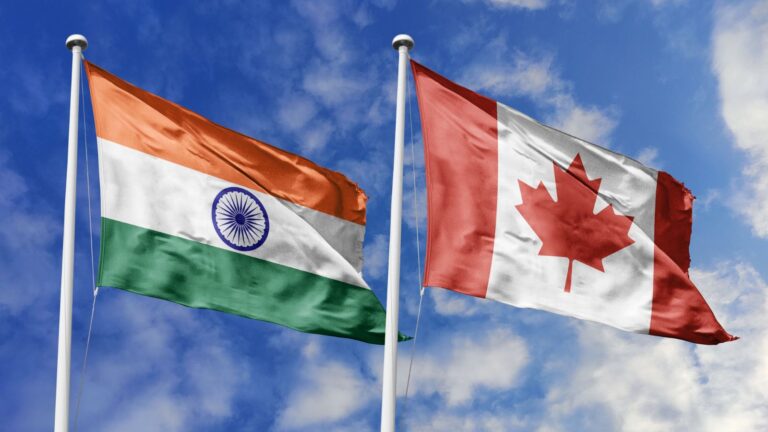
Canada’s effort to sell more of what it produces beyond the United States is beginning to show up in the trade numbers, just as Ottawa accelerates negotiations with one of the world’s largest economies. International Trade Minister Maninder Sidhu says Canadian exports to non-U.S. markets have risen roughly 17%, or about $33 billion, while describing negotiations with India as making “great headway.”
The numbers offer evidence that Canada’s export map is changing, although they require some context. The United States remains by far Canada’s largest customer, and part of the recent overseas growth came from unusually strong gold exports. Still, record non-U.S. shipments, four completed rounds of Canada-India trade negotiations and expanding energy ties suggest Ottawa’s diversification campaign has moved beyond diplomatic messaging and into measurable commercial activity.
The 17% Export Increase Is Significant, but the Details Matter
Canada Says Non-U.S. Exports Jumped 17% as India Trade Talks Make ‘Great Headway’
- The 17% Export Increase Is Significant, but the Details Matter
- India Talks Have Advanced Quickly Through Four Negotiating Rounds
- The Existing Canada-India Relationship Is Bigger Than Goods Alone
- Energy Could Become One of the Relationship’s Biggest Commercial Pillars
- Agriculture and Manufacturing Still Face Difficult Negotiating Questions
- India Is Only One Piece of a Much Broader Diversification Push
- The United States Is Still Far Too Important to Simply Replace
- The Next Few Months Will Show Whether Momentum Becomes an Agreement
The 17% figure cited by Sidhu refers essentially to Canada’s merchandise exports outside the United States. Statistics Canada reported that merchandise exports to non-U.S. countries increased 17.2% in 2025. By comparison, exports to the United States fell 5.8%, helping reduce the U.S. share of Canadian merchandise exports from 75.9% in 2024 to 71.7% in 2025.
There is an important qualification. A large portion of the overseas increase came from precious metals, particularly gold sold into markets such as the United Kingdom. Global Affairs Canada found that goods and services exports to non-U.S. destinations increased by 11.1%, or about $33.3 billion, when services are included. Gold prices surged during the year even as global gold export volumes fell. That means the headline number is evidence of diversification, but it should not be interpreted as every Canadian export industry suddenly growing overseas at double-digit rates.
India Talks Have Advanced Quickly Through Four Negotiating Rounds
Canada and India formally launched their latest Comprehensive Economic Partnership Agreement negotiations in March 2026, when the two governments finalized the terms that would guide the talks. Six months later, four negotiating rounds have been completed, an unusually compressed schedule for an agreement covering complex questions ranging from tariffs and services to investment and regulatory rules.
Sidhu said after his latest meetings in India that the negotiations were making “great headway,” while telling Reuters separately that he was “very, very optimistic” an agreement could be completed in the coming months. The official target remains the end of 2026, although that is a negotiating objective rather than a guaranteed completion date. Canada and India have also set a much larger commercial ambition: increasing two-way trade to approximately $70 billion annually by 2030. The pace of the negotiations suggests both governments are treating that target as more than a distant aspiration.
The Existing Canada-India Relationship Is Bigger Than Goods Alone
India is not yet one of Canada’s largest merchandise export destinations, which helps explain why Ottawa sees so much room for expansion. Global Affairs Canada reported Canadian merchandise exports to India of approximately $3.9 billion in 2025, led by vegetables, mineral fuels and oils, and wood pulp. Canadian merchandise exports to India actually fell significantly during 2025, illustrating why a new trade framework is being pursued.
Services tell a different story. India has become one of Canada’s most important services markets, with education-related travel accounting for a large share of Canadian service exports to the country. Global Affairs Canada’s State of Trade report says India became Canada’s second-largest services export market in 2025, overtaking the United Kingdom and accounting for roughly 6% of Canadian services exports. That unusual combination—a comparatively modest merchandise relationship but a substantial services connection—gives negotiators several different avenues for expanding trade rather than relying on a single sector.
Energy Could Become One of the Relationship’s Biggest Commercial Pillars
The trade negotiations are advancing alongside a much broader Canada-India energy partnership. During Prime Minister Mark Carney’s March visit to India, the two countries announced cooperation involving LNG, LPG, uranium, critical minerals, renewable power and other energy technologies. One of the most concrete outcomes was a roughly $2.6 billion agreement between Saskatoon-based Cameco and India’s Department of Atomic Energy.
Under that agreement, Cameco is expected to supply nearly 22 million pounds of uranium between 2027 and 2035. India has also signalled interest in Canadian LNG, while Canadian officials are promoting Pacific Coast energy infrastructure as a way to serve rapidly growing Asian markets. More recently, Sidhu said Indian companies were examining Canadian LNG and critical-mineral opportunities. For Canadian resource producers, that creates a potentially important shift: diversification does not simply mean replacing American buyers with foreign ones, but developing infrastructure and long-term contracts specifically designed around overseas demand.
Agriculture and Manufacturing Still Face Difficult Negotiating Questions
A trade agreement with India could create opportunities for Canadian agriculture, forestry, machinery, aerospace and other industries, but those opportunities will depend heavily on the final negotiating details. Global Affairs Canada’s consultations with Canadian businesses and industry associations identified Indian tariffs and non-tariff measures as major concerns, particularly for agriculture and processed foods.
Canadian agri-food groups pointed to sanitary and phytosanitary requirements, unpredictable tariff changes, certification rules and other regulatory barriers that can make access difficult even when consumer demand exists. Industrial groups similarly emphasized regulatory predictability and technical barriers. Those issues help explain why negotiations go well beyond simply cutting customs duties. Rules of origin, for example, determine whether a product contains enough Canadian or Indian content to qualify for preferential treatment. For a Saskatchewan pulse exporter, an aerospace supplier in Quebec or a machinery manufacturer in Ontario, those technical provisions can ultimately matter as much as the political announcement that a trade agreement has been reached.
India Is Only One Piece of a Much Broader Diversification Push
Ottawa’s India negotiations are occurring alongside an aggressive campaign across Europe, Southeast Asia and other markets. Sidhu travelled from India to the Philippines for negotiations involving both a bilateral Canada-Philippines agreement and a wider Canada-ASEAN free trade agreement. On September 22, he said those Southeast Asian negotiations were more than 90% complete and that Canada hoped to finish them around November.
The trade numbers indicate businesses are already shipping considerably more goods outside the United States. In July 2026, Canadian merchandise exports to non-U.S. countries increased 7.4% from the previous month and reached a record $25.6 billion. Non-U.S. destinations accounted for 33.7% of total merchandise exports that month. The largest contributors included the Netherlands, China and Germany rather than India, underscoring an important point: Canada’s diversification effort is not built around finding one substitute for the American market. The strategy involves spreading exports across a much larger collection of economies.
The United States Is Still Far Too Important to Simply Replace
Record exports elsewhere should not obscure the scale of Canada’s economic relationship with its southern neighbour. Even after the share declined substantially, 71.7% of Canadian merchandise exports went to the United States during 2025. In July 2026, when non-U.S. exports hit a record, the United States still absorbed roughly two-thirds of Canadian merchandise exports.
That proximity is difficult for any overseas market to replicate. Canada and the United States share integrated automotive, energy, agricultural and manufacturing supply chains, enormous cross-border infrastructure and transportation routes built over decades. India, Europe and Southeast Asia can reduce concentration risk and provide Canadian firms with additional customers, but diversification is more realistically a long-term rebalancing than a complete replacement of U.S. trade. The latest statistics nevertheless show that the balance can move. Global Affairs Canada says the non-U.S. share of Canadian goods and services exports reached its highest level since 1981 in 2025, making the shift economically meaningful even if North American trade remains dominant.
The Next Few Months Will Show Whether Momentum Becomes an Agreement
The immediate test comes this fall. Canada has scheduled a Team Canada Trade Mission to India for October 12 to 17, bringing government officials and Canadian businesses together as the CEPA negotiations continue. Sidhu has also said Indian negotiators are expected in Canada, while political leaders could meet around the G20 gathering later in the year.
Reaching a negotiating agreement would still not mean that every benefit appeared immediately. Trade agreements typically require legal review, domestic procedures and implementation before companies begin using new tariff preferences and market-access rules. The harder measure of success will come afterward: whether businesses actually increase shipments, investment and long-term commercial relationships. Canada already has evidence that its overseas exports can grow rapidly, but 2025’s gold-driven gains also demonstrate why sustainable diversification requires breadth. If India produces greater demand for Canadian agriculture, energy, minerals, aerospace, technology and services simultaneously, the commercial shift would be considerably deeper than a single year’s export spike.
This Options Discord Chat is The Real Deal
While the internet is scoured with trading chat rooms, many of which even charge upwards of thousands of dollars to join, this smaller options trading discord chatroom is the real deal and actually providing valuable trade setups, education, and community without the noise and spam of the larger more expensive rooms. With a incredibly low-cost monthly fee, Options Trading Club (click here to see their reviews) requires an application to join ensuring that every member is dedicated and serious about taking their trading to the next level. If you are looking for a change in your trading strategies, then click here to apply for a membership.