35,000+ smart investors are already getting financial news, market signals, and macro shifts in the economy that could impact their money next with our FREE weekly newsletter. Get ahead of what the crowd finds out too late. Click Here to Subscribe for FREE.
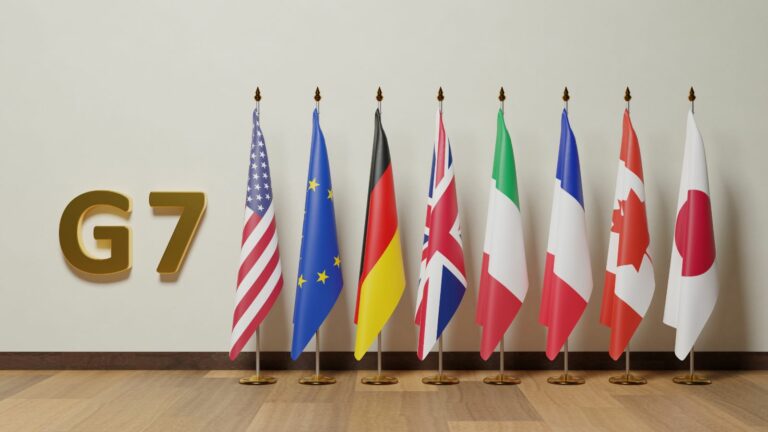
Canada and the United States have joined their G7 partners in issuing a direct warning to Iran as renewed fighting in Yemen raises concerns far beyond the country’s borders. Meeting around the United Nations General Assembly in New York, G7 foreign ministers called on Tehran to stop arming and supporting the Houthis and demanded an end to Houthi military operations and threats against civilian shipping.
The warning comes as fighting intensifies near one of the world’s most important maritime corridors. With ships, oil infrastructure and supply chains already facing disruption elsewhere in the Middle East, instability around the Bab el-Mandeb Strait adds another layer of risk for businesses and consumers thousands of kilometres away. For Canada and the United States, the issue is increasingly about both regional security and the reliability of global trade.
The G7 Message Goes Beyond the Fighting in Yemen
Canada and U.S. Join G7 Warning Iran Over Houthi Arms as Shipping and Trade Risks Grow
- The G7 Message Goes Beyond the Fighting in Yemen
- Bab el-Mandeb Is a Small Strait With an Oversized Economic Role
- The Iran Dispute Centres on Weapons, Support and Influence
- Yemen’s Battlefield Has Changed Quickly
- Canada Has a Growing Stake in Keeping Overseas Trade Routes Open
- Shipping Disruptions Can Reach Consumers Faster Than Expected
- The Humanitarian Crisis Is Deepening at the Same Time
- The Risk Is Now About Multiple Chokepoints at Once
- Diplomacy Is Still the Outcome the G7 Says It Wants
The September 22 statement was signed by the foreign ministers of Canada, France, Germany, Italy, Japan, the United Kingdom and the United States, together with the European Union’s foreign-policy representative. The governments condemned continuing Houthi strikes in Yemen and against Saudi Arabia and called for an immediate end to military operations, threats and attacks against civilian shipping. The statement also explicitly described the situation as a threat to regional stability, global energy security, maritime security and navigational rights in the Red Sea and Bab el-Mandeb Strait.
That wording helps explain why governments geographically distant from Yemen are treating the escalation as an international economic issue. The G7 specifically warned that continued escalation could undermine international trade and create wider economic instability. It singled out energy, food and fertilizer flows as areas where prolonged shipping disruption could hurt economies and vulnerable populations. In practical terms, a missile or drone attack near Yemen can eventually translate into longer shipping routes, tighter vessel availability, higher insurance costs or delayed deliveries on another continent.
Bab el-Mandeb Is a Small Strait With an Oversized Economic Role
The Bab el-Mandeb sits between Yemen and the Horn of Africa and connects the Red Sea with the Gulf of Aden. Ships travelling between Asia and Europe through the Suez Canal normally use this corridor, making it a critical link in a much larger logistics network. IMF analysis has estimated that about 15% of global maritime trade volume normally travels through the Suez route. When Red Sea attacks intensified after 2023, major carriers instead began sending vessels around Africa’s Cape of Good Hope, often adding 10 days or more to voyages.
Those disruptions never fully disappeared. In April 2026, the IMF reported that ship transits through Bab el-Mandeb were still running at roughly half their pre-attack level, more than two years after widespread diversions began. That history makes the latest escalation particularly important. Shipping companies have already learned that insecurity around the strait can turn what looks like a temporary rerouting decision into a much longer adjustment. Added distance means more fuel, more crew time, additional vessel capacity tied up at sea and greater uncertainty for companies managing tightly timed inventories.
The Iran Dispute Centres on Weapons, Support and Influence
The G7 statement specifically called on Iran to end what the ministers described as its arming and support of the Houthis, citing UN Security Council resolutions including 2140 and 2216. The UN sanctions regime does impose a targeted arms embargo on designated individuals and entities connected with the conflict, and the Houthis themselves are currently listed as an entity subject to that embargo. UN documentation says member states are required to prevent prohibited weapons and related military assistance from reaching designated parties.
There remains an important distinction between evidence of Iranian support and claims about how directly Tehran controls Houthi decisions. Reuters has reported, citing Iranian, Yemeni and regional sources, that Iranian weapons, advisers and tactical assistance have helped strengthen Houthi capabilities. Iran, however, has denied directing Houthi operations and has publicly characterized the movement as an independent Yemeni actor. That disagreement matters because the G7 is attempting to increase pressure on Tehran while the broader regional confrontation involving Iran remains highly volatile.
Yemen’s Battlefield Has Changed Quickly
The warning is arriving during one of Yemen’s sharpest military escalations in years. Reuters reported in September that Houthi forces had advanced rapidly along Yemen’s Red Sea coast, taking territory around important maritime approaches after years in which the front lines had been comparatively more stable following the 2022 truce. The fighting has involved drones, missiles and airstrikes and has again placed areas near the Bab el-Mandeb corridor at the centre of the conflict.
The strategic significance is difficult to separate from geography. Reuters reported that Houthi gains included territory and positions near the mouth of the strait, increasing concern among Saudi Arabia and other regional governments about shipping and energy infrastructure. The renewed offensive has also coincided with attacks against Saudi targets, creating additional pressure on Riyadh at a time when regional oil transportation has already been disrupted. The G7 statement therefore represents a response not simply to the Houthis’ long-running presence in Yemen, but to a rapid change in the military situation around a globally important maritime corridor.
Canada Has a Growing Stake in Keeping Overseas Trade Routes Open
Canada may be far from the Red Sea, but its economy depends heavily on predictable international transportation. Statistics Canada recorded $76.1 billion in merchandise exports and $75.4 billion in imports in July 2026 alone. That enormous monthly flow includes commodities, machinery, electronics, consumer products and industrial inputs moving through interconnected ports, rail networks and ocean shipping routes. Disruption in one major maritime corridor can therefore affect Canadian companies even when their own cargo never travels directly through the affected waters.
The exposure is becoming more relevant as Canada deliberately expands economic relationships outside the United States. Statistics Canada reported that Canadian merchandise exports to non-U.S. markets rose 17.2% in 2025, while imports from those markets increased 12.4%. Total merchandise trade with countries other than the United States reached $553 billion, up 14.3% from 2024. More diversified trade can reduce dependence on a single market, but it also makes reliable transoceanic shipping increasingly important. Instability connecting Asia, Europe and the Middle East consequently becomes a Canadian commercial concern as well as a foreign-policy issue.
Shipping Disruptions Can Reach Consumers Faster Than Expected
The economic impact of maritime conflict does not require ships to stop moving entirely. Longer routes, higher insurance premiums, fuel consumption and unpredictable arrival times can raise costs even while trade continues. UN Trade and Development reported that disruptions in Middle Eastern shipping during 2026 contributed to increases in energy, transport, logistics and production costs. Global trade continued expanding, but UNCTAD noted that rising prices accounted for a significant share of the increase in the value of goods moving internationally.
The IMF has reached a similar conclusion. Its 2026 analysis said shipping and aviation disruptions slow trade, raise supply-chain costs and hit import-dependent economies particularly hard. Those pressures eventually reach households through everyday products rather than through an obvious “shipping disruption” charge. A manufacturer may pay more to obtain components, a retailer may hold extra inventory because delivery dates are less reliable, or an importer may face higher freight costs. Each expense can be small in isolation, but prolonged instability allows them to accumulate across an entire supply chain.
The Humanitarian Crisis Is Deepening at the Same Time
The commercial importance of Yemen’s coastline can easily overshadow the people living beside it. The renewed fighting has displaced tens of thousands of families. The International Organization for Migration recorded more than 118,000 people displaced after the west-coast escalation began, based on data covering developments through September 17. Reuters has documented families fleeing bombardment with little more than the belongings they could carry, while others crossed the Gulf of Aden toward Djibouti.
Food insecurity makes the situation even more fragile. The World Food Programme said in September that more than 18 million Yemenis faced acute food insecurity and approximately 2.2 million children under five were acutely malnourished. Yemen imports about 90% of its food, meaning functioning ports and commercial supply chains are not simply an economic convenience. They are essential to keeping basic necessities available. WFP was preparing capacity to assist another 1.5 million people if the conflict intensified, even as funding shortages constrained its response.
The Risk Is Now About Multiple Chokepoints at Once
One reason the latest G7 warning carries additional weight is that the Red Sea is not the region’s only troubled maritime corridor. Shipping through the Strait of Hormuz has also been severely disrupted during the broader Middle East conflict. Reuters reported on September 22 that preliminary data showed only two commodity vessels crossing Hormuz on Monday, compared with an average of roughly 125 large commercial vessels per day before the current conflict. Ships operating without visible tracking signals mean the figures are not necessarily comprehensive, but the decline illustrates the scale of disruption.
That creates an unusual problem for energy and freight markets. Routes normally used as alternatives to one another can become vulnerable simultaneously. Saudi Arabia has relied on its East-West Pipeline to move crude toward the Red Sea when Hormuz traffic is constrained, yet that system itself was temporarily shut after drone attacks before restarting in September. A security crisis around Bab el-Mandeb therefore has implications well beyond container shipping: it can complicate efforts to reroute energy supplies around problems elsewhere in the Gulf.
Diplomacy Is Still the Outcome the G7 Says It Wants
Despite the forceful language directed at the Houthis and Iran, the G7 statement stops short of presenting military escalation as the preferred solution. The ministers called on the Houthis to return to the political process in good faith and reaffirmed support for UN Special Envoy Hans Grundberg and a negotiated, inclusive, Yemeni-led settlement. They also reiterated support for Yemen’s unity, sovereignty, independence and territorial integrity.
That leaves the international response balancing several goals at once: protecting civilian shipping, preventing weapons transfers prohibited by UN sanctions, limiting attacks on Saudi Arabia, keeping essential trade routes functioning and attempting to revive a political settlement inside Yemen. Iran’s relationship with the Houthis makes Tehran central to Western diplomatic pressure, while Iran continues to dispute portrayals that suggest it controls the group’s decisions. For Canada, the United States and their G7 partners, the immediate warning is about weapons and attacks. The broader concern is that instability around one narrow stretch of water could compound other Middle Eastern disruptions and produce economic consequences far beyond the region.
This Options Discord Chat is The Real Deal
While the internet is scoured with trading chat rooms, many of which even charge upwards of thousands of dollars to join, this smaller options trading discord chatroom is the real deal and actually providing valuable trade setups, education, and community without the noise and spam of the larger more expensive rooms. With a incredibly low-cost monthly fee, Options Trading Club (click here to see their reviews) requires an application to join ensuring that every member is dedicated and serious about taking their trading to the next level. If you are looking for a change in your trading strategies, then click here to apply for a membership.