35,000+ smart investors are already getting financial news, market signals, and macro shifts in the economy that could impact their money next with our FREE weekly newsletter. Get ahead of what the crowd finds out too late. Click Here to Subscribe for FREE.
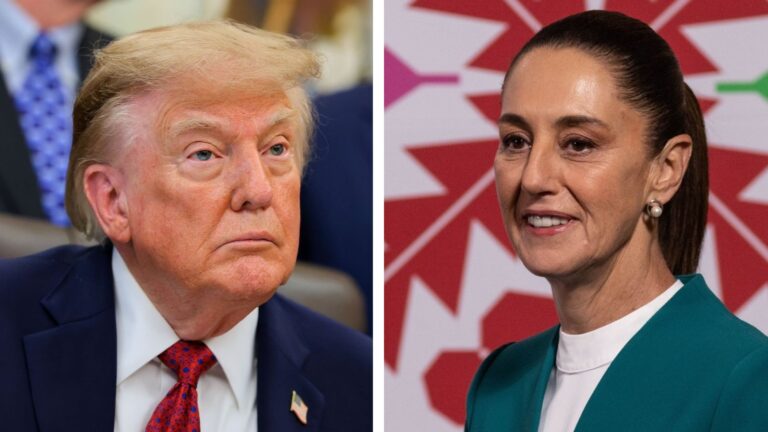
One of North America’s most consequential trade negotiations played out far from the continent this week. On November 18, U.S. President Donald Trump met Mexican President Claudia Sheinbaum in Shenzhen, China, shortly after Canada and Mexico reaffirmed their commitment to renewing the Canada–United States–Mexico Agreement (CUSMA).
Trump also held a separate meeting with Canadian Prime Minister Mark Carney, bringing all three leaders into direct discussions during the Asia-Pacific Economic Cooperation (APEC) summit.
The encounters came four months after Washington declined to extend the agreement under its existing terms. Although CUSMA remains in force, its long-term future is uncertain. For manufacturers, agricultural exporters and businesses operating across North America, the outcome could shape investment decisions, employment and supply chains for years to come.
Trump and Sheinbaum Meet Privately in China
Trump Holds Separate Meeting With Mexico’s Sheinbaum as Canada and Mexico Push to Renew CUSMA
- Trump and Sheinbaum Meet Privately in China
- Sheinbaum Signals Progress in Negotiations With Washington
- Canada and Mexico Present a United Front on CUSMA
- Trump Also Holds Separate Talks With Canadian Prime Minister Carney
- Washington’s July Decision Changed the Future of the Agreement
- Separate Negotiations Create Challenges for a Three-Country Deal
- Mexico Seeks Relief From Tariffs on Steel, Aluminum and Automobiles
- Automotive Supply Chains Are at the Centre of the Trade Debate
- Canadian Manufacturing Jobs Remain a Major Concern
- Canada–Mexico Trade Growth Strengthens Their Economic Partnership
- Growing Trade With China Adds Another Layer to Negotiations
- The Next Steps Could Determine CUSMA’s Long-Term Future
Trump and Sheinbaum met on Wednesday, November 18, at The Langham Shenzhen, where the U.S. president was staying during the APEC gathering. Sheinbaum arrived with Economy Secretary Marcelo Ebrard and Foreign Secretary Roberto Velasco for a closed-door discussion that she later said lasted approximately 20 minutes. The meeting was more substantial than the brief greeting she had anticipated earlier in the week, although neither government presented it as a formal negotiating breakthrough. Its location in a major Chinese technology hub added an unusual backdrop to an increasingly important North American trade conversation.
Both presidents had maintained contact through repeated telephone conversations, but their face-to-face encounters had been less frequent. The opportunity to speak directly mattered because their administrations are navigating disputes involving trade, tariffs and border policies simultaneously. For Mexico, bringing its chief economic negotiator into the room ensured that ongoing discussions could be addressed at the highest political level. Nevertheless, no immediate tariff reductions or agreement extending CUSMA were announced.
Sheinbaum Signals Progress in Negotiations With Washington
Following the meeting, Sheinbaum characterized her conversation with Trump positively and indicated that negotiations between Mexico and the United States were significantly advanced. She explained that Trump had received an update on discussions conducted by Ebrard and his American counterparts. The Mexican president described the negotiations as being “very far along,” suggesting that months of technical discussions had produced meaningful progress. Her comments offered encouragement to businesses hoping for relief from the uncertainty surrounding North American trade, particularly manufacturers exposed to American tariffs.
However, diplomatic optimism should not be confused with a completed agreement. Sheinbaum did not announce specific concessions, a tariff reduction or a definitive timeline for renewing the trade pact. Mexico’s immediate objectives remain closely connected to existing American trade restrictions, while Washington continues to seek changes to the broader commercial relationship. For companies making decisions about factories, equipment and hiring, the distinction matters. Encouraging statements can improve expectations, but businesses ultimately need enforceable rules and predictable costs before committing substantial investments.
Canada and Mexico Present a United Front on CUSMA
One day before Sheinbaum met Trump, she held talks with Canadian Prime Minister Mark Carney on November 17 in Shenzhen. The two leaders reaffirmed their commitment to renewing CUSMA, demonstrating that Ottawa and Mexico City share a fundamental objective despite facing different challenges in negotiations with Washington. Their discussions also emphasized stronger bilateral trade, investment and cooperation on supply chains. The meeting reinforced the importance both governments attach to preserving a regional economic framework rather than allowing the North American trading relationship to become entirely fragmented.
The discussions carried particular significance because Canada and Mexico have been strengthening their own economic partnership. During Carney’s visit to Mexico in 2025, the two governments launched a Comprehensive Strategic Partnership intended to expand cooperation beyond their traditional trade arrangements. Their latest meeting highlighted progress under that initiative and a shared interest in making North American supply chains more competitive. Although neither leader can guarantee American approval, their coordinated position gives both governments a clearer foundation for continued negotiations.
Trump Also Holds Separate Talks With Canadian Prime Minister Carney
Trump’s meeting with Sheinbaum was not his only North American diplomatic engagement in Shenzhen. On November 18, the American president also met separately with Carney for a conversation lasting just under 20 minutes. The Canadian delegation included Foreign Affairs Minister Anita Anand and Carney’s chief of staff, Marc-André Blanchard. On the American side, participants included U.S. Trade Representative Jamieson Greer, Commerce Secretary Howard Lutnick, Secretary of State Marco Rubio and senior White House official Stephen Miller. The involvement of key trade policymakers underscored the importance of the discussions.
According to the Canadian government’s official account, Carney and Trump discussed efforts to reach a mutually beneficial trade arrangement that would support jobs, affordability and Canadian sovereignty. Both agreed to continue discussions and remain in contact. The meeting was significant because it provided another opportunity for direct engagement during a difficult period in Canada–U.S. relations. However, Ottawa did not announce a new trade agreement or resolution of outstanding tariff disputes, leaving the substantive negotiations unfinished.
Washington’s July Decision Changed the Future of the Agreement
The uncertainty surrounding CUSMA dates back to July 1, 2026, when the three countries conducted the agreement’s first mandatory six-year review. The treaty originally entered into force on July 1, 2020, replacing the North American Free Trade Agreement. Canada and Mexico supported extending the agreement, but the Trump administration declined to renew it under the existing terms. U.S. Trade Representative Jamieson Greer argued that unresolved problems, including trade imbalances and shortcomings in the agreement, required further negotiations before Washington could support an extension.
Importantly, the American decision did not terminate CUSMA. Under Article 34.7, the agreement remains scheduled to operate until July 2036, with annual reviews required until all three governments agree to extend it or the treaty expires. A unanimous decision could extend the arrangement for another 16-year period. This creates an unusual situation: businesses can continue operating under the agreement, but cannot assume that its long-term rules will remain unchanged. That uncertainty complicates decisions involving investments expected to generate returns over decades.
Separate Negotiations Create Challenges for a Three-Country Deal
Although Canada and Mexico are united in supporting CUSMA’s renewal, Washington has increasingly pursued separate negotiations with its two neighbours. The American government argues that different trade concerns require different solutions. Mexico’s discussions have concentrated on subjects including automotive content, customs enforcement and the movement of goods from outside North America. Canada’s priorities include tariff relief, market access and protection for major domestic industries. Reuters reported in July that Mexico’s negotiations were considerably more advanced than Canada’s discussions at that stage.
This approach carries potential consequences for the entire trading region. An arrangement negotiated between Washington and Mexico could establish expectations that Canada might later face pressure to accept. Conversely, concessions negotiated by Canada could influence American demands toward Mexico. Former Mexican trade negotiators have warned about the difficulty of keeping these separate processes aligned with a trilateral agreement. North America’s economic integration depends on common rules, making coordination especially important. The challenge is allowing each government to address its national concerns without undermining the shared framework that businesses rely upon.
Mexico Seeks Relief From Tariffs on Steel, Aluminum and Automobiles
One of Mexico’s most immediate objectives is reducing American tariffs affecting steel, aluminum and automotive products. Deputy Economy Minister for Foreign Trade Luis Rosendo Gutiérrez identified relief from tariffs imposed under Section 232 of U.S. trade law as a priority shortly before the Shenzhen meeting. According to the Mexican official, approximately 80% of the country’s exports to the United States already enter without tariffs. Nevertheless, the remaining restrictions affect industries that depend heavily on reliable cross-border access, making targeted tariff relief economically important even without a complete overhaul of CUSMA.
The scale of the relationship explains the urgency. Reuters reported that Mexico and the United States exchanged approximately US$779 billion in goods during the first nine months of 2026. Automotive manufacturers, component suppliers and metal producers form an important part of this commercial relationship. Higher trade costs can affect production planning, supplier contracts and decisions about where new factories should be established. For Sheinbaum’s government, obtaining reductions in sectoral tariffs could provide a meaningful result while more complicated questions about the agreement’s future continue through separate negotiations.
Automotive Supply Chains Are at the Centre of the Trade Debate
Few industries illustrate North America’s economic integration as clearly as automotive manufacturing. Under CUSMA’s rules of origin, passenger vehicles and light trucks generally require at least 75% regional value content, calculated using the net-cost method, to qualify for preferential treatment. The agreement also includes requirements involving North American steel and aluminum purchases and labour conditions. For automakers, these provisions influence where engines, transmissions, electronics and other components are produced. A vehicle assembled in one country can depend on parts manufactured in facilities spread across the entire continent.
The rules are particularly important because meeting them involves detailed supplier documentation and production planning. CUSMA generally requires qualifying vehicle producers to source at least 70% of their steel and aluminum purchases by value from North America. Additional labour-value rules require specified portions of vehicle production to occur in higher-wage facilities. Changes to these requirements could alter manufacturing costs and investment strategies. For workers in Canadian assembly plants, American parts factories and Mexican manufacturing facilities, seemingly technical negotiations can ultimately influence which communities receive future production commitments.
Canadian Manufacturing Jobs Remain a Major Concern
In Canada, the trade dispute reaches directly into communities where manufacturing paycheques support families and local businesses. Statistics Canada estimated that U.S. demand accounted for approximately 27,000 jobs and 76.4% of payroll employment in Canadian automobile and light-duty vehicle manufacturing in 2024. The agency also recorded a 9.3% decline in motor vehicle parts manufacturing employment between December 2024 and December 2025, alongside a 1.3% decrease in motor vehicle manufacturing employment. These figures illustrate the sector’s dependence on cross-border commerce and the importance of protecting existing production networks.
Ottawa has identified American tariffs on steel, aluminum, automobiles and lumber as major negotiating priorities. Statistics Canada’s first-quarter 2026 business survey found that 50.6% of manufacturing businesses reported negative effects from U.S. tariffs over the preceding year. Tariffs are not responsible for every decline in employment or production, but they create additional pressures for companies already managing changing market conditions. For suppliers, factory employees and surrounding communities, predictable trade arrangements are essential to supporting long-term investments and stable employment.
Canada–Mexico Trade Growth Strengthens Their Economic Partnership
Despite uncertainty involving Washington, Canada and Mexico have been expanding their own economic relationship. During their November 17 meeting, Carney and Sheinbaum highlighted a 19% increase in merchandise trade between their countries during the first nine months of 2026 compared with the equivalent period in 2025. Their governments also welcomed nearly $1 billion in Mexican investments in Canadian mining and food production, alongside more than $3.7 billion in Canadian investments in Mexican manufacturing, renewable energy and mining. The figures illustrate a bilateral relationship that extends well beyond traditional automotive trade.
The leaders also reviewed progress under the Canada–Mexico Action Plan, which has generated more than 130 initiatives across its four areas of cooperation. Trade missions organized in both countries produced over 3,700 business-to-business meetings and more than 100 commercial agreements and new partnerships. These developments provide opportunities for companies seeking additional customers, suppliers and investment destinations. However, stronger bilateral ties cannot fully replace access to the much larger American market. Instead, they give Canada and Mexico another reason to cooperate while defending the broader North American trading framework.
Growing Trade With China Adds Another Layer to Negotiations
The Shenzhen meetings unfolded against a broader shift in Canada’s and Mexico’s economic relationships with China. Carney met Chinese President Xi Jinping on November 17 and secured additional tariff relief covering approximately C$400 million in Canadian exports, including certain pork and seafood products. In exchange, Canada agreed to extend exemptions for selected Chinese steel and aluminum products. Carney subsequently argued that Canada’s growing trade relationship with Beijing was not among Trump’s highest priorities, although White House trade adviser Peter Navarro had publicly criticized suggestions that Canada might consider Chinese automakers as alternatives to North American production.
Mexico faces its own balancing act. American officials have raised concerns about Asian products potentially entering the U.S. market through Mexico while benefiting from North American trade preferences. Mexican authorities have responded by tightening controls on steel imports and tracing the origins of shipments. In November, a senior Mexican trade official reported that approximately 1,100 mill registrations had been cancelled following enforcement reviews. The challenge for both Canada and Mexico is expanding international opportunities without creating additional disputes with their largest trading partner.
The Next Steps Could Determine CUSMA’s Long-Term Future
The diplomatic meetings in Shenzhen provided encouraging signals, but the most consequential decisions remain unresolved. Sheinbaum said she expected to meet Trump again during the G20 Leaders’ Summit in Miami in December 2026, creating another potential opportunity to advance bilateral negotiations. Meanwhile, American officials are continuing preparations for the next formal CUSMA review. The Office of the U.S. Trade Representative has opened a public consultation process for the 2027 review, with written comments due January 12, 2027. The process gives businesses and other interested parties an opportunity to present their concerns.
For Canada and Mexico, the immediate challenge is maintaining momentum while avoiding agreements that weaken their negotiating positions. Washington must decide which changes would satisfy its objections to extending CUSMA. Until all three governments reach an understanding, the existing agreement remains operational, but its long-term future is unsettled. The Shenzhen meetings demonstrated that direct political communication continues despite disagreements. Whether those conversations lead to tariff relief, revised trade provisions or a renewed 16-year commitment will determine how much certainty North American businesses can expect in the years ahead.
This Options Discord Chat is The Real Deal
While the internet is scoured with trading chat rooms, many of which even charge upwards of thousands of dollars to join, this smaller options trading discord chatroom is the real deal and actually providing valuable trade setups, education, and community without the noise and spam of the larger more expensive rooms. With a incredibly low-cost monthly fee, Options Trading Club (click here to see their reviews) requires an application to join ensuring that every member is dedicated and serious about taking their trading to the next level. If you are looking for a change in your trading strategies, then click here to apply for a membership.