35,000+ smart investors are already getting financial news, market signals, and macro shifts in the economy that could impact their money next with our FREE weekly newsletter. Get ahead of what the crowd finds out too late. Click Here to Subscribe for FREE.
Canada is opening the door to closer trade relations with China, but Foreign Affairs Minister Anita Anand says protecting the country’s existing automotive industry must come first.
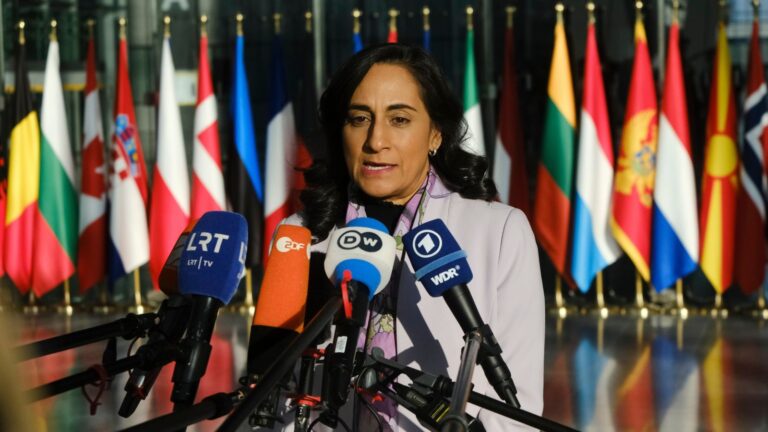
Speaking to Reuters during the Asia-Pacific Economic Cooperation (APEC) gathering in Shenzhen on November 18, 2026, Anand emphasized the importance of maintaining a strong Canadian manufacturing base as Prime Minister Mark Carney pursues new economic opportunities with Beijing.
The challenge is considerable. More than 90% of Canadian-made vehicles are exported to the United States, where President Donald Trump’s tariffs have unsettled long-established supply chains. Meanwhile, Ottawa’s agreement to admit a limited number of lower-tariff Chinese electric vehicles is creating new opportunities and concerns about domestic employment, competition, and investment.
Anand Makes Canadian Auto Manufacturing the Top Priority
Anand Says Protecting Canadian Auto Manufacturing Is Ottawa’s ‘First Priority’ as China EV Ties Grow
- Anand Makes Canadian Auto Manufacturing the Top Priority
- Why Canada’s Automotive Industry Still Depends Heavily on the United States
- Ottawa’s 49,000-Vehicle Limit Is Designed to Protect Domestic Production
- Lower-Cost Chinese EVs Are Beginning to Enter Canada’s Market
- Carney Wants Chinese Investment to Create Canadian Manufacturing Jobs
- The China Trade Reset Extends Far Beyond Electric Vehicles
- Trump’s Tariffs Are Increasing the Pressure on Canadian Assembly Plants
- Ontario and Auto Workers Are Warning About Chinese Competition
- Anand Wants a Cautious Reset That Does Not Compromise Canadian Interests
- Canada’s Next Challenge Is Turning Trade Promises Into Manufacturing Results
Foreign Affairs Minister Anita Anand has drawn a clear distinction between expanding Canada’s relationship with China and protecting the automotive industry that already supports hundreds of thousands of Canadian workers. During a November 18 interview with Reuters in Shenzhen, Anand described maintaining a strong domestic auto manufacturing system as Ottawa’s “first priority.” Her comments came as the Carney government sought to rebuild economic relations with Beijing while navigating mounting trade pressure from Washington. The message was that pursuing new partnerships would not mean abandoning existing manufacturing commitments.
Anand also emphasized that Canada would maintain safeguards when considering Chinese investment in automotive manufacturing and energy. Rather than treating Chinese automakers as an immediate replacement for established North American manufacturers, Ottawa wants to preserve the production networks connecting Canadian factories with American customers and suppliers. Anand identified easier access to the U.S. market for Canadian vehicles and reduced tariff-related disruptions as essential objectives. Her position reflects a fundamental economic concern: attracting foreign capital offers little long-term benefit if existing factories lose production, workers face layoffs, and Canadian suppliers become less competitive.
Why Canada’s Automotive Industry Still Depends Heavily on the United States
Canada’s automotive industry is deeply connected to the American economy, making any significant change in trade policy particularly consequential. Federal government figures show that more than 90% of Canadian-made vehicles and approximately 60% of Canadian-made auto parts are exported to the United States. The industry supports more than 500,000 workers across manufacturing and related activities, including roughly 125,000 direct automotive manufacturing jobs. In 2025, Canada produced more than 1.2 million passenger vehicles, demonstrating the scale of an industry that remains central to manufacturing communities, particularly in Ontario.
The dependence extends beyond vehicle sales. Statistics Canada found that U.S. demand accounted for approximately 76.4% of employment in Canada’s automobile and light-duty vehicle manufacturing industry in 2024. That relationship helps explain why changes in American tariffs, vehicle assembly schedules, or sourcing decisions can have consequences far beyond individual factories. A reduction in production can affect parts suppliers, transportation companies, equipment manufacturers, and surrounding businesses. For Ottawa, preserving access to the American market is therefore not simply about protecting exports. It is about safeguarding an interconnected industrial ecosystem that cannot be redirected toward other markets overnight.
Ottawa’s 49,000-Vehicle Limit Is Designed to Protect Domestic Production
Canada’s decision to reopen its market to Chinese electric vehicles represents a significant change from the protectionist measures introduced in 2024. The previous government imposed a 100% surtax on Chinese-made EVs, substantially increasing their cost of entering the Canadian market. Under the January 2026 agreement negotiated by Carney’s government, that surtax was removed, and an initial annual quota of 49,000 vehicles was established at the standard 6.1% most-favoured-nation tariff rate. The new arrangement took effect on March 1, creating a controlled pathway for Chinese-built vehicles rather than unrestricted market access.
Ottawa argues that the quota helps balance affordability with industrial protection because its initial volume represents less than 3% of Canada’s annual new-vehicle market. Importers must obtain shipment-specific permits, and the government stops issuing permits once the annual allocation has been exhausted. The arrangement also provides a degree of predictability for manufacturers planning future investments. However, the quota is scheduled to increase by 6.5% annually, meaning competition could gradually intensify. Whether the policy ultimately strengthens Canadian manufacturing will depend on how much domestic production and investment accompanies those additional imports.
Lower-Cost Chinese EVs Are Beginning to Enter Canada’s Market
Canada’s evolving trade relationship with China is already producing measurable changes in vehicle imports. According to a November 16 update from Global Affairs Canada, 16,211 vehicles had entered the country under the new quota since March, with approximately half carrying an import value below $35,000. The government also confirmed that a second China-based automaker had satisfied Transport Canada’s requirements and begun importing vehicles in November. Its expected import price was below $35,000, although Ottawa did not identify the manufacturer or provide confirmed Canadian dealership prices. The development suggests that the policy is beginning to broaden access beyond established import channels.
Affordable electric vehicles could appeal to Canadian households concerned about high purchase prices, particularly those considering their first EV. However, a vehicle’s declared import value is not necessarily its final retail price. Transportation, distribution, dealership expenses, and applicable taxes can affect what consumers ultimately pay. There is also an important distinction involving federal incentives: Canada’s 2026 Electric Vehicle Affordability Program generally requires eligible vehicles to be manufactured in Canada or a country with which Canada has a free-trade agreement. The lower import tariff therefore does not automatically qualify Chinese-built models for the federal purchase incentive.
Carney Wants Chinese Investment to Create Canadian Manufacturing Jobs
Prime Minister Mark Carney has argued that attracting international automotive investment must involve more than allowing foreign manufacturers to sell vehicles in Canada. During remarks in Cambodia on November 16, Carney said Chinese, European, and Japanese automakers could become alternative partners if negotiations with Washington failed to preserve Canada’s position in North American vehicle production. He emphasized that prospective Chinese investments would need to involve meaningful manufacturing activity within Canada, rather than simply assembling vehicles from imported components. The government also wants projects to support Canadian workers, strengthen domestic supply chains, and incorporate Canadian critical minerals.
That approach could create opportunities for communities already experienced in automotive production, including places with established assembly facilities, skilled tradespeople, and extensive supplier networks. Canada has invested heavily in developing battery manufacturing capabilities, making potential partnerships in vehicle assembly, battery materials, and component production particularly relevant. Still, there is an important distinction between investment expectations and completed commitments. Ottawa has expressed confidence that its agreement with Beijing will encourage Chinese joint ventures with trusted partners, but projected investment should not be confused with independently confirmed factory construction or guaranteed employment. For workers, the critical test will be whether diplomatic announcements eventually become production contracts, operating facilities, and sustained jobs.
The China Trade Reset Extends Far Beyond Electric Vehicles
The automotive agreement is one part of a broader effort to improve Canada’s economic relationship with China after years of diplomatic and commercial tensions. During Carney’s November 17 meeting with Chinese President Xi Jinping, the two countries agreed to expand tariff relief covering approximately $400 million in Canadian exports, including frozen pork and several seafood products. The agreement builds on earlier measures reducing Chinese trade barriers affecting Canadian canola, peas, lobster, and crab. Government figures show Canadian canola seed exports to China reached $1.74 billion between March and August 2026, representing a 43% increase compared with the same period in 2025.
For Canadian farmers and seafood producers, improvements in market access can translate into additional orders and greater certainty when planning production. Ottawa has also secured extensions of certain tariff exemptions through the end of 2028, while agreeing to continue relief for selected Chinese steel and aluminum products where Canadian supplies are insufficient or unavailable. The government wants to increase exports to China by 50% by 2030, reflecting its determination to reduce dependence on a single trading partner. However, Anand’s position makes clear that expanding agricultural and energy trade does not automatically justify unlimited access for Chinese automakers. The government is attempting to separate commercial opportunities from areas requiring stronger industrial protections.
Trump’s Tariffs Are Increasing the Pressure on Canadian Assembly Plants
The urgency behind Anand’s comments becomes clearer when examining the continuing impact of American trade restrictions. Since April 2025, Canadian-built vehicles have faced a 25% U.S. tariff on their non-American content, with special treatment for vehicles meeting Canada–United States–Mexico Agreement requirements. The restrictions have complicated production decisions for manufacturers operating integrated North American supply chains. On November 18, Carney met Trump in Shenzhen to discuss a potential trade agreement. Although both leaders agreed to continue negotiations, no new tariff agreement was announced, leaving Canadian manufacturers facing continued uncertainty.
The dispute involving Stellantis illustrates how serious that uncertainty has become. The automaker shifted planned Jeep Compass production from Brampton, Ontario, to Illinois and subsequently signed an agreement to sell its idled Brampton assembly plant to Canadian defence manufacturer Roshel. On November 12, Industry Minister Mélanie Joly issued a formal notice alleging Stellantis had breached obligations under a 2022 federal funding agreement, giving the company 30 days to address the government’s concerns. Ottawa had originally committed up to $529 million in federal support to help retool Stellantis facilities in Brampton and Windsor. For workers who expected new vehicle production, the dispute demonstrates how quickly international investment decisions can reshape employment prospects in a manufacturing community.
Ontario and Auto Workers Are Warning About Chinese Competition
Not everyone agrees that allowing more Chinese-built electric vehicles into Canada represents a sensible response to American trade pressure. Ontario Premier Doug Ford has repeatedly warned that lower-priced Chinese imports could threaten domestic manufacturing jobs and complicate Canada’s relationship with the United States. Following Carney’s November comments about potential Chinese automotive partnerships, Ford argued that Ottawa should prioritize existing Canadian auto workers rather than expand access for vehicles benefiting from Chinese state support. His concerns reflect the importance of automotive assembly and parts manufacturing to Ontario’s industrial economy.
Canada’s largest private-sector union, Unifor, has also been outspoken about the agreement. In January, members of Unifor Local 222 in Oshawa unanimously supported a motion opposing Chinese-owned EV imports that could undermine Canadian employment. Union president Lana Payne has consistently argued that automakers seeking access to Canadian consumers should also contribute to Canadian production. The union’s concerns extend beyond vehicle assembly to domestic parts suppliers, labour standards, and long-term investment incentives. Ottawa maintains that its controlled import quota limits the potential disruption, but industry representatives question whether anticipated Chinese investments will materialize quickly enough to offset competitive pressures. The disagreement reveals a genuine policy trade-off between expanding consumer choice and preserving Canada’s established industrial capacity.
Anand Wants a Cautious Reset That Does Not Compromise Canadian Interests
Anand has described Canada’s renewed engagement with China as a gradual process that recognizes both economic opportunities and longstanding concerns. Relations deteriorated significantly after the 2018 detention of two Canadians in China, which followed the arrest of a Huawei executive in Canada on an American warrant. Although the individuals were released in 2021, diplomatic tensions and allegations of foreign interference have continued to influence political debate. Against that background, the Carney government is pursuing targeted commercial arrangements rather than a comprehensive free trade agreement with Beijing. Anand has emphasized that greater cooperation must be accompanied by safeguards protecting Canadian interests.
Those safeguards are particularly relevant to modern vehicles, which increasingly rely on connected software, sensors, and extensive data collection. Briefing materials from the Office of the Privacy Commissioner of Canada identify potential privacy and cybersecurity concerns involving connected vehicles, including questions about where personal information is stored and whether foreign authorities could gain access. The commissioner’s office notes that these risks are not exclusive to Chinese-made vehicles. Consequently, attracting international automotive investment involves considerations beyond manufacturing costs and employment. Ottawa must also address vehicle security, data governance, compliance with Canadian standards, and the implications of foreign ownership. For Anand, closer economic relations with Beijing will be more politically sustainable if Canadians see evidence that these concerns are being taken seriously.
Canada’s Next Challenge Is Turning Trade Promises Into Manufacturing Results
The coming years will provide a clearer picture of whether Ottawa’s China strategy can deliver its promised economic benefits. Under the current arrangement, 10% of the Chinese vehicle import quota will be reserved for lower-priced vehicles beginning in 2027, increasing to 50% by 2030. The overall quota is scheduled to expand annually, while the agreement provides for a review before the end of its third year. That review will offer an opportunity to assess whether expected investment and employment benefits have emerged. Canada and China may consider adjustments if the anticipated results fall short, subject to mutual agreement.
Meanwhile, Ottawa is pursuing a broader automotive strategy that includes up to $3 billion from the Strategic Response Fund for manufacturing investment and up to $100 million through a regional initiative supporting affected automotive businesses. These measures reflect the government’s recognition that tariff policy alone cannot secure Canada’s manufacturing future. Meaningful success would require substantial Canadian production, competitive suppliers, skilled employment, and reliable export access. For Anand and Carney, the challenge is to demonstrate that a stronger relationship with China can complement rather than undermine the country’s established automotive industry. Until investment commitments become operating factories and sustained employment, protecting Canada’s existing manufacturing capacity will remain the clearest test of Ottawa’s stated priorities.
This Options Discord Chat is The Real Deal
While the internet is scoured with trading chat rooms, many of which even charge upwards of thousands of dollars to join, this smaller options trading discord chatroom is the real deal and actually providing valuable trade setups, education, and community without the noise and spam of the larger more expensive rooms. With a incredibly low-cost monthly fee, Options Trading Club (click here to see their reviews) requires an application to join ensuring that every member is dedicated and serious about taking their trading to the next level. If you are looking for a change in your trading strategies, then click here to apply for a membership.