35,000+ smart investors are already getting financial news, market signals, and macro shifts in the economy that could impact their money next with our FREE weekly newsletter. Get ahead of what the crowd finds out too late. Click Here to Subscribe for FREE.
A train journey from Canada to the United States could involve more advance government screening under new rules proposed by the Trump administration. U.S. Customs and Border Protection wants railway operators to submit detailed passenger information electronically before trains cross the border, expanding a system that currently relies partly on voluntary reporting.
Published on October 13, 2026, the proposal would cover Canadians travelling south and passengers returning north, including those using popular services connecting Toronto, Montréal and Vancouver with American cities.
Washington says earlier screening could improve security and reduce border delays. However, the proposed requirements also raise questions about personal information, booking procedures and how rail operators would manage last-minute changes.
The measures are not yet law, and public comments remain open until December 14.
Washington Wants Passenger Details Before Trains Reach the Border
Trump Administration Proposes New Passenger Data Rules for Canadians Crossing the U.S. Border by Train
- Washington Wants Passenger Details Before Trains Reach the Border
- Passengers Could Have More Personal Information Shared With U.S. Officials
- Two Different Deadlines Would Apply to Trains and Travellers
- Toronto, Montréal and Vancouver Train Services Would Be Affected
- The Requirements Would Apply in Both Directions
- Advance Screening Could Affect Boarding Decisions
- Privacy Questions Accompany the Expanded Information Collection
- U.S. Officials Predict Shorter Border Delays
- Rail Operators Would Face Additional Reporting Responsibilities
- The Public Has Until December to Respond
The U.S. Department of Homeland Security has proposed a regulatory overhaul called Advance Traveler Information for Rail. The 32-page notice, published in the Federal Register on October 13, would require rail companies operating international services to send electronic information about passengers and crew members to U.S. Customs and Border Protection (CBP). The requirement would cover trains entering or leaving the United States, rather than focusing exclusively on Canadian travellers.
The proposal addresses what American border officials describe as a longstanding gap in railway security. Unlike commercial airlines and many vessels, international trains have not been subject to a comprehensive mandatory advance passenger-reporting system. CBP has operated a voluntary rail program since 2005, but participation remains limited. The administration argues that standardized information would allow officers to identify potential problems before a train arrives, rather than waiting until passengers reach an inspection point. The announcement marks the beginning of a formal rulemaking process, not an immediate change to every cross-border train ticket.
Under the proposal, rail operators would transmit up to 20 categories of passenger information, with several fields applying only when relevant or available. These include a traveller’s full name, date of birth, sex, citizenship, country of residence and details of an approved travel document. CBP also wants the passenger’s complete itinerary, including departure and destination stations, and an address in the United States unless the person is travelling through to another country. Seat assignments, baggage tags and reservation reference numbers would be included when available.
Rail companies would also have to request an email address and telephone number, including the country code. Importantly, the proposal says these contact details need not be transmitted if the traveller does not provide them. Some information is already familiar to passengers: Amtrak currently requests birth dates, citizenship details and identification information when international reservations are made. The distinction is that the proposed regulation would make a broader set of government transmissions mandatory and consistent across operators, rather than relying on existing individual practices.
Two Different Deadlines Would Apply to Trains and Travellers
One potentially confusing feature of the proposal involves its two reporting deadlines. Rail companies would have to submit information about the train itself at least 24 hours before its scheduled arrival at the U.S. border crossing. That notice would identify the operator, train number, scheduled stops, destination, estimated border arrival and emergency contact information. It would effectively give border officials advance notice of which trains are approaching, separate from identifying the people travelling on them.
The passenger and crew information would follow a different timetable. Carriers would generally have to send those records no later than 60 minutes before the train leaves its final station or stop before crossing the U.S. border. This does not mean every passenger would automatically need to arrive at the station 24 hours early. Operators would also need to submit updates when passengers board, disembark or change relevant information. A change of 30 minutes or more in the estimated border arrival would trigger an additional requirement for the carrier to contact CBP about inspection availability.
Toronto, Montréal and Vancouver Train Services Would Be Affected
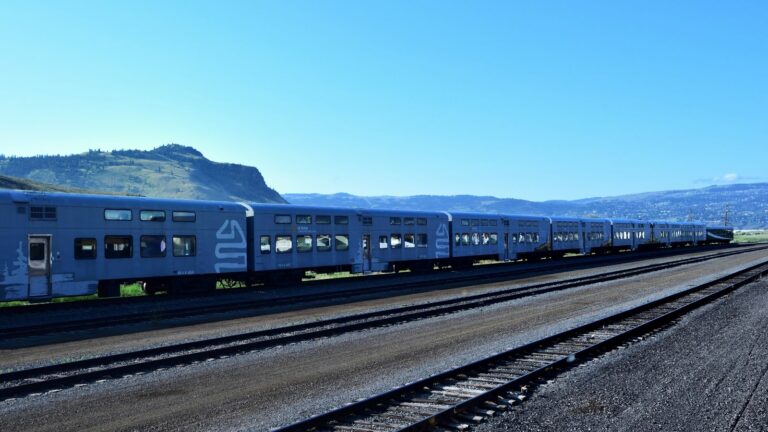
For Canadians, the changes would be most noticeable on established international passenger routes. The Maple Leaf connects Toronto with New York City through Niagara Falls and Buffalo. The Adirondack links Montréal and New York through upstate New York, while Amtrak Cascades runs between Vancouver and Pacific Northwest destinations including Seattle and Portland. These services serve a mix of holidaymakers, families and business travellers, many of whom choose rail for its city-centre stations and relaxed travel experience.
Border procedures already differ by route. On the Toronto–New York service, passengers undergo inspection at Niagara Falls and must leave the train with their baggage before boarding again. Vancouver gained North America’s first passenger-rail U.S. preclearance facility in June 2026, allowing travellers to complete U.S. customs processing at Pacific Central Station before departure. The proposed electronic reporting requirements would add a standardized data layer to these existing arrangements. They would not eliminate the need for inspections or guarantee identical procedures at every crossing.
The Requirements Would Apply in Both Directions
The rules are broader than their Canadian travel implications might initially suggest. CBP proposes collecting passenger and crew records for trains entering the United States and for those departing toward Canada or Mexico. The proposal also covers trains that cross U.S. territory while travelling between other destinations. Its definition of a traveller includes conductors, engineers and other crew members, meaning the requirements extend beyond paying passengers in ordinary railway coaches.
Even freight operators would have obligations because workers travelling aboard international cargo trains would fall within the reporting framework. The proposal includes a narrow exemption for active-duty U.S. military personnel travelling under orders on military-chartered trains. It would not apply to an ordinary domestic train journey that never crosses the international border. For a Canadian returning home from New York, however, the U.S. reporting process would still be relevant on the northbound leg. These requirements concern information supplied to American authorities; they do not establish a separate new Canadian entry system.
Advance Screening Could Affect Boarding Decisions
The proposed system would allow American border officers to examine electronic passenger records before a train approaches the frontier. After receiving information, CBP would send the railway operator a response confirming that the transmission was accepted or instructing the carrier to contact officials. A request to call could arise because a traveller’s information requires additional review. Officers and the company could then check whether a name, document number or other detail had been entered incorrectly.
If unresolved concerns involve security, immigration, customs enforcement or outstanding warrants, CBP could recommend that a passenger not be allowed to board. The proposed rule specifies that the railway operator would retain authority over whom it transports. That distinction matters because a screening alert is not necessarily proof of wrongdoing. A typographical error or outdated record could require clarification, potentially affecting someone whose travel documents are otherwise valid. Carriers would also be responsible for comparing passengers’ identification documents with submitted records. For travellers, accuracy during booking could become even more important.
Privacy Questions Accompany the Expanded Information Collection
Collecting more data before a border crossing creates an understandable privacy concern. A passenger record could combine identity-document details, residential information, travel plans, seat assignments and contact information in one government screening process. Some of those details are already collected for international travel, but mandatory transmission raises questions about retention, access and how information may be used after a journey ends. A traveller heading to visit family may reasonably want to know how long such a record remains available.
CBP states that information gathered under the proposed rule would be retained in accordance with the U.S. Privacy Act of 1974. If the regulation is finalized, the agency says it will issue or update necessary privacy impact assessments and official records notices explaining its compliance arrangements. The proposal itself does not establish a new, clearly specified retention period for every requested data field. That leaves room for public scrutiny of safeguards and accountability. The central policy question is how to obtain useful security information without collecting or retaining more personal detail than necessary.
U.S. Officials Predict Shorter Border Delays
The administration argues that advance screening could make railway travel smoother, not merely more heavily monitored. Under current procedures, passenger trains entering the United States may undergo significant inspection-related waiting. CBP estimates that advance manifest processing could save approximately 30 minutes per passenger train at the border compared with a situation without advance reporting. For someone making a long Toronto–New York journey, half an hour could make a meaningful difference, particularly when arranging onward transportation or meeting relatives.
CBP’s economic analysis estimates annualized passenger time-saving benefits of approximately US$8.17 million under its modelling assumptions. Those are projected benefits, not verified savings achieved under the proposed rule. The agency based its calculations partly on historical border-crossing figures and assumed no traffic growth in its forecast. It also acknowledged that security benefits could not be reliably assigned a dollar value. Real-world results would depend on staffing, network reliability, train operations and how effectively early screening replaces work otherwise performed at the crossing.
Rail Operators Would Face Additional Reporting Responsibilities
For railway companies, complying with the proposed system would involve more than collecting information when tickets are purchased. Operators would need processes for transmitting train schedules, passenger manifests, crew details and subsequent corrections. CBP estimates roughly 3,497 international passenger-train crossings annually for its regulatory modelling and approximately 70,215 cargo-train crossings. Those are forecasting assumptions, not a count of unique passengers. Together, they illustrate why even relatively small reporting duties can accumulate across the railway industry.
The agency expects rail operators to use certified electronic systems or approved tools such as its existing eAPIS portal. It projects annualized net benefits of approximately US$347,000 for passenger rail carriers, largely reflecting shorter waits, while forecasting annualized net costs of about US$380,000 for cargo rail operators. The proposal also provides for civil penalties and other enforcement consequences for violations, with limited alternatives during unexpected disruptions. These are not automatic fees charged to travellers. They are compliance responsibilities for companies and personnel responsible for submitting information correctly and on time.
The Public Has Until December to Respond
The October 13 notice opened a formal consultation period, with comments due by December 14, 2026. Individuals, rail companies, industry associations and other interested groups can submit feedback through the U.S. federal rulemaking portal using docket number USCBP-2026-0992. CBP is specifically interested in the economic and operational consequences of the proposal, including costs that its preliminary analysis may not fully capture. Submitted comments are generally published publicly, making it important not to include unnecessary sensitive personal information.
For Canadians currently planning train trips, the immediate message is that the new mandatory system has not yet taken effect. Existing railway identification and border requirements still apply. Amtrak advises travellers to carry the original identification document used in their reservation and to follow station-specific arrival instructions. Whether the final regulation changes booking practices, processing times or information-sharing requirements will depend on decisions after the consultation. The outcome could influence how cross-border train journeys operate for years, balancing Washington’s demand for earlier security checks against the convenience and privacy expectations of travellers.
This Options Discord Chat is The Real Deal
While the internet is scoured with trading chat rooms, many of which even charge upwards of thousands of dollars to join, this smaller options trading discord chatroom is the real deal and actually providing valuable trade setups, education, and community without the noise and spam of the larger more expensive rooms. With a incredibly low-cost monthly fee, Options Trading Club (click here to see their reviews) requires an application to join ensuring that every member is dedicated and serious about taking their trading to the next level. If you are looking for a change in your trading strategies, then click here to apply for a membership.