35,000+ smart investors are already getting financial news, market signals, and macro shifts in the economy that could impact their money next with our FREE weekly newsletter. Get ahead of what the crowd finds out too late. Click Here to Subscribe for FREE.
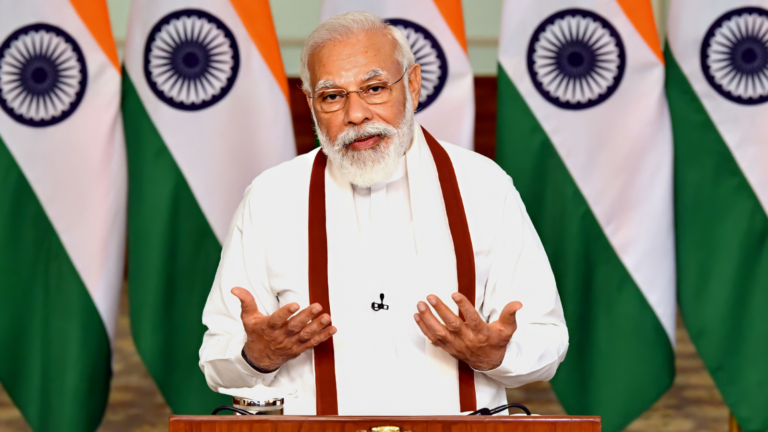
Canada and India are moving toward a major diplomatic milestone after Prime Minister Mark Carney’s office confirmed that Indian Prime Minister Narendra Modi plans to visit Canada in December 2026. The announcement follows an October 13 conversation between the two leaders, who reaffirmed their commitment to completing a comprehensive trade agreement and more than doubling bilateral commerce by 2030.
Ottawa wants annual trade with India to reach C$70 billion, compared with C$30.4 billion in 2025. The renewed push comes as Canada seeks additional trading partners amid ongoing tensions with the United States.
The planned visit marks a remarkable shift from the diplomatic confrontation that disrupted relations just two years earlier. However, negotiations remain unfinished, security concerns persist, and the ambitious trade target will depend on whether political commitments translate into meaningful commercial opportunities.
December Visit Marks Another Step in Canada’s Diplomatic Reset
Modi to Visit Canada in December as Carney Pushes Trade Deal Aimed at Doubling Business With India by 2030
- December Visit Marks Another Step in Canada’s Diplomatic Reset
- Carney Wants Bilateral Trade to Reach C$70 Billion by 2030
- Trade Negotiators Are Racing Toward a Year-End Agreement
- Nearly 300 Canadian Delegates Are Already Pursuing Indian Deals
- A C$2.6-Billion Uranium Agreement Shows What Cooperation Can Deliver
- Canadian Farmers Want Better Access to India’s Agricultural Market
- Students and Families Remain Essential to the Economic Relationship
- Artificial Intelligence and Investment Are Becoming Major Priorities
- The Nijjar Dispute Still Casts a Shadow Over the Reset
- Canada’s Push Beyond the U.S. Will Be Tested in December
Modi’s expected December arrival would represent one of the most significant moments in Canada’s effort to rebuild relations with India. On October 13, Carney’s office confirmed that the two prime ministers had spoken about advancing cooperation in trade, energy, artificial intelligence, defence and security. Both governments emphasized the importance of maintaining diplomatic momentum ahead of the visit. Although December has been identified as the expected timeframe, an exact date and detailed itinerary have not been publicly confirmed.
The planned meeting follows a series of diplomatic encounters that began with Modi’s appearance at the G7 summit in Alberta in June 2025. The leaders subsequently met at the G20 summit in Johannesburg that November and again during Carney’s official visit to India in March 2026. That trip was the first bilateral visit to India by a Canadian prime minister since 2018. During the March meetings, Carney formally invited Modi to visit Canada. The December trip would continue this effort to establish a more predictable relationship after years of political tension.
Carney Wants Bilateral Trade to Reach C$70 Billion by 2030
The economic ambition behind the diplomatic reset is substantial. According to Global Affairs Canada, trade in goods and services between Canada and India reached C$30.4 billion in 2025. Both governments now want that figure to climb to C$70 billion annually by 2030. Achieving the target would require more than doubling the value of economic exchanges within five years. The goal includes both merchandise and services, rather than merchandise exports alone, an important distinction when interpreting Canada’s trade statistics.
Canada exported approximately C$3.9 billion in merchandise to India during 2025, including agricultural products, mineral fuels and wood pulp. Imports from India totalled roughly C$9.7 billion, led by precious stones and metals, machinery and pharmaceuticals. Services, including education-related travel, also form an important part of the commercial relationship. The proposed expansion could create opportunities for Canadian producers, Indian manufacturers, technology companies and service providers. However, the C$70-billion figure represents a government objective rather than contracted sales or a guaranteed economic outcome. Reaching it will require stronger demand, investment and market access in both countries.
Trade Negotiators Are Racing Toward a Year-End Agreement
At the centre of the discussions is the proposed Comprehensive Economic Partnership Agreement, commonly called CEPA. The framework is intended to address trade in goods and services, investment, agriculture, digital commerce and other issues affecting businesses operating between the two countries. Negotiations formally advanced following Carney’s March visit, when both governments finalized their terms of reference. By October 13, officials had completed five negotiating rounds, including the latest round held in Ottawa from October 5 to 9.
The deadline is ambitious because trade agreements involve complicated decisions about tariffs, regulatory standards and the treatment of sensitive industries. Canada’s consultations produced 624 submissions from businesses, industry organizations, governments and individuals. Agricultural exporters sought more predictable access to India, while some domestic producers warned against concessions that could undermine protected Canadian sectors. Indian Commerce Minister Piyush Goyal has previously suggested concentrating on areas where the countries can find agreement rather than allowing difficult issues to derail progress. Even if negotiators finish by December, completing the text would not automatically mean the agreement has entered into force. Legal reviews and domestic approval procedures would still matter.
Nearly 300 Canadian Delegates Are Already Pursuing Indian Deals
The diplomatic push is being supported by a major Canadian business delegation. International Trade Minister Maninder Sidhu is leading nearly 300 delegates to India between October 12 and 17, making it Canada’s largest trade mission to the country in more than three decades. The delegation is visiting Mumbai and Bengaluru, where Canadian companies are seeking meetings with Indian customers, investors and industry representatives. Participating sectors include aerospace, clean technology, energy transition, information technology, life sciences and agriculture.
The commercial mission is unfolding alongside high-level political meetings. On October 13, Sidhu met India’s Commerce and Industry Minister Piyush Goyal in New Delhi, their ninth meeting since May 2025. Foreign Affairs Minister Anita Anand is also visiting India this week to advance cooperation on trade, energy, security and people-to-people relations. The activity shows how both governments are attempting to connect diplomatic negotiations with practical business development. For a smaller Canadian technology supplier or food producer, access to Indian decision-makers can provide a starting point. However, introductions and business meetings should not be confused with finalized contracts or guaranteed export growth.
A C$2.6-Billion Uranium Agreement Shows What Cooperation Can Deliver
Energy has already produced one of the most concrete outcomes of the renewed relationship. In March 2026, Saskatoon-based Cameco announced a long-term uranium supply agreement with India’s Department of Atomic Energy. The contract involves nearly 22 million pounds of uranium concentrate over nine years, with deliveries expected between 2027 and 2035. Cameco estimated its value at approximately C$2.6 billion, subject to market-related pricing. India intends to use the material to support civilian nuclear electricity generation as it expands its nuclear power capacity.
The agreement provides a practical example of how Canadian natural resources can support India’s growing energy requirements. Both governments are also exploring additional cooperation involving liquefied natural gas, liquefied petroleum gas, critical minerals and renewable energy technologies. During their March meetings, Carney and Modi welcomed an expanded strategic energy partnership covering these sectors. Importantly, the uranium contract is a concluded commercial arrangement, while several proposed gas and mineral initiatives remain under discussion or development. Future investments will depend on infrastructure, transportation costs and commercial negotiations. For Canadian energy producers, the opportunity is substantial, but securing long-term customers requires more than government support.
Canadian Farmers Want Better Access to India’s Agricultural Market
Agriculture could become one of the most consequential areas of the trade negotiations, particularly for Western Canadian farmers. India is a major consumer of pulses, including lentils and peas, while Saskatchewan is one of the world’s leading pulse-producing regions. Agriculture and Agri-Food Canada reported that Canadian agri-food and seafood exports to India reached approximately C$1.4 billion in 2024. Dried peas accounted for about C$789 million, while dried lentils contributed roughly C$604 million.
Trade barriers remain a significant source of uncertainty for producers. India introduced a 30% import duty on yellow peas in November 2025, reversing an earlier period of duty-free access. Canadian agricultural organizations have also identified fumigation requirements, food safety standards and unpredictable regulatory changes as obstacles. A comprehensive agreement could establish clearer rules, reduce selected tariffs and improve the reliability of export opportunities. However, Canadian negotiators must also consider domestic agricultural protections, including supply management. The negotiations therefore involve difficult trade-offs rather than a simple demand for unrestricted agricultural trade. For producers planning acreage and investments several seasons ahead, predictable market access could be as valuable as a tariff reduction.
Students and Families Remain Essential to the Economic Relationship
Canada’s relationship with India extends far beyond cargo shipments and corporate investments. According to Statistics Canada’s 2021 census, approximately 1.35 million people reported Indian ethnic or cultural origins. Family connections, professional networks and educational relationships link communities across both countries. International education is especially important economically because tuition, accommodation and other spending by students from India contribute to Canadian services exports. These connections have also helped sustain commercial relationships during periods of diplomatic difficulty.
Education cooperation is receiving renewed attention. During Carney’s March visit, the governments welcomed 24 education-related agreements and an arrangement expanding the Mitacs Globalink Research Internship program, potentially enabling approximately 300 Indian undergraduate students annually to undertake research placements at Canadian universities. They also outlined initiatives supporting joint degrees, research exchanges and academic collaboration. Nevertheless, these plans are developing while Canada maintains stricter international student policies. Immigration, Refugees and Citizenship Canada set a 2026 planning level of up to 408,000 study permits, including extensions, across all countries. The challenge is balancing deeper educational cooperation with domestic concerns about housing, institutional capacity and immigration levels.
Artificial Intelligence and Investment Are Becoming Major Priorities
Technology and investment provide another reason for Ottawa and New Delhi to rebuild their partnership. Canada’s March 2026 agreements identified artificial intelligence, critical minerals, space research and advanced digital systems as areas for expanded cooperation. The countries also participate with Australia in a technology and innovation partnership intended to encourage collaboration in AI, semiconductors and resilient supply chains. Canadian researchers bring expertise in advanced computing and scientific development, while India’s large technology sector offers opportunities for commercialization and deployment.
Investment ties are already significant. Global Affairs Canada reported that Canadian pension funds and asset managers held approximately C$108 billion in exposure to India during 2025, including portfolio investments, direct holdings and other financial vehicles. The figure represents existing investment exposure rather than newly announced funding. Canadian multinational enterprises employed approximately 68,941 workers through affiliates in India during 2024, while Indian multinationals employed 37,902 people through Canadian affiliates. Those numbers illustrate the employment relationships behind diplomatic discussions. Future commercial gains could arise from technology partnerships, infrastructure financing and industrial investment, although regulatory clarity and investor confidence will be essential to converting government announcements into lasting business activity.
The Nijjar Dispute Still Casts a Shadow Over the Reset
The diplomatic recovery remains politically sensitive because the events that damaged relations have not disappeared. In June 2023, Canadian Sikh leader Hardeep Singh Nijjar was killed in British Columbia. Former prime minister Justin Trudeau subsequently raised allegations of Indian government involvement, which New Delhi denied. Tensions escalated further in October 2024, when Canada expelled six Indian diplomats and consular officials after the RCMP publicly described evidence linking Indian government agents to serious criminal activity in Canada. India rejected the allegations, and relations deteriorated sharply.
Although both countries restored high commissioners in 2025, concerns about foreign interference and community safety remain. In October 2026, Canadian adviser David Morrison met Indian National Security Adviser Ajit Doval in New Delhi to discuss security cooperation, including organized crime, terrorism and information-sharing. Sikh Federation Canada subsequently expressed concern that closer security relations could expose community members to additional risks without adequate safeguards. Those concerns remain part of Canada’s domestic debate. Stronger economic ties do not resolve outstanding questions about accountability or sovereignty. Maintaining public confidence will require officials to demonstrate that cooperation on trade is compatible with protecting Canadians and enforcing Canadian law.
Canada’s Push Beyond the U.S. Will Be Tested in December
Carney’s pursuit of an India agreement forms part of a broader effort to diversify Canada’s international economic relationships. The United States remains Canada’s dominant trading partner, accounting for approximately 72.5% of Canadian merchandise exports in 2025 on a customs basis, according to Global Affairs Canada’s chief economist. That share declined from 76.3% in 2024 as American tariffs and trade uncertainty affected exporters. Building commercial relationships elsewhere could help Canadian businesses reduce their exposure to changes in Washington’s trade policies.
However, India cannot rapidly replace the enormous American market, and the proposed agreement will not eliminate the practical challenges of serving customers thousands of kilometres away. Transportation expenses, regulatory differences, competition and investment requirements all affect whether companies can expand. The December visit will therefore be judged by more than diplomatic photographs or optimistic announcements. Negotiators must determine whether a meaningful agreement can be concluded, which industries obtain improved access and how commitments will be implemented. Canada and India have established a target of C$70 billion in annual trade by 2030. The more important question is whether their renewed relationship can produce sustained growth while managing the security and political disagreements that remain unresolved.
This Options Discord Chat is The Real Deal
While the internet is scoured with trading chat rooms, many of which even charge upwards of thousands of dollars to join, this smaller options trading discord chatroom is the real deal and actually providing valuable trade setups, education, and community without the noise and spam of the larger more expensive rooms. With a incredibly low-cost monthly fee, Options Trading Club (click here to see their reviews) requires an application to join ensuring that every member is dedicated and serious about taking their trading to the next level. If you are looking for a change in your trading strategies, then click here to apply for a membership.