35,000+ smart investors are already getting financial news, market signals, and macro shifts in the economy that could impact their money next with our FREE weekly newsletter. Get ahead of what the crowd finds out too late. Click Here to Subscribe for FREE.
Relations between Canada and the United States have entered another unusually tense phase, with trade policy and electoral politics now colliding in public. On September 29, White House trade adviser Peter Navarro told Canadians working Washington’s lobbying circuit to “get the hell out of our country,” while warning that Canada could face additional consequences if it interfered in U.S. elections in Maine or Michigan.
The remarks arrived just as new U.S. restrictions on Canadian products took effect and weeks after bilateral trade negotiations broke down. Prime Minister Mark Carney responded by saying Canada was not timing its trade policy around the American electoral calendar and remained prepared to negotiate in good faith. The confrontation has therefore become about more than tariffs: it now touches lobbying, election law, border-state politics and the uncertain future of continental trade.
Trump Adviser Tells Canadian Lobbyists to ‘Get the Hell Out’ and Warns Ottawa Over U.S. Midterms
- Navarro’s Message Went Well Beyond a Routine Trade Warning
- Maine and Michigan Are Deeply Connected to Canadian Trade
- Lobbying and Election Interference Are Legally Different Activities
- The Warning Came as the Trade Fight Escalated Again
- Carney Is Publicly Separating Trade Policy From the U.S. Election Calendar
- The Unresolved CUSMA Review Makes Every Dispute More Consequential
- The Economic Relationship Is Too Large for the Dispute to Remain Abstract
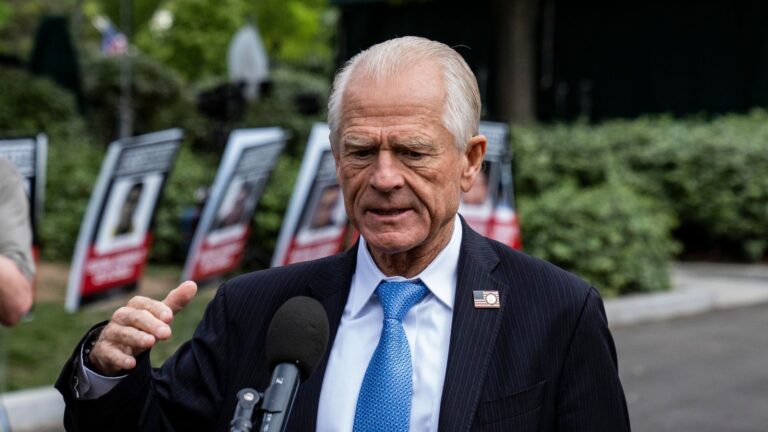
Navarro delivered the remarks at the American Growth Summit in Washington, where he appeared in his role as White House senior counselor for trade and manufacturing. The September 29 gathering included senior administration officials, lawmakers and business leaders and was billed as a discussion of policies shaping the American economy. During his appearance, Navarro turned directly to Canada, arguing that Canadian interests had successfully lobbied Washington in the past and declaring that the strategy would no longer work. He told Canadians on “K Street,” Washington shorthand for its lobbying industry, to “get the hell out of our country.”
The sharper part came immediately afterward. Navarro warned that if Canada interfered in elections in Maine or Michigan, it would “pay even more dearly.” Reports of the appearance did not identify a particular Canadian government action that Navarro alleged constituted illegal election interference, nor did the reported remarks spell out what additional consequences he had in mind. That makes the distinction between his political warning and a formal allegation of unlawful activity significant.
Maine and Michigan Are Deeply Connected to Canadian Trade
Navarro’s choice of Maine and Michigan was notable because Canada is not a distant economic issue in either state. U.S. Trade Representative data show Canada was Maine’s largest export market in 2025, buying roughly $1.3 billion in Maine goods — about 41% of everything the state exported. Transportation equipment, paper products, electronics, chemicals and machinery are among Maine’s important export industries, while cross-border commerce also extends deeply into forestry, seafood, tourism and energy.
Michigan’s exposure is much larger in dollar terms. Current USTR data put Michigan’s 2025 goods exports to Canada at about $23.2 billion, or roughly 39% of the state’s exports. Transportation equipment alone accounted for more than $25 billion of Michigan’s global exports that year, highlighting how closely the auto sector is tied to cross-border production. Both Maine and Michigan also have major statewide contests on the November 3, 2026 election calendar. Navarro did not explain precisely what activity he believed Canada might undertake in those states, but trade disputes affecting factories, farms, border communities and consumer prices inevitably have domestic political consequences without necessarily constituting foreign election interference.
Lobbying and Election Interference Are Legally Different Activities
Foreign governments and companies can have representatives advocate their interests in Washington, but U.S. law imposes disclosure requirements. The Foreign Agents Registration Act, commonly known as FARA, requires certain people acting on behalf of foreign principals to register and disclose their relationships, political activities, receipts and expenditures. The Justice Department explicitly describes representation of foreign interests before U.S. agencies or officials as an activity that can fall under the statute. In other words, foreign-government lobbying is regulated and disclosed; its existence alone does not establish an election-law violation.
Election activity operates under a separate set of restrictions. The Federal Election Commission says foreign nationals are prohibited from making contributions, donations, expenditures or electioneering disbursements connected to U.S. federal, state or local elections. They also cannot participate in decision-making concerning another organization’s election-related spending or political committee administration. That legal boundary is important when assessing Navarro’s language. Based on publicly available reporting of his September 29 remarks, he accused Canada broadly of lobbying Washington and warned against future electoral interference, but did not publicly describe a specific Canadian contribution, expenditure or campaign-management activity that would fall under those prohibitions.
The Warning Came as the Trade Fight Escalated Again
The rhetoric did not emerge in isolation. The Trump administration had already invoked Section 338 of the Tariff Act of 1930 in its dispute with Canada. USTR says President Trump imposed 50% tariffs covering $27.6 billion in Canadian goods beginning in August and later used Section 338 authority to exclude certain Canadian products from the U.S. market. The September measures targeted areas including alcoholic beverages, dairy-related products and certain motor vehicles or motorcycles, while Washington also directed changes affecting Canadian goods in federal procurement.
Canada answered with countermeasures of its own. The federal government says retaliatory tariffs covering $27.6 billion in U.S. products became effective September 8, concentrated in areas including steel and aluminum, dairy, appliances, agricultural equipment, pulp and paper, plastics and electronics. Canadian Press reporting calculated that the newer American import bans taking effect September 29 covered approximately US$967 million in Canadian imports based on 2025 trade, with alcoholic beverages representing roughly 87% of the affected value. The figures are modest compared with total Canada-U.S. commerce, but for individual distilleries, manufacturers and exporters the impact can be immediate.
Carney Is Publicly Separating Trade Policy From the U.S. Election Calendar
Prime Minister Mark Carney responded to the midterm warning without announcing another round of Canadian retaliation. Speaking in Vancouver, he said Canada had no current intention of escalating the trade war specifically because of the approaching U.S. elections, although he stopped short of ruling out future measures altogether. “Our timing isn’t dictated by any specific aspect of the U.S. calendar,” Carney said, adding that Canada remained prepared to negotiate an arrangement that served both countries.
Canada-U.S. Trade Minister Dominic LeBlanc was more explicit on another point of contention. After Trump suggested Canada would eventually return seeking a deal and an apology, LeBlanc said Ottawa was not preparing to apologize for defending Canadian workers, businesses and the economy. He also confirmed that the intensive, detailed negotiations underway several weeks earlier had stopped, although officials on both sides remained in contact. That leaves Canada in an unusual position: diplomatic channels have not closed, but there is no active negotiation resembling the near-deal process that existed before Carney suspended talks in August.
The Unresolved CUSMA Review Makes Every Dispute More Consequential
Behind the immediate tariff confrontation sits a larger structural question: the future of the Canada-United States-Mexico Agreement. The pact entered into force in July 2020 with a 16-year term and required the three countries to conduct their first joint review in 2026. At the July 1 review, the United States formally declined to renew the agreement in its current form. USTR nevertheless confirmed that USMCA remains in force while discussions continue or until its scheduled termination under the agreement’s provisions.
Canada has emphasized the same distinction from its side. Global Affairs Canada says CUSMA remains fully operational until 2036 and can still be extended for another 16 years if the three countries eventually reach consensus. Without agreement on an extension, annual reviews continue until renewal occurs or the existing term expires. That means the present quarrel does not automatically erase tariff-free trade rules overnight, but it does create prolonged uncertainty. Businesses considering a factory expansion, a parts contract or a decade-long supply agreement must now account for the possibility that the rules governing North American commerce could remain under negotiation for years.
The Economic Relationship Is Too Large for the Dispute to Remain Abstract
The scale of Canada-U.S. integration helps explain why statements made at a Washington conference can quickly become news on both sides of the border. USTR estimates that U.S. trade in goods and services with Canada totalled approximately US$872.3 billion in 2025. Goods trade alone reached roughly US$715.5 billion, with the United States exporting $333.6 billion to Canada and importing $381.9 billion. Statistics Canada, meanwhile, reported that 71.7% of Canadian merchandise exports still went to the United States in 2025 despite a significant shift toward other markets.
Those totals translate into much smaller everyday transactions: an Ontario-made auto component moving into Michigan, Maine seafood crossing into Atlantic Canada for processing, or Canadian spirits destined for an American distributor. That is why the latest dispute matters beyond the sharp language surrounding it. Navarro’s warning introduces U.S. electoral politics into an already difficult trade relationship, while Ottawa is publicly insisting that its policy choices will not be dictated by the midterm calendar. For businesses and workers caught between those positions, the most consequential developments will be the actual tariffs, market restrictions and negotiating decisions that follow.
This Options Discord Chat is The Real Deal
While the internet is scoured with trading chat rooms, many of which even charge upwards of thousands of dollars to join, this smaller options trading discord chatroom is the real deal and actually providing valuable trade setups, education, and community without the noise and spam of the larger more expensive rooms. With a incredibly low-cost monthly fee, Options Trading Club (click here to see their reviews) requires an application to join ensuring that every member is dedicated and serious about taking their trading to the next level. If you are looking for a change in your trading strategies, then click here to apply for a membership.