35,000+ smart investors are already getting financial news, market signals, and macro shifts in the economy that could impact their money next with our FREE weekly newsletter. Get ahead of what the crowd finds out too late. Click Here to Subscribe for FREE.
The Arctic security relationship between Canada and the United States is holding together even as the strategic environment around it becomes more complicated. Foreign Affairs Minister Anita Anand says threats facing Canada’s North have “shifted significantly,” pointing to Russia’s war against Ukraine and the movement of security concerns farther north. At the same time, she says Ottawa and Washington remain closely coordinated on Arctic security and sovereignty. That message is backed by recent meetings, military planning and joint operations. Canada is spending more on continental defence, NATO is expanding its northern posture, and Washington is asking Arctic allies to shoulder more of the security burden. The result is an Arctic increasingly treated not as a distant frontier, but as a central part of North American and NATO defence planning.
Anand Separates Arctic Cooperation From Wider Political Tensions
Canada and U.S. Stay Aligned on Arctic Security as Anand Says Northern Threats Have ‘Shifted Significantly’
- Anand Separates Arctic Cooperation From Wider Political Tensions
- NORAD Still Anchors Continental Defence
- Russia and China Have Changed the Northern Threat Picture
- NATO’s Northern Map Looks Very Different
- Canada Is Putting More Money and Hardware Into the North
- Joint Operations Show the Partnership Is Still Active
- Greenland Has Become a Test of Alliance Management
- Northern Security Is Also About Trust at Home
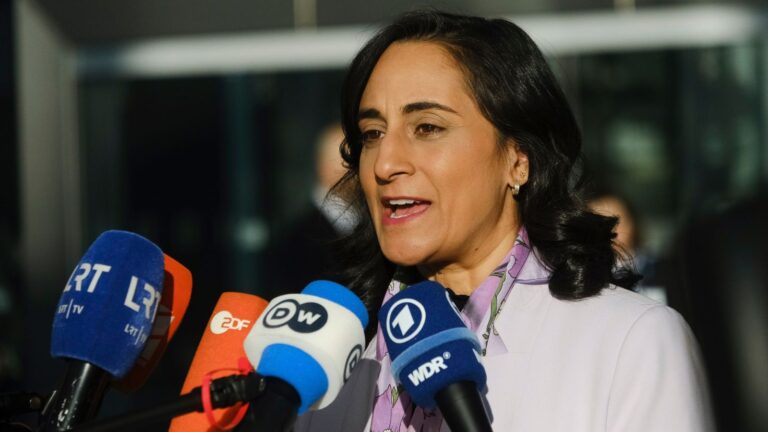
Anand’s comments came after a week of high-level diplomacy in New York, where U.S. Secretary of State Marco Rubio convened foreign ministers from Canada and other Arctic allies on September 21. According to the U.S. State Department readout, the meeting focused on sustained investment, military and economic capabilities, critical infrastructure and coordination against strategic competitors. Anand later described the conversation as frank and said the United States remained “very much at the table” when it came to Arctic security. Canada’s own UN statement also welcomed Rubio’s decision to convene the Arctic group, reinforcing the message that the two governments continue to see overlapping interests in the region.
That does not mean every part of the Canada-U.S. relationship is free of tension. Instead, Arctic security appears to be one area where established institutions and shared geography continue to encourage cooperation. Anand and Rubio had already met in Washington on August 20, when Global Affairs Canada said they discussed shared security priorities, Canada’s Arctic foreign policy and investments in continental defence. The pattern is important: political disagreements can change the tone of a bilateral relationship, but military geography is harder to change. Canada and the United States still share the northern approaches to the continent, and both governments continue to treat those approaches as a common defence problem.
NORAD Still Anchors Continental Defence
The most durable piece of the Canada-U.S. Arctic security relationship remains NORAD. The binational command integrates Canadian and American capabilities for aerospace warning, aerospace control and maritime warning across North America. More than half of NORAD’s operating area lies in the Arctic, according to Canadian defence briefing material. That makes northern surveillance much more than a sovereignty symbol: an aircraft, missile or other threat approaching through the Arctic could affect targets in either country, giving Ottawa and Washington a practical reason to maintain tightly integrated detection and response systems.
Canada is investing $38.6 billion over 20 years to modernize its contribution to NORAD. The program includes new surveillance systems, upgraded command and control, northern infrastructure, space-based capabilities and modern air-defence equipment. One of the most important projects is Arctic Over-the-Horizon Radar, which uses signals reflected through the ionosphere to detect objects at ranges that conventional radar cannot reach because of the curvature of the Earth. Canada is also coordinating elements of that system with the United States. The scale of the modernization effort reflects how much the threat environment has changed since the North Warning System was developed during an earlier era of continental defence.
Russia and China Have Changed the Northern Threat Picture
Russia remains the most capable military actor in the Arctic, according to Canadian foreign-policy briefing material, and NATO says Moscow has reopened or expanded Arctic military sites, including airfields and deep-water ports. Russia has also tested advanced weapons systems and maintains substantial naval and submarine capabilities in its northern regions. Anand has linked the change in Canada’s assessment directly to Russia’s full-scale invasion of Ukraine in 2022. The implication is not that an attack on Canada is considered imminent, but that governments can no longer assume the Arctic will remain insulated from the strategic competition affecting Europe and the North Atlantic.
China adds a different dimension. Canadian officials have tracked growing Chinese interest in Arctic shipping, research, critical minerals and infrastructure, while Russia and China have increased military cooperation in northern approaches. A Canadian National Defence briefing notes that Russian and Chinese aircraft carried out their first combined bomber patrol in the Arctic in 2024, prompting a NORAD intercept. Canada’s Arctic Foreign Policy also points to joint naval and coast-guard patrols near Alaska and the Bering Sea. None of those developments automatically signals a direct attack on Canadian territory, but together they have made surveillance, intelligence-sharing and early warning more central to northern defence planning.
NATO’s Northern Map Looks Very Different
The expansion of NATO has changed the strategic map around the Arctic. Seven of the eight Arctic states are now members of the alliance, with Russia the only exception. Finland joined NATO in 2023 and Sweden followed in 2024, creating a much more continuous allied defence area stretching across northern Europe toward the North Atlantic. NATO says those additions have strengthened its Arctic capabilities and given the alliance greater ability to coordinate military planning across a region that was once divided by several different security arrangements.
That shift has continued in 2026. NATO launched Arctic Sentry in February as a multi-domain activity intended to pull existing northern exercises and defence efforts into a broader operational framework. In June, the alliance established Forward Land Forces Finland, further reinforcing its northern and eastern flanks. Canada, the United States and other Arctic allies also issued a joint statement in May pledging enhanced military presence, surveillance and joint training while supporting NATO’s increased regional role. Anand has argued that NATO needs a strategic assessment of the North alongside its focus on the alliance’s eastern flank. In practical terms, Arctic defence is becoming more closely connected to NATO’s wider planning for Europe and the North Atlantic.
Canada Is Putting More Money and Hardware Into the North
Canada’s policy response is becoming increasingly expensive. The federal government says defence spending reached roughly $63 billion in fiscal 2025–26, allowing Canada to meet NATO’s 2-per-cent-of-GDP benchmark. Anand told the UN General Assembly on September 26 that the previous federal budget allocated more than $80 billion in new defence investments and that Canada is working toward NATO’s broader 5-per-cent defence and security investment pledge by 2035. Much of the new northern spending is aimed at making forces easier to deploy, supply and sustain across immense distances where roads, ports, communications and other infrastructure remain limited.
The hardware plans are becoming equally significant. Ottawa has announced $32 billion for upgrades to NORAD forward operating locations in Yellowknife, Inuvik and Iqaluit, along with Goose Bay. Canada has also selected Germany’s Thyssenkrupp Marine Systems as the preferred supplier for its next submarine fleet and is negotiating for as many as 12 under-ice-capable submarines. The first four are targeted for delivery in 2034, although a final contract still needs to be concluded. Combined with new radar, maritime patrol aircraft and other surveillance systems, the spending signals an attempt to replace periodic northern presence with a more persistent defence capability.
Joint Operations Show the Partnership Is Still Active
Military exercises provide some of the clearest evidence that Canada-U.S. Arctic coordination remains operational rather than merely diplomatic. Canada’s 2026 Operation NANOOK-NUNALIVUT involved roughly 1,300 Canadian Armed Forces members and nearly 200 vehicles and pieces of equipment, making it the largest winter iteration of the operation to date. Personnel from the United States, Denmark, France and Belgium participated. Other NANOOK activities have involved U.S. naval forces operating with Canadian ships through Arctic waters, giving crews experience with surveillance, logistics and communications in an environment where even routine operations can become difficult.
Operation LATITUDE offers another example. Canadian ships, aircraft, special-operations personnel and the Coast Guard have been operating in northern waters, including the Bering Sea, alongside U.S. forces. National Defence describes the mission as supporting continental defence and improving awareness of activity approaching North America. Earlier in 2026, NORAD and U.S. Northern Command also conducted Arctic Edge across Alaska and Greenland, with Canadian NORAD personnel and other allied forces participating. Exercises cannot eliminate political disagreements, but they reveal whether military organizations still train, communicate and plan together. By that measure, the Canada-U.S. northern defence relationship remains active.
Greenland Has Become a Test of Alliance Management
Greenland has made Arctic diplomacy more complicated because security interests and sovereignty concerns now intersect more visibly. Canada has repeatedly said that Greenland’s future is for Greenland and Denmark to determine, while also supporting stronger NATO security across the region. Ottawa reinforced its diplomatic presence by officially opening a Canadian consulate in Nuuk in February 2026, a move intended to deepen cooperation on Arctic governance, security, commercial links and people-to-people ties. Canada’s Arctic Foreign Policy also calls for a consulate in Anchorage, reflecting an effort to build direct diplomatic links around both sides of the North American Arctic.
The United States, Denmark and Greenland then signed a new security agreement on September 22 that expands the framework for U.S. activity and investment in Greenland’s defence. The agreement followed months of disagreement surrounding President Donald Trump’s approach to Greenland, but its eventual signing also demonstrated that allied governments were able to reach a security arrangement without changing Greenland’s sovereignty. For Canada, this matters because Greenland sits directly beside the Canadian Arctic and plays an important role in the northern approaches defended through NORAD and NATO. The episode shows how Arctic allies can disagree sharply over political questions while still searching for workable defence arrangements.
Northern Security Is Also About Trust at Home
Government-level alignment with Washington does not mean northern Canadians necessarily view the United States the same way. Polling conducted for Quebec’s Observatoire de la politique et la sécurité de l’Arctique and reported by Global News found that 48 per cent of respondents in Nunavut, the Northwest Territories, Yukon and Nunavik identified the United States as the greatest threat to Arctic security. Russia was named by 30 per cent and China by 12 per cent. The U.S. figure had risen from 37 per cent in the previous year’s polling. Another 60 per cent said Canada should take a firm position in Arctic border or resource disputes, compared with 26 per cent who preferred compromise. Those figures measure opinion rather than a military threat assessment, but they illustrate the political complexity surrounding northern cooperation.
Ottawa has increasingly emphasized that Arctic security cannot be built only through military equipment or agreements negotiated in southern capitals. Anand’s UN address said Indigenous participation is an essential part of Canada’s approach, while National Defence says it intends to maintain meaningful engagement with communities affected by northern operations. The Canadian Rangers are another practical example of that connection, maintaining a presence across remote communities where local knowledge can be as important as sophisticated technology. The emerging picture is therefore more layered than simple Canada-U.S. alignment: the two countries remain deeply connected through NORAD and allied defence, while Canada is simultaneously trying to strengthen its own capabilities, partnerships and public confidence in the North.
This Options Discord Chat is The Real Deal
While the internet is scoured with trading chat rooms, many of which even charge upwards of thousands of dollars to join, this smaller options trading discord chatroom is the real deal and actually providing valuable trade setups, education, and community without the noise and spam of the larger more expensive rooms. With a incredibly low-cost monthly fee, Options Trading Club (click here to see their reviews) requires an application to join ensuring that every member is dedicated and serious about taking their trading to the next level. If you are looking for a change in your trading strategies, then click here to apply for a membership.