35,000+ smart investors are already getting financial news, market signals, and macro shifts in the economy that could impact their money next with our FREE weekly newsletter. Get ahead of what the crowd finds out too late. Click Here to Subscribe for FREE.
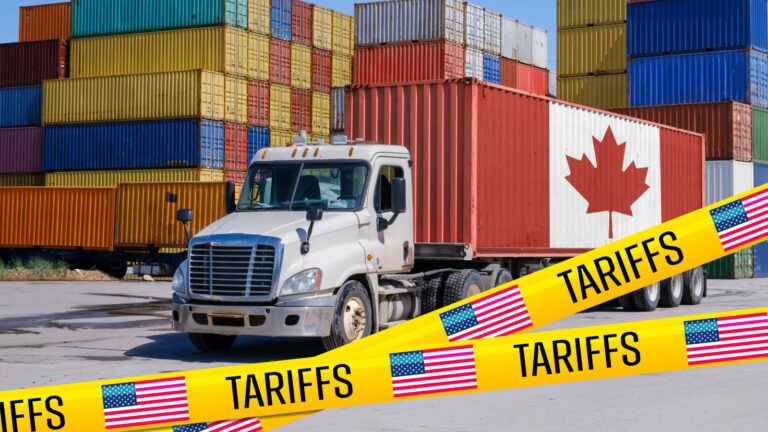
Canada and the United States are heading into another high-stakes midnight deadline, with President Donald Trump’s threatened 50% duties on roughly C$28 billion worth of Canadian goods scheduled to take effect at 12:01 a.m. Eastern time Saturday unless negotiators finish a deal or secure another extension. The three-day reprieve that began earlier this week has narrowed the dispute from political declarations to the legal language that determines what actually crosses the border and at what cost.
Canadian Trade Minister Dominic LeBlanc and chief negotiator Janice Charette are in Washington for a third straight day of talks with U.S. Trade Representative Jamieson Greer. Trump said Friday afternoon that the deal was “moving along” and that the two countries should be able to reach an agreement. Yet no final terms had been publicly released, leaving exporters, workers and provincial governments waiting on a clock that has already been reset once.
A Deadline That Was Already Delayed Once
Trump’s 50% Tariff Clock Runs Out Tonight on $28 Billion in Canadian Goods as Talks Enter Third Day
- A Deadline That Was Already Delayed Once
- Why This Tariff Round Is Different
- Negotiators Are in Their Third Straight Day
- Autos and Metals Are at the Centre of the Bargain
- Alcohol and Dairy Have Become Political Leverage
- The $28 Billion Figure Is Only Part of Canada’s Exposure
- The Costs Would Not Stop at the Canadian Border
- Tonight’s Outcome Will Shape the Next CUSMA Fight
The immediate threat dates to three presidential proclamations Trump issued on July 20 under Section 338 of the Tariff Act of 1930. Those orders targeted Canadian practices involving motor vehicles, alcoholic beverages and dairy, and imposed an additional 50% duty on selected Canadian products. The original effective time was 12:01 a.m. Eastern on August 19, giving companies only weeks to prepare for a new layer of border costs.
That deadline changed at the last moment. On August 18, Trump said the United States would pause the duties for three days while a prospective agreement was put into final form. Prime Minister Mark Carney’s office confirmed that Washington had postponed implementation through the end of August 21, while stressing that important work remained. Unless another delay or final agreement is announced, the tariffs are now scheduled to begin at 12:01 a.m. Eastern on Saturday, August 22, at the border.
Why This Tariff Round Is Different
This tariff round is unusually consequential because the affected products can be hit even when they satisfy the rules of the Canada-United States-Mexico Agreement. The White House explicitly said the Section 338 duties apply to covered goods regardless of USMCA origin status. That removes a protection that has shielded many compliant Canadian shipments from other broad U.S. tariff measures and makes the threat harder for exporters to avoid through paperwork alone.
The lists are also broader than their political labels suggest. Canadian reporting identifies products ranging from hockey sticks, honey and essential oils to cement, plywood, clothing and dairy goods. At the same time, the White House carved out important categories, including energy, potash, goods already subject to Section 232 duties, fish and certain critical minerals. Canadian Press estimates put the affected trade at roughly C$28 billion annually, while Reuters describes it as about US$20 billion in annual cross-border trade.
Negotiators Are in Their Third Straight Day
Friday’s meetings mark the third straight day of intensive negotiations in Washington. LeBlanc and Charette have been working with U.S. Trade Representative Jamieson Greer, while Canada’s ambassador to the United States, Mark Wiseman, and Prime Minister Carney’s chief of staff, Marc-André Blanchard, have also joined the discussions. The talks followed a Thursday session between LeBlanc and Greer that lasted more than three hours.
The public messaging has been cautiously optimistic rather than definitive. LeBlanc said Thursday that the two sides were “very close” but still had work to do. On Friday afternoon, Trump told reporters the deal was “moving along” and said the United States should be able to reach an agreement with Canada. That language matters because Trump had earlier declared that the countries already had a deal, while Carney described only substantial progress. The gap between a political understanding and finalized legal text is now the central issue.
Autos and Metals Are at the Centre of the Bargain
The biggest economic prize for Ottawa may not be the threatened C$28 billion tariff package itself, but relief from duties already weighing on major Canadian industries. Reuters reports that negotiators have discussed cutting the U.S. tariff on Canadian-built vehicles from 25% to 15% and reducing steel and aluminum tariffs from 50% to 25%. Those remain proposed terms, not a publicly signed settlement, and Canada has pushed for deeper auto relief.
The details could be as important as the headline rates. Earlier reporting indicated disagreement over how much North American content should reduce an auto tariff: Washington has favoured deductions tied to U.S.-made content, while Canada has argued for broader North American content. In steel, a reported framework has included a quota structure that could preserve higher duties above specified volumes. For manufacturers making investments, a 15% or 25% tariff is a material cost even if lower than current rates.
Alcohol and Dairy Have Become Political Leverage
Alcohol and dairy have become bargaining chips because both sit at the intersection of federal trade policy and politically sensitive provincial or agricultural systems. Trump’s July proclamations accused Canada of discriminatory treatment of U.S. alcohol, dairy and vehicle exports. The U.S. trade representative has repeatedly highlighted provincial removal of American alcohol from store shelves and Canada’s dairy market-access rules as examples Washington wants changed.
Carney has asked premiers to consider returning U.S. alcohol to provincial shelves as negotiations move toward a possible settlement. Several premiers have signalled openness, but resistance remains. Manitoba Premier Wab Kinew has urged consumers to keep buying Canadian even if U.S. products return, and Quebec has said it wants to assess the deal’s overall impact. Dairy groups are also watching closely: Dairy Farmers of Canada said Friday that the lack of detail was troubling and pointed to LeBlanc’s earlier commitment to defend Canada’s supply management system.
The $28 Billion Figure Is Only Part of Canada’s Exposure
The C$28 billion figure is large enough to hurt targeted exporters, but it understates Canada’s broader exposure to U.S. trade policy. Statistics Canada reported that 71.7% of Canada’s merchandise exports went to the United States in 2025, down from 75.9% a year earlier as businesses diversified. In 2024, Canadian production generated C$644 billion in exports to the U.S., showing how deeply the economies remain connected despite the shift toward other markets.
The employment link is equally significant. Statistics Canada estimated that 1.9 million people, or 9.3% of Canadian employment, worked in industries dependent on U.S. demand for Canadian exports in 2024. Transportation equipment is especially exposed: 62.5% of jobs in that industry were linked to U.S. exports. That helps explain why Ottawa is negotiating beyond the immediate tariff list. Preventing new duties while leaving autos, metals or lumber heavily taxed would still leave Canadian communities facing investment and employment uncertainty.
The Costs Would Not Stop at the Canadian Border
A tariff is collected from the importer at the U.S. border, but the economic burden does not necessarily stay with that company. Research on the 2018–19 U.S. tariff episode found that duties were passed almost completely into prices paid by U.S. importers, with later effects reaching consumers to varying degrees. Federal Reserve research on the 2025 tariff cycle likewise found measurable increases in consumer goods prices, although pass-through differed by product.
That matters for a basket containing building materials, food products and manufactured consumer goods. A U.S. distributor importing Canadian plywood or cement can absorb some of the cost, demand a lower price from its Canadian supplier, raise prices for customers, switch suppliers, or combine those responses. Canadian exporters therefore face more than a simple 50% tax calculation. They face possible substantial lost orders, squeezed margins and supply-chain changes, while American buyers face higher procurement costs and fewer sourcing options.
Tonight’s Outcome Will Shape the Next CUSMA Fight
Tonight’s outcome will feed into an unsettled North American trade negotiation. The United States declined on July 1 to extend the USMCA for another 16-year term. The agreement remains in force until 2036, but without consensus on an extension, it moves into annual reviews. Canada has said its goal is renewal, while Washington argues that unresolved trade and non-tariff issues must be addressed first.
A breakthrough now could lower immediate tariff pressure and create space for the broader review. A failure could add a new 50% layer to a relationship already burdened by auto, steel, aluminum and lumber duties and Canadian countermeasures. That is why the final hours are about more than one deadline. Businesses are judging whether North American rules will become more predictable or tariffs will remain a recurring negotiating instrument. Tonight’s decision will not settle that larger question, but it will signal the direction of the relationship.
This Options Discord Chat is The Real Deal
While the internet is scoured with trading chat rooms, many of which even charge upwards of thousands of dollars to join, this smaller options trading discord chatroom is the real deal and actually providing valuable trade setups, education, and community without the noise and spam of the larger more expensive rooms. With a incredibly low-cost monthly fee, Options Trading Club (click here to see their reviews) requires an application to join ensuring that every member is dedicated and serious about taking their trading to the next level. If you are looking for a change in your trading strategies, then click here to apply for a membership.