35,000+ smart investors are already getting financial news, market signals, and macro shifts in the economy that could impact their money next with our FREE weekly newsletter. Get ahead of what the crowd finds out too late. Click Here to Subscribe for FREE.
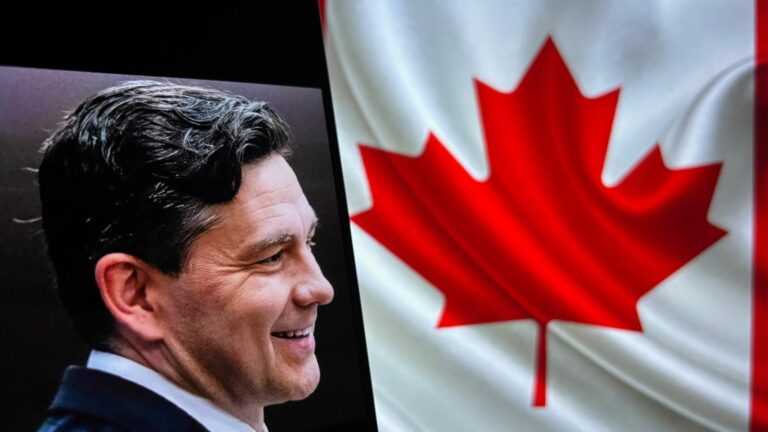
Pierre Poilievre is turning up the pressure on Prime Minister Mark Carney at a particularly delicate moment in Canada’s trade confrontation with the United States. With President Donald Trump’s latest 50% tariffs scheduled to take effect on August 19, the Conservative leader is urging Ottawa to stop making concessions before securing meaningful relief in return.
The argument goes beyond partisan positioning. Canada and the United States are negotiating over automobiles, dairy access, provincial restrictions on American alcohol and existing tariffs on metals, while billions of dollars in Canadian exports hang in the balance. Carney maintains that negotiations remain active and that retaliation before the deadline could undermine them. Poilievre sees the same situation differently: Canada, he argues, has already surrendered valuable bargaining chips and cannot afford to give away more.
Poilievre Takes His Case Directly to Carney
Poilievre Tells Carney to Stop Conceding to Trump as 50% Tariff Deadline Closes In
- Poilievre Takes His Case Directly to Carney
- The August 19 Deadline Is Different From Earlier Tariff Threats
- The Concessions Debate Has Become the Heart of the Fight
- Carney Is Betting That Restraint Preserves Room for a Deal
- Steel, Aluminum and Autos Remain the Bigger Economic Battlefield
- Dairy and American Alcohol Have Become Political Tripwires
- Canadian Public Opinion Gives Carney Less Room to Compromise
- Canada Still Has Enormous Exposure to the American Market
- August 19 Is Becoming a Test of Both Leaders’ Strategies
- The Larger Fight Will Continue Even if the Deadline Is Defused
Poilievre sharpened his criticism on August 9 by sending Carney a letter urging the prime minister not to concede to additional American demands. His central complaint is that Ottawa has already made decisions Washington wanted without obtaining enough tariff relief in exchange. Earlier in the week, Poilievre accused the government of repeatedly giving ground before serious negotiations had produced a durable settlement.
The Conservative leader has pointed to decisions including Canada’s elimination of its digital services tax and removal of many retaliatory tariffs on U.S. imports. The government did, in fact, abandon the digital services tax in June 2025 to advance negotiations with Washington, and most of the broad retaliatory tariffs introduced earlier that year were removed effective September 1, 2025. Canada retained counter-tariffs in strategically important sectors including steel, aluminum and automobiles. The disagreement now is less about whether concessions occurred than whether those decisions increased or diminished Canada’s negotiating leverage.
The August 19 Deadline Is Different From Earlier Tariff Threats
The newest U.S. measures are scheduled to begin August 19, just 30 days after Trump signed three proclamations under Section 338 of the Tariff Act of 1930. They impose additional tariffs of 50% on covered Canadian products and, importantly, are designed to apply even when those goods would otherwise qualify for preferential treatment under the Canada-U.S.-Mexico Agreement.
That makes the threat more consequential than simply another increase on products already paying duties. Goods including alcoholic beverages, dairy-related products and various manufactured items are among those exposed, with products ranging from wine and hockey sticks to cement appearing in the affected categories. Energy, potash, fish, critical minerals and goods already handled under certain Section 232 measures are excluded. Desjardins estimated that approximately C$28 billion in annual Canadian exports could be affected, equivalent to roughly 5% of U.S. merchandise imports from Canada. For individual exporters caught inside that relatively small slice, however, a 50% border charge could dramatically alter competitiveness overnight.
The Concessions Debate Has Become the Heart of the Fight
Poilievre’s argument rests on a traditional negotiating principle: concessions are most valuable before they are given away. He has argued that measures Washington wants should be placed on the bargaining table and exchanged directly for the elimination of U.S. tariffs, particularly those hitting steel, aluminum, lumber and automobiles. He has also suggested that Canadian natural resources and major military procurement decisions provide Ottawa with leverage.
Carney’s record is more complicated than the Conservative critique sometimes suggests. Canada did abandon the digital services tax and remove many counter-tariffs, but it preserved retaliation in several sectors where U.S. duties remained. The current negotiations also appear to involve an explicit exchange rather than simply unilateral concessions. Reports indicate Ottawa has discussed removing tariffs on U.S. automobiles, addressing American concerns about dairy-quota administration and helping restore American alcohol to provincial stores. In return, Washington could reduce existing duties on Canadian steel and aluminum. Whether that represents pragmatic bargaining or another asymmetric compromise is now the central political question.
Carney Is Betting That Restraint Preserves Room for a Deal
Carney has rejected calls for an immediate escalation. After meeting Canada’s premiers in July, he said the federal government had a full range of options available but argued that retaliating before the U.S. tariffs actually take effect could be counterproductive. His government has continued negotiating instead, with Canadian officials holding intensive discussions in Washington as the deadline approaches.
That strategy reflects the prime minister’s belief that Trump’s deadlines can function partly as negotiating pressure. Carney has pointed to the pattern of large tariff threats accompanying U.S. trade negotiations and has maintained that Ottawa should use the remaining time rather than respond prematurely. Canada-U.S. Trade Minister Dominic LeBlanc and chief negotiator Janice Charette have been deeply involved, and negotiations with U.S. Trade Representative Jamieson Greer’s team were expected to continue frequently through August 19. Carney has characterized Canada’s position as firm and the negotiations as constructive, even as the political atmosphere surrounding them has become increasingly hostile.
Steel, Aluminum and Autos Remain the Bigger Economic Battlefield
Although the new 50% tariffs are attracting attention, Canada’s larger concern remains the collection of sectoral duties already disrupting some of its most integrated industries. Steel, aluminum and automobiles cross a border that was designed for deeply interconnected North American production. Poilievre therefore wants relief in those sectors to be the price Washington pays before Ottawa agrees to additional U.S. demands.
Recent economic data show why those industries matter. Canadian motor-vehicle and parts exports fell sharply early in 2026, dropping 21.2% in January to C$5.4 billion, their lowest level since September 2021, although manufacturing subsequently rebounded. More broadly, Global Affairs Canada’s State of Trade report found that Canadian industries exposed to international trade grew only 1.1% in 2025, compared with 2% for trade-sheltered industries. Tariffs are not responsible for every movement in factory output, but Washington’s trade measures and the uncertainty surrounding them have become significant obstacles for companies deciding whether to place their next investment in Canada or the United States.
Dairy and American Alcohol Have Become Political Tripwires
Agricultural policy is emerging as one of the most difficult parts of a potential compromise. Washington has long criticized Canada’s supply-management system, particularly the way dairy import quotas are administered. The White House says Canadian practices unfairly restrict American producers, while Canadian dairy organizations argue that the sector has already made substantial concessions under successive international trade agreements.
Dairy Farmers of Canada has urged Ottawa not to surrender additional ground, warning that further concessions may simply produce another round of American demands. Carney has publicly reaffirmed his government’s commitment to supply management. Alcohol creates a different complication because provincial governments, rather than Ottawa alone, determine what appears on many publicly controlled liquor-store shelves. Several provinces stopped buying or selling American alcohol during the trade conflict. That means Carney cannot simply promise Washington that every bottle of U.S. bourbon or wine will return nationwide. A federal deal may therefore depend partly on whether premiers are willing to cooperate — something that becomes harder as public anger toward Washington rises.
Canadian Public Opinion Gives Carney Less Room to Compromise
The political environment surrounding the negotiations has changed substantially since the tariff confrontation began. An Angus Reid Institute poll conducted from July 23 to 25 found that 62% of respondents supported some form of retaliatory Canadian tariffs. Thirty-four per cent wanted Ottawa to match American tariffs dollar for dollar, while another 28% favoured a more limited response. Only 7% preferred making the concessions demanded by Washington to avoid another tariff fight.
Specific U.S. demands were also unpopular. Sixty-one per cent opposed giving American dairy producers greater access to Canada’s market, while 48% opposed putting U.S. alcohol back on Canadian shelves. At the same time, confidence in Ottawa’s negotiating ability had weakened: 43% believed Carney could secure a good agreement, down from 51% in April. Those numbers help explain the difficulty facing the government. Compromise could prevent billions of dollars in exports from being hit by tariffs, but concessions that look excessive could create an equally serious domestic political problem.
Canada Still Has Enormous Exposure to the American Market
For all the talk about diversification, the United States remains by far Canada’s most important merchandise customer. Statistics Canada reported that 71.7% of Canadian merchandise exports went to the United States in 2025. That was down noticeably from 75.9% in 2024, demonstrating that exporters have been finding additional markets, but it still means disruption at the U.S. border reaches deeply into Canadian factories, farms and resource businesses.
The relationship has also shown resilience. Canada’s goods exports to the United States increased again in June 2026, marking a fifth consecutive monthly gain, while overall bilateral goods trade rose from May. That recovery makes the August confrontation especially important: exporters have begun rebuilding flows after the shocks of 2025, yet another major tariff escalation could interrupt that progress. Canada has accelerated efforts to expand trade through Europe, Asia and other markets, but replacing American demand is a long-term project. Geography, integrated transportation networks and decades of shared industrial investment cannot be reproduced quickly.
August 19 Is Becoming a Test of Both Leaders’ Strategies
The practical question over the next several days is whether Canada can convert concessions under discussion into tariff reductions significant enough to justify them. Reuters reported that Canadian and American negotiators have discussed a package involving autos, dairy and American alcohol in exchange for U.S. relief on Canadian steel and aluminum. No agreement is guaranteed, and some elements depend on decisions outside Ottawa’s direct control.
The political stakes are equally clear. Carney needs to demonstrate that patient negotiations can produce something tangible rather than simply postponing the next confrontation. Poilievre, meanwhile, is positioning himself as the advocate of a harder transactional approach: no additional Canadian concessions without an American concession attached. If a deal substantially reduces U.S. tariffs, Carney can argue that restraint worked. If Canada gives ground and still faces major tariffs after August 19, Poilievre’s criticism will become considerably more potent. And if negotiations fail entirely, Ottawa will face an even harder decision — how aggressively to retaliate without inflicting unnecessary costs on Canadian businesses and consumers.
The Larger Fight Will Continue Even if the Deadline Is Defused
An agreement before August 19 would remove an immediate threat, but it would not restore the old Canada-U.S. trading relationship. Washington has already declined to renew CUSMA in its existing form, opening a longer and more uncertain review process. Existing sectoral tariffs, arguments over industrial policy and disagreements about where automobiles and other manufactured products should be built will remain after this deadline passes.
That is why the disagreement between Carney and Poilievre matters beyond one week of negotiations. Carney’s approach assumes Canada must combine selective compromise with economic diversification, preserving dialogue with its overwhelmingly important neighbour while gradually becoming less dependent on it. Poilievre is arguing that Ottawa must extract a measurable American concession every time Washington asks Canada to move. Both strategies ultimately confront the same uncomfortable reality: Canada cannot ignore the U.S. market, but accepting an escalating series of demands without durable tariff relief could make the country increasingly vulnerable to the next deadline. August 19 may therefore settle one tariff dispute while revealing how Canada intends to handle many more.
This Options Discord Chat is The Real Deal
While the internet is scoured with trading chat rooms, many of which even charge upwards of thousands of dollars to join, this smaller options trading discord chatroom is the real deal and actually providing valuable trade setups, education, and community without the noise and spam of the larger more expensive rooms. With a incredibly low-cost monthly fee, Options Trading Club (click here to see their reviews) requires an application to join ensuring that every member is dedicated and serious about taking their trading to the next level. If you are looking for a change in your trading strategies, then click here to apply for a membership.