35,000+ smart investors are already getting financial news, market signals, and macro shifts in the economy that could impact their money next with our FREE weekly newsletter. Get ahead of what the crowd finds out too late. Click Here to Subscribe for FREE.
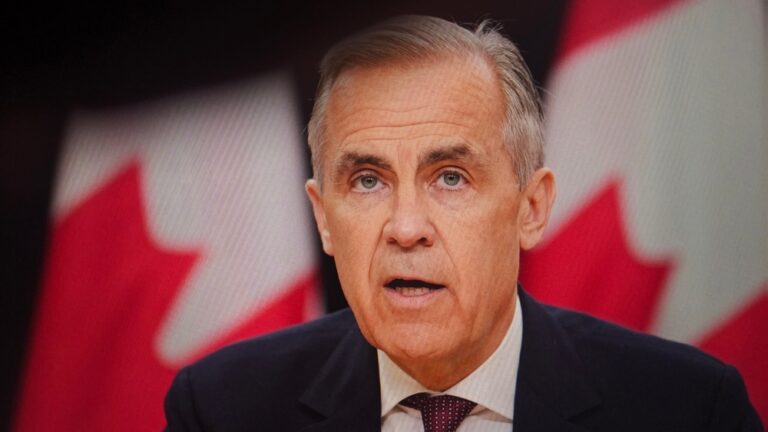
Canada’s investment problem has been building for a decade, but Prime Minister Mark Carney is concentrating his response into two unusually consequential dates. On September 14 and 15, 2026, Toronto will host the first Canada Investment Summit, bringing global investors and business leaders into the same room as a government promising to make major projects easier to finance, approve and build.
Ottawa’s ambition is to catalyze $1 trillion in total investment over five years. The number carries deliberate symbolism: RBC estimates that Canada recorded more than $1 trillion in net outward foreign direct investment between 2015 and 2024. The summit cannot reverse that history in 48 hours. It can, however, test whether Carney’s pro-investment shift is strong enough to turn international interest into commitments—and commitments into construction.
Two Days to Sell a New Canadian Story
The September gathering is designed to be more than a conventional trade mission filled with speeches, handshakes and polished promotional videos. The federal government is organizing it with CPP Investments and the Public Sector Pension Investment Board, two major Canadian institutional investors with deep connections to the global financial community. Their participation gives the event more credibility with the pension funds, sovereign investors, corporate executives and other long-term capital providers Carney wants in the room. Ottawa’s pitch combines familiar Canadian strengths—energy, critical minerals, political stability, an educated workforce and access to global markets—with a more urgent promise that governments will become better at execution. Canada has 16 free-trade agreements covering 51 countries and approximately 1.5 billion consumers. Yet market access has limited value when businesses cannot build enough mines, transmission lines, ports, factories and technology infrastructure to serve those customers. That is why the summit is expected to emphasize clean and conventional energy, critical minerals, artificial intelligence and other advanced industries. The government says roughly $280 billion in federal capital investments and incentives over five years can help generate more than $1 trillion from public, private and institutional partners. Ottawa is effectively asking investors to view federal spending as the first layer of a much larger capital structure, rather than expecting taxpayers to finance the entire transformation. It will also point to Canada’s AAA credit rating, comparatively low net government debt and stable financial system as advantages at a time when political and trade uncertainty is unsettling many competing markets. Those strengths may earn Canada a meeting, but investors will still demand competitive returns.
The harder task will be proving that Canada has a credible inventory of financeable projects instead of a collection of political ambitions. Carney’s Major Projects Office was launched in August 2025 as a single federal point of contact for large developments. By the spring of 2026, Ottawa said 15 projects and six broader strategies represented more than $126 billion in potential investment and over 60,000 projected jobs. The portfolio spans nuclear generation, liquefied natural gas facilities, critical-mineral mines, electricity transmission, ports and northern transportation links. Additional proposals have continued to emerge, including Alberta’s concept for a west coast pipeline capable of moving one million barrels of oil per day toward international markets. Ottawa has also proposed running federal assessments and permit reviews at the same time, rather than forcing companies through a series of consecutive processes. Under the proposed reforms, federal review and decision-making would take no more than one year after a proponent submits the necessary information. Those changes are not yet a guarantee that projects will move quickly, which makes the summit a test of credibility as much as promotion. As of July 24, the government had not publicly disclosed how many invited investors had confirmed their attendance, although officials described the level of interest as strong. A pension manager considering a mine, pipeline or LNG terminal will not commit billions simply because a ballroom presentation sounds confident. The manager will want a dependable approval schedule, Indigenous consultation and partnership, transportation access, affordable power, customer contracts, skilled workers and a clear division of financial risk. Local communities will also want evidence that projects produce lasting employment and revenue rather than temporary construction activity followed by years of environmental or financial uncertainty. Carney’s central challenge on those two September days is to show that all these pieces are beginning to align.
The $1 Trillion Number Is Real—But Easy to Misread
The headline figure does not mean foreign investors suddenly removed $1 trillion from Canadian bank accounts or closed $1 trillion worth of factories. RBC’s calculation compares foreign direct investment entering Canada with Canadian direct investment flowing abroad from 2015 through 2024. Over that period, approximately two dollars went outward for every dollar coming inward, producing a cumulative net outflow above $1 trillion. Foreign direct investment is a specific statistical category involving a lasting ownership interest and a meaningful degree of influence over a company. It is different from the daily trading of shares, bonds and currencies. Outward investment can therefore reflect corporate strength as well as domestic weakness. Canadian banks, pension funds and corporations acquire businesses and assets overseas to reach new customers, diversify risk and generate returns for shareholders and retirees. By the end of 2025, Canada’s outward direct-investment position stood at approximately $2.43 trillion, compared with about $1.60 trillion of foreign direct investment located in Canada. That left the country with a net outward direct-investment position of roughly $828 billion. The gap is substantial, but describing all of it as capital “fleeing” Canada can create the wrong impression. The more revealing question is why Canadian companies repeatedly found attractive opportunities abroad while too little domestic and foreign capital was used to expand productive capacity at home. A Canadian pension fund buying an overseas toll road is not necessarily abandoning Canada. However, when businesses consistently choose American factories, foreign technology firms or international infrastructure over Canadian projects, it suggests that expected returns, market size, regulatory timelines or project risks may be more attractive elsewhere.
There are signs that the pattern can change, although one strong year does not erase a decade of weakness. Foreign direct investment entering Canada reached $96.8 billion in 2025, the highest annual inflow since 2007. Canadian direct investment abroad fell to $79.4 billion, its lowest level since 2020, giving Canada a net direct-investment inflow for the year. The composition of that investment still matters. Approximately $43.6 billion of the inward total came through mergers and acquisitions, while more than half of all inward investment originated in the United States. The purchase of an existing Canadian business can protect employment, introduce expertise and provide money for expansion, but it does not automatically add the same productive capacity as a new mine, factory, power line or data centre. Canada’s deeper challenge is the amount of modern equipment, technology and intellectual property available to each worker. The OECD found that Canadian business investment per worker in 2023 was only 85 per cent of its 2014 level. Investment per worker in the United States increased by 21 per cent over the same period. RBC estimates that only about 30 per cent of Canadian capital formation goes toward machinery, equipment and intellectual property—approximately half the U.S. share—and argues that Canada may require $1.8 trillion over the next decade across oil and gas, metals and minerals, electricity, agriculture and food processing, defence and space. Weak investment eventually reaches ordinary households. Workers using outdated equipment produce less in each hour, limiting the room businesses have to raise wages without raising prices. It can also make Canadian companies slower to adopt automation, artificial intelligence and new production methods. The Bank of Canada expected business investment to remain soft through much of 2026 as weak demand and uncertainty surrounding U.S. trade policy affected corporate plans. That is why the real results of September 14 and 15 will not be measured by attendance figures or loosely worded memorandums. They will be measured through final investment decisions, Indigenous equity and benefit agreements, completed regulatory reviews, private financing, equipment orders and workers arriving at construction sites. Canada does not appear to lack available money: RBC estimates that non-financial corporations hold more than $1.1 trillion in currency, deposits and debt securities. What remains scarce is confidence that projects can move from proposal to revenue without unpredictable delays or constantly changing rules. Two September days may be enough to change the conversation around Canada. Reversing a decade of underinvestment will depend on what happens every day afterward.
This Options Discord Chat is The Real Deal
While the internet is scoured with trading chat rooms, many of which even charge upwards of thousands of dollars to join, this smaller options trading discord chatroom is the real deal and actually providing valuable trade setups, education, and community without the noise and spam of the larger more expensive rooms. With a incredibly low-cost monthly fee, Options Trading Club (click here to see their reviews) requires an application to join ensuring that every member is dedicated and serious about taking their trading to the next level. If you are looking for a change in your trading strategies, then click here to apply for a membership.