35,000+ smart investors are already getting financial news, market signals, and macro shifts in the economy that could impact their money next with our FREE weekly newsletter. Get ahead of what the crowd finds out too late. Click Here to Subscribe for FREE.
Prime Minister Mark Carney’s latest conversation with U.S.ence and several areas of bilateral cooperation. Yet one of the most consequential economic issues facing Canada was never discussed. Carney confirmed that the Canada-United States-Mexico Agreement, better known as CUSMA, did not come up during the June 24 call, despite a mandatory review of the continental trade pact beginning July 1. The omission immediately gave opposition politicians an opening and added to questions about how Ottawa is managing an increasingly unpredictable relationship with Washington. Carney’s explanation, however, suggested that the call was not intended to serve as a trade-negotiating session and that any meaningful breakthrough would likely emerge from detailed work between officials rather than a single conversation between leaders.
A Long Conversation With a Striking Omission
Carney Reveals CUSMA Never Came Up During Lengthy Trump Call
- A Long Conversation With a Striking Omission
- July 1 Is a Checkpoint, Not an Expiry Date
- Carney Expects Officials to Do the Detailed Work
- Trump’s Public Position Remains Unpredictable
- The U.S. Ambassador Says the Sides Are Far Apart
- Poilievre Turns the Omission Into a Political Attack
- Most Canadian Exports Still Depend on the U.S. Market
- Mexico Has Already Held Formal Talks With Washington
- Businesses Are Already Feeling the Uncertainty
- The Real Test Will Be What Happens Next
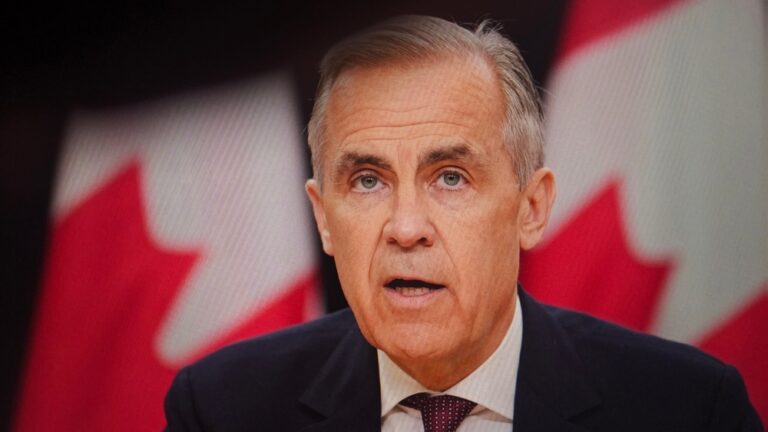
Carney disclosed details of the call during a June 25 news conference in Ottawa marking the end of Parliament’s spring sitting. He characterized the conversation with Trump as lengthy and said it covered NATO, the conflict involving Iran and other matters on which Canada and the United States were working together. He declined to reveal every initiative under discussion, explaining that some were better left private until they produced tangible results.
When reporters turned to CUSMA, however, Carney confirmed that the continental trade negotiations had not been part of the conversation. That answer stood out because trade had dominated Canadian political discussion for months and the call occurred only days before the agreement’s first mandatory six-year review. The absence of CUSMA did not mean Canada-U.S. trade had disappeared from government activity. Carney had just used his prepared remarks to say that Canada was working with the United States and Mexico to modernize the pact. Still, the contrast was difficult to miss: trade was central to Ottawa’s public message, but absent from the leaders’ call.
July 1 Is a Checkpoint, Not an Expiry Date
The approaching July 1 date has frequently been described as a deadline, creating the impression that tariff-free continental trade could suddenly disappear. The actual mechanism is less dramatic. CUSMA entered into force on July 1, 2020, and requires the three countries to conduct a joint review after six years. Each government can then confirm whether it wants the agreement extended for another 16-year period.
If Canada, the United States and Mexico all support an extension, the agreement would continue under a renewed 16-year term, with another review held no later than six years afterward. If one country refuses to approve the extension, CUSMA does not immediately collapse. Instead, annual reviews can continue through 2036 while the governments keep trying to reach an agreement. A country can separately withdraw by providing six months’ written notice. Canada’s chief negotiator, Janice Charette, has consequently described July 1 as a “checkpoint” rather than a cliff. That distinction lowers the risk of an overnight disruption, but it does not eliminate the uncertainty created by potentially annual negotiations.
Carney Expects Officials to Do the Detailed Work
Carney suggested that a genuine breakthrough would probably emerge below the presidential and prime-ministerial level. Trade agreements are rarely settled through broad leader-to-leader conversations alone. Negotiators must work through product-specific tariffs, rules of origin, dispute-settlement procedures, market-access demands and dozens of technical provisions before political leaders can approve a final package.
Canada has placed that work under an experienced team. Charette, a former clerk of the Privy Council and former Canadian high commissioner to the United Kingdom, was appointed chief trade negotiator to the United States in February. She advises Carney and Canada-U.S. Trade Minister Dominic LeBlanc while attempting to protect the agreement’s core benefits and secure relief from U.S. tariffs affecting industries such as steel, aluminum, automobiles and lumber. Carney’s argument is essentially that the leaders should intervene when officials have narrowed the remaining differences enough to make a political decision possible. The risk is that without regular direction from Trump, American negotiators may lack the authority to offer Canada the concessions it wants.
Trump’s Public Position Remains Unpredictable
The uncertainty is amplified by Trump’s own comments. At the G7 summit in France on June 17, he said the United States might perform better without CUSMA and indicated that he would prefer to see the agreement terminated. During the same exchange, however, Trump also left open the possibility that he could sign an extension. Those conflicting statements made it difficult for Canadian officials and businesses to determine whether Washington was negotiating for major changes or preparing for a possible withdrawal.
Trump’s hostility is especially notable because his first administration negotiated CUSMA as the replacement for the North American Free Trade Agreement. He promoted the new pact at the time as a major improvement over NAFTA. Now, his administration has criticized trade deficits, Canadian market restrictions and production patterns that place factories outside the United States. Trump’s approach often combines sweeping public threats with last-minute bargaining. That gives Carney reason to keep channels open, but it also means a seemingly productive conversation on defence or international security does not necessarily reveal where the president will land on trade.
The U.S. Ambassador Says the Sides Are Far Apart
Two days before Carney explained the phone call, U.S. Ambassador Pete Hoekstra delivered a blunt assessment of the negotiations. He said Canada and the United States were not close to announcing either a full agreement or an interim framework. His comments challenged any expectation that a polished deal would be ready when the formal review process began.
Carney responded by drawing on his experience dealing with Trump. He said negotiations involving the president can appear nowhere near completion before suddenly producing an agreement. Carney was careful not to equate speed with quality, noting that a rapidly concluded arrangement is not automatically a good one. His government, he said, must complete the necessary preparation and refuse an outcome that damages Canadian interests. The answer revealed Ottawa’s balancing act. Canadian officials do not want to manufacture an artificial deadline that gives Washington leverage, but they also cannot appear passive while Trump openly questions the value of the agreement. Hoekstra’s warning and Carney’s response both point toward a longer negotiating process rather than an immediate settlement.
Poilievre Turns the Omission Into a Political Attack
Conservative Leader Pierre Poilievre quickly focused on the fact that CUSMA had not been raised. He called the omission “unbelievable” and argued that the prime minister should use every conversation with Trump to pursue a better trade arrangement. Poilievre also tied the issue to Carney’s political brand, accusing him of failing to deliver on his promise that his international and economic experience would help Canada manage the Trump administration.
The criticism is politically potent because Canada-U.S. relations played a central role in Carney’s rise to office. His supporters presented the former Bank of Canada and Bank of England governor as a steady economic manager capable of dealing with financial shocks and difficult global leaders. That created high expectations for visible progress. Carney’s defence is that constant public pressure and leader-level intervention can sometimes undermine technical negotiations. Poilievre’s counterargument is simpler: with the country’s most important trade agreement in doubt, the prime minister should personally press the issue whenever Trump is available. The disagreement is partly about results, but also about what effective negotiation should look like.
Most Canadian Exports Still Depend on the U.S. Market
The stakes are enormous even though Canada has been trying to diversify its international relationships. Statistics Canada reported that 71.7 per cent of Canadian merchandise exports went to the United States in 2025. That was down from 75.9 per cent in 2024, showing some diversification, but it still left Canadian producers deeply dependent on access to American customers. Estimates cited by Farm Credit Canada suggest that producing exports destined for the United States supports roughly 16 per cent of Canadian GDP and 12 per cent of Canadian jobs.
CUSMA has limited some of the damage from Trump’s tariff policies because qualifying goods can continue crossing the border under preferential treatment. Carney has said approximately 85 per cent of Canada-U.S. trade remains tariff-free. The protection is particularly important for businesses built around integrated supply chains. A vehicle assembled in Ontario, for example, may contain parts that crossed the border several times before reaching a dealership. Even without the agreement collapsing, repeated reviews, changing rules and sector-specific tariffs can increase costs, discourage new factories and make companies hesitant to hire additional workers.
Mexico Has Already Held Formal Talks With Washington
The contrast with Mexico has added to concern in Ottawa. American and Mexican negotiators completed an initial bilateral round in late May that covered automotive rules of origin, steel, aluminum and economic security. A second round was scheduled for mid-June, with agriculture and competitive conditions on the agenda, while another meeting was planned for the week of July 20 in Mexico City.
At the time of Carney’s call, Washington had not announced an equivalent series of formal bilateral negotiating rounds with Canada. That does not necessarily mean Canada has been shut out. Canadian and American officials have maintained contact, and the final review remains a trilateral process involving all three countries. Nevertheless, Mexico’s visible schedule gives its government an opportunity to address U.S. concerns early and shape the negotiating agenda. It also raises questions about whether Washington is attempting to divide the talks into separate Canadian and Mexican tracks. Ottawa and Mexico City have both expressed support for preserving a trilateral agreement, recognizing that a fragmented system could weaken continental supply chains and give the United States greater bargaining power over each neighbour.
Businesses Are Already Feeling the Uncertainty
For executives deciding whether to expand a factory or hire another shift, the most damaging outcome may be years of unresolved annual reviews. The Bank of Canada has repeatedly identified U.S. trade policy and the CUSMA review as important sources of uncertainty weighing on investment. Its economic projections have assumed that the agreement’s basic structure survives, because preserving it would reduce uncertainty for exporters and companies operating integrated North American supply chains.
The effects are visible in border communities. Reuters reported that businesses in Windsor, Ontario, were experiencing delayed orders and cautious customers as concerns about tariffs and CUSMA weighed on the automotive region. Windsor’s unemployment rate had exceeded 11 per cent before improving to 8.6 per cent, while local home sales in February were down 15 per cent from a year earlier. A national survey from Canadian Manufacturers & Exporters found that more than nine in 10 manufacturers supported extending CUSMA. Those figures help explain why a phone call that omitted trade attracted so much attention. For workers and business owners, the negotiations are not an abstract diplomatic exercise but a question of whether investments and paycheques remain secure.
The Real Test Will Be What Happens Next
The absence of CUSMA from one lengthy call does not prove that Carney has neglected the file. He discussed trade informally with Trump during the G7 summit, has appointed a dedicated chief negotiator and has repeatedly stated that Canada wants to preserve and modernize the agreement. Negotiators also have more time than the July 1 date might suggest. What matters now is whether that preparation produces formal talks, tariff relief and a credible path toward long-term certainty.
Several signals will reveal whether progress is real. Canada will be watching for Washington’s written position on extending CUSMA, the announcement of formal Canadian-American negotiating rounds and movement on steel, aluminum, automotive and softwood-lumber barriers. Businesses will also monitor whether the United States seeks tougher rules of origin or takes the more dramatic step of issuing a six-month withdrawal notice. Until then, Carney’s explanation is likely to remain politically controversial. His strategy depends on quiet technical work producing a better outcome than constant public confrontation. If a durable agreement emerges, the missing trade discussion will look less important. If negotiations deteriorate, it may be remembered as an opportunity that should not have been missed.
This Options Discord Chat is The Real Deal
While the internet is scoured with trading chat rooms, many of which even charge upwards of thousands of dollars to join, this smaller options trading discord chatroom is the real deal and actually providing valuable trade setups, education, and community without the noise and spam of the larger more expensive rooms. With a incredibly low-cost monthly fee, Options Trading Club (click here to see their reviews) requires an application to join ensuring that every member is dedicated and serious about taking their trading to the next level. If you are looking for a change in your trading strategies, then click here to apply for a membership.