35,000+ smart investors are already getting financial news, market signals, and macro shifts in the economy that could impact their money next with our FREE weekly newsletter. Get ahead of what the crowd finds out too late. Click Here to Subscribe for FREE.
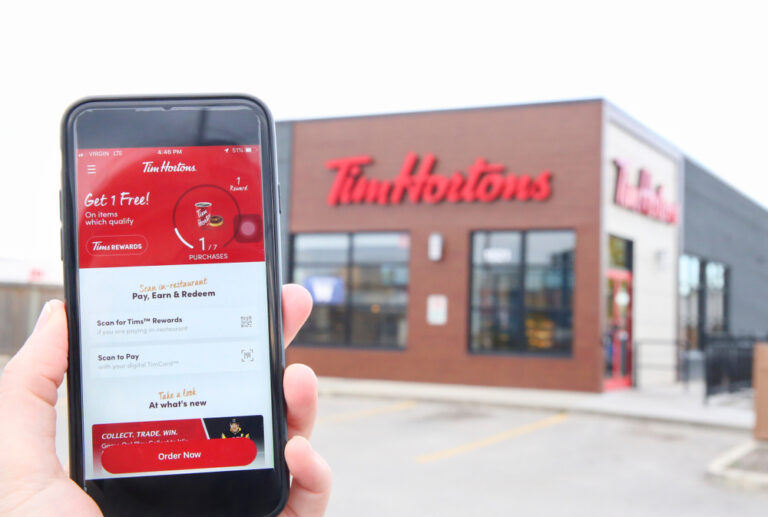
A free coffee used to feel like a small but reliable win. Now, for many Canadians, rewards programs feel more like moving targets: more points needed, more fine print to read, and fewer perks that feel simple. The reported wind-down of the Tims Mastercard adds another example to that frustration, especially for regular Tim Hortons customers who used the card to collect points on everyday spending.
The change lands at a time when loyalty programs have become part of household budgeting. Canadians are still watching grocery bills, coffee prices, and restaurant spending closely. When a familiar brand reduces or reshapes a rewards perk, it can feel less like a technical card update and more like one more small benefit disappearing.
A Coffee Card Became a Personal-Finance Story
Tim Hortons Credit Card Drops Rewards Points as Loyalty Perks Keep Shrinking
- A Coffee Card Became a Personal-Finance Story
- What Cardholders Appear to Be Losing
- The Fine Print Made the Rewards Less Simple Than They Looked
- Loyalty Shrinkflation Has Been Building for Years
- Canadians Are Leaning on Points Because Prices Still Sting
- Brands Want Data, Frequency, and App Engagement
- The Bigger Risk Is Trust, Not Just Points
- What Regular Tim Hortons Customers Should Watch Next
The Tims Mastercard was designed to turn routine spending into Tim Hortons rewards. It had no annual fee and promoted accelerated earning at Tim Hortons, groceries, gas, EV charging, transit, taxis, and rideshare purchases. For someone already making frequent coffee runs, the pitch was easy to understand: pay with the branded card, scan for Tims Rewards, and build points faster toward food, drinks, or statement credits.
That simplicity is what made the reported change noticeable. A coffee card is not a premium travel card with airport lounges or complicated transfer partners. It sits closer to everyday life: the morning drive-through, the gas station, the grocery run, the quick breakfast before work. When that kind of card loses its core rewards connection, it affects the very customers who chose it because it seemed easy, familiar, and tied to purchases they were already making.
What Cardholders Appear to Be Losing
Public cardholder reports say the Tims Mastercard program is being discontinued, with existing cardholders offered a move to a Neo-branded Mastercard. The most important practical shift is not just the name on the card. It is the loss of the Tims-specific rewards structure that made the product distinct in the first place. Without that branded earning engine, the card becomes much less about turning everyday purchases into Tim Hortons points.
That matters because the card’s value was heavily tied to the Tim Hortons ecosystem. The public Tims Financial materials listed up to 15 points per dollar at Tim Hortons when customers also scanned for Tims Rewards, 5 points per dollar in select everyday categories, and 1 point per $2 everywhere else. If the co-branded program ends as reported, regular users may need to decide whether the replacement card offers enough value without the emotional pull of free coffees, breakfast sandwiches, and app-based redemptions.
The Fine Print Made the Rewards Less Simple Than They Looked
Even before the reported discontinuation, the card’s rewards math required attention. The headline earning rates sounded strong, but part of the Tim Hortons restaurant rate came from the regular Tims Rewards program, not only from the credit card itself. In practice, customers needed to use the card and scan properly to receive the full advertised earning rate at restaurants.
Statement credits also made the value easier to measure but not necessarily generous. Tims Financial listed 1,250 points as equal to a $5 statement credit, with statement credits available in $5 increments up to $45. On the card’s own example of $1,600 in estimated monthly spending, the calculator showed 4,363 Tims Rewards points per month. That is enough for three $5 statement-credit increments, with points left over toward the next one. For a no-fee card, that is still something, but it also shows why small changes to earning rules can quickly shrink the real-world benefit.
Loyalty Shrinkflation Has Been Building for Years
The Tim Hortons card news fits a broader pattern: loyalty perks are being adjusted, re-priced, or reorganized across major consumer brands. Tim Hortons already made a major rewards shift in 2023 when it moved from a visit-based structure to a spend-based structure. Under the newer model, customers earned points based on dollars spent, while redemption levels for common items changed substantially.
Starbucks faced similar customer pushback in Canada when it raised the number of stars required for several popular redemptions. These changes are often framed as modernization, flexibility, personalization, or long-term sustainability. Consumers often experience them differently. To a regular customer, a program that once gave a clear path to a free coffee can start to feel like a maze of thresholds, tiers, expiry rules, and changing redemption values.
Canadians Are Leaning on Points Because Prices Still Sting
The timing is important because points feel more valuable when everyday prices are high. Statistics Canada reported that grocery prices rose faster in 2025 than in 2024, and coffee prices were a particular pressure point. Restaurant food also became more expensive on an annual average basis, even if the pace of increase was slower than the previous year.
That environment changes how people view loyalty programs. A few dollars in rewards may not transform a household budget, but it can soften the feeling of paying more for the same routine. A commuter who buys coffee several times a week may not calculate every point precisely, but they still notice when the path to a free item gets longer. When rewards shrink while prices rise, loyalty programs can start to feel less like appreciation and more like another place where consumers are asked to accept less.
Brands Want Data, Frequency, and App Engagement
For companies, loyalty programs are no longer just punch cards with a digital coat of paint. They are data systems, marketing engines, and tools for increasing visit frequency. The most valuable programs encourage customers to open the app, redeem targeted offers, respond to personalized promotions, and keep spending inside a specific ecosystem.
That helps explain why loyalty programs are changing even when customers dislike the changes. Starbucks has moved toward tiers and status-style benefits. Canadian Tire and Tim Hortons have announced a partnership that will allow members to link Triangle Rewards and Tims Rewards accounts, opening the door to cross-brand earning and offers. For brands, that kind of ecosystem can be more powerful than a single co-branded credit card. For customers, it can also mean more complexity and more dependence on app-based promotions that may vary from person to person.
The Bigger Risk Is Trust, Not Just Points
When a loyalty program changes, the immediate question is financial: how many points are lost, how much are they worth, and what replaces them? But the bigger issue is trust. Customers often build habits around rewards systems. They choose one coffee chain over another, one gas station over another, or one card over another because the reward feels predictable.
If that predictability disappears, the emotional value of the brand can weaken. A person who feels a program has quietly become less generous may not leave immediately, especially if the location is convenient. But the relationship becomes more transactional. Instead of thinking, “I go there because they reward me,” the customer starts thinking, “I go there only when the price or convenience makes sense.” That is a subtle but important shift for a brand built around routine.
What Regular Tim Hortons Customers Should Watch Next
For existing cardholders, the practical next step is to read any account notice carefully, check whether points continue earning during the transition period, and understand what happens to existing Tims Rewards balances. It is also worth comparing the replacement card’s value against simple no-fee cash-back cards, especially if most spending is outside Tim Hortons. A branded card only makes sense when the brand-specific perk is strong enough to justify the limitation.
For Tim Hortons, the challenge is broader than one credit card. The company still has a massive Canadian footprint, strong morning traffic, and a rewards program that millions of customers recognize. But loyalty is easiest to maintain when the value feels clear. If customers increasingly feel that perks are shrinking, expiring, or becoming harder to use, the next free coffee may not feel like a reward. It may feel like proof that customers had to work harder for less.
This Options Discord Chat is The Real Deal
While the internet is scoured with trading chat rooms, many of which even charge upwards of thousands of dollars to join, this smaller options trading discord chatroom is the real deal and actually providing valuable trade setups, education, and community without the noise and spam of the larger more expensive rooms. With a incredibly low-cost monthly fee, Options Trading Club (click here to see their reviews) requires an application to join ensuring that every member is dedicated and serious about taking their trading to the next level. If you are looking for a change in your trading strategies, then click here to apply for a membership.