35,000+ smart investors are already getting financial news, market signals, and macro shifts in the economy that could impact their money next with our FREE weekly newsletter. Get ahead of what the crowd finds out too late. Click Here to Subscribe for FREE.
A familiar trade fault line has reopened in Atlantic Canada. After the Canadian Food Inspection Agency confirmed potato wart in soil from one Prince Edward Island field, the Washington-based National Potato Council and allied U.S. potato groups pushed for fresh Island potatoes to be blocked again. CFIA says the detection is confined to a single field, with no symptomatic tubers and no evidence so far of spread to other fields. It also says the farm in question does not export potatoes.
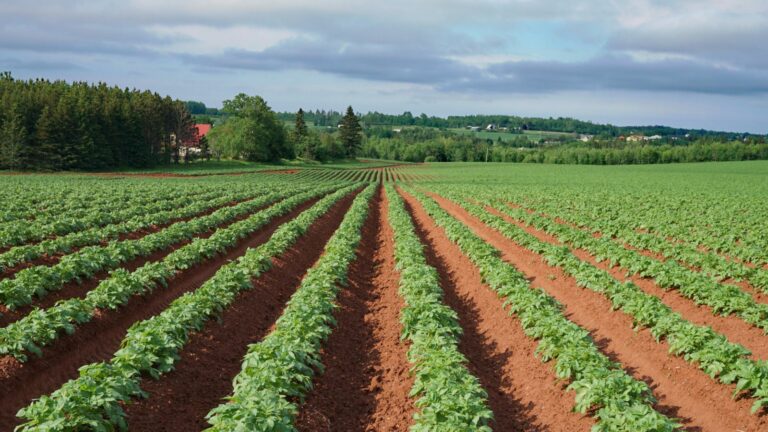
Even so, the issue has moved well beyond one field. In Prince Edward Island, potatoes are tied to farm income, rural jobs, trucking, storage, processing and export confidence. In Washington, the argument is being framed as a biosecurity fight that the United States cannot afford to lose.
A Single Field Has Become a Cross-Border Test
U.S. potato growers want Prince Edward Island potatoes blocked again
- A Single Field Has Become a Cross-Border Test
- Why Potato Wart Triggers So Much Alarm
- Prince Edward Island Has Too Much at Stake to Treat This Lightly
- The Shadow of the 2021 Shutdown Still Shapes Every Reaction
- The Real Fight Is Over Whether Canada’s Controls Are Convincing Enough
- What Happens Next Could Be Bigger Than This One Detection
The latest flare-up began with what sounds, on paper, like a narrow event: potato wart detected in soil from one PEI field. But farm trade disputes are rarely judged by acreage alone. The National Potato Council argues that the bigger problem is what the detection might imply. Its case is that a fresh finding in a field not previously tied to known detections raises new questions about how far the disease may have moved and whether present safeguards are strong enough. That is why the lobbying effort quickly escalated into a demand for a renewed U.S. block on fresh potatoes from the Island.
CFIA is presenting the situation much more narrowly. The agency says there is no current evidence of symptomatic tubers or spread to other fields, and it stresses that the farm does not export potatoes and grows seed only for on-farm use, with most of its crop headed to on-Island processing. That contrast is what gives the dispute its edge. One side is treating the new detection as a warning sign about the whole system; the other is treating it as a contained event that existing controls are built to handle.
Why Potato Wart Triggers So Much Alarm
Potato wart sounds cosmetic, but regulators treat it as a serious plant-health issue because it can devastate commercial value even though it poses no risk to people or food safety. The disease is caused by a soil-borne fungus that can deform tubers, cut yields and leave potatoes unmarketable. What makes officials especially cautious is its persistence. The spores can remain dormant in soil for decades, which means a contaminated field can stay under long-term restrictions long after the original crop is gone. For growers, that turns one detection into a problem that outlives a season, a contract and sometimes even a generation of farm planning.
The disease also moves in ways that make border agencies uneasy. It can spread through infected tubers, soil stuck to potatoes, farm equipment, tools, footwear and other soil-linked pathways. That is why the CFIA leans so heavily on soil sampling rather than waiting for visible symptoms to appear. Under Canada’s testing rules, a field is regulated after laboratory confirmation involving spore identification and molecular testing. The basic message is simple: by the time wart is obvious in a shipment, regulators believe the real problem may already be older and wider than it looks.
Prince Edward Island Has Too Much at Stake to Treat This Lightly
For PEI, this is not just a technical plant-health story. Potatoes are one of the province’s defining economic pillars. They accounted for nearly 35% of PEI’s total farm cash receipts in 2024, and even after a drought-hit 2025 season, the province still reported the largest seeded potato area in Canada. On the Island itself, the crop reaches far beyond the farm gate. PEI’s potato sector feeds processors, packers, trucking firms, input suppliers, storage operators and local communities that feel the impact every time trade rules shift. When an export scare emerges, it is not only growers who start doing the math.
The structure of the industry explains why market access matters so much. About 60% of PEI potatoes are grown for processing, 30% for the fresh market and 10% for seed, with seed and table potatoes shipped to more than 20 countries. At the national level, the United States remains overwhelmingly the key buyer for Canadian potato products. That makes any cross-border disruption larger than a provincial quarrel. Even if the farm tied to the new detection does not export, the headlines still land on every grower trying to protect contracts, manage storage risk and persuade buyers that PEI remains a dependable source.
The Shadow of the 2021 Shutdown Still Shapes Every Reaction
This story feels so charged because neither side is starting from a blank page. In late 2021, after new potato wart detections on PEI, exports of fresh potatoes from the Island to the United States were suspended. In spring 2022, exports for human consumption resumed, but PEI seed potatoes remained barred from the U.S. market. Since then, the trade relationship has never fully returned to normal political temperature. The memory of that shutdown still sits close to the surface in PEI, where growers watched an agronomic problem turn into a public symbol of economic vulnerability almost overnight.
The earlier ban also revealed how uneven the pain could be. USDA analysis at the time said U.S. imports from Canada account on average for about 10% of domestic table-stock supply, and that fresh imports from Canada were only 0.4% below the three-year average during the first three months after the PEI ban because other Canadian provinces helped fill the gap. In other words, the disruption was far more personal for PEI than existential for the broader U.S. market. Ottawa responded with support funding and surplus-potato measures, but the lesson stuck: when access to the U.S. tightens, the Island feels it first and hardest.
The Real Fight Is Over Whether Canada’s Controls Are Convincing Enough
Since the last crisis, Canada has not stood still. The CFIA says its new National Potato Wart Response Plan, finalized in March 2025 and effective with the 2025 crop, is meant to modernize the response with stronger preventive control plans, more soil analysis and tougher rules around restricted fields. The agency also says its 2024 national survey found no potato wart in more than 2,200 soil samples from seed-potato fields across multiple provinces. From Ottawa’s perspective, that is evidence of a system that is adapting, tightening and trying to preserve trade credibility through science-based controls.
The problem is that confidence is not the same thing as consensus. U.S. growers and their allies are openly arguing that the fresh detection undercuts the Canadian case. Their position is that a new field, apparently unconnected to previous findings, suggests the disease footprint may still be broader than known. The National Potato Council has also criticized the design of recent Canadian survey work and says Washington should respond more aggressively. CFIA, by contrast, says the risks tied to fresh potatoes remain negligible when mitigation measures are properly applied. That is the heart of the standoff: not whether potato wart matters, but whether current controls deserve to be trusted.
What Happens Next Could Be Bigger Than This One Detection
If Washington moves toward another block, the impact would reach beyond the fresh potatoes directly targeted by the latest demand. Fresh trade may be only one part of PEI’s marketing mix, but border actions send broader signals to buyers, processors and lenders. They affect contract talks, transport planning, storage decisions and the tone of future negotiations. A renewed restriction would also reopen a wider political argument about whether agricultural trade is being governed strictly by phytosanitary risk or partly by domestic industry pressure. That debate matters because once confidence slips, it can spread faster than any technical bulletin.
If the United States does not act immediately, the issue still will not fade on its own. PEI’s provincial government has already signalled support for the federal response plan and for CFIA’s handling of the detection, but the burden now is on Canadian officials to show that containment is real, testing is credible and communication is fast enough to prevent speculation from filling the gaps. For growers, the immediate question is practical: whether this remains a contained plant-health incident or becomes, again, a border story. For everyone else, it is a reminder that in farm trade, the smallest field can still trigger the loudest fight.
This Options Discord Chat is The Real Deal
While the internet is scoured with trading chat rooms, many of which even charge upwards of thousands of dollars to join, this smaller options trading discord chatroom is the real deal and actually providing valuable trade setups, education, and community without the noise and spam of the larger more expensive rooms. With a incredibly low-cost monthly fee, Options Trading Club (click here to see their reviews) requires an application to join ensuring that every member is dedicated and serious about taking their trading to the next level. If you are looking for a change in your trading strategies, then click here to apply for a membership.