35,000+ smart investors are already getting financial news, market signals, and macro shifts in the economy that could impact their money next with our FREE weekly newsletter. Get ahead of what the crowd finds out too late. Click Here to Subscribe for FREE.
A foreign interference story rarely begins with a dramatic headline. More often, it starts quietly: an online smear campaign, pressure on a community leader, a suspicious outreach effort to a local politician, or a cyber intrusion that never makes the evening news. That is why the latest warning matters. Recent reporting on a comparative study says Chinese interference across G7 countries is not best understood as a series of disconnected episodes, but as a recurring pattern woven through democratic systems.
That framing lands at a moment when G7 governments are already treating foreign interference, information manipulation, and transnational repression as shared security challenges. The real concern is not only whether a single election or institution is targeted. It is whether trust, openness, and civic confidence are being steadily weakened over time.
A Pattern, Not a String of Isolated Incidents
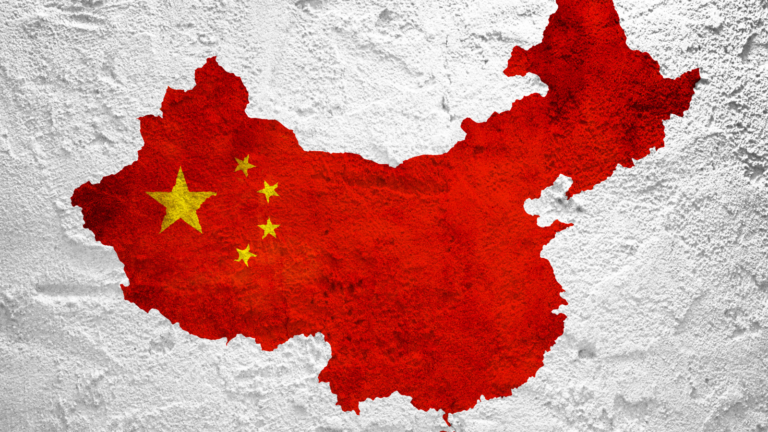
Report Warns Chinese Interference Across G7 Countries Is ‘Systemic’
- A Pattern, Not a String of Isolated Incidents
- Canada Has Become a Warning Case
- Diaspora Communities Often Feel the Pressure First
- The Digital Front Is Expanding Faster Than Institutions Can Adapt
- City Halls, Campuses, and Community Networks Are the Soft Spots
- Democracies Still Struggle to Name the Threat and Respond Cleanly
- Governments Are Building Defenses, but They Are Not Moving at the Same Speed
- The G7’s Real Test Is Whether It Can Act Like a System Too
Calling the problem “systemic” changes the conversation. It suggests Chinese interference is not limited to one bad actor, one platform, or one election cycle. Instead, it points to a method: pressure where democracies are open, fragmented, and easiest to exploit. That can mean political influence efforts, disinformation, harassment of diaspora voices, covert relationship-building, or cyber activity aimed at gathering leverage rather than causing immediate chaos. The danger is cumulative. Each incident may seem manageable on its own, but together they create a climate in which democratic institutions are forced to spend more time defending themselves and less time governing.
That broader view is supported by how democracies now describe the threat. Canada’s foreign influence law explicitly warns that non-transparent foreign influence can have systemic effects across the country. Freedom House, meanwhile, has documented 1,375 direct physical incidents of transnational repression by 54 governments in 107 host countries between 2014 and 2025. Those figures do not capture every online threat, coerced phone call, or warning passed through family members abroad. In other words, the visible cases are likely only the surface of a larger pattern.
Canada Has Become a Warning Case
Canada offers one of the clearest examples of why the issue can no longer be treated as abstract. Justice Marie-Josée Hogue’s foreign interference inquiry concluded that the People’s Republic of China is the most active perpetrator of state-based foreign interference targeting Canada’s democratic institutions. The report described a wide network of tools: diplomatic officials, party-linked influence structures, proxies, cyber activity, and online disinformation. It also stressed that the activity is not confined to Parliament Hill. The targeting can extend across different levels of government, which is one reason the phrase “whole-of-society challenge” keeps resurfacing in official language.
What makes that finding land so hard is the contrast between drama and damage. The public often looks for proof that an election was “stolen,” but democratic erosion usually works differently. A campaign may not flip a national result and still leave real harm behind. Trust falls. Communities feel watched. Politicians become more cautious. Officials grow slower and more defensive. Reuters’ reporting on the inquiry captured that distinction well: the probe found Canada’s election outcomes were not altered, but public confidence was damaged and the government’s response was too slow. That is exactly how a systemic threat behaves.
Diaspora Communities Often Feel the Pressure First
Foreign interference becomes most human when it reaches into the lives of people who thought distance would bring safety. A student, activist, journalist, or business owner may live in a democratic country, yet still feel the reach of an authoritarian state through threatening calls, monitoring, online intimidation, or warnings delivered to relatives back home. The Montreal Institute for Global Security describes transnational repression in Canada as a serious and under-recognized threat to democracy and public safety. Its report argues that the issue should not be seen as a collection of isolated cases, because the result is broader political silencing inside diaspora communities.
That assessment matches other recent findings. The Asia Pacific Foundation of Canada summarized 2024 survey results showing that most Canadians see foreign interference as a serious democratic threat, while many respondents from Chinese, Hong Kong, Tibetan, Taiwanese, and Uyghur communities reported experiencing transnational repression, often through online harassment and threatening calls. Freedom House found Canada began holding outreach meetings in major cities in early 2025 with diaspora groups, bringing together Public Safety Canada, the RCMP, Justice Canada, and CSIS. That is a telling development. Governments do not organize those meetings unless the problem has moved well beyond theory.
The Digital Front Is Expanding Faster Than Institutions Can Adapt
Interference now travels through a mixed ecosystem of propaganda, manipulated narratives, hacked accounts, fake personas, and algorithmic amplification. The old image of a spy passing envelopes in a parking lot has not disappeared, but it is no longer enough to describe the threat. The U.S. State Department has warned that China’s approach to reshaping the information environment relies on propaganda, censorship, and coercive influence at global scale. France’s VIGINUM, created in 2021, was built specifically to detect and characterize foreign digital information manipulation campaigns aimed at harming French interests. Its recent work also warns that generative AI is making manipulative operations faster, more scalable, and harder to interpret in real time.
Japan has already seen what that convergence looks like in practice. In 2025, Japanese authorities linked more than 200 cyberattacks conducted between 2019 and 2024 to the China-linked group MirrorFace, saying the operations systematically targeted ministries, politicians, journalists, companies, and think tanks tied to national security and advanced technology. The point is not only that cyberattacks happened. It is that the targets formed a map of democratic resilience: government, media, research, and industry. That is why interference today feels less like a single offense and more like constant pressure testing.
City Halls, Campuses, and Community Networks Are the Soft Spots
One of the sharpest insights in the latest reporting is the emphasis on the local level. National governments tend to focus on summits, sanctions, and major elections. But foreign interference often finds easier openings lower down, where resources are thinner and security culture is weaker. A mayor’s office, a school board, a university lab, a local ethnic media outlet, or a neighborhood civic association may not think of itself as a national security target. That assumption can be a vulnerability in itself.
Recent analysis in North America has highlighted exactly that danger. Strong Cities Network warned that foreign information operations are not just a federal issue and can target municipalities, local elections, and community cohesion. In the U.K., new guidance from MI5’s National Protective Security Authority is aimed not just at MPs, but also peers, councillors, candidates, and parliamentary staff. France’s new national strategy similarly leans on local networks, public education, and distributed resilience rather than purely central control. That makes sense. In democratic societies, influence often moves through familiar institutions first. By the time a problem reaches the national stage, it may already have taken root locally.
Democracies Still Struggle to Name the Threat and Respond Cleanly
Even when governments know interference is happening, acting on that knowledge is difficult. Intelligence is often classified. Evidence can be fragmentary. Public attribution is politically sensitive. Victims may fear becoming more visible if they speak up. Canada’s NSICOP special report underscored this tension by noting that much of its work relied on classified reporting and had to be revised before publication. That is a reminder of a basic problem: democracies are trying to explain a covert threat without exposing the sources and methods used to track it.
There is also a legal mismatch. Some perpetrators operate from abroad, beyond the practical reach of domestic prosecutions. The Asia Pacific Foundation of Canada recently highlighted that gap, noting that many transnational repression actors outside North America remain difficult to reach through ordinary legal channels. Freedom House has also warned that democratic countries still leave loopholes open, including weak reporting systems and the misuse of migration or Interpol processes. In 2025 alone, it documented at least 11 cases in which detention or unlawful deportation involved Interpol notices. That helps explain why victims often describe the experience as exhausting rather than cinematic. The pressure is diffuse, bureaucratic, and hard to prove all at once.
Governments Are Building Defenses, but They Are Not Moving at the Same Speed
The response across democratic countries is becoming more serious, but it is still uneven. Canada’s Foreign Influence Transparency and Accountability Act received royal assent in 2024, and Ottawa moved in 2026 to name a proposed commissioner to oversee a public registry of foreign influence activities. The U.K. launched its Foreign Influence Registration Scheme in July 2025 and continues to run its Defending Democracy Taskforce. Germany’s domestic intelligence service set up a task force to protect its federal election from illegitimate foreign influence. France has gone further on the information side, adopting a 2026–2030 national strategy that treats resilience against foreign information manipulation as a national priority.
Still, new tools do not automatically equal real protection. A registry only works if it is enforced. A task force only matters if it shares intelligence quickly enough to be useful. Public awareness campaigns help, but they do not replace prosecutions, diplomatic consequences, or protection for people already under pressure. Perhaps most importantly, governments must avoid making diaspora communities feel like suspects rather than victims. The most effective programs increasingly focus on trust-building, multilingual outreach, and clear reporting pathways. That is less dramatic than a splashy law, but in practice it may be more important.
The G7’s Real Test Is Whether It Can Act Like a System Too
If the threat is systemic, the response has to be systemic as well. That means the G7 cannot rely on occasional communiqués and reactive statements every time a new incident surfaces. It needs repeatable habits: shared definitions, faster attribution, common reporting standards, practical local-level playbooks, and visible support for communities most often targeted. The G7 Rapid Response Mechanism was created in 2018 for exactly this kind of coordinated work, and it has since expanded its role in responding to foreign information manipulation and transnational repression. Its recent publications show a bloc trying to move from awareness toward common operating frameworks.
That is where the latest warning becomes useful rather than merely alarming. A report that says Chinese interference across G7 countries is systemic is really arguing that democracies should stop treating each case as an exception. The smarter posture is to assume pressure will continue, adapt institutions accordingly, and build resilience far below the summit level. In the end, the G7’s strength is not just military or economic. It is institutional trust. If that trust is the target, then protecting it has to become routine, not episodic.
This Options Discord Chat is The Real Deal
While the internet is scoured with trading chat rooms, many of which even charge upwards of thousands of dollars to join, this smaller options trading discord chatroom is the real deal and actually providing valuable trade setups, education, and community without the noise and spam of the larger more expensive rooms. With a incredibly low-cost monthly fee, Options Trading Club (click here to see their reviews) requires an application to join ensuring that every member is dedicated and serious about taking their trading to the next level. If you are looking for a change in your trading strategies, then click here to apply for a membership.