35,000+ smart investors are already getting financial news, market signals, and macro shifts in the economy that could impact their money next with our FREE weekly newsletter. Get ahead of what the crowd finds out too late. Click Here to Subscribe for FREE.
Summer travel in Canada does not have to mean joining the longest line, paying the steepest weekend rate, or fighting for the same viewpoint everyone has already photographed. Beyond the country’s best-known parks and resort towns are places with strong scenery, real local character, and enough substance to reward a longer stay. These 21 Canadian destinations feel smarter than the usual summer hotspots because they offer a better mix of nature, culture, pacing, and discovery. Some are coastal towns with working-harbour charm, others are prairie dark-sky escapes, island parks, lake communities, or mountain regions that still feel refreshingly specific rather than overpackaged.
Prince Edward County, Ontario
21 Canadian Destinations That Feel Smarter Than the Usual Summer Hotspots
- Prince Edward County, Ontario
- Thousand Islands, Ontario
- Bruce Peninsula, Ontario
- Pukaskwa National Park, Ontario
- Lunenburg, Nova Scotia
- Kejimkujik National Park and National Historic Site, Nova Scotia
- Fundy National Park, New Brunswick
- Kouchibouguac National Park, New Brunswick
- Basin Head, Prince Edward Island
- Charlevoix, Quebec
- Parc national du Bic, Quebec
- Mingan Archipelago, Quebec
- Riding Mountain National Park, Manitoba
- Hecla-Grindstone Provincial Park, Manitoba
- Churchill, Manitoba
- Grasslands National Park, Saskatchewan
- Prince Albert National Park and Waskesiu, Saskatchewan
- Waterton Lakes National Park, Alberta
- Kootenay National Park and Radium, British Columbia
- Sunshine Coast and Desolation Sound, British Columbia
- Kluane National Park and Reserve, Yukon
- 19 Things Canadians Don’t Realize the CRA Can See About Their Online Income

Prince Edward County has become a clever summer alternative for travellers who want beaches, food, wine, and small-town atmosphere without defaulting to Muskoka or Niagara-on-the-Lake. Its appeal comes from variety packed into a relatively compact area: sandy shorelines, rural roads, farm stands, galleries, cideries, and winery patios sit close enough together to make the day feel unhurried. Sandbanks Provincial Park remains the headline attraction, but the county works best when it is treated as more than a beach stop.
The smarter move is to build time around Picton, Bloomfield, Wellington, and quieter country lanes rather than rushing only toward the dunes. A couple might spend the morning swimming, the afternoon browsing a converted barn market, and the evening eating local produce near a vineyard. The result feels polished but not corporate, with enough independent businesses to keep the destination rooted in place.
Thousand Islands, Ontario
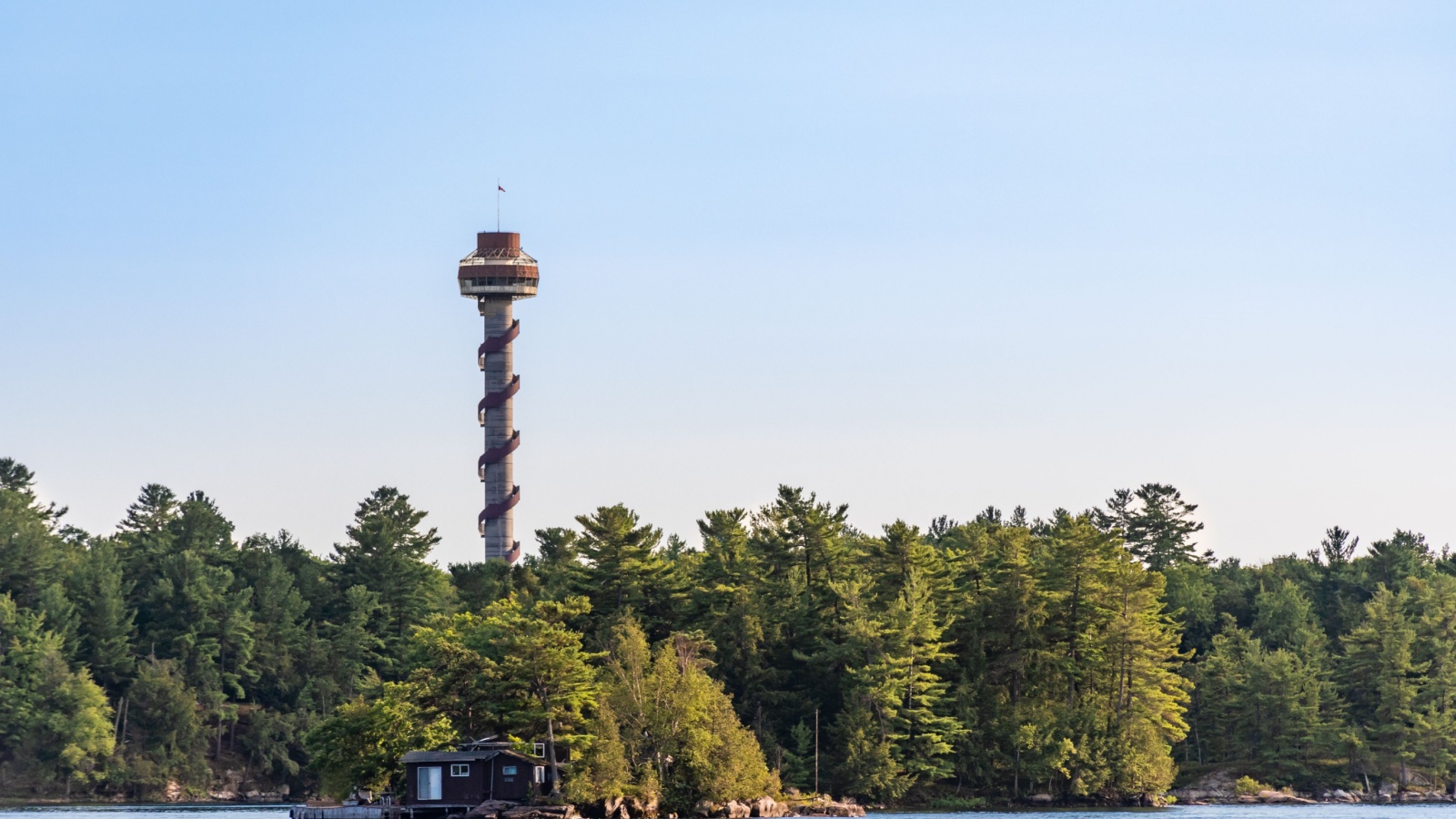
The Thousand Islands can feel like a smarter summer choice because it delivers classic Ontario water scenery without requiring a cottage rental or a full week away. Stretching along the St. Lawrence River near Gananoque, Brockville, and Kingston, the region rewards slow boat rides, kayaking, waterfront cycling, and low-key island exploration. Thousand Islands National Park adds a protected natural layer, with paddling routes, island campsites, and oTENTik-style stays that make the area feel more adventurous than a standard lakeside weekend.
What makes the region especially appealing is how flexible it can be. A family can stay in town and take a short cruise; experienced paddlers can plan a more active route; history-minded visitors can pair river views with heritage stops. The landscape has an almost storybook quality, with cottages, granite outcrops, and pine-covered islands scattered across international waters.
Bruce Peninsula, Ontario

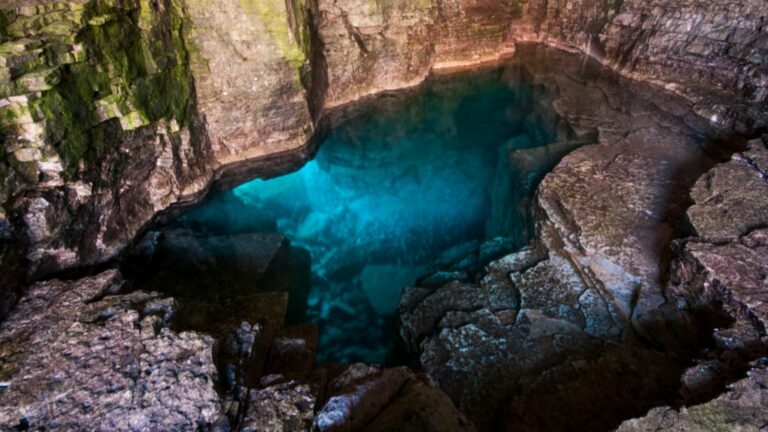
The Bruce Peninsula is not unknown, but it still earns a place here because it rewards planning in a way many obvious summer hotspots do not. The turquoise waters near Tobermory, the cliffs of the Niagara Escarpment, and the caves and shoreline around Bruce Peninsula National Park create scenery that feels almost Caribbean at first glance. Yet the real advantage is that the area supports many kinds of trips: hiking, boat tours, camping, diving, paddling, and quieter village stays.
The smart approach is to avoid treating the Grotto as the entire destination. Parking reservations, weather, and trail conditions matter, so travellers who plan ahead often have a much better experience. Nearby Lion’s Head, Sauble Beach, and Flowerpot Island can round out the trip. Instead of one crowded photo stop, the peninsula becomes a full Georgian Bay escape with structure, variety, and dramatic natural contrast.
Pukaskwa National Park, Ontario

Pukaskwa National Park feels like a hidden heavyweight on Lake Superior’s north shore. While many summer road trips stop at better-known Great Lakes beaches, Pukaskwa offers a wilder experience: boreal forest, rugged shoreline, backcountry paddling, driftwood beaches, and the White River Suspension Bridge high above rushing water. It is the kind of place where the scale of Lake Superior becomes impossible to ignore, especially when fog, wind, and sunlight change the mood within an hour.
The destination suits travellers who want a stronger sense of remoteness without leaving Ontario. Hattie Cove offers a practical base, while day hikes give visitors a taste of the larger coastal wilderness. A summer evening here can feel surprisingly quiet: waves rolling in, spruce trees moving in the wind, and a sky that darkens far from urban light. It is not effortless, but that is part of the point.
Lunenburg, Nova Scotia

Lunenburg is a smarter summer destination for travellers who want beauty with historical depth. The town’s colourful waterfront is instantly photogenic, but its value runs deeper than bright buildings and harbour views. Old Town Lunenburg is recognized as an exceptional example of a planned British colonial settlement in North America, and its street grid, wooden architecture, and maritime setting give the town a distinctive identity that many resort-style destinations lack.
Summer days here can move comfortably between walking tours, seafood lunches, sailing culture, galleries, and drives along Nova Scotia’s South Shore. The working-harbour feel helps prevent the town from becoming only a postcard. A visitor might watch boats in the morning, wander steep streets lined with heritage homes in the afternoon, and end the day with scallops near the water. Lunenburg feels polished, but still lived-in.
Kejimkujik National Park and National Historic Site, Nova Scotia

Kejimkujik is one of Nova Scotia’s most rewarding summer choices because it combines wilderness, cultural history, and night-sky appeal in one place. Inland Kejimkujik is known for paddling routes, lakes, forest trails, camping, and Mi’kmaw cultural connections, including protected petroglyphs that speak to thousands of years of presence on the land. Its designation as both a national park and national historic site gives it a rare layered identity.
The destination is especially smart for travellers who want a quieter alternative to the busiest Atlantic coast stops. A day might include canoeing still water, biking under tall trees, and joining an interpreter-led experience before watching stars after dark. Kejimkujik Seaside adds another dimension with coastal trails and ocean views. It is not a single-viewpoint destination; it is a place that unfolds slowly, rewarding people who stay long enough to listen.
Fundy National Park, New Brunswick

Fundy National Park offers one of the most distinctive summer experiences in Canada because the landscape visibly changes with the tide. At low tide, visitors can walk across exposed ocean floor; at high tide, the same area becomes a paddling and coastal-viewing environment. The Bay of Fundy’s tidal range is central to the park’s identity, but the inland experience is just as important, with Acadian forest trails, waterfalls, and campgrounds that create a full outdoor itinerary.
It feels smarter than a standard beach trip because the timing of the day matters. Tide tables become part of the travel rhythm, turning a simple shoreline visit into something more memorable. The nearby village of Alma adds seafood, harbour activity, and practical lodging. Families, hikers, and photographers all get different versions of the same place, which helps Fundy feel active without feeling overdesigned.
Kouchibouguac National Park, New Brunswick

Kouchibouguac is a strong summer pick for travellers who want beaches, cycling, warm coastal water, and wildlife-rich landscapes in a less obvious Atlantic setting. The park protects a mix of dunes, lagoons, estuaries, salt marshes, forests, and barrier islands along the Northumberland Strait. That variety makes it more than a place to spread a towel; it is a living coastal system that can be explored by bike, canoe, foot, or interpretive program.
The atmosphere is relaxed but not empty. Kellys Beach, boardwalks, and cycling trails make the park approachable for families, while the surrounding Mi’gmaq and Acadian cultural context adds meaning to the landscape. A smart summer day might include an early ride, a beach swim, and a quiet evening under dark skies. Kouchibouguac feels like a place designed by nature first and tourism second.
Basin Head, Prince Edward Island

Basin Head is a clever PEI choice for travellers who want a memorable beach without making the entire trip revolve around Cavendish. The park is famous for its “Singing Sands,” a nickname tied to the sound the high-silica sand can make when walked on. Its white sand, supervised beach, fisheries museum, washrooms, concessions, and family-friendly layout make it practical as well as distinctive.
The beach’s divided layout, with a channel known locally as “the run,” gives Basin Head a social energy that differs from a quiet shoreline walk. Teenagers jump, families swim, and visitors linger longer than planned because the setting feels playful without needing much added entertainment. Pairing Basin Head with nearby Souris, coastal drives, and local seafood makes eastern PEI feel like a destination in its own right rather than a detour.
Charlevoix, Quebec

Charlevoix feels smarter than a typical city-break or resort escape because it offers a rare combination of St. Lawrence River scenery, mountain villages, food culture, art, and protected natural significance. The region, northeast of Quebec City, is part of a UNESCO biosphere reserve, with landscapes shaped by river ecosystems, forests, tidal zones, mountains, and long-settled communities. That mix creates a sense of place that feels dramatic but still human-scale.
Summer travellers can move between Baie-Saint-Paul galleries, La Malbaie views, farm-to-table restaurants, whale-watching routes nearby, and national parks such as Grands-Jardins or Hautes-Gorges-de-la-Rivière-Malbaie. The result is not one big attraction but a region that rewards curiosity. A long weekend can feel both outdoorsy and cultured, especially for travellers who want Quebec charm without relying entirely on Old Quebec’s busiest streets.
Parc national du Bic, Quebec
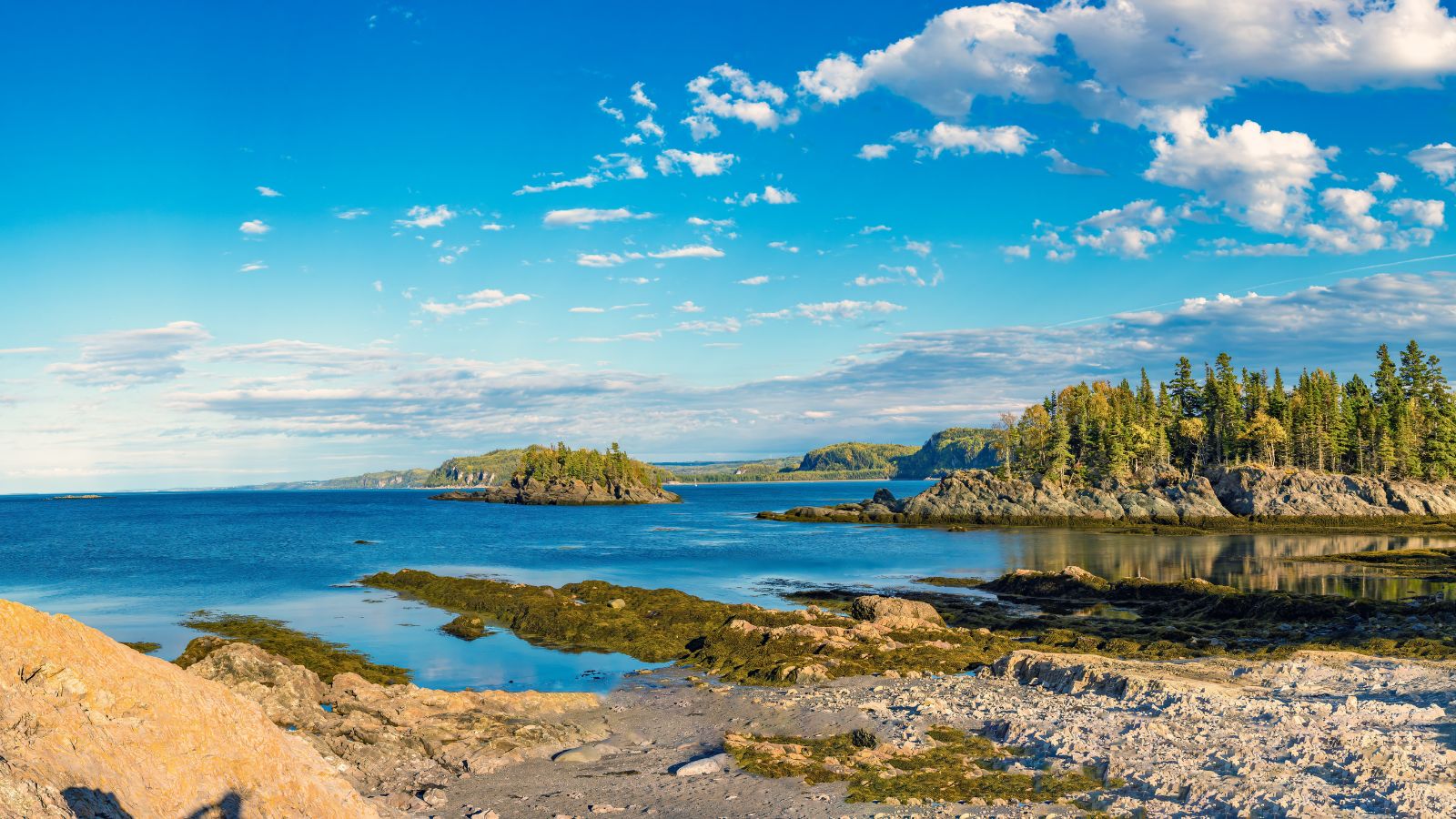
Parc national du Bic is one of the smartest St. Lawrence summer escapes because it feels coastal, rugged, and intimate all at once. Located near Rimouski, the park is known for coves, capes, islands, tidal flats, and shoreline trails where timing matters. Visitors often plan walks and viewpoints around the tides, which gives even a short hike a sense of discovery. The landscape feels sculpted rather than merely scenic.
The park is also closely associated with wildlife observation, particularly seals seen from designated areas when conditions are right. It suits travellers who like quiet drama: mist over the estuary, wind-shaped trees, rocky points, and light shifting across the water. Compared with more famous Quebec summer stops, Bic offers a slower rhythm. The experience is less about checking off attractions and more about watching the estuary change.
Mingan Archipelago, Quebec
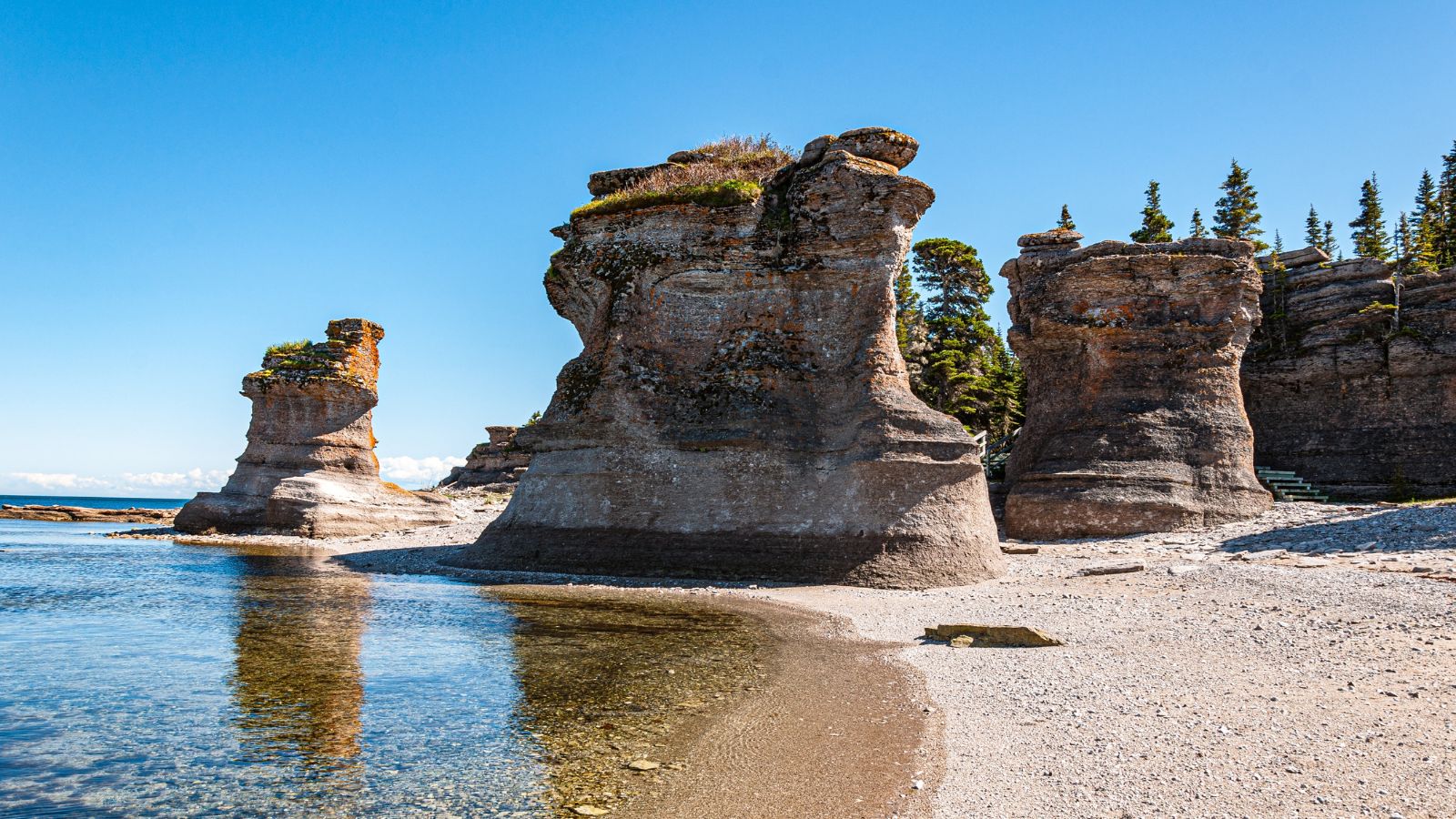
The Mingan Archipelago is a brilliant choice for travellers who want a Canadian destination that feels truly different. Located on Quebec’s North Shore, the national park reserve is known for limestone monoliths, islands, islets, seabirds, seals, and a maritime landscape that looks almost otherworldly. The stone formations are shaped by erosion and weather, giving the shoreline a sculptural quality that feels far removed from standard summer scenery.
Because reaching the area takes more commitment, the reward feels greater. Boat excursions, island walks, coastal villages, and long northern light make the trip feel expedition-like without requiring extreme travel skills. The experience suits photographers, geology lovers, birders, and travellers tired of crowded boardwalks. A day among the monoliths can feel like stepping into a natural gallery, with the Gulf of St. Lawrence setting the scale.
Riding Mountain National Park, Manitoba

Riding Mountain National Park is a smart summer alternative because it combines prairie accessibility with forested parkland, lakes, wildlife, and a classic resort-town base at Wasagaming. The park protects a landscape that rises from surrounding farmland into a mix of grasslands, boreal forest, wetlands, and lakes. Clear Lake gives the area its summer-holiday centre, but the park becomes more interesting when visitors go beyond the main beach.
The Lake Audy Bison Enclosure adds a memorable wildlife dimension, with a small herd of plains bison visible from the road when conditions cooperate. Travellers can hike, cycle, paddle, camp, or simply use Wasagaming as a relaxed base for ice cream, evening walks, and lake sunsets. Riding Mountain feels approachable without feeling ordinary, especially for families or road-trippers looking for a western park that is not in the Rockies.
Hecla-Grindstone Provincial Park, Manitoba
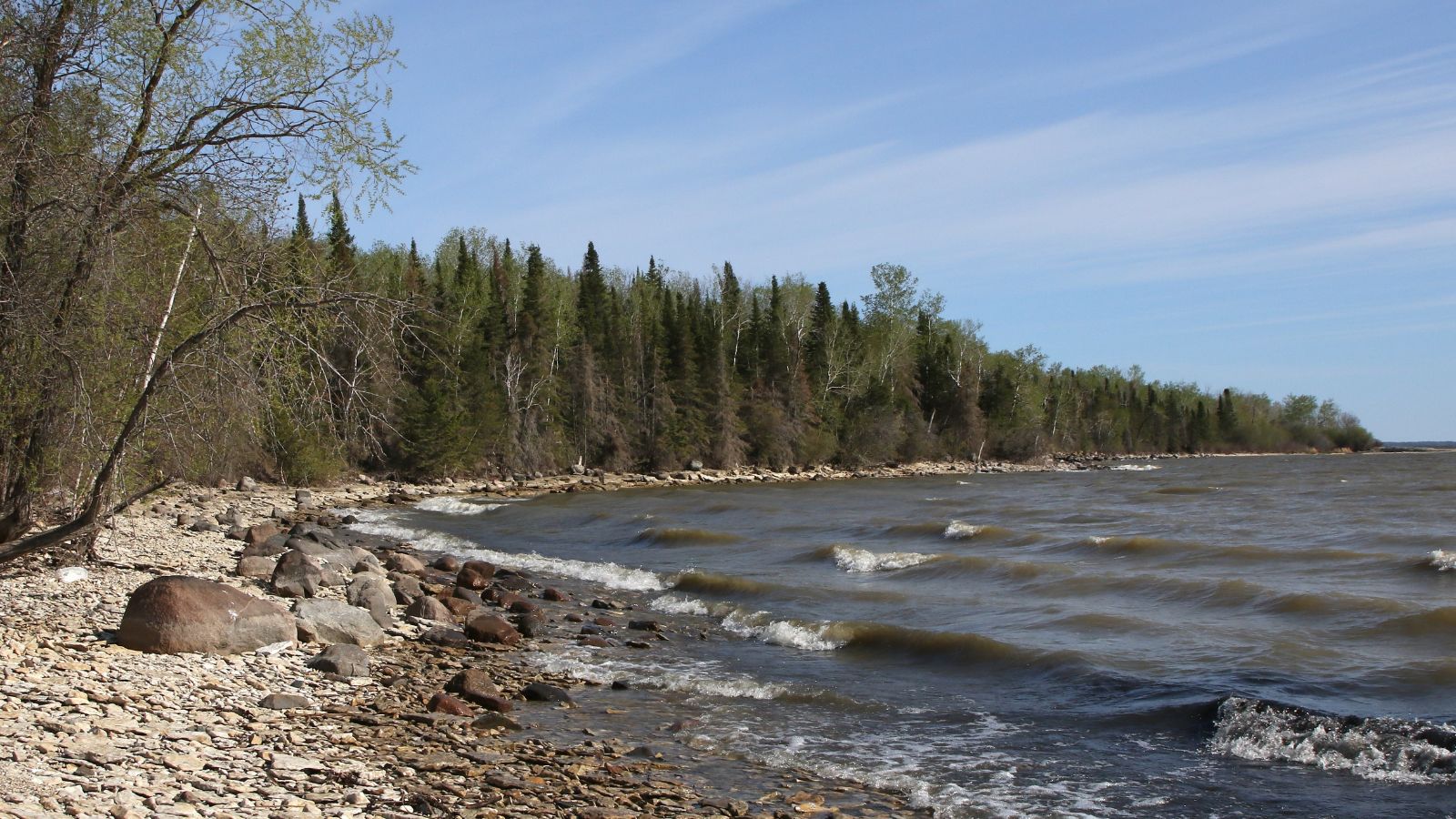
Hecla-Grindstone Provincial Park is a smart pick for travellers who want an island-style summer escape in the middle of the Prairies. Set on Lake Winnipeg, the park includes Hecla Island, Grindstone, Black Island, and other smaller islands and shoreline areas. Its mix of beaches, fishing culture, trails, marina facilities, historic settlement, and big-lake weather makes it feel more coastal than many visitors expect from Manitoba.
The destination works because it has range. A family might swim and picnic; a couple might explore the historic village and shoreline roads; anglers and boaters can build an entire trip around the lake. The Icelandic heritage of the area adds texture, while the size of Lake Winnipeg gives sunsets and storms a dramatic scale. It is a reminder that smart summer travel is not always about going farther west or east.
Churchill, Manitoba

Churchill is not a casual weekend choice, but that is exactly why it can feel smarter for travellers seeking something unforgettable. While the town is famous for polar bears in autumn, summer brings beluga whales into the Churchill River and Hudson Bay region. Thousands of belugas migrate into the area, creating opportunities for boat-based viewing, kayaking experiences, and wildlife-focused trips that feel very different from a standard beach holiday.
The destination also offers tundra landscapes, northern culture, birding, and the sense of reaching the edge of a larger Arctic world. It requires planning, budget, and respect for local conditions, but the payoff is enormous. A summer traveller might hear belugas vocalizing near a boat, see wildflowers across the tundra, and watch the long northern evening stretch over Hudson Bay. Few Canadian trips feel as distinctive.
Grasslands National Park, Saskatchewan

Grasslands National Park feels like a smart summer destination because it offers a form of beauty many travellers overlook: open prairie, badlands, silence, wildlife, and some of the darkest skies in Canada. The park’s East and West Blocks reveal different moods, from rolling grasslands to eroded formations and wide horizons. It is not a place built around shade, shops, or quick entertainment; it is built around space.
That makes planning important. Summer visitors should respect heat, distance, limited services, and changing weather, but those who prepare are rewarded with prairie dog colonies, possible bison sightings, hiking routes, and extraordinary night skies. The dark-sky experience is especially powerful because the landscape offers few visual interruptions. A campsite under the Milky Way can feel more luxurious than a busy resort, precisely because there is so little between the traveller and the sky.
Prince Albert National Park and Waskesiu, Saskatchewan

Prince Albert National Park offers a smarter Saskatchewan summer escape because it blends boreal nature with the convenience of Waskesiu Lake townsite. The park has lakes, trails, campgrounds, wildlife viewing, paddling, beaches, and practical services, which makes it easier for mixed-interest groups than more remote wilderness areas. Waskesiu gives the trip a social centre without overwhelming the natural setting around it.
The destination works especially well for travellers who want a lake holiday with more depth. A morning can be spent hiking or cycling, the afternoon on the water, and the evening in town for a meal or walk near the marina. The park also carries cultural and historical associations, including Grey Owl-related sites in the broader park story. It feels familiar enough for comfort but substantial enough to avoid feeling generic.
Waterton Lakes National Park, Alberta

Waterton Lakes National Park is a smarter Rocky Mountain summer choice for travellers who want alpine scenery without automatically joining the busiest corridors around Banff and Lake Louise. Located where Alberta’s prairies meet the Rocky Mountains, Waterton packs lakes, waterfalls, colourful rock, steep trails, wind, wildflowers, and townsite convenience into a compact area. Its setting feels striking because the mountains rise so abruptly from open grassland.
Waterton also carries international significance through the Waterton-Glacier International Peace Park and UNESCO recognition. The park’s scale makes it easier to understand in a short visit, but the terrain still feels dramatic. A visitor might hike early, pause at Cameron Falls, drive Red Rock Parkway if open, and watch evening light move across Upper Waterton Lake. It feels less like a checklist and more like a concentrated mountain experience.
Kootenay National Park and Radium, British Columbia

Kootenay National Park is a smart summer pick for travellers who want the Rockies with a slightly different rhythm. Running between Banff-area mountain corridors and Radium Hot Springs, the park offers Marble Canyon, the Paint Pots, Numa Falls, Kootenay River viewpoints, and hot-spring access near the village. It feels like a drive-through park at first, but visitors who stop often discover a varied landscape of cliffs, mineral colour, forest, and mountain water.
Radium adds practical comfort, including accommodations, restaurants, and the famous hot springs nearby. The destination works well for road-trippers who want a Rockies experience without anchoring every day around the most photographed Alberta lakes. A smart itinerary might pair a morning canyon walk, an afternoon scenic drive, and an evening soak. It is accessible, restorative, and visually rich without needing to be loud about it.
Sunshine Coast and Desolation Sound, British Columbia

British Columbia’s Sunshine Coast feels smarter than many classic summer hotspots because it is close to Vancouver yet separated by ferry, which naturally changes the pace. The region stretches along the southwest mainland coast toward Powell River and Desolation Sound, with communities, beaches, lakes, forest trails, artist studios, breweries, and marine routes spread along the way. It is connected, but not rushed.
Desolation Sound adds a more adventurous layer, especially for kayaking, boating, and coastal exploration. The sheltered waters, mountain backdrops, and access to islands make the region feel expansive even when the itinerary is simple. A traveller might spend one day in Gibsons or Sechelt, another moving toward Lund or Powell River, and another on the water. It suits people who want West Coast scenery without turning the trip into a Vancouver Island rerun.
Kluane National Park and Reserve, Yukon

Kluane National Park and Reserve is one of Canada’s most compelling smarter-than-usual summer destinations because its scale is almost beyond comparison. The park and surrounding protected area are associated with massive icefields, glaciers, Dall sheep, grizzlies, alpine valleys, and Mount Logan, Canada’s highest peak. It is not a conventional sightseeing park; much of its power comes from seeing how enormous the landscape is.
Summer access through Haines Junction and nearby routes allows travellers to experience trails, viewpoints, flightseeing, cultural interpretation, and lake scenery without needing to mount an expedition. Still, the destination demands humility. Weather, distance, and wilderness conditions shape the trip. For travellers who have already seen the country’s most familiar postcard scenes, Kluane offers something rarer: a reminder that Canada’s most memorable summer places are not always the easiest to summarize.
19 Things Canadians Don’t Realize the CRA Can See About Their Online Income

Earning money online feels simple and informal for many Canadians. Freelancing, selling products, and digital services often start as side projects. The problem appears at tax time. Many people underestimate how much information the CRA can access. Online platforms, banks, and payment processors create detailed records automatically. These records do not disappear once money hits an account. Small gaps in reporting add up quickly.
Here are 19 things Canadians don’t realize the CRA can see about their online income.
This Options Discord Chat is The Real Deal
While the internet is scoured with trading chat rooms, many of which even charge upwards of thousands of dollars to join, this smaller options trading discord chatroom is the real deal and actually providing valuable trade setups, education, and community without the noise and spam of the larger more expensive rooms. With a incredibly low-cost monthly fee, Options Trading Club (click here to see their reviews) requires an application to join ensuring that every member is dedicated and serious about taking their trading to the next level. If you are looking for a change in your trading strategies, then click here to apply for a membership.