35,000+ smart investors are already getting financial news, market signals, and macro shifts in the economy that could impact their money next with our FREE weekly newsletter. Get ahead of what the crowd finds out too late. Click Here to Subscribe for FREE.
Big investment decisions rarely go wrong because of one dramatic headline. More often, they go wrong because a cluster of quieter signals gets ignored until the money is already committed. In Canada right now, those signals are showing up in inflation data, household balance sheets, mortgage renewals, labour-market softness, and even in how concentrated the domestic stock market really is.
These 18 signals matter because they sit underneath the usual talking points. They affect risk tolerance, expected returns, tax efficiency, and how much room a portfolio really has to absorb a mistake. Looked at together, they create a more grounded picture of what Canadians should weigh before making a large move.
Headline inflation is still sending mixed messages
18 Money Signals Canadians Are Missing Right Before Making Big Investment Decisions
- Headline inflation is still sending mixed messages
- Core inflation matters more than the comforting narrative
- The Bank of Canada is paused, not permissive
- A soft labour market changes more than job security
- Wage growth is stronger than many investors assume
- Household debt is still doing most of the talking
- Debt-service strain is easing, but only a little
- Mortgage renewals are not yesterday’s problem
- Credit stress is appearing before panic headlines do
- GDP can look decent until it is measured per person
- Housing weakness changes how people feel about wealth
- Consumer caution is showing up in spending plans
- The TSX is more concentrated by sector than it feels
- A broad Canadian fund can still be a home-bias bet
- Oil still reaches far beyond energy stocks
- Fees are small enough to ignore until they are not
- Tax shelter room changes the return equation immediately
- A market can feel safe and still not be cheap
- 19 Things Canadians Don’t Realize the CRA Can See About Their Online Income

A lot of investors relax the moment inflation looks “normal enough,” but headline inflation can still distort judgment when it changes for the wrong reasons. In Canada, a seemingly manageable annual CPI reading can hide sharp month-to-month pressure in categories that people actually feel right away, especially fuel, rent, and restaurant prices. That matters because investors do not make decisions in a vacuum. They make them while paying for groceries, driving to work, and watching monthly bills inch higher.
When those visible costs rise, even temporarily, behaviour changes. Households become more cautious, discretionary spending slows, and big commitments start feeling riskier. That can shape everything from bank earnings expectations to retail demand and housing sentiment. A portfolio decision made during a gasoline spike or renewed sticker shock often looks emotional only in hindsight. In real time, it feels rational. That is why headline inflation remains a money signal, not just a policy statistic.
Core inflation matters more than the comforting narrative

Headline inflation gets the attention, but core inflation is often the better clue for what central bankers and long-term investors are really watching. If headline inflation drops because of one-off energy moves while underlying price pressure stays sticky, markets can overreact to the wrong story. In Canada, the more durable inflation measures have cooled, but not so dramatically that they can be dismissed. That is a different message from “mission accomplished.”
For investors, the distinction is practical. Sticky core inflation can keep borrowing costs higher than expected, slow the case for easier policy, and put pressure on valuations that depend on cheap money returning quickly. It also changes how to think about businesses. Companies with pricing power, recurring revenue, or less sensitivity to financing costs tend to look sturdier when core inflation lingers. A market that appears calm on the surface can still be repricing beneath it if the more persistent inflation gauges refuse to cooperate.
The Bank of Canada is paused, not permissive

Many Canadians still think in two outdated frames: either rates are rising aggressively, or easy money is about to come back. The current backdrop is less dramatic and more dangerous because it invites complacency. A pause is not the same thing as relief. When the central bank holds rates steady while warning that future moves depend on inflation, energy, and global uncertainty, it is effectively telling investors not to build a plan around one clean outcome.
That matters because big investment decisions are often financed decisions in disguise. Buying more equities, extending duration, purchasing rental property, or leaning into speculative growth all become more attractive when money is cheap and predictably getting cheaper. That is not the environment Canada is in. A patient central bank can still keep financial conditions restrictive enough to punish bad timing. Investors who treat a hold as an all-clear signal may be taking on far more sensitivity to rates than they realize.
A soft labour market changes more than job security

Labour-market data can look like background noise until it starts reshaping spending patterns, credit quality, and business confidence. A softer job market does not just matter to workers who lose employment. It also matters to everyone making assumptions about consumer demand, housing stability, loan losses, and how quickly the economy can absorb shocks. Once unemployment stays elevated, optimism becomes harder to convert into actual spending.
For investors, that shift can creep in quietly. A household with secure income may still delay a renovation, skip a major purchase, or keep more cash parked on the sidelines if the broader job market feels fragile. Companies react the same way: slower hiring, more cautious forecasts, smaller expansion plans. That means the labour market is not only a recession signal. It is a sentiment signal, a credit signal, and a profits signal. Ignoring it before committing large sums can lead to bets that are simply too cyclical for the moment.
Wage growth is stronger than many investors assume

A softer labour market usually suggests cooling wage pressure, but Canada’s wage data has recently offered a more complicated picture. That tension matters. When wages grow faster than expected while employment stays only modestly healthy, investors can misread what comes next. On one hand, stronger wages can support consumer spending and stabilize household finances. On the other, they can also keep service inflation uncomfortable and complicate the outlook for interest rates.
That is why wage growth is one of the easiest signals to miss. It does not fit neatly into either a bullish or bearish script. For a retailer, rising wages can support top-line demand but squeeze margins. For banks, stronger incomes can help borrowers, yet sticky inflation can keep rate-sensitive households under pressure. For investors, the takeaway is simple: a strong wage backdrop does not automatically mean a strong economy. Sometimes it means the economy is still adjusting in a way that keeps policy, prices, and profits pulling in different directions.
Household debt is still doing most of the talking

Canadian household debt remains one of the most important signals in the entire investment picture because it shapes how families react to almost everything else. High debt loads mean rate changes hit harder, inflation hurts faster, and employment uncertainty feels more threatening. Even when markets are rising, a heavily indebted household sector can limit how much of that optimism turns into real spending or risk-taking.
That is especially important before making a big investment decision, because many portfolios are built on assumptions about resilience. Investors assume consumers will keep buying, homeowners will keep borrowing, and lenders will keep benefiting from steady balance-sheet behaviour. But debt changes those assumptions. A leveraged household has less room for error, which means the economy has less room for error too. If debt levels stay extreme, even modest shocks can have outsized effects. That is not a side note in Canada; it is one of the defining conditions of the investment landscape.
Debt-service strain is easing, but only a little

There is a meaningful difference between “better than last year” and “comfortable.” Debt-service ratios may improve as rates stabilize or incomes rise, but that does not erase how much income is still going toward principal and interest. A household that feels slightly less squeezed than it did a year ago may still be too constrained to spend, invest, or absorb another shock with confidence.
That distinction matters because markets love inflection points. The moment debt-service pressure stops worsening, the narrative quickly turns optimistic. But for actual households, smaller monthly pain is not the same as flexibility. It does not automatically restore confidence, increase discretionary spending, or make new investment risk feel attractive. For investors, this is the trap: assuming household behaviour rebounds as soon as the worst pressure passes. In practice, people recover more slowly than markets price. The ratio may be off its highs, but it is still high enough to shape real-world decisions.
Mortgage renewals are not yesterday’s problem

The mortgage-renewal story has been discussed so often that many investors now treat it as old news. That is exactly why it is still dangerous. In Canada, a large share of mortgages is still rolling from ultra-low-rate vintages into materially higher payment environments. Even when the financial system stays sound overall, that renewal wave can influence consumer spending, housing turnover, and delinquency risk long before it becomes a crisis.
This matters beyond real estate. Mortgage payment shock changes how households behave across the whole economy. Families cut back on travel, delay car purchases, save less aggressively, or pull back from equity investing because monthly housing costs now dominate every financial choice. That filters into earnings expectations for banks, retailers, insurers, and even utilities. It also affects how much risk a household can reasonably carry in its portfolio. A big investment decision made just before a costly renewal may look bold on paper and badly timed in real life.
Credit stress is appearing before panic headlines do

Credit deterioration does not usually begin with dramatic defaults. It begins with small misses, rising balances, and households juggling expenses they used to handle more easily. That is why delinquency data and insolvency trends are so useful. They capture strain before it becomes obvious in stock prices or economic headlines. By the time investors start calling it a major issue, the signal has usually been flashing for months.
In the Canadian context, that early stress matters because it often shows up first among younger borrowers and households with less margin for error. Those are the same groups that drive a lot of incremental consumption, borrowing, and housing demand. When their finances weaken, the economy feels it in layers. Investors who only watch benchmark indexes can miss this entirely. But missed payments and rising insolvencies are telling a deeper story: the system may still be functioning, yet the consumer underneath it is becoming less forgiving and less able to absorb bad timing.
GDP can look decent until it is measured per person
Aggregate GDP is one of the most misleading comfort statistics in a country where population shifts, immigration trends, and uneven income gains can distort the headline. An economy can still grow while individuals feel stuck. That gap matters for investors because corporate revenue, housing demand, and consumer confidence depend less on abstract totals than on what households experience in daily life.
When per-person output stalls, it suggests the economy is not generating enough momentum to make everyone feel better off, even if the aggregate number avoids recession language. That can create a market disconnect. Equity investors may hear “growth” and assume stronger earnings ahead, while households still behave as if money is tight. This is especially important in Canada, where investors often lean on broad macro reassurance before making big moves. If growth is weak once adjusted for population, the backdrop may be less supportive than the headline suggests.
Housing weakness changes how people feel about wealth

In Canada, housing is not just an asset class. It is a confidence engine. When home values are strong, households often feel safer spending, borrowing, and investing. When housing weakens, that emotional cushion disappears even if a stock portfolio is doing well. This is one reason market gains do not always translate into stronger consumer behaviour. Real estate carries more psychological weight for many families than a brokerage account does.
That makes housing a powerful money signal before any major investment decision. A household may technically have strong net worth and still feel financially constrained if home equity is falling, turnover is slow, or affordability remains stretched. Investors who ignore that can overestimate how supportive the domestic backdrop really is. Canada’s economy is unusually sensitive to housing confidence, so a soft property market does more than affect construction and mortgage lending. It changes how secure people feel, and that can ripple across sectors that appear unrelated at first glance.
Consumer caution is showing up in spending plans

People reveal a great deal about the economy before they ever change official data. They postpone trips, delay large purchases, substitute toward cheaper options, and keep a tighter grip on cash. Those decisions may look personal, but taken together they become a market signal. When households remain cautious even after the loudest shocks have faded, investors should pay attention.
This kind of restraint matters because it tends to show up unevenly. Companies tied to discretionary spending can feel it first. Financial firms can feel it later through softer borrowing demand or weaker credit quality. Even strong households often become more defensive when they expect higher prices, slower growth, or more labour-market risk. That means caution itself becomes a variable in the investment outlook. When consumers are still guarded, big portfolio moves based on a clean rebound story can be premature. Sentiment is not everything, but it often turns before earnings do.
The TSX is more concentrated by sector than it feels

Canadian investors often describe domestic equities as stable, diversified, and sensible. In one sense, that reputation is deserved. In another, it hides a structural concentration problem. The TSX remains heavily tilted toward financials, materials, and energy, which means a portfolio can look diversified by ticker count while still being driven by a narrow set of economic forces.
That matters when someone is making a big allocation decision and assumes a broad Canadian equity position spreads risk widely. In reality, it may simply bundle together several expressions of similar macro themes: commodity prices, credit conditions, and domestic economic sensitivity. A portfolio that already includes a home, Canadian wages, and Canadian debt may become even more Canada-dependent than intended. Domestic familiarity can feel like safety, but concentration risk rarely announces itself clearly. It usually hides behind good company names, dividend histories, and the illusion of breadth.
A broad Canadian fund can still be a home-bias bet

Buying a broad market fund sounds like diversification, but in Canada that can still leave an investor heavily exposed to one country, one policy regime, and a relatively small cluster of dominant firms. That is not automatically bad. It becomes a problem only when investors mistake convenience for balance. Many do, especially when domestic investing feels prudent or patriotic.
The issue is not whether Canadian stocks deserve a place in a portfolio. They do. The issue is whether that place has quietly become too large. When the top holdings carry a disproportionate share of the index and the overall exposure is overwhelmingly domestic, “broad market” can become shorthand for “same risks in different wrappers.” For someone about to deploy a large lump sum, that distinction matters. A portfolio can end up overexposed to Canadian banks, pipelines, commodities, and domestic economic cycles without the investor ever making an explicit concentration decision.
Oil still reaches far beyond energy stocks

Oil prices are often treated as something only energy investors need to watch. In Canada, that is a mistake. Oil influences export revenues, inflation pressure, the Canadian dollar, and even interest-rate expectations. A spike in crude can help producers and resource-heavy indexes while simultaneously making life more expensive for households and complicating the central bank’s job.
That is why oil is such a tricky money signal before a large investment move. It can improve one part of the Canadian story while weakening another. Higher oil prices may support parts of the TSX and the loonie, yet they can also squeeze consumers through gasoline and transport costs. Investors who only follow the bullish side may miss how quickly the broader picture becomes less friendly for discretionary spending or rate-sensitive assets. In Canada, oil is not a side variable. It is one of the clearest examples of how a single price can send opposing messages through the same portfolio.
Fees are small enough to ignore until they are not

Investors spend endless time debating whether the market will return 7% or 9% and surprisingly little time on the costs that are actually known in advance. Fees may look minor on a statement, but they compound with brutal consistency. Unlike market outcomes, fee drag is almost guaranteed. That makes it one of the clearest money signals an investor can act on before committing fresh capital.
The problem is not only visible management fees. Embedded costs, trailing commissions, and the habit of comparing funds by performance instead of total cost all contribute to weaker outcomes over time. A large investment placed into an expensive product has to outperform just to reach the starting line of a lower-cost alternative. In markets where returns may normalize after strong years, that cost gap matters even more. Fees do not feel urgent, which is exactly why they are often missed at the moment when they matter most: right before the money goes in.
Tax shelter room changes the return equation immediately
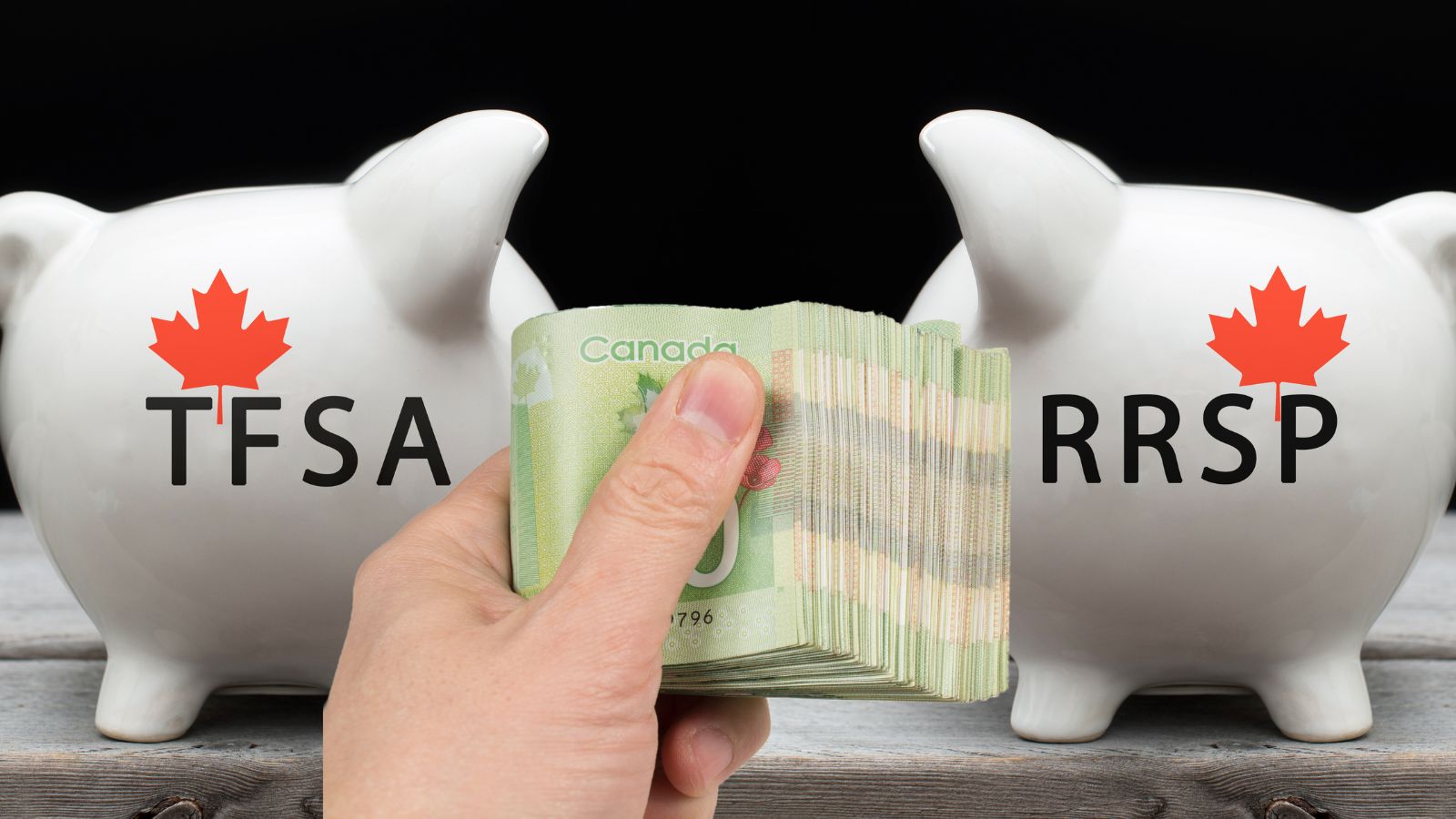
A big investment decision is never just about what to buy. It is also about where to hold it. In Canada, unused room in a TFSA, RRSP, or FHSA can materially change the after-tax outcome of the same investment. Yet many investors focus on the product first and the account second, as though taxes are an administrative issue to tidy up later.
That is backwards. The account wrapper changes the compounding path from day one. A taxable account can turn interest, dividends, or capital gains into a slower climb than the investor originally modeled, while registered accounts can protect more of that growth or deliver an up-front deduction. In practical terms, that means the same decision can be either efficient or wasteful depending on placement. Before moving serious money, Canadians should treat contribution room as a live investment signal. Ignoring it is like negotiating hard on purchase price and then forgetting the carrying costs.
A market can feel safe and still not be cheap

Canadian investors often associate dividends, blue-chip brands, and familiar sectors with value. Sometimes that instinct is right. Sometimes it is a shortcut that hides valuation risk. A market can offer income and still be priced for optimism. A stock can feel conservative and still leave very little margin for disappointment. That is why valuation is a money signal, not just an analyst’s concern.
This is especially important after strong market performance. When returns have been impressive, investors begin to treat sturdiness as a substitute for price discipline. But “solid company” and “good entry point” are different ideas. The same goes for dividend yield. A healthy yield may support total return, but it does not automatically mean the market is cheap or defensive. Before making a large investment, Canadians should ask a harder question than whether the names feel safe: are the expected returns still attractive after the recent run, or is familiarity masking a richer price than it seems?
19 Things Canadians Don’t Realize the CRA Can See About Their Online Income

Earning money online feels simple and informal for many Canadians. Freelancing, selling products, and digital services often start as side projects. The problem appears at tax time. Many people underestimate how much information the CRA can access. Online platforms, banks, and payment processors create detailed records automatically. These records do not disappear once money hits an account. Small gaps in reporting add up quickly.
Here are 19 things Canadians don’t realize the CRA can see about their online income.
This Options Discord Chat is The Real Deal
While the internet is scoured with trading chat rooms, many of which even charge upwards of thousands of dollars to join, this smaller options trading discord chatroom is the real deal and actually providing valuable trade setups, education, and community without the noise and spam of the larger more expensive rooms. With a incredibly low-cost monthly fee, Options Trading Club (click here to see their reviews) requires an application to join ensuring that every member is dedicated and serious about taking their trading to the next level. If you are looking for a change in your trading strategies, then click here to apply for a membership.