35,000+ smart investors are already getting financial news, market signals, and macro shifts in the economy that could impact their money next with our FREE weekly newsletter. Get ahead of what the crowd finds out too late. Click Here to Subscribe for FREE.
May has a way of changing the market mood in Canada. What looked defensive in winter can suddenly look exposed, and sectors once dismissed as too cyclical can regain appeal when inflation, energy prices, regulation, and capital spending all start pulling in new directions at once. This year, the shift feels especially sharp because rate expectations have become less straightforward just as trade friction, power demand, and industrial policy are reshaping the domestic backdrop.
That is why 16 Canadian sectors are attracting a more nuanced read right now. Some are being reconsidered for resilience, some for operating leverage, and others because investors are beginning to see them less as old-economy holdovers and more as strategic assets in a more fragmented world.
Banks
16 Canadian Sectors Investors Are Starting to View Differently in May
- Banks
- Insurance
- Energy
- Pipelines and Gas Infrastructure
- Gold Miners
- Critical Minerals and Base Metals
- Utilities and Power Infrastructure
- Real Estate and REITs
- Telecom
- Rail and Transportation
- Aerospace and Defence
- Manufacturing and Industrials
- Consumer Staples and Grocers
- Consumer Discretionary and Auto Parts
- Technology and AI Infrastructure
- Life Sciences and Healthcare
- 19 Things Canadians Don’t Realize the CRA Can See About Their Online Income

Canadian banks are no longer being viewed as simple rate-cut beneficiaries. In May, the conversation is more balanced: margins still matter, but so do funding resilience, credit quality, and exposure to areas regulators are watching more closely. That makes the sector feel less like an automatic “safe yield” trade and more like a selective earnings story. Investors are paying closer attention to which institutions have stronger wealth, capital-markets, and commercial franchises that can offset softer household borrowing.
That shift is understandable. Some large banks have still posted solid earnings, helped by net interest income and fee businesses, even as loan growth remains muted and provisions stay relevant. At the same time, OSFI has put real-estate secured lending, non-bank financial institution risk, and liquidity and funding risk near the center of its 2026-27 outlook. In practical terms, that means the sector is still sturdy, but it is being judged with a finer lens than it was when lower rates seemed like a one-way tailwind.
Insurance

Insurance is increasingly being treated as a sector with both pricing power and climate exposure, which makes it more complex than the old “steady compounder” label suggests. Investors still like the dependable cash generation and disciplined underwriting culture in Canadian property and casualty names, but May brings wildfire season back into focus. That seasonal reality makes the sector look both more defensive and more vulnerable at the same time, depending on which part of the story gets emphasized.
What has changed is the recognition that insurers can raise premiums and improve risk selection, yet still face a harsher claims environment over the long run. The recent Canadian experience with wildfire, hail, and flood damage has sharpened that point. Strong profits can coexist with rising catastrophe stress, and that means investors are increasingly rewarding companies that invest in resilience, modelling, and smarter underwriting rather than simply chasing volume. In other words, the sector is being viewed less as boring financial plumbing and more as a live referendum on how Canada prices physical climate risk.
Energy

Canadian energy has started to look less like a politically constrained cash machine and more like a strategic source of secure supply. In May, that distinction matters. Higher geopolitical risk and a renewed focus on reliable barrels have made investors more willing to see Canadian producers through a global lens rather than a purely domestic policy one. That is a meaningful change for a sector that spent years trading under the shadow of pipeline bottlenecks and environmental discounting.
The re-rating case is easy to understand. Global majors have shown fresh interest in Canadian assets, and the appeal is tied to stable politics, established resource quality, and improving export access. When conflict pushes energy security back to the top of the agenda, Canada’s producers look different than they did in a lower-volatility world. Investors are still alert to oil-price swings and policy risk, but the sector is increasingly being judged on durability of free cash flow, inventory depth, and export optionality rather than on the assumption that it must always trade at a structural discount.
Pipelines and Gas Infrastructure

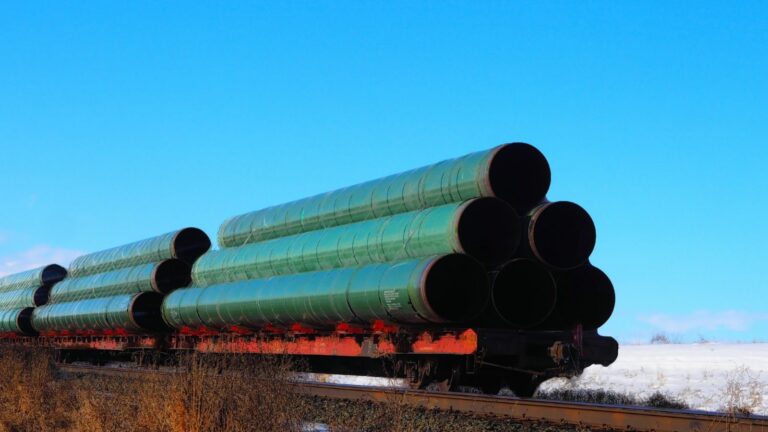
Pipelines are being viewed with fresh respect because they now sit at the intersection of three themes investors care about: export access, regulated cash flow, and the build-out of Canadian natural gas capacity. In earlier cycles, the group could be dismissed as low-growth utility-like infrastructure. This May, it looks more like a scarce toll-road network attached to some of the country’s most valuable resource corridors, especially as LNG demand and Asian market access become more important.
Recent developments reinforce that perception. Trans Mountain is running close to full, and optimization work is already being planned to expand throughput further. On the gas side, a major expansion of Enbridge’s Westcoast system has been approved to help meet rising British Columbia demand tied in part to LNG projects. Those are not abstract talking points; they point to real throughput and capital-allocation opportunities. Investors are starting to view the sector less as a sleepy income corner and more as a backbone for Canada’s next export chapter.
Gold Miners

Gold miners are being taken more seriously again, but not only because bullion is strong. In May, they are increasingly seen as a hedge against a world where inflation can flare, geopolitics can disrupt confidence, and central banks still want reserve diversification. That makes the Canadian gold complex more than a momentum trade. It turns the sector into one of the clearest domestic expressions of the market’s appetite for hard assets and policy uncertainty insurance.
The backdrop is unusually supportive. World Gold Council data show central-bank buying stayed strong in the first quarter, while gold demand by investors remained healthy and prices stayed historically elevated. For Canadian miners, that combination changes the narrative. Investors are less willing to brush the group aside as a short-term commodity swing and more willing to ask which operators can turn a strong price tape into lasting balance-sheet improvement. The sector is being valued less for drama and more for what disciplined execution can look like when the metal’s macro case refuses to fade.
Critical Minerals and Base Metals

Critical minerals are no longer being treated as a distant policy dream. In May, investors are increasingly looking at them as a real industrial strategy category with money, permitting support, and geopolitical relevance attached. That matters in Canada, where the conversation has moved beyond simply digging metals out of the ground. More attention is now going to processing, infrastructure, and the ability to build supply chains that are friendlier, closer, and more defensible.
Canada’s own progress reports help explain the change in tone. The country has dozens of active critical-mineral mines, multiple processing facilities, and a large project pipeline, while the IEA has highlighted new proposed federal funding tools aimed at accelerating projects and investor confidence. That does not remove execution risk; mining still depends on permitting, infrastructure, and Indigenous partnership. But it does mean the sector is being viewed less as speculative concept territory and more as a long-duration strategic buildout with real policy sponsorship behind it.
Utilities and Power Infrastructure

Utilities used to be pigeonholed as rate-sensitive dividend vehicles. This May, they are being reconsidered as essential infrastructure for electrification, industrial expansion, and the AI buildout. That subtle shift is important. Investors are paying more attention to grid access, allowed returns, transmission bottlenecks, and generation quality because electricity is no longer just a household service. It is becoming a scarce enabling input for economic growth.
Ontario and Quebec tell the story well. Ontario’s system operator now expects data centres to account for a meaningfully larger share of future demand than previously forecast, while Hydro-Québec is moving to charge large new data centres much higher rates to reflect the value of renewable power. Those are signs of a system where electricity supply has become more strategic. For investors, that changes how utilities are framed. They are not just shelter from volatility anymore; they are becoming gatekeepers to growth, and that can support a very different valuation conversation.
Real Estate and REITs

Real estate is being viewed with more nuance than the broad “rates down, property up” logic that dominated earlier. In May, investors are separating residential, rental, industrial, and office exposures much more carefully. That is especially true in Canada, where slowing population growth, rising rental supply, and softer resale pricing have complicated the old assumption that anything linked to property would automatically recover once borrowing costs eased.
Recent housing data show why. National home sales were nearly unchanged in March, while benchmark prices were lower year over year. CMHC’s outlook also points to softer rental conditions in several markets as vacancy rates rise and a wave of completions reaches the market. That does not make real estate unattractive; it makes it selective. Investors are increasingly rewarding landlords and developers with better asset quality, stronger balance sheets, and exposure to segments where supply remains disciplined. The sector is no longer a one-button macro call. It is turning back into a market of individual property stories.
Telecom

Canadian telecom is starting to lose its image as a simple bond proxy with dependable dividends and modest growth. In May, the sector looks caught between two opposing forces: heavier competitive pressure in core consumer services and potentially valuable opportunities in fibre, enterprise infrastructure, and AI-related demand. That mix is forcing investors to think beyond headline yields and ask harder questions about capital discipline, pricing, and the next leg of growth.
The operating backdrop has clearly changed. The CRTC’s push to widen fibre-based competition could expand choices for millions of households, while major operators are also signaling tighter spending and different priorities. At the same time, BCE’s Saskatchewan AI data-centre investment shows telecom groups can participate in a more infrastructure-like digital buildout. That combination makes the sector more interesting, but also less straightforward. Investors are starting to view telecom not as a sleepy utility with a handset business, but as a transition sector that must prove where durable returns will come from next.
Rail and Transportation

Rail is being seen more clearly as an economic barometer and a trade-system asset, not just as a cyclical industrial category. That distinction matters in May because investors want clues about whether Canadian growth is being driven by real goods movement or by short-lived inventory behavior. Railway data can offer that read quickly. When carloadings improve on agricultural products, containers, and cross-border freight, the sector starts to look like a cleaner way to express confidence in North American commerce than some manufacturers or retailers.
The recent numbers have been encouraging. Canadian railways moved noticeably more freight in February than a year earlier, including stronger container and U.S.-linked traffic, and volumes remained above the five-year average for the month. That gives the sector a sturdier backdrop than many expected. Investors are increasingly treating rail as a logistics franchise with pricing power, network scarcity, and exposure to both domestic production and continental trade. In uncertain markets, that combination tends to earn a better multiple than a plain reading of “transportation” would suggest.
Aerospace and Defence

Aerospace and defence is being viewed less as a niche manufacturing bucket and more as an area of national capability. That is a meaningful shift for Canada, where aerospace has long had deep expertise but was not always discussed as a strategic market theme. In May, rising defence commitments, supply-chain realignment, and export demand have made the sector look more central. Investors are beginning to connect civilian aerospace strength with a broader reindustrialization story.
Canada already has a sizable aerospace base, with large employment, export exposure, and deep engineering capacity. On top of that, defence financing and procurement discussions are adding fresh relevance to the ecosystem. Even before orders show up fully in company results, sentiment can change when governments start treating resilience, sovereignty, and equipment readiness as urgent priorities. That is what appears to be happening now. The sector is being judged less as an afterthought beside U.S. defence giants and more as a Canadian advanced-manufacturing platform with both commercial and security importance.
Manufacturing and Industrials

Manufacturing has begun to look different in May because the data finally show life, but investors are also trying to decide how much of that life is durable. That creates a more interesting setup than simple bullishness. Stronger factory activity, rising sales, and better output in transportation equipment and machinery make the sector look healthier than it did earlier in the year. Yet the quality of demand still matters, especially when inventory building and geopolitical uncertainty can temporarily lift production.
The latest figures make that tension visible. Canadian manufacturing posted its fastest monthly sales gain in February, and the PMI moved back into expansion in April. Transportation equipment, machinery, and primary metals all contributed, while Québec aerospace and metal output also improved. Those are real positives. But investors are still asking whether the rebound reflects stable end demand or precautionary ordering ahead of further cost increases and supply worries. That is why the sector is being viewed differently now: not as dead money, but not as a fully de-risked recovery either.
Consumer Staples and Grocers

Grocers and staples businesses are being viewed less as dull inflation pass-through machines and more as operating models built around value-seeking households. That is a key distinction in May. Food inflation is still uncomfortable, but not in the same way as during the sharpest post-pandemic squeeze. What matters now is how retailers respond to consumers who remain budget-conscious, increasingly promotion-sensitive, and more willing to trade down across banners and categories.
The sector’s own moves reflect that reality. Food prices in stores are still rising, and retail data show continued strength at supermarkets and other grocery retailers. Meanwhile, major chains are expanding discount formats and investing heavily in stores and supply chains, an acknowledgment that traffic and market share are increasingly won through value. For investors, that shifts the lens. These companies are being judged not just on defensive earnings, but on whether they can protect margins while serving a consumer who still wants convenience yet has become much more deliberate about every weekly basket.
Consumer Discretionary and Auto Parts

Consumer discretionary is being split in two by investors: cautious on broad household spending, more constructive on selected niches with operational leverage or replacement demand. Auto parts is a good example of why. It sits close to the consumer, but it also benefits from longer vehicle lives, technology content, and global production programs. That makes the space more resilient than a simple discretionary label suggests, even when shoppers remain careful elsewhere.
Recent Canadian retail data show spending is still happening, though volumes look less impressive than headline sales. At the same time, Magna’s latest results showed demand for auto parts and advanced driver-assistance systems has held up better than some expected, even as tariffs and EV uncertainty remain real headwinds. That is why investors are starting to distinguish between fragile discretionary categories and those tied to maintenance, safety content, or deferred replacement cycles. The sector is not being written off outright; it is being re-sorted into winners and pressure points.
Technology and AI Infrastructure

Canadian technology is increasingly being viewed through an infrastructure lens rather than a pure software multiple lens. That is one of the more interesting shifts of May. For years, the local tech conversation often centered on whether Canada could produce enough large-scale platform winners. Now the focus is widening to include compute capacity, sovereign data, AI adoption, and the physical systems required to support them. That creates a broader opportunity set than the market once recognized.
The numbers help explain why. Statistics Canada says AI adoption among firms has accelerated sharply, and planned adoption remains meaningful. Meanwhile, large projects such as BCE’s Saskatchewan AI data centre show that compute and power are becoming investable themes in Canada, not just Silicon Valley stories. Investors are beginning to treat the sector less as a narrow bet on a handful of growth names and more as an ecosystem spanning software, infrastructure, connectivity, and productivity gains. In a country long criticized for lagging productivity, that broader framing has real narrative power.
Life Sciences and Healthcare

Life sciences is being viewed with more seriousness as a sovereignty and manufacturing story, not merely as a speculative biotech corner. That change is especially visible in May, when supply-chain resilience, domestic production, and strategic capacity are all political priorities. In Canada, that gives the sector a different kind of relevance. Investors are paying more attention to facilities, partnerships, and commercialization pathways instead of focusing only on binary research outcomes.
The policy backdrop supports that shift. Ottawa continues to frame biomanufacturing and life sciences as strategic capacity, and recent federal support for critical-drug production in Alberta underscores that this is not just rhetorical. Canada’s approval of another generic semaglutide product also highlights how domestic pharmaceutical activity can intersect with affordability and competition. None of this turns the sector into a low-risk haven overnight. But it does mean investors are starting to see healthcare and life sciences less as a tiny sideshow in the Canadian market and more as an emerging industrial capability with national significance.
19 Things Canadians Don’t Realize the CRA Can See About Their Online Income

Earning money online feels simple and informal for many Canadians. Freelancing, selling products, and digital services often start as side projects. The problem appears at tax time. Many people underestimate how much information the CRA can access. Online platforms, banks, and payment processors create detailed records automatically. These records do not disappear once money hits an account. Small gaps in reporting add up quickly.
Here are 19 things Canadians don’t realize the CRA can see about their online income.
This Options Discord Chat is The Real Deal
While the internet is scoured with trading chat rooms, many of which even charge upwards of thousands of dollars to join, this smaller options trading discord chatroom is the real deal and actually providing valuable trade setups, education, and community without the noise and spam of the larger more expensive rooms. With a incredibly low-cost monthly fee, Options Trading Club (click here to see their reviews) requires an application to join ensuring that every member is dedicated and serious about taking their trading to the next level. If you are looking for a change in your trading strategies, then click here to apply for a membership.