
35,000+ smart investors are already getting financial news, market signals, and macro shifts in the economy that could impact their money next with our FREE weekly newsletter. Get ahead of what the crowd finds out too late. Click Here to Subscribe for FREE.
Canada’s next growth story is not limited to Toronto, Vancouver, or Calgary. In 2026, some of the most interesting momentum is showing up in smaller communities where new housing, infrastructure spending, and long-range planning are starting to change the local economy in visible ways. In many cases, the boom is not just about population counts. It is also about building permits, downtown redevelopment, transit-oriented planning, and the kind of public investment that can shift a town’s trajectory for years.
These 14 Canadian towns stand out because the numbers and the planning activity are lining up at the same time. Some are benefiting from overflow from larger urban centres, while others are using tourism, industry, or housing policy to punch above their weight.
1. East Gwillimbury, Ontario — From fringe community to serious growth market
14 Canadian Towns Seeing a Surprising Boom in 2026
- 1. East Gwillimbury, Ontario — From fringe community to serious growth market
- 2. Innisfil, Ontario — A commuter town trying to become a destination in its own right
- 3. Wasaga Beach, Ontario — A resort town pushing for a four-season economy
- 4. Collingwood, Ontario — Lifestyle migration is turning into real development pressure
- 5. Carleton Place, Ontario — Eastern Ontario growth that no longer looks accidental
- 6. Caledon, Ontario — Rural image, metropolitan-scale future
- 7. Fort Erie, Ontario — Border geography is becoming a development advantage again
- 8. Cochrane, Alberta — The Calgary halo keeps getting stronger
- 9. Strathmore, Alberta — Affordable growth with regional leverage
- 10. Okotoks, Alberta — Measured growth is still growth
- 11. Squamish, British Columbia — Outdoor appeal has turned into sustained growth pressure
- 12. Shediac, New Brunswick — Tourism charm is now backed by construction numbers
- 13. Stratford, Prince Edward Island — Charlottetown’s neighbour is becoming a growth engine itself
- 14. Bridgewater, Nova Scotia — Small-town scale, bigger regional ambitions
- 19 Things Canadians Don’t Realize the CRA Can See About Their Online Income

East Gwillimbury no longer looks like a quiet edge-of-the-map municipality. It has become one of the clearest examples of how Greater Toronto spillover can reshape a town in a short period of time. The town was identified as the fastest-growing municipality in Canada between 2016 and 2021, with population growth of 44.4 percent. That kind of pace changes everything at once: schools, roads, parks, housing mix, and expectations about what the community will become over the next two decades.
What makes East Gwillimbury especially notable in 2026 is that the boom is being treated as permanent, not temporary. The town’s 2025 Housing Needs Assessment says the current estimated population is about 41,000, but it is expected to reach 128,600 by 2051. That is a dramatic long-term shift, and it explains why the official plan review is focused on servicing, housing supply, and complete community planning. In other words, this is no longer just growth on paper. It is growth that requires major structural preparation.
2. Innisfil, Ontario — A commuter town trying to become a destination in its own right
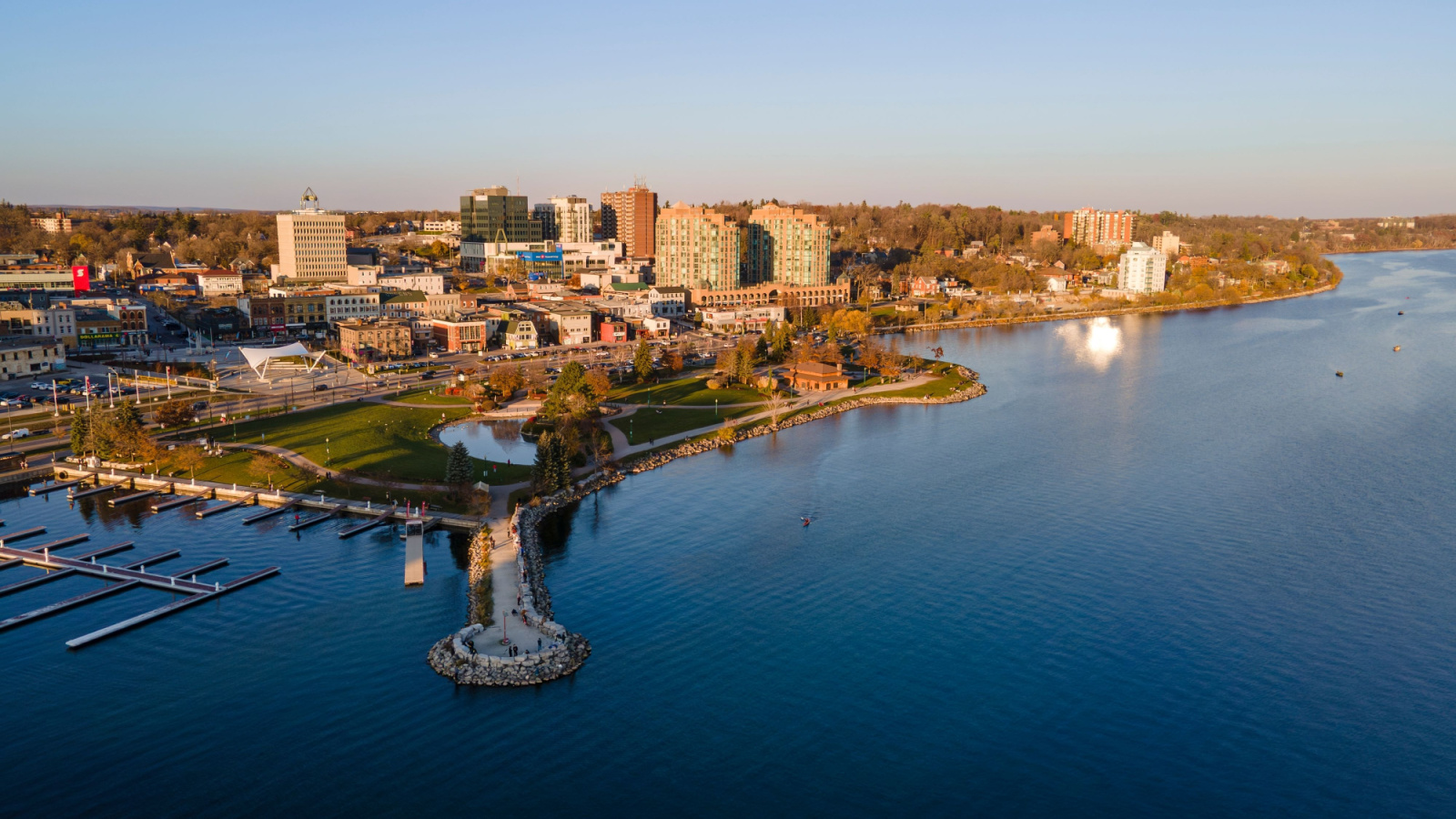
Innisfil has spent years being discussed as a place people move to for space, value, and highway access. In 2026, the conversation is broader. The town’s growth plans now point to a future where Innisfil is not just a Barrie-side bedroom community, but a more deliberate urban node with jobs, density, and its own centre of gravity. Population projections tied to county planning work suggest about 85,000 residents and 26,000 jobs by 2051, a major jump from 2021 levels.
The boldest symbol of that ambition remains The Orbit, the town’s vision for higher-density growth around a planned GO station. Municipal materials say at least 7,700 people are expected to live in the first transit-oriented areas alone through 2051. Even before that vision is fully built, the official plan review shows how seriously Innisfil is taking long-range growth management. That matters because boom towns often get stretched by growth they did not design for. Innisfil’s appeal in 2026 is that it is trying to shape the boom instead of simply reacting to it.
3. Wasaga Beach, Ontario — A resort town pushing for a four-season economy

Wasaga Beach has long been known for summer crowds and weekend traffic, but 2026 is making it look more like an active redevelopment story than a seasonal tourism town. The province announced nearly $38 million in 2025 to support Destination Wasaga, a large-scale effort tied to the waterfront, downtown, and historic sites. At the same time, the town’s new official plan directs mixed-use and higher-density housing to six strategic growth areas, signaling that officials want more than just beach-season business.
That combination is important. Wasaga Beach is not simply polishing a tourist brand; it is trying to build a more durable local economy. One downtown redevelopment planning document says infrastructure work could immediately unlock more than 1,000 residential units along with a hotel and commercial activity tied to the revitalized core. That makes the town’s boom more substantial than a typical cottage-country bump. In 2026, Wasaga looks like a place trying to convert natural popularity into year-round jobs, investment, and a stronger tax base.
4. Collingwood, Ontario — Lifestyle migration is turning into real development pressure

Collingwood has always had an enviable location, with Georgian Bay, ski country, and a historic downtown all working in its favour. What feels different now is the scale of the development conversation. The town says its permanent population is estimated at 26,563, up 21.9 percent from 2016. That kind of increase helps explain why local planning is no longer just about preserving charm. It is increasingly about how to add housing, protect the downtown, and manage demand without losing what made the town attractive in the first place.
The current push is visible in both policy and projects. Collingwood approved a Downtown Master Plan in 2025 focused on housing, retail diversity, public space, and safety. The town is also advancing specific development files, including a 30-unit affordable rental project on Birch Street in partnership with the County of Simcoe. For a town of this size, that mix of public planning and active applications signals real momentum. Collingwood’s boom in 2026 is not a vague popularity contest. It is showing up in hard decisions about housing, infrastructure, and downtown intensification.
5. Carleton Place, Ontario — Eastern Ontario growth that no longer looks accidental
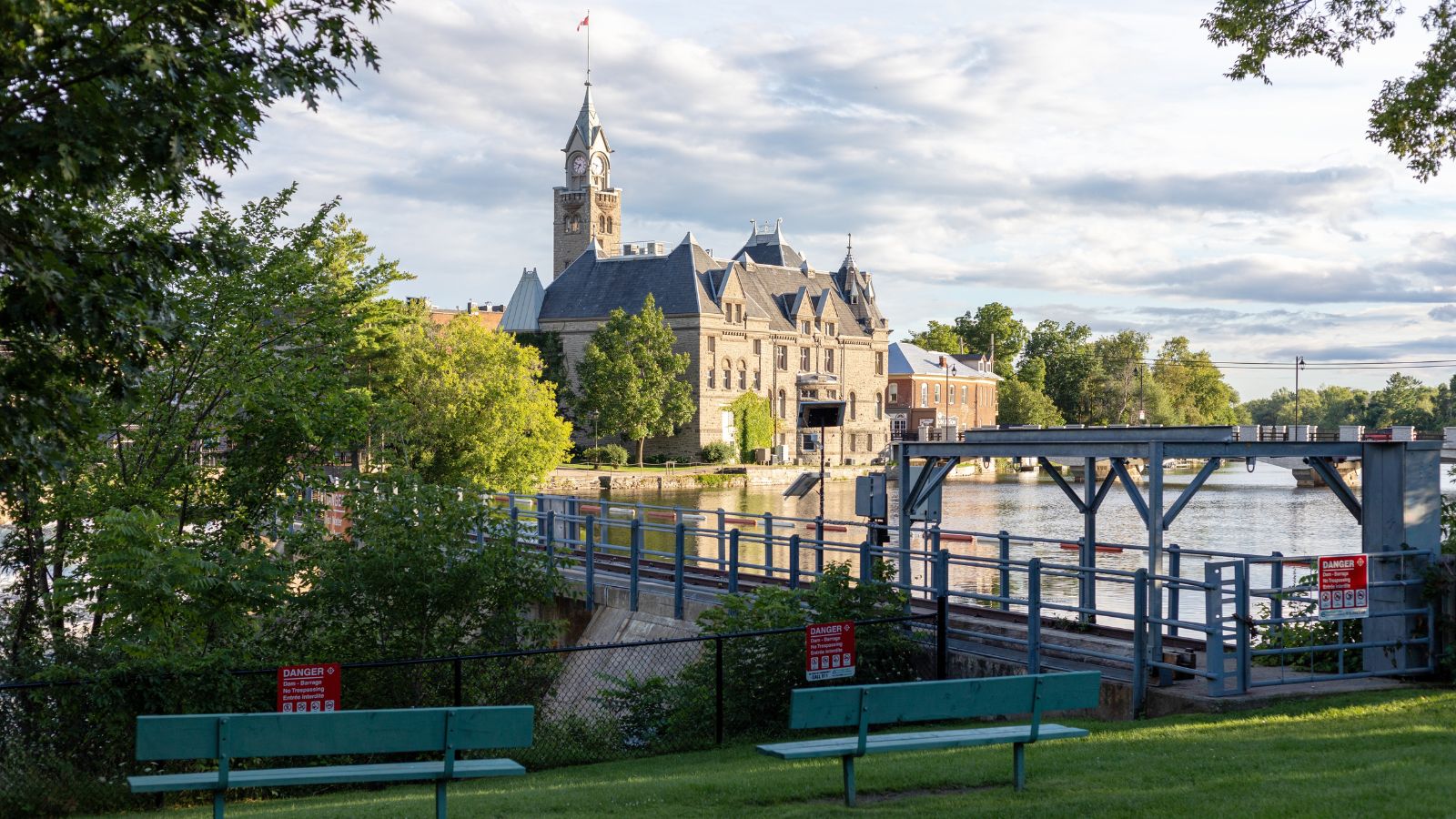
Carleton Place has been one of the more quietly successful growth stories in Eastern Ontario, and 2026 makes that harder to ignore. The town’s own community profile shows the population rose from 10,644 in 2016 to 12,517 in 2021, with projections of roughly 20,964 by 2038. That is a steep climb for a community that once felt secondary to Ottawa’s bigger suburban headlines. Instead, Carleton Place is increasingly benefiting from households looking for more attainable housing, a walkable core, and access to the capital region without paying Ottawa prices.
What stands out is that the growth is materializing on the ground. The town’s 2025 annual review notes that the first phase of the McNeely Landing subdivision sold almost 50 percent of its homes within the first six months, with future phases expected in 2026. Other projects, including Johanne’s Garden and McArthur Island, add to the sense that this is no one-off burst. Carleton Place feels like the kind of place where momentum compounds: once enough people and builders arrive, the town becomes part of a larger regional shift.
6. Caledon, Ontario — Rural image, metropolitan-scale future
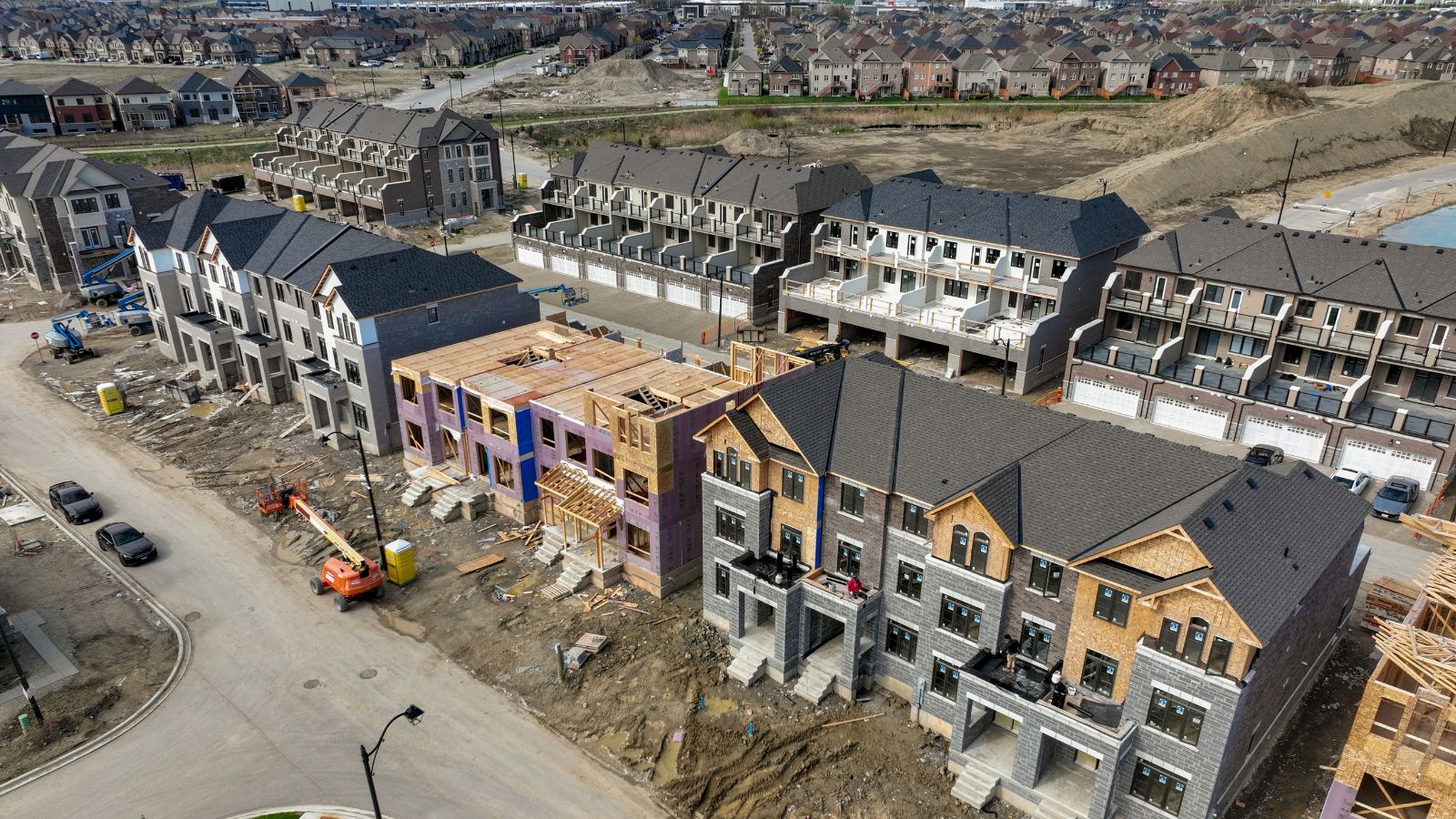
Caledon still carries a rural and equestrian identity in the minds of many Ontarians, but its official planning documents tell a much bigger story. The town has made it clear that it is preparing for a very different future, with population expected to rise to 300,000 and employment to 125,000 jobs by 2051. That would move Caledon into a completely different class of municipality. In practical terms, it means a place once valued mostly for open space is becoming one of the GTA’s major long-term growth fronts.
The most telling part is how much land and policy work is already being lined up. Public planning materials note that more than 4,000 hectares of new urban area in south Caledon are expected to be developed as new community and employment areas over the next 30 years. Council has also framed the town as one of Ontario’s fastest-growing communities. In 2026, Caledon’s boom still feels early compared with more mature suburbs, which is exactly why it is surprising. It is not merely growing. It is laying the groundwork for a transformation on a metropolitan scale.
7. Fort Erie, Ontario — Border geography is becoming a development advantage again
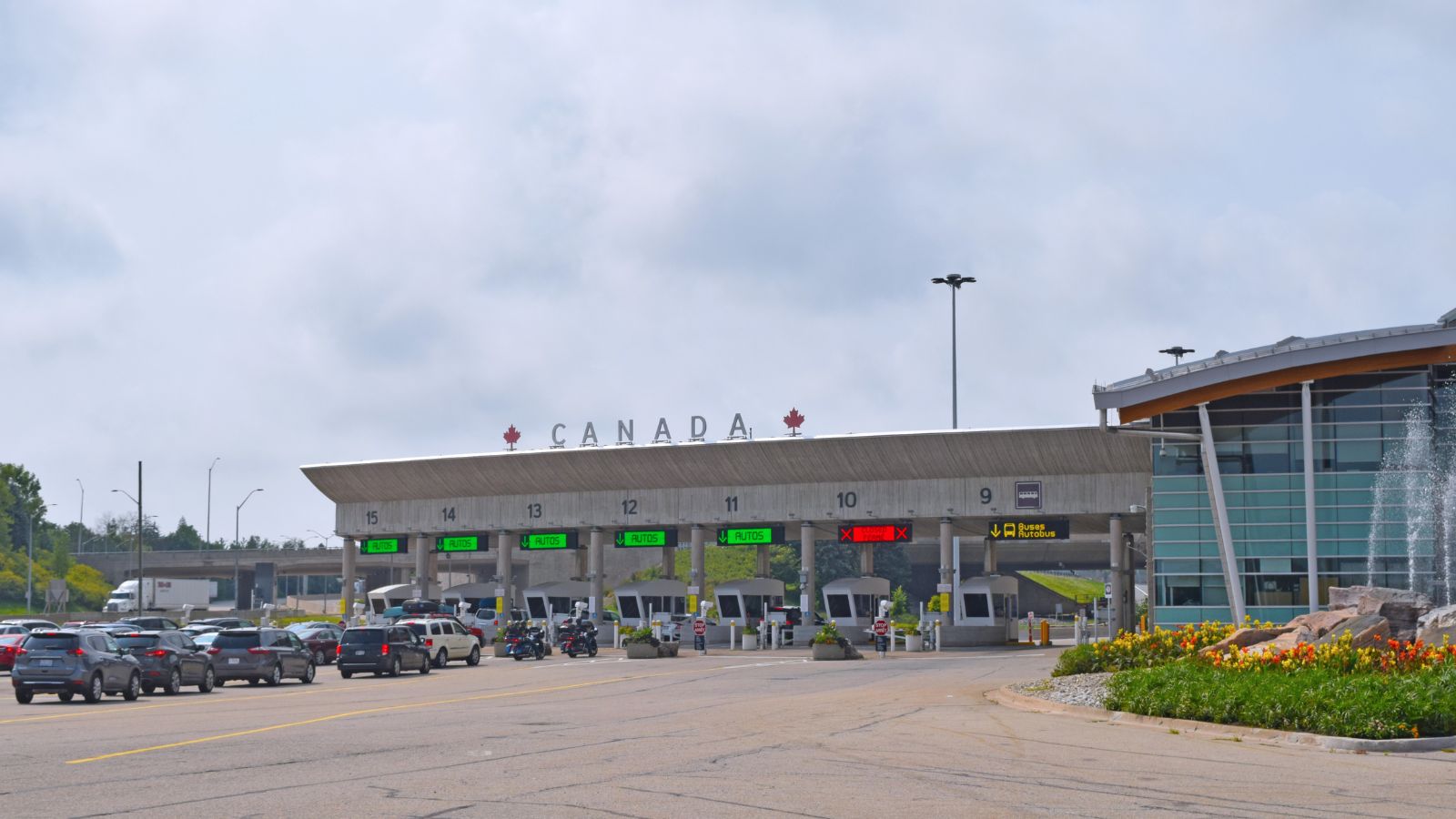
Fort Erie has often been seen mainly through the lens of its border location, but that geography is turning into a broader growth asset in 2026. The town’s draft official plan projects Fort Erie will reach 48,050 residents and 18,430 jobs by 2051. For a community with a 2021 population of just under 33,000, that is meaningful growth. It suggests more than incremental change and points to a town preparing for a larger role in the Niagara economy, especially as cross-border logistics, redevelopment, and housing remain central issues.
What makes the current moment more convincing is the policy follow-through. Fort Erie adopted an Affordable Housing Community Improvement Plan in February 2025, creating incentives aimed at expanding access to housing. Local planning documents also tie future growth to strategic areas such as Crystal Beach and other redevelopment corridors. That gives the town’s boom a practical structure. It is not just that more people may come. Fort Erie is actively building a framework for where that growth should go and how it can be used to revive underperforming areas.
8. Cochrane, Alberta — The Calgary halo keeps getting stronger

Cochrane has been one of Alberta’s most obvious growth stories for a while, but 2026 shows that the pace still has not let up. Alberta’s regional dashboard puts the town’s 2025 population at 39,397, up 3.4 percent year over year and 22.8 percent over five years. A 2024 municipal census also found Cochrane had reached 37,011 residents, with local officials saying growth has been running at about 5 percent annually since 2011. Those are not background numbers. They describe a place expanding fast enough to force continuous recalibration.
Municipal planning confirms the scale of what is coming. Cochrane’s housing materials say the population is estimated to reach 90,000 by 2050, and a 2026 housing needs assessment presentation projected the need for 16,063 additional housing units over the next 20 years. That helps explain why building permit revenue and development activity have stayed strong. Cochrane’s boom is not surprising because it is hidden. It is surprising because it keeps accelerating without losing its appeal to families who still want a town feel within reach of Calgary.
9. Strathmore, Alberta — Affordable growth with regional leverage
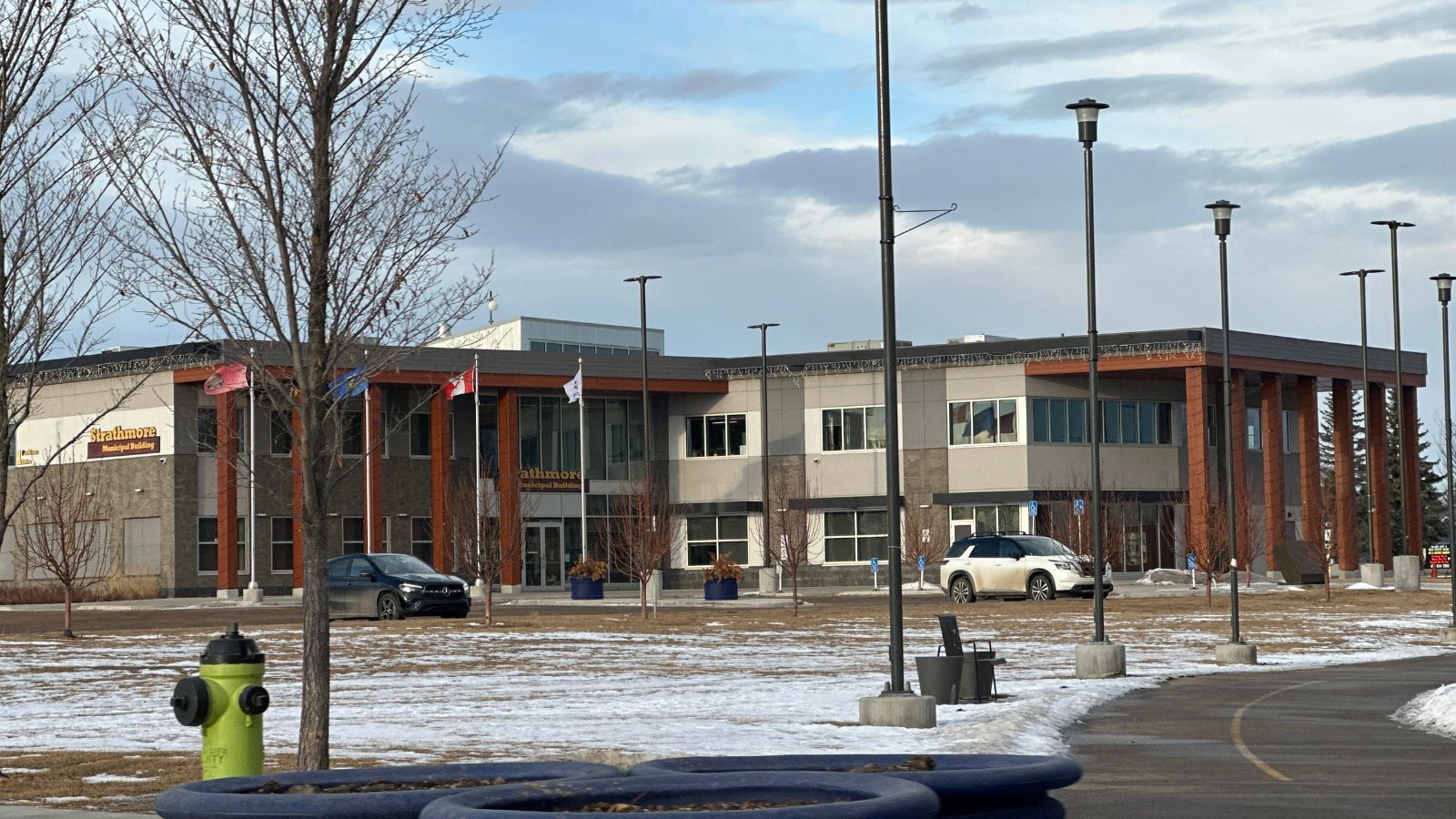
Strathmore rarely dominates national real-estate chatter, which is part of why its growth story feels notable. Alberta’s dashboard says the town’s population reached 16,416 in 2025, up 1.74 percent year over year and 9.73 percent over five years. On its own, that is healthy. What makes Strathmore more interesting is its position east of Calgary, where it can offer a more attainable entry point for families and businesses that still want access to a metro labour market and major transportation routes.
The town’s business profile adds more texture. It highlights a five-year population growth rate above 10 percent in 2023, says 79 percent of households were spending less than 30 percent of income on housing in 2021, and points to an immediate trading area of more than 35,000 people. Economic development indicators also show nearly $19.6 million in building permits and more than $283 million in major projects in 2023. That is the kind of combination boom towns need: not just people arriving, but enough affordability and investment to keep the cycle going.
10. Okotoks, Alberta — Measured growth is still growth
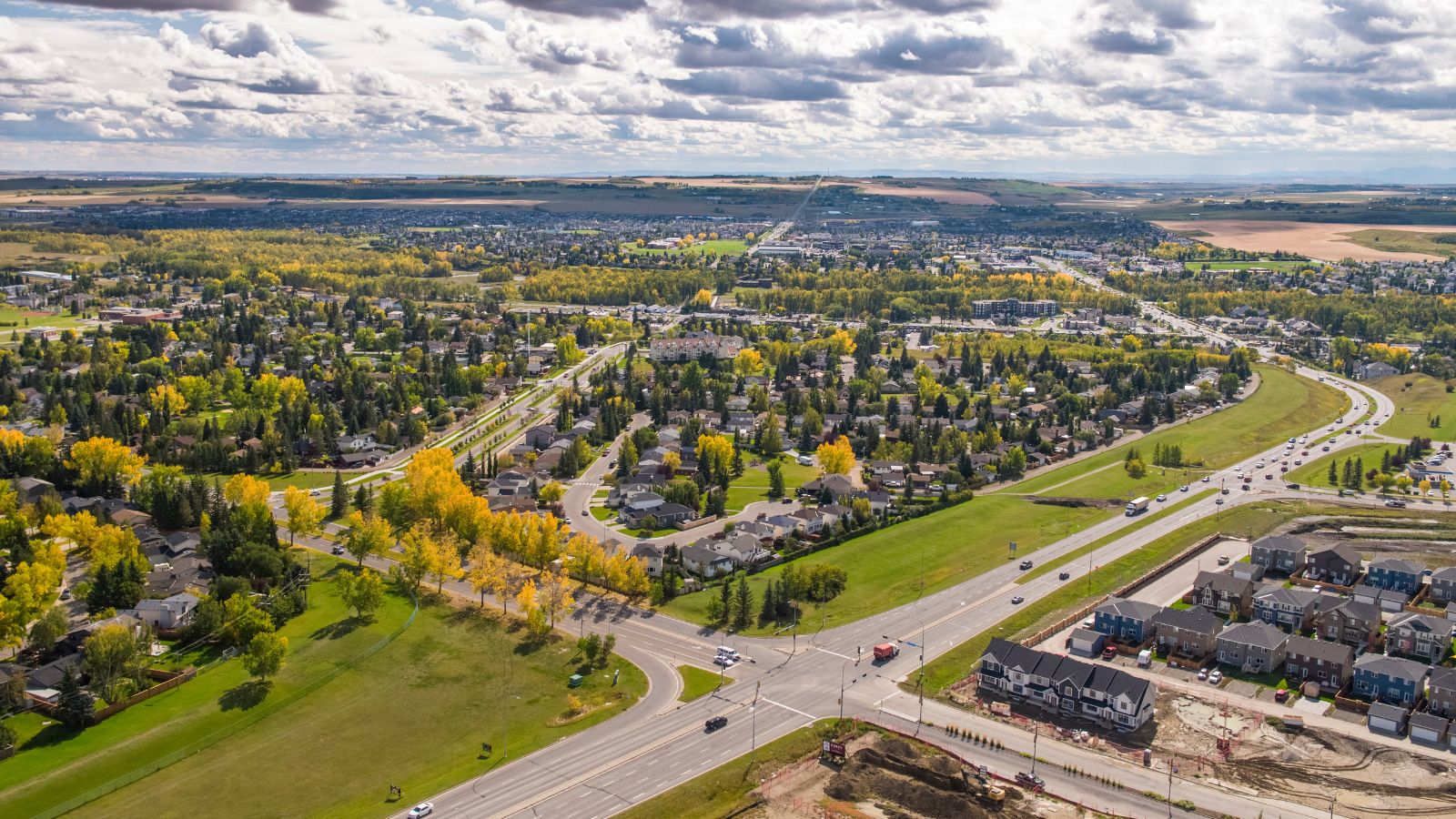
Okotoks is an interesting case because its boom is not being sold as unchecked expansion. Instead, the town is trying to grow carefully, which may actually make it more durable. Alberta’s dashboard says Okotoks had a population of 33,482 in 2025, up 8.55 percent over five years. The town’s 2025 Growth Strategy and related progress reporting also note that Okotoks is expected to reach about 44,000 residents by 2041 and roughly 75,000 by 2076. That is a substantial long-term increase for a place still defined by quality of life.
The town is also pairing population planning with economic strategy. Its 2024–2029 Economic Development Strategic Plan is explicitly aimed at attracting investment, strengthening local employment, and supporting innovation and job creation. That matters because the best boom towns are not just places where people sleep and commute elsewhere. They increasingly generate their own opportunity. Okotoks in 2026 looks like a town trying to avoid the mistakes of faster-growing neighbours by setting the rules early, while still capturing the advantages of Alberta’s strong population momentum.
11. Squamish, British Columbia — Outdoor appeal has turned into sustained growth pressure

Squamish has been admired for years as a spectacular place to live, but admiration has now turned into intense growth management. District materials say the population jumped 46.8 percent between 2016 and 2023, making Squamish one of the fastest-growing communities in Canada. That kind of increase affects everything from road capacity to school space to housing affordability. It also changes the town’s economic identity, because a place once seen mainly as a gateway between Vancouver and Whistler increasingly functions as a growth centre in its own right.
The clearest sign of the boom is how aggressively housing is now being discussed. The District says its 2023 Housing Needs Assessment found Squamish needs 6,840 new housing units by 2031 to meet current need and growth demand. In 2025, local reporting said the town saw 434 new housing starts. British Columbia has also added Squamish to its housing-target program, reinforcing how central the community has become to the province’s supply push. In 2026, Squamish looks less like a hidden gem and more like a pressure point of western Canadian growth.
12. Shediac, New Brunswick — Tourism charm is now backed by construction numbers

Shediac is often introduced through postcards, seafood, and summer crowds, but its recent numbers tell a much bigger story. The town reported more than $111 million in building permit value in 2025, another remarkable year after already passing the $100 million mark the year before. That is a striking figure for a town of its size. It suggests that Shediac is moving beyond seasonal popularity and into a new phase where residential, institutional, and commercial development are starting to deepen the local economy.
Part of that momentum came from a major school project. Reporting on the permit totals noted that commercial and institutional construction reached about $66 million, largely because of a planned new English-language K-12 school. The town also introduced a 3.5 percent marketing destination levy on overnight stays beginning January 1, 2026, a sign that officials see tourism as something to reinvest more strategically. That combination of public infrastructure, new construction, and tourism revenue tools makes Shediac one of the more surprising boom towns in Atlantic Canada right now.
13. Stratford, Prince Edward Island — Charlottetown’s neighbour is becoming a growth engine itself

Stratford’s rise is one of the clearest examples of how a smaller town can benefit from metropolitan spillover without remaining secondary forever. The town says its 2021 population was 10,927, up 12.5 percent from 2016, which far outpaced national growth over the same period. Being close to Charlottetown obviously helps, but the bigger story in 2026 is that Stratford is now planning for large-scale growth on its own terms rather than simply absorbing overflow.
Its draft official plan says the 2023 Growth Management Strategy anticipates the need for 7,979 new dwelling units between 2023 and 2051. Stratford is also using federal Housing Accelerator Fund commitments to rezone underused commercial lands for mixed-use development and rethink parts of the waterfront gateway. Those are not cosmetic changes. They are structural moves that can create a more urban, more flexible housing pipeline. In a province where population growth has run hot relative to homebuilding, Stratford stands out as a town trying to stay ahead of the pressure instead of being overwhelmed by it.
14. Bridgewater, Nova Scotia — Small-town scale, bigger regional ambitions

Bridgewater is not usually the first place people mention when they talk about booming Canadian towns, which is exactly why 2026 feels important there. The town had a 2021 population of 8,790, making it the largest town on Nova Scotia’s South Shore, but recent policy moves suggest leaders are preparing for growth beyond traditional expectations. In March 2025, Bridgewater secured more than $3.3 million through the Housing Accelerator Fund to help speed up 100 homes over the next three years and spur a combined 365 homes over the next decade.
That housing push is now being reinforced by infrastructure and regional planning. On April 7, 2026, the federal government announced funding for wastewater upgrades in Bridgewater specifically tied to increasing housing supply. The town and the Municipality of the District of Lunenburg have also formed a Regional Growth Management Committee to collaborate on growth opportunities. Taken together, those moves suggest Bridgewater is thinking beyond one-off projects. It is positioning itself as a regional hub that can absorb more people, more homes, and more economic activity without losing the practical advantages of small-town living.
19 Things Canadians Don’t Realize the CRA Can See About Their Online Income

Earning money online feels simple and informal for many Canadians. Freelancing, selling products, and digital services often start as side projects. The problem appears at tax time. Many people underestimate how much information the CRA can access. Online platforms, banks, and payment processors create detailed records automatically. These records do not disappear once money hits an account. Small gaps in reporting add up quickly.
Here are 19 things Canadians don’t realize the CRA can see about their online income.
This Options Discord Chat is The Real Deal
While the internet is scoured with trading chat rooms, many of which even charge upwards of thousands of dollars to join, this smaller options trading discord chatroom is the real deal and actually providing valuable trade setups, education, and community without the noise and spam of the larger more expensive rooms. With a incredibly low-cost monthly fee, Options Trading Club (click here to see their reviews) requires an application to join ensuring that every member is dedicated and serious about taking their trading to the next level. If you are looking for a change in your trading strategies, then click here to apply for a membership.