35,000+ smart investors are already getting financial news, market signals, and macro shifts in the economy that could impact their money next with our FREE weekly newsletter. Get ahead of what the crowd finds out too late. Click Here to Subscribe for FREE.
Trade disputes rarely stay confined to tariff schedules and technical language. In Canada this week, they spilled into a sharper political question about credibility, experience, and who is best equipped to handle a rougher American negotiating style. Mark Carney’s jab at Pierre Poilievre landed because it spoke to more than one exchange on Parliament Hill. It touched a national anxiety about leverage, dependence, and how much room Ottawa really has when the country’s biggest trading relationship turns hostile.
These 10 sections unpack the clash, the economics behind it, the pressure building ahead of the CUSMA review, and the choices now facing Canada. What sounded like a one-line comeback is really a snapshot of a bigger struggle over tariffs, supply chains, provincial policy, and the future shape of Canada’s trade strategy.
A One-Line Comeback That Captured the Moment
‘What’s He Ever Negotiated?’ Carney Hits Back at Poilievre Over Canada-U.S. Trade
- A One-Line Comeback That Captured the Moment
- Why This Trade File Carries So Much Weight
- Carney’s Core Argument: Dependence Has Become a Liability
- Poilievre’s Critique Is About More Than Tone
- The Résumé Fight Behind the Trade Fight
- The Clock Is Ticking on CUSMA
- Concessions, Red Lines, and National Optics
- The Sectors Feeling the Pressure First
- Diversification Is No Longer a Side Project
- What a Real Win Would Look Like Now
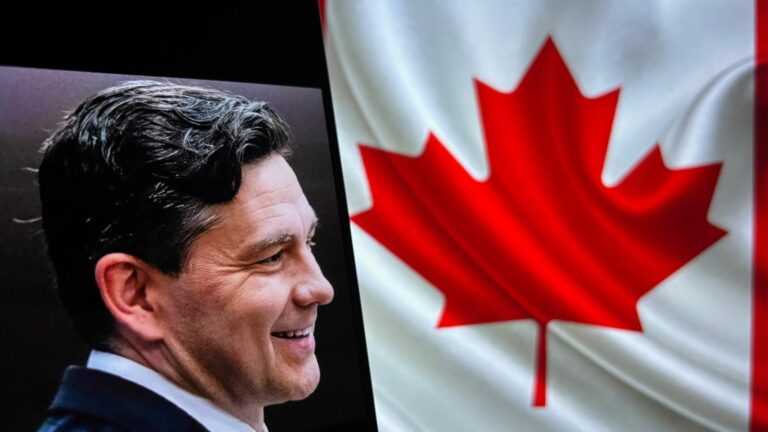
The headline quote mattered because it distilled a broader confrontation into a few cutting words. On April 22, after Pierre Poilievre accused the prime minister of “showboating” and said the only talks Carney was doing were “YouTube videos,” Carney fired back by asking what Poilievre had ever negotiated. It was a sharp, made-for-cameras response, but it also revealed how the trade file has become a test of personal credibility as much as policy detail. In one exchange, the conversation moved from tariff mechanics to résumés, competence, and whether Ottawa is projecting strength or simply improvising under pressure.
What made the moment more potent was the backdrop. Reporting the same day pointed to U.S. demands for concessions before formal talks resumed, which gave the exchange a deeper edge. Suddenly, Poilievre’s criticism was not just opposition theatre; it was attached to a live question about whether Canada was being boxed into negotiations on unfavourable terms. Carney’s answer was designed to turn that vulnerability around. Instead of defending every tactical detail, he tried to make the argument personal: whatever critics say about his style, he is the one at the table with a crisis-manager’s record.
Why This Trade File Carries So Much Weight
The intensity around Canada-U.S. trade makes sense once the scale is clear. According to the Office of the U.S. Trade Representative, goods trade between the two countries totalled an estimated US$719.5 billion in 2025. Statistics Canada, meanwhile, reported that even after a decline, 71.7 per cent of Canada’s merchandise exports still went to the United States in 2025. That is down from 75.9 per cent the year before, which suggests some diversification is happening, but the relationship remains overwhelmingly dominant. When so much of the economy leans on one market, trade talks become political oxygen.
The numbers also explain why any delay or deterioration feels immediate. Statistics Canada said Canada’s merchandise trade surplus with the United States fell to $81.6 billion in 2025 from $101.3 billion in 2024. In services, December 2025 alone saw Canadian exports rise to $20.2 billion while imports fell to $19.4 billion, widening the monthly surplus. Together those figures show a relationship that is still massive, still productive, and still vulnerable. This is why a jab between Carney and Poilievre does not stay a personality story for long. It quickly becomes a story about jobs, business planning, consumer prices, and the national balance sheet.
Carney’s Core Argument: Dependence Has Become a Liability
Carney has been trying to reframe the national debate by saying that Canada’s old assumption about the United States no longer holds. In his April 19 video address, he said the country’s close economic ties to the U.S. used to be a strength but have now become a weakness that must be corrected. That message is central to his posture in the current dispute. It lets him argue that the issue is not merely a bad week in trade diplomacy. It is a structural problem that tariffs, threats, and political volatility in Washington have finally exposed.
That framing also helps explain why Carney has sounded less interested in quick symbolic wins than in changing Canada’s position over time. Reuters reported that he tied Trump-era tariffs to the need to reduce heavy reliance on the U.S. market, and AP noted that he has been emphasizing diversification while defending Canada’s negotiating room. The political risk in that message is obvious. Telling Canadians their economic model needs reworking can sound abstract when factories and exporters want clarity now. But the appeal is just as obvious: it turns a defensive moment into a national strategy story, one built around resilience rather than mere retaliation.
Poilievre’s Critique Is About More Than Tone
Poilievre’s attack works because it targets a possible weak spot in Carney’s appeal. Carney projects competence, fluency, and international stature, but critics are trying to paint that as performance without enough visible results. The “showboating” line and the swipe about “YouTube videos” were meant to puncture the prime minister’s technocratic image and recast it as image management. That argument becomes more powerful when formal talks appear stalled, tariffs remain in place, and voters do not see an obvious breakthrough to point to.
There is also a broader political logic at work. Reuters reported that Nanos polling this month found Canadians’ top concerns were the economy and inflation, followed by the relationship with the United States. In that environment, opposition parties do not need to prove Carney is failing everywhere; they need only suggest he is too polished and too indirect on the single issue voters most want solved. Poilievre has also accused Carney of “pushing fear” in his public messaging about the U.S. relationship. That lets Conservatives argue that the prime minister is dramatizing the threat instead of confronting it, even as Carney insists the threat is precisely why a harder reset is necessary.
The Résumé Fight Behind the Trade Fight
Carney’s reply to Poilievre was designed to weaponize biography. He can point to years spent running the Bank of Canada and later the Bank of England, roles that placed him at the centre of crisis management, cross-border coordination, and high-stakes economic decision-making. The Prime Minister’s Office says he guided Canada through the 2008 financial crisis, while the Bank of Canada and Bank of England both record his tenure at the top of those institutions. That is not the same as campaigning through the retail politics of Parliament, but it is substantial negotiating-adjacent experience in rooms where markets and governments move fast.
At the same time, Poilievre’s line lands because central banking is not the same as electoral trade combat. Voters understand that expertise on macroeconomics does not automatically translate into extracting concessions from an aggressive White House. So the clash has become a contest between two kinds of legitimacy. Carney leans on institutional experience, international stature, and crisis credentials. Poilievre leans on the idea that politics is about taking positions plainly, drawing red lines, and fighting in public when needed. The quote in the headline resonated because it brought that contrast into view instantly. Beneath the insult sits a real national debate over what kind of negotiator this moment requires.
The Clock Is Ticking on CUSMA
Timing is one reason the exchange has real weight. Reuters reported that the CUSMA review is due by July 1, and that the three countries must either keep the deal as it is, renegotiate it, or move into annual reviews until the agreement’s 2036 expiry. That is not a distant policy discussion. It is a live deadline hanging over exporters, provincial governments, and sectors already fatigued by tariff uncertainty. Every week without visible momentum gives critics more room to say Ottawa is reacting rather than steering.
The asymmetry with Mexico makes that pressure worse. Reuters reported that Mexico has already held two rounds of talks with the United States and that its first formal round of negotiations is set for next month, while no date has been announced for Canada’s formal talks. At the same time, Janice Charette, Canada’s chief trade negotiator with the U.S., has said she does not expect all issues to be resolved by July 1. That does not mean collapse is imminent, but it does mean the country is entering review season without neat answers. In that setting, a quick exchange between leaders becomes shorthand for a much larger question: who has a plan for the deadline, and who is merely narrating the delay?
Concessions, Red Lines, and National Optics
One of the thorniest parts of this dispute is that the talks are not just about tariffs in the abstract. They are about what Canada might have to give up, relax, or rework to get a broader deal. Reuters reported that Washington has pushed on issues such as rules of origin and has complained about provincial restrictions on U.S. alcohol. AP also noted American objections to Canada’s dairy protections and the federal “Buy Canadian” approach. These are not obscure technicalities. They are visible political symbols, especially in provinces where local industry, agriculture, and anti-tariff sentiment all matter.
That is why Carney has been so firm in public language. Reuters quoted him saying Canada is not a supplicant and will not let the United States dictate the terms of review. Yet firmness has to coexist with realism. Canada’s own Buy Canadian policy applies to strategic federal procurements worth $25 million or more and is set to apply to contracts worth $5 million or more by spring 2026. Meanwhile, Ottawa has already removed many counter-tariffs on U.S. goods while leaving those on steel, aluminum, and autos in place. The optics are delicate: concede too openly and the government looks weak; refuse every compromise and it risks being blamed for stalemate. That is the narrow political bridge Carney now has to cross.
The Sectors Feeling the Pressure First
Trade fights sound abstract until they reach industries with payrolls, plants, and supply chains. Canada’s automotive sector alone supports more than 500,000 workers, contributes more than $16 billion annually to GDP, and produced more than 1.2 million passenger vehicles in 2025, according to federal figures. More than 90 per cent of Canadian-made vehicles and 60 per cent of Canadian-made parts are exported to the United States, while the industry directly employs more than 125,000 people. Those numbers make clear why auto tariffs are not just another line item in a government briefing note. They hit a strategic manufacturing spine.
The tariff structure adds to the strain. Canada’s Trade Commissioner Service says U.S. tariffs include 50 per cent duties on steel and aluminum and 25 per cent tariffs on autos and trucks, with CUSMA-based exemptions and content rules complicating the exact impact. Reuters has reported that tariff relief on autos, steel, and aluminum is central to Ottawa’s goals in the broader trade talks. That helps explain why political language has become so heated. When the industries at stake are this integrated and this large, even a few months of uncertainty can alter investment plans, hiring, and supplier decisions. For communities tied to those sectors, the Carney-Poilievre clash is not simply rhetorical noise. It is a proxy for material risk.
Diversification Is No Longer a Side Project
For years, Canadian governments talked about diversifying trade while the U.S. relationship remained the default anchor. That is now changing from a long-term aspiration into a pressing policy necessity. Global Affairs Canada says Canada has 15 free trade agreements covering 49 countries, alongside 36 foreign investment promotion and protection agreements. Its trade diversification material also points to the EU as Canada’s second-largest trading partner and notes 58 per cent trade growth since 2016 under CETA. Those are not trivial assets. They suggest Ottawa has more room than the Canada-U.S. binary sometimes implies.
Recent moves with China underline the point, even if they bring their own political complications. Global Affairs Canada said tariffs on Canadian canola seed were cut to a combined applied rate of 14.9 per cent from nearly 85 per cent, while anti-discrimination tariffs on canola meal, peas, lobster, and crab were suspended through the end of 2026. At the same time, official background material said those changes could improve access for roughly $4 billion in annual canola seed exports. That does not replace the U.S. market, and Carney’s critics know it. But it does show why the prime minister keeps returning to diversification. He is trying to prove Canada has options, even if none of them are large enough to make Washington irrelevant.
What a Real Win Would Look Like Now
At this stage, a genuine success for Ottawa would not necessarily look like a dramatic handshake moment. It would probably look more modest and more practical: preserving the agreement’s core protections, getting relief for key sectors, reducing the uncertainty that has weighed on investment and hiring, and avoiding a negotiation in which Canada appears to accept one-sided terms just to get talks started. Reuters reported that around 85 per cent of goods flowing to the United States are currently exempt from tariffs under the agreement, which helps explain why business groups want continuity even if perfection is out of reach.
Carney enters that task with more political room than he had a week ago. Reuters reported that his Liberals now hold 174 seats in the 343-seat House of Commons after securing a parliamentary majority, a change that strengthens his position and reduces the immediate threat of election pressure. But extra room is not the same as unlimited patience. The same Reuters reporting notes that Canadians are focused on the economy, inflation, and the U.S. relationship. That is why Poilievre’s criticism matters. The attack is effective only if public frustration keeps rising. Carney’s comeback grabbed attention, but the line will mean very little unless it is followed by visible progress on the trade file itself.
This Options Discord Chat is The Real Deal
While the internet is scoured with trading chat rooms, many of which even charge upwards of thousands of dollars to join, this smaller options trading discord chatroom is the real deal and actually providing valuable trade setups, education, and community without the noise and spam of the larger more expensive rooms. With a incredibly low-cost monthly fee, Options Trading Club (click here to see their reviews) requires an application to join ensuring that every member is dedicated and serious about taking their trading to the next level. If you are looking for a change in your trading strategies, then click here to apply for a membership.