35,000+ smart investors are already getting financial news, market signals, and macro shifts in the economy that could impact their money next with our FREE weekly newsletter. Get ahead of what the crowd finds out too late. Click Here to Subscribe for FREE.
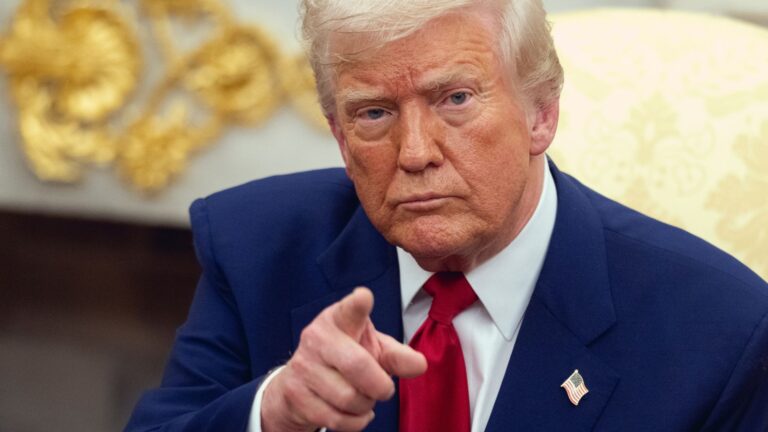
Donald Trump’s latest remarks about Canada landed at a moment when the dispute between the two neighbours is moving well beyond sharp language. Speaking at a White House Hispanic Heritage Month event on September 30, the U.S. president accused Canadian leaders of taking advantage of the United States, called them “very bad” and said Canada was now “being taught a little lesson.” The comments came just after new U.S. import bans on selected Canadian alcohol, dairy products and motorcycles took effect.
Behind the rhetoric is an increasingly consequential fight over manufacturing, tariffs and the future of continental trade. Canada has responded with counter-tariffs while accelerating efforts to find customers outside the United States, even as the two economies remain deeply interconnected.
Trump Turns the Trade Dispute Into a Public Rebuke
Trump Calls Canada ‘Very Bad,’ Says It’s Being ‘Taught a Little Lesson’ as Trade War Escalates
- Trump Turns the Trade Dispute Into a Public Rebuke
- Washington Has Moved From Tariffs to Outright Import Bans
- Autos Are at the Centre of the Fight for a Reason
- The Trade Numbers Are More Complicated Than the Political Rhetoric
- Canada Has Already Answered With Billions in Counter-Tariffs
- The Dispute Is Starting to Become Personal for Workers and Small Businesses
- Canada’s Response Is Increasingly About Finding Other Customers
- CUSMA Is Still in Force, but Its Future Is Now Part of the Pressure
Trump was speaking at a White House celebration of Hispanic Heritage Month when his remarks shifted toward Canada and manufacturing. He argued that previous U.S. governments had allowed other countries to produce vehicles that should have been made in the United States, then accused Canada of having benefited unfairly from that arrangement. Trump said he liked Canadians but claimed the country’s leaders had taken advantage of earlier U.S. administrations. His description of those leaders as “very bad” and his comment that Canada was “being taught a little lesson” represented another escalation in rhetoric directed at one of Washington’s largest trading partners.
The remarks also fit the administration’s broader negotiating posture. U.S. Trade Representative Jamieson Greer said in late September that Washington saw no particular urgency to resolve the Canadian standoff, even with further trade restrictions approaching. Prime Minister Mark Carney, meanwhile, has continued to say Canada is prepared to negotiate an arrangement that benefits both countries and respects Canadian sovereignty. The result is an unusual dynamic: communication has not completely stopped, but neither government is currently presenting an imminent compromise as inevitable.
Washington Has Moved From Tariffs to Outright Import Bans
The biggest immediate escalation occurred on September 29, when U.S. restrictions barring selected Canadian products from entering the country took effect. The measures cover numerous alcoholic beverages, certain dairy-related products such as whey and a category of motorcycles. An Associated Press analysis put the affected 2025 trade at approximately US$967 million, about 87 per cent of it alcoholic beverages. For multinational brands with American processing operations, there may be ways to limit the damage. Smaller producers that bottle their products in Canada have considerably fewer options.
The White House says the restrictions are a response to discriminatory Canadian policies. Its proclamations cite provincial limits on U.S. alcohol, Canadian dairy policies and measures affecting vehicles, using Section 338 of the Tariff Act of 1930 as authority. Canada disputes important parts of that characterization. Ottawa says provincial restrictions on American alcohol and Canadian automotive countermeasures were introduced in response to earlier U.S. tariffs, and it maintains that its administration of CUSMA dairy tariff-rate quotas complies with the agreement. Those competing interpretations are central to the dispute: both governments portray their actions as responses to measures taken by the other.
Autos Are at the Centre of the Fight for a Reason
Trump’s focus on Canadian automobile production goes directly to one of the most integrated parts of the North American economy. Canada produced more than 1.2 million passenger vehicles in 2025, according to the federal government. More than 90 per cent of Canadian-made vehicles and about 60 per cent of Canadian-made auto parts are exported to the United States. Ottawa estimates the broader auto sector supports more than 500,000 Canadian workers, including roughly 125,000 direct manufacturing jobs.
That dependence makes Trump’s threat of 50 per cent tariffs on Canadian cars, trucks and automotive parts beginning January 1, 2027 especially consequential if implemented as announced. Statistics Canada estimates that U.S. demand accounted for 76.4 per cent of both output and payroll jobs in Canada’s automobile and light-duty vehicle manufacturing industry in 2024. The relationship also runs both ways: Canadian manufacturing incorporates U.S.-made materials and components, and vehicle parts can cross the border several times before a finished product reaches a dealership. That is why tariffs on Canadian production can create costs for businesses operating on both sides of the border rather than affecting only the country where final assembly occurs.
The Trade Numbers Are More Complicated Than the Political Rhetoric
Trump has repeatedly described Canada as taking advantage of the United States, but the underlying trade relationship involves both a U.S. deficit in goods and a U.S. surplus in services. USTR data show total U.S.-Canada goods and services trade was approximately US$872.3 billion in 2025. The United States exported US$333.6 billion in goods to Canada and imported US$381.9 billion, producing a US$48.3 billion goods deficit. In services, the direction was reversed: America posted a US$27.7 billion surplus after exporting US$92.3 billion in services to Canada.
Energy is another major part of the equation. Canada’s energy regulator reports that Canada supplied 63.4 per cent of U.S. crude-oil imports in 2025 and close to 100 per cent of imported natural gas. Canadian exports of crude oil, natural gas, natural-gas liquids and refined petroleum products to the United States were worth C$157.5 billion that year, compared with C$34.4 billion flowing in the other direction. Those numbers help explain why a bilateral goods deficit by itself does not establish whether one country has behaved fairly or unfairly; a trade balance is an accounting measure shaped partly by what each country produces and purchases.
Canada Has Already Answered With Billions in Counter-Tariffs
Ottawa has not limited its response to diplomatic objections. Beginning September 8, Canada imposed counter-tariffs of 15, 25 and 50 per cent on C$27.6 billion worth of American imports, with rates designed to correspond to U.S. measures. The targeted categories include steel and aluminum, dairy products, appliances, agricultural equipment, pulp and paper, plastics and electronics. The federal government also announced C$7.5 billion in new and expanded assistance for affected workers and businesses, on top of earlier tariff-response programs.
The retaliation followed the breakdown of bilateral negotiations in August. Carney said Canada had been prepared to remove remaining counter-tariffs in strategic sectors if Washington substantially lowered U.S. duties to levels that allowed Canadian exporters to compete economically. He also said Ottawa was willing to encourage provinces to restore American alcohol to their shelves while protecting Canada’s supply-management system. The talks nevertheless collapsed after the Canadian government concluded that new U.S. demands were unacceptable. That is Canada’s account of the breakdown; Washington has separately accused Canada of reneging on commitments and failing to negotiate in good faith.
The Dispute Is Starting to Become Personal for Workers and Small Businesses
The impact is increasingly visible away from government negotiating rooms. Stelco announced plans to indefinitely idle cold-rolled and coated steel operations in Hamilton, Ontario, potentially affecting as many as 500 workers. The company said U.S. tariffs had significantly reduced the market for those products and that demand in its traditional markets was almost 25 per cent lower in the second quarter than the 2024 quarterly average. Cleveland-Cliffs, Stelco’s U.S. parent, said Canadian production would instead be concentrated at its Nanticoke operation and that it expected many affected employees to be offered work there.
For smaller exporters, even a trade measure that looks modest compared with total Canada-U.S. commerce can be disruptive. Wolfhead Distillery in Amherstburg, Ontario, stopped sending whisky to Michigan after the alcohol ban took effect. Its marketing director told AP that prospective American sales, including interest from a buyer in Georgia, had been placed on hold. The example illustrates why aggregate figures can miss the human scale of a trade fight: a restriction covering less than US$1 billion is small beside hundreds of billions in annual bilateral commerce, yet it can effectively close a crucial market for individual producers.
Canada’s Response Is Increasingly About Finding Other Customers
The shift away from U.S. dependence began showing up in Canada’s trade figures before this latest confrontation. Statistics Canada reported that Canadian merchandise exports to the United States fell 5.8 per cent in 2025, while exports to countries outside the U.S. rose 17.2 per cent. The American share of Canadian merchandise exports fell from 75.9 per cent in 2024 to 71.7 per cent in 2025. That still leaves the United States overwhelmingly Canada’s largest export customer, but the movement shows how quickly businesses began seeking other destinations during a period of growing trade uncertainty.
Ottawa now says it wants to double exports to markets beyond the United States over the next decade. International Trade Minister Maninder Sidhu has been pursuing negotiations with India while Canada also works on agreements involving ASEAN countries, Mercosur and other partners. At the G20 trade ministers’ gathering in Wisconsin this week, Sidhu was scheduled to meet representatives from India and the European Union as well as speak with Greer. Canada and India have already completed four negotiating rounds toward a comprehensive economic partnership agreement and have stated a goal of finishing negotiations by the end of 2026.
CUSMA Is Still in Force, but Its Future Is Now Part of the Pressure
The confrontation is particularly significant because it coincides with the first six-year review of the Canada-United States-Mexico Agreement. At the July 1 review, the United States declined to approve an extension of CUSMA in its current form. That decision did not immediately terminate the agreement. USTR explicitly stated that CUSMA remains in force, while the agreement’s own Article 34.7 provides a mechanism for continuing annual reviews when all three countries do not agree to an extension.
Under the existing text, CUSMA is scheduled to run until 2036 unless the parties extend it or a country separately invokes the withdrawal provisions. If all three governments eventually agree to another 16-year term, the extension can occur before that expiry date. Until then, recurring reviews give the three governments additional opportunities to resolve outstanding disputes—but they also leave businesses facing uncertainty about the rules that will govern future investment. With import bans already in force and Washington threatening much higher auto, parts and steel tariffs from January, Trump’s “little lesson” remark has arrived during a dispute whose economic consequences reach well beyond political rhetoric.
This Options Discord Chat is The Real Deal
While the internet is scoured with trading chat rooms, many of which even charge upwards of thousands of dollars to join, this smaller options trading discord chatroom is the real deal and actually providing valuable trade setups, education, and community without the noise and spam of the larger more expensive rooms. With a incredibly low-cost monthly fee, Options Trading Club (click here to see their reviews) requires an application to join ensuring that every member is dedicated and serious about taking their trading to the next level. If you are looking for a change in your trading strategies, then click here to apply for a membership.